


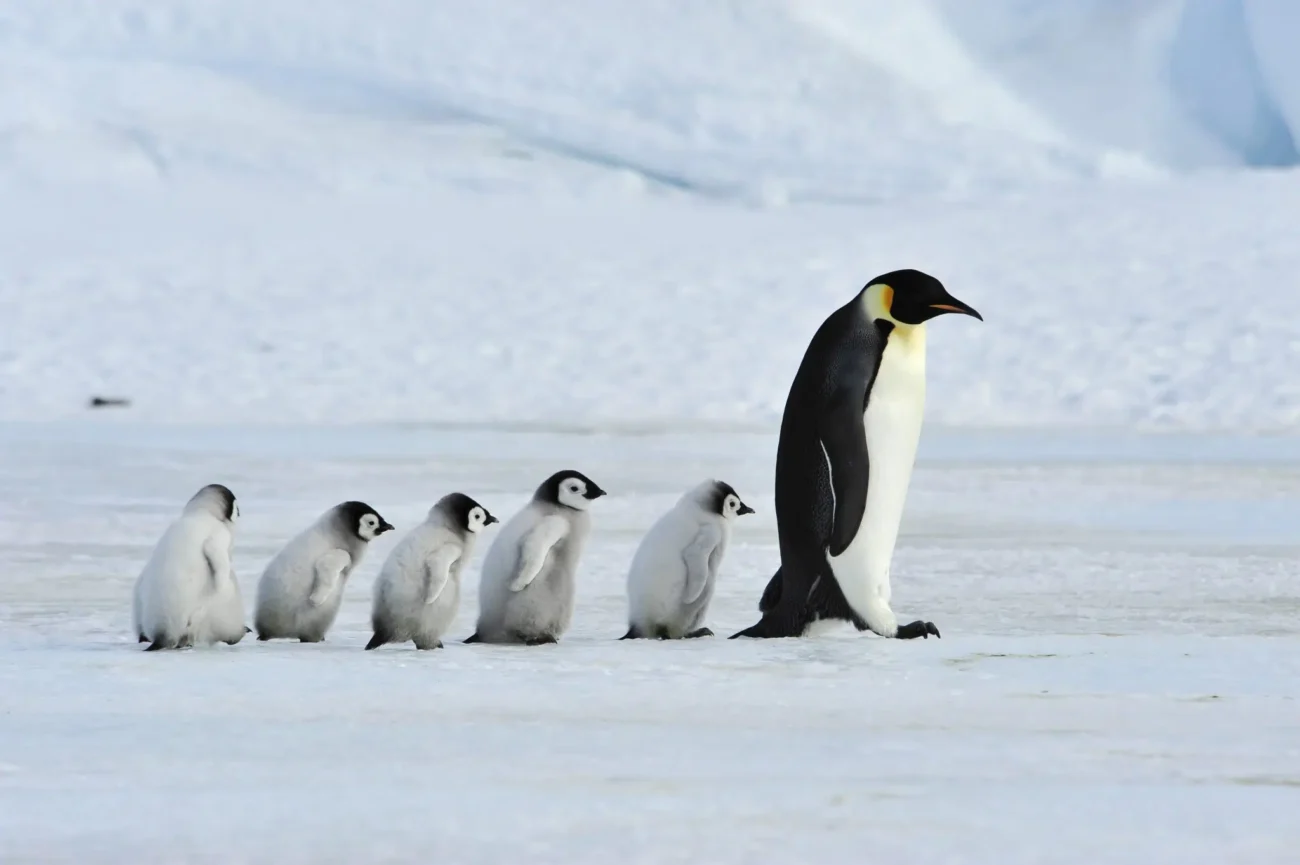
BirdLife International’s latest Red List assessment has sounded a dire alarm for the iconic Emperor Penguin, officially reclassifying the species from Near Threatened to Endangered. This significant uplisting, driven by the accelerating impacts of climate change on its crucial Antarctic sea ice habitat, underscores an urgent call to action for global governments. BirdLife International, in collaboration with the IUCN SSC Penguin Specialist Group, has meticulously reassessed the extinction risk of this beloved Antarctic resident, highlighting the profound and escalating threat posed by a warming planet. The organization is now urging world leaders to take decisive steps, including the designation of the Emperor Penguin as an Antarctic Specially Protected Species at the upcoming 48th Antarctic Treaty Consultative Meeting in Hiroshima this May.
The Growing Shadow of Climate Change
The primary driver behind the Emperor Penguin’s precarious new status is the drastic and erratic changes in sea ice persistence across the Antarctic region. Sea ice is not merely a backdrop for these majestic birds; it is the very foundation of their survival, providing essential platforms for breeding, molting, and raising their young. Projections indicate that without significant global intervention to curb greenhouse gas emissions, Emperor Penguin populations could be halved by the 2080s, a stark testament to the pervasive influence of climate change even in the most remote corners of the globe.
Rob Martin, Red List Team Manager at BirdLife International and coordinator of this critical reassessment, expressed his deep concern. "The Emperor Penguin’s shift from Near Threatened to Endangered is a worrying signal of the reach of climate change impacts into the most remote parts of the globe," Martin stated. "Future projections for the species robustly point to severe reductions over the rest of this century." He further elaborated on the species’ absolute dependence on the Antarctic environment, noting, "Emperor Penguins are completely dependent on the Antarctic habitat for breeding, moulting and feeding, but it will become harder for them to survive as ice patterns become less predictable and this crucial habitat keeps decreasing."
The scientific data supporting this grim prognosis is sobering. Satellite imagery has revealed a significant population loss of approximately 10% between 2009 and 2018 alone, a figure translating to over 20,000 adult penguins. This decline is directly attributed to the premature break-up and loss of sea ice, a phenomenon that has reached alarming, record-low levels since 2016.

The Critical Role of Fast Ice
Emperor Penguins have a specific and vital requirement for "fast ice" – sea ice that is firmly attached to the coastline, the ocean floor, or grounded icebergs. This stable ice formation serves as their nursery, offering a safe haven for their chicks and a necessary refuge during their annual molt. During the molting period, penguins are temporarily unable to enter the water as their new feathers are not yet waterproof. If this essential fast ice breaks up too early, before the chicks have developed their waterproof plumage and the ability to swim, the consequences can be catastrophic, leading to widespread mortality.
While direct observation of every tragic event is challenging, population modeling based on a wide range of future climate scenarios paints a clear and concerning picture. These models robustly demonstrate that unless there are abrupt and dramatic reductions in greenhouse gas emissions, the Emperor Penguin population will continue its rapid decline throughout the remainder of this century. The implications are profound, suggesting that without immediate and substantial global action, this iconic species faces an increasingly uncertain future.
A Window of Opportunity: The Antarctic Treaty Meeting
The upcoming 48th Antarctic Treaty Consultative Meeting, scheduled to convene in Hiroshima in May, presents a critical juncture for international cooperation and environmental stewardship. This pivotal meeting will bring together signatory governments to deliberate on and shape the environmental protection policies governing the Antarctic continent and its surrounding waters. BirdLife International’s updated Red List assessment for the Emperor Penguin will serve as a crucial scientific brief, informing decision-makers and underscoring the urgency of the situation.
Martin Harper, CEO of BirdLife International, emphasized the broader significance of this moment. "Penguins are already among the most threatened birds on Earth," Harper stated. "The Emperor Penguin’s move to Endangered is a stark warning: climate change is accelerating the extinction crisis before our eyes. Governments must act now – starting by designating the Emperor Penguin as an Antarctic Specially Protected Species this May."
The Power of Special Protection
The designation of the Emperor Penguin as an Antarctic Specially Protected Species would carry significant weight. It would establish legally binding obligations for governments to actively prevent actions that could directly harm or disturb Emperor Penguins and their vital habitat. This protective status would signify a collective international commitment to safeguarding this vulnerable species and its unique environment from further anthropogenic pressures.

A Broader Ecological Message
The plight of the Emperor Penguin serves as a potent metaphor for the health of our planet. As BirdLife International eloquently puts it, "Birds are our compass. Their health reveals the health of our world." The stark reality facing these Antarctic dwellers is a clear indicator of the future trajectory of the polar regions if current climate change trends continue unabated. The urgent need to "change course now and urgently decarbonise our economies" is a message that resonates far beyond the icy shores of Antarctica.
Understanding the Red List and Conservation Efforts
BirdLife International serves as the official Red List Authority for birds, a role that involves the regular reassessment of the global extinction risk for all bird species worldwide. This vital process not only draws attention to species facing the greatest peril but also highlights the successes of conservation initiatives. The IUCN Red List of Threatened Species, maintained by the International Union for Conservation of Nature (IUCN), is the most comprehensive inventory of the global conservation status of biological species. It is a critical tool for raising awareness of the extent of biodiversity loss and for catalyzing action to conserve it.
The collaboration between BirdLife International and the IUCN SSC Penguin Specialist Group in reassessing the Emperor Penguin’s status reflects the interconnectedness of global conservation efforts. The IUCN SSC Penguin Specialist Group comprises leading experts dedicated to the study and conservation of penguins, bringing invaluable scientific expertise to such assessments.
Historical Context and Future Projections
The Emperor Penguin, scientifically known as Aptenodytes forsteri, has long been a symbol of resilience and adaptation in one of Earth’s harshest environments. Historically, populations have faced challenges, but the current threat posed by climate change is unprecedented in its scale and speed. Unlike many other species, Emperor Penguins have a relatively long generation time and a complex breeding cycle that is intricately tied to specific sea ice conditions, making them particularly vulnerable to rapid environmental shifts.
The projections for the coming decades are stark. Climate models consistently forecast a significant increase in global temperatures, leading to further melting of polar ice caps and a destabilization of sea ice formations. This directly impacts the Emperor Penguin’s ability to successfully reproduce and survive. For instance, research has indicated that if current emission trends continue, over two-thirds of Emperor Penguin colonies could be quasi-extinct by 2100. This stark future underscores the critical need for immediate and effective climate mitigation strategies.

The Call to Action: A Multifaceted Approach
The call for designating the Emperor Penguin as an Antarctic Specially Protected Species is a crucial step, but it is part of a broader strategy for species and habitat conservation. Beyond this specific designation, broader international efforts to reduce greenhouse gas emissions are paramount. This includes transitioning to renewable energy sources, improving energy efficiency, and implementing sustainable land-use practices.
For the Emperor Penguin, specific conservation actions could include monitoring key breeding colonies, studying their foraging behavior in relation to changing oceanographic conditions, and potentially exploring the feasibility of mitigating local threats where possible. However, the overwhelming consensus among conservation scientists is that global climate action remains the most critical factor in securing the long-term survival of the species.
The actions taken, or not taken, at the upcoming Antarctic Treaty Consultative Meeting will have far-reaching consequences. The designation of special protection for the Emperor Penguin would send a powerful signal to the world about the commitment to preserving Antarctic biodiversity in the face of escalating environmental challenges. It would also serve as a catalyst for increased research and conservation efforts, fostering a greater understanding of the intricate ecosystems of the Antarctic and the threats they face. The future of this magnificent species, and indeed many others, hinges on the decisions made by the international community in the critical months and years ahead. The world watches, and the Emperor Penguin waits.

