


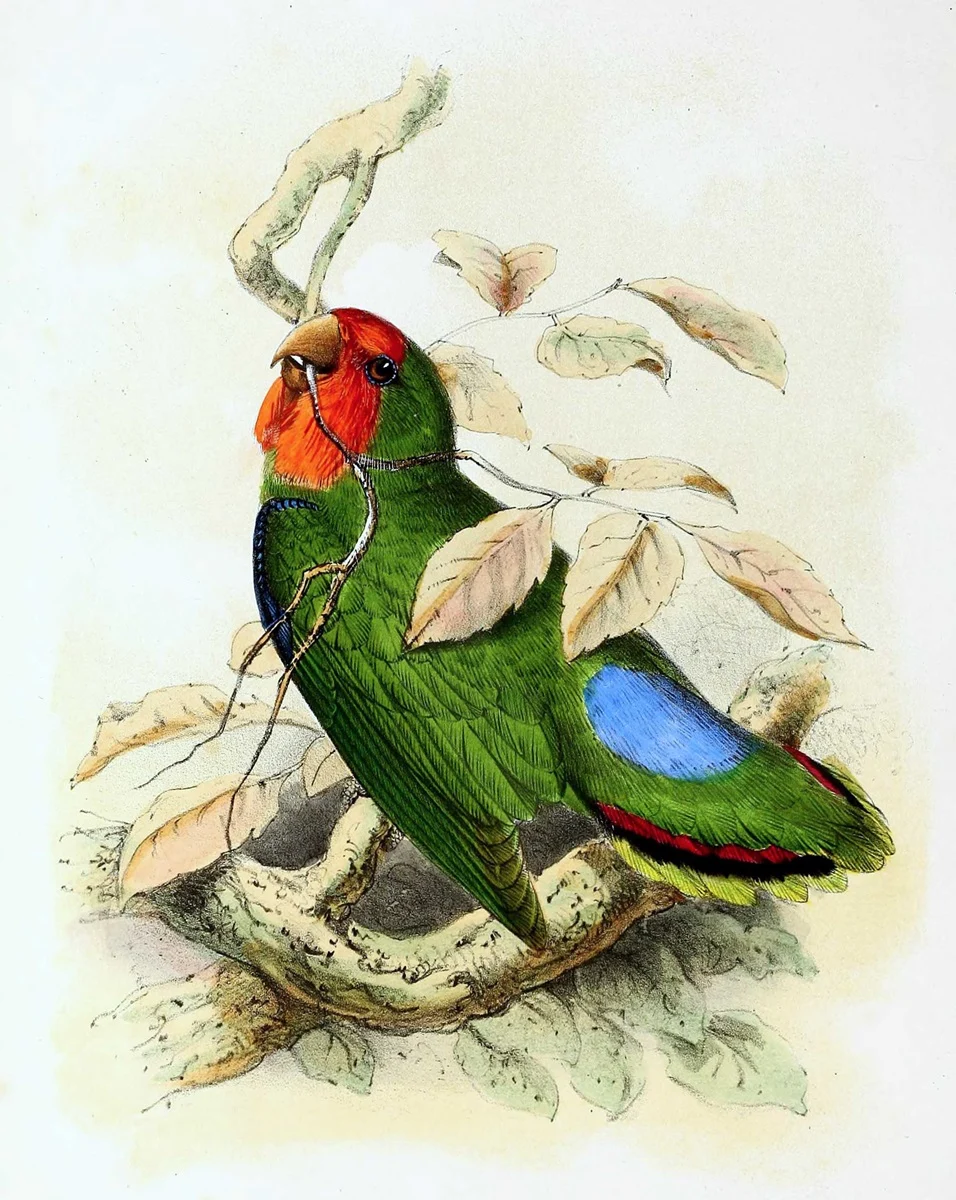
The Red-headed Lovebird, scientifically known as Agapornis pullarius, stands as a fascinating, albeit often overlooked, member of the parrot family. Unlike its more commonly encountered relatives within the Agapornis genus, which frequently adorn pet stores and aviaries globally, this particular species maintains a discreet presence in aviculture due to its pronounced sensitivity and stress-prone nature. While its vibrant plumage captivates observers, its intrinsic fragility presents significant hurdles for those attempting to keep or breed it outside its natural West to Central African habitat. This article delves into the unique biology, ecological role, conservation status, and the profound challenges associated with Agapornis pullarius, offering a comprehensive understanding of this remarkable avian species.
Discovery and Classification: Tracing the Lineage of Agapornis pullarius
The genus Agapornis, commonly known as lovebirds, comprises nine distinct species, all native to the African continent and Madagascar. Agapornis pullarius was first scientifically described by Carl Linnaeus in 1758, establishing its place within the broader avian taxonomy. The name "Agapornis" is derived from the Greek words agape (love) and ornis (bird), aptly reflecting the strong pair bonds these parrots are known to form. The specific epithet "pullarius" is Latin for "of young birds" or "chick," though its precise etymological link to this species is less clear than its common name.
Lovebirds are small, stocky parrots characterized by their short tails and comparatively large beaks. They are generally known for their lively personalities and social interactions. However, Agapornis pullarius distinguishes itself from its kin, such as the Peach-faced Lovebird (Agapornis roseicollis) or Fischer’s Lovebird (Agapornis fischeri), not only by its distinct coloration but also by its notably different temperament and specialized environmental needs, particularly regarding nesting habits, which significantly impact its prevalence in captivity.
Geographical Distribution and Habitat Ecology
Agapornis pullarius is endemic to sub-Saharan Africa, inhabiting a broad, albeit patchy, band stretching from western regions like Guinea and Sierra Leone eastward through Central Africa to Ethiopia. Its preferred natural habitat consists of tropical lowland savannahs. These environments are characterized by open grasslands interspersed with scattered trees and shrubs, providing both foraging grounds and essential perching and roosting sites. The species shows a distinct preference for areas with some tree cover but actively avoids dense primary forests, suggesting a niche adaptation to more open, mosaic landscapes.
Red-headed Lovebirds are largely sedentary within their range, rarely undertaking long-distance migrations, though localized movements in response to food availability or environmental changes are observed. They typically occur at altitudes up to 2,000 meters (approximately 6,550 feet) but are more commonly found at lower elevations. Socially, they are observed traveling in pairs or small flocks, which can occasionally number up to a few dozen individuals. This social structure aids in vigilance against predators and facilitates foraging for scattered food resources across their expansive habitat. Their reliance on specific savannah ecosystems makes them vulnerable to habitat fragmentation and degradation, despite their current "Least Concern" conservation status.
Physical Characteristics and Subspecies
The Red-headed Lovebird is a visually striking species, measuring up to 15 cm (6 inches) in length and weighing around 45 grams. Its plumage is predominantly a vibrant emerald green across its body. The most distinctive feature is the brilliant scarlet-red coloration that covers its face, extending from the forehead down to the throat, and its beak, giving rise to its common name. A subtle dash of blue is often visible on the lower back and rump, contrasting elegantly with the green body. The tail feathers also exhibit a small band of red, adding to its colorful array.
Sexual dimorphism is present in Agapornis pullarius, though it can be subtle. Males typically boast a more intensely colored, brighter red face and beak, almost scarlet in hue. Females, by contrast, tend to have a slightly duller facial coloration, leaning more towards an orange-red, and their beaks are also less intensely red. This difference, while not always immediately apparent to the untrained eye, is a reliable method for visual sexing.

Two recognized subspecies further delineate minor variations:
- Agapornis pullarius pullarius: The nominate subspecies, found across the western and central parts of the range.
- Agapornis pullarius ugandae: Found in the eastern parts of the range, particularly around Uganda, often noted for minor differences in plumage saturation or size, though these distinctions are typically subtle.
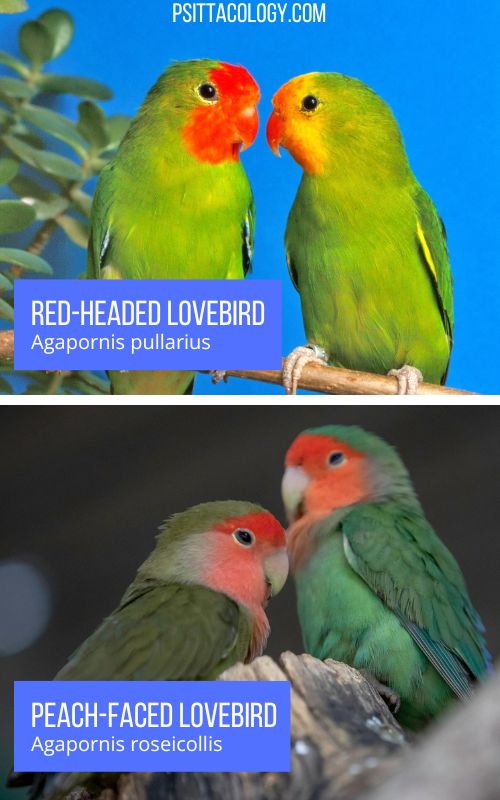
Comparing Agapornis pullarius to its more common relative, the Peach-faced Lovebird (Agapornis roseicollis), reveals key differences beyond facial color. While both possess green bodies, the Peach-faced Lovebird has a pale peach or pink face and a beige or horn-colored beak, distinctly different from the red face and beak of A. pullarius. These distinctions are crucial for identification, particularly in aviculture where misidentification can lead to improper care or hybridization.
Dietary Habits and Ecological Role
Like many parrot species, Red-headed Lovebirds are primarily granivorous, with a diet heavily reliant on seeds. Their strong beaks are perfectly adapted for cracking open various seed types, especially those from grasses. They show a particular preference for grass seeds, which are abundant in their savannah habitat during certain seasons. This dietary inclination extends to agricultural crops such as millet, a staple grain grown in many parts of Africa. Consequently, Agapornis pullarius is sometimes perceived as an agricultural pest by local farmers, leading to conflicts where birds are deliberately deterred or culled to protect harvests.
Beyond seeds, these lovebirds supplement their diet with wild fruits when available, including species like figs (Ficus species) and guava (Psidium guajava). These fruits provide essential vitamins, minerals, and moisture. While primarily vegetarian, some parrots may occasionally consume insects or insect larvae, especially during breeding season to boost protein intake, though this is less documented for Red-headed Lovebirds. Their foraging activities, particularly seed consumption, play a role in seed dispersal, contributing to the regeneration and diversity of plant life in their ecosystem. However, their consumption of agricultural crops also highlights the complex interface between wildlife and human livelihoods in shared landscapes.
Conservation Status and Threats
The International Union for Conservation of Nature (IUCN) Red List currently classifies Agapornis pullarius as a species of "Least Concern." This designation typically implies a widespread and abundant population, not immediately threatened with extinction. However, the IUCN’s own assessment acknowledges that the species is "locally uncommon in most of its natural range," suggesting a more nuanced situation than the broad classification might imply.
Despite the "Least Concern" status, the population size of the Red-headed Lovebird is unfortunately believed to be decreasing. Several significant threats contribute to this decline:
- Habitat Destruction and Degradation: Extensive deforestation for agriculture, logging, human settlement, and infrastructure development across West and Central Africa directly reduces the available savannah and woodland habitats essential for Agapornis pullarius. Fragmentation of remaining habitats isolates populations, making them more vulnerable.
- Conflict with Farmers: As noted, the lovebirds’ preference for grass seeds extends to agricultural crops like millet. This leads to them being viewed as pests by farmers, resulting in retaliatory killings or trapping to protect livelihoods.
- Capture for the Pet Trade: This is a particularly insidious threat. Despite its stress-prone nature and difficulty in captive care, Agapornis pullarius has historically been targeted for the international pet trade. A 2018 study alarmingly reported that almost 40,000 Red-headed Lovebirds were exported from their natural range since 1975. This large-scale removal of individuals from wild populations can have significant impacts, especially when coupled with high mortality rates during capture, transport, and initial acclimatization due to stress. The quote from Parr & Juniper (2010) in "Parrots: A Guide to Parrots of the World" succinctly summarizes this: "Abundance also varies owing to nomadic habits, but a genuine overall decline appears to have occurred in many areas this century. Trapped for live bird trade with large numbers in captivity outside range." This highlights a persistent problem where commercial demand fuels unsustainable harvesting, despite the species’ unsuitability for general pet ownership.
The trade in wild-caught birds not only depletes wild numbers but also poses ethical concerns regarding animal welfare, given the inherent stress these birds endure. While some captive breeding efforts exist, they are challenging and do not mitigate the historical impact of the wild bird trade. Agapornis pullarius is listed under CITES Appendix II, meaning trade is permitted but regulated to prevent overexploitation, yet enforcement can be challenging.
The Ethical Dilemma of the Pet Trade
The extensive capture of Red-headed Lovebirds for the pet trade, as evidenced by the export figures, presents a profound ethical dilemma. While other lovebird species thrive in captivity and make popular pets, Agapornis pullarius‘s delicate constitution makes it particularly ill-suited for the typical pet environment. Wild-caught specimens often exhibit extreme stress responses, including refusing to eat, feather plucking, and even sudden death from shock. This contributes to high mortality rates both during transit and in the initial phases of captivity, rendering the trade not only unsustainable for wild populations but also deeply problematic from an animal welfare perspective.

The demand, however small compared to other species, for these beautiful birds often comes from dedicated aviculturists seeking to complete collections or undertake specialized breeding projects. While such efforts can, in principle, contribute to ex-situ conservation, the ethical foundation is undermined when the source stock is wild-caught and suffers significantly. The preference for captive-bred individuals is paramount, but the challenges of breeding this species mean such birds are rare and expensive, perpetuating interest in potentially cheaper, though ethically fraught, wild-caught options.
Challenges in Aviculture: A Sensitive Species
The Red-headed Lovebird’s reputation as a difficult species in aviculture is well-earned. Unlike its robust and adaptable cousins, Agapornis pullarius is notoriously nervous, easily stressed, and often displays a highly selective appetite in captivity. This makes it a bird typically sought only by highly experienced and dedicated parrot enthusiasts or specialized zoos, rather than general pet owners.
The primary hurdle is its stress-prone nature. Wild-caught individuals, in particular, are extremely susceptible to environmental disturbances. A sudden loud noise, an unfamiliar presence, or even changes in routine can trigger a severe stress response, sometimes leading to fatal outcomes. They are also known to be highly sensitive to their surroundings, including the presence of other, more boisterous parrot species in a shared aviary, which can cause them to become withdrawn, refuse food, or exhibit other stress-related behaviors. This inherent nervousness means that establishing a bond typical of many pet parrots is often impossible; Agapornis pullarius is a bird to be observed, not interacted with closely.
Their dietary pickiness further complicates captive care. While primarily granivorous in the wild, adapting to a varied captive diet can be challenging, especially for wild-caught birds. This requires careful monitoring and a patient approach to introduce new foods. The combination of stress susceptibility and specialized needs explains why this species remains rare in aviculture and why responsible ownership requires exceptional dedication.
Responsible Captive Care: Housing and Diet
For the rare, fortunate, and experienced aviculturist who acquires captive-bred Red-headed Lovebirds, meticulous care is paramount. These birds thrive best in a calm, stable environment.
Housing:
- Aviary Preference: A spacious, heated aviary is ideal, providing ample room for flight and a naturalistic setting. It is generally recommended to house them as single pairs or individually, as they can be intimidated by other species and even by other lovebird pairs.
- Indoor Caging: If kept indoors, a large cage is essential, with minimum dimensions of at least 80 cm (30 inches) wide. Bar spacing should be narrow, around 1.25 cm (0.5 inches), to prevent escape or injury.
- Perches: A variety of natural wood perches of differing diameters should be provided to promote foot health and prevent pressure sores.
- Environment: The housing environment must be quiet and free from sudden disturbances. Temperature control is crucial, as these birds are sensitive to drafts and extreme fluctuations.
Captive Diet:
The dietary regimen for captive Red-headed Lovebirds should prioritize nutritional completeness and variety, moving beyond a simple seed mix.
- Pelleted Diet: Veterinarians and avian nutritionists widely recommend a high-quality pelleted diet as the foundation for most parrot species, including lovebirds. Pellets provide balanced nutrition that seed-only diets often lack.
- Seed Supplementation: A good quality seed mix, especially one formulated for small parrots, can be offered in moderation as a supplement. Sprouted seeds are also highly beneficial, offering enhanced nutrition and stimulating natural foraging behaviors.
- Fresh Produce: A wide array of fresh vegetables, particularly leafy greens (kale, spinach, romaine), bell peppers, carrots, and broccoli, should be offered daily. Many fruits can also be provided, such as apples, berries, and melon, in smaller quantities due to their sugar content.
- Additional Foods: Cooked grains (quinoa, brown rice) and select foraged weeds (dandelion, chickweed, plantain, ensuring they are pesticide-free) can add variety and enrichment.
- Protein for Breeding: During breeding season, or for overall health, supplemental protein sources like boiled egg (crushed with shell for calcium) or mealworms can be beneficial.
Enrichment and Behavioral Considerations
Like all parrots, Red-headed Lovebirds are intelligent and require significant environmental enrichment to prevent boredom, stress, and behavioral issues. However, due to their nervous disposition, new enrichment items must be introduced gradually to avoid startling them.
Essential enrichment items and strategies include:
- Chew Toys: Untreated natural wood toys, paper, and cardboard items satisfy their natural urge to chew and keep their beaks trimmed.
- Foraging Opportunities: Puzzle feeders or scattered food encourage natural foraging behaviors, mentally stimulating the birds.
- Natural Perches: As mentioned, perches of varying textures and diameters.
- Privacy: Providing hiding spots or dense foliage (if in an aviary) can give them a sense of security.
- Bathing: A shallow dish of water or a light misting can encourage bathing, which is important for feather health.
Noise Level:
Compared to many other parrot species, Agapornis pullarius is considered relatively quiet. However, like all psittacines, they are capable of producing shrill calls, particularly when alarmed or interacting with their mates. Their calls, while not as deafening as some larger parrots, can be quite sharp. Recordings are available on platforms like Xeno-Canto for those wishing to familiarize themselves with their vocalizations.
Red-headed Lovebird Reproduction
Reproduction in Agapornis pullarius is a fascinating aspect of its biology, particularly due to its unique nesting habits. In the wild, breeding typically coincides with the rainy season, when food resources are most abundant, ensuring sufficient provisions for raising young.
Wild Reproduction:
The most distinctive feature of their breeding behavior is their preference for nesting in arboreal (tree-dwelling) termite or ant nests. The female excavates a burrow within the termitarium, creating a safe and insulated nesting chamber. This burrow is then reinforced and lined with plant materials, such as grass leaves, collected by the female. Less commonly, they may utilize existing tree hollows, often those created by woodpeckers, or even ground-level nests. Once the nest is prepared, the female typically lays a clutch of up to six eggs. Both parents participate in incubating the eggs and rearing the chicks, though the female is primarily responsible for incubation.
Captive Reproduction:
Successfully breeding Red-headed Lovebirds in captivity is notoriously difficult, largely owing to their nervous nature and specialized nesting requirements. Standard wooden nest boxes, commonly used for other lovebird species, are often ignored or deemed unsuitable by A. pullarius. Dedicated enthusiasts have experimented extensively to mimic their natural nesting environment. One successful innovation has been the use of nest boxes constructed from cork, which replicates the texture and insulation properties of a termite nest. Even with specialized nest boxes, a calm, undisturbed environment and a nutritionally complete diet are crucial for encouraging breeding pairs. The stress susceptibility of the species means that even minor disturbances can lead to nest abandonment or failure. The rarity of captive-bred Red-headed Lovebirds underscores the complexity of their reproductive biology and the specialized care required.
Broader Implications for Avian Conservation
The story of the Red-headed Lovebird encapsulates many of the broader challenges and ethical considerations in avian conservation and aviculture today. Its "Least Concern" status, juxtaposed with clear evidence of localized declines and significant pressure from the pet trade and habitat loss, serves as a stark reminder that official classifications do not always capture the full vulnerability of a species.
The species highlights the critical importance of understanding the specific behavioral and ecological needs of individual species. What works for one lovebird species in captivity, such as the Peach-faced Lovebird, is demonstrably unsuitable for another, like Agapornis pullarius. This underscores the need for species-specific research and responsible practices, particularly concerning the pet trade. The high mortality rates of wild-caught individuals, coupled with the difficulties in captive breeding, raise serious questions about the ethics and sustainability of any trade that relies on wild populations for this sensitive species.
Ultimately, the Red-headed Lovebird stands as a symbol of wild beauty and inherent fragility. Its continued existence depends on concerted conservation efforts that address habitat preservation, mitigate human-wildlife conflict, and rigorously regulate the pet trade. For aviculturists, it represents a pinnacle of challenge, urging a shift towards genuinely responsible, captive-bred populations, driven by a deep understanding and respect for the unique needs of this remarkable African parrot.

