


In an era where the demands of modern life increasingly challenge pet owners to balance their busy schedules with the needs of their animal companions, a significant technological advancement is poised to transform canine well-being. The integration of the Pet Tutor automatic treat dispenser with the PupPod high-tech puzzle game represents a pivotal development, offering an innovative, automated solution for providing essential mental and physical stimulation to dogs. This synergy addresses a fundamental aspect of canine health that extends far beyond simple obedience training, promising enhanced cognitive function, improved behavior, and a richer quality of life for dogs, all while offering unparalleled convenience to their human caregivers.
Understanding the Innate Drive for Canine Engagement
For generations, dog owners have observed the profound satisfaction their pets derive from learning, whether it’s mastering a basic "sit" command or navigating a complex agility course. While the immediate reward, often a tasty treat, plays a role in reinforcing desired behaviors, the underlying motivations for a dog’s enjoyment of learning run much deeper. Canine ethology and behavioral science confirm that dogs, irrespective of breed or lifestyle, possess an inherent need for both mental and physical engagement. From the energetic working breeds to the most laid-back lap dogs, this need is fundamental to their overall happiness, health, and psychological well-being.
A lack of adequate stimulation can manifest in various undesirable ways, including boredom, destructive behaviors, excessive barking, anxiety, and even cognitive decline. Engaging a dog’s mind and body through structured activities, training, and play provides an outlet for their natural instincts, such as foraging, problem-solving, and exploration. This consistent engagement has been linked to numerous benefits: it builds confidence, improves impulse control, lengthens attention spans, contributes to better physical health by encouraging activity, and, crucially, may help stave off age-related cognitive dysfunction, often referred to as "doggie dementia." Research published in journals like Applied Animal Behaviour Science consistently highlights the positive correlation between environmental enrichment and improved animal welfare, emphasizing the importance of providing opportunities for species-specific behaviors and cognitive challenges.
The Modern Dilemma: Time Constraints Versus Pet Needs
Despite a deep commitment to their pets’ welfare, many contemporary dog owners face an increasingly difficult challenge: how to reconcile the demanding nature of their work, family, and social commitments with the significant time investment required to adequately stimulate their dogs. Long working hours, commutes, childcare responsibilities, and the myriad pressures of daily life often leave precious little time for extended training sessions or dedicated interactive play. This often leads to a sense of guilt among owners and, more importantly, can result in dogs spending significant portions of their day under-stimulated, potentially contributing to behavioral issues and diminished quality of life.
The pet care industry has responded to this growing dilemma with a proliferation of products and services aimed at easing the burden on owners, from dog walkers and daycare facilities to a burgeoning market of smart pet technologies. These innovations seek to bridge the gap between human schedules and canine needs, offering solutions that maximize efficiency without compromising on the quality of care. It is within this context that the Pet Tutor and PupPod integration emerges as a particularly compelling and timely solution.
The Evolution of Automated Canine Enrichment Technology
The journey towards this integrated solution began with two distinct but complementary innovations: the Pet Tutor and the PupPod.
Pet Tutor: The Foundation of Automated Positive Reinforcement
Smart Animal Training Systems, the creators of Pet Tutor, developed their device with a clear mission: to make positive reinforcement training more accessible and convenient for owners and more consistent for dogs. Launched several years ago, the Pet Tutor is an automatic treat dispenser designed to deliver rewards remotely and on a schedule. Its core functionality allows owners to reinforce desired behaviors even when they are not physically present, or when they need to manage distractions during training. Users can control the dispenser via a mobile application, scheduling treat deliveries, adjusting portion sizes, and triggering rewards in real-time. This capability alone represented a significant leap forward in training efficiency, enabling owners to maintain training consistency and manage their dog’s environment with greater ease. Early adopters praised its ability to assist with crate training, reduce barking, manage resource guarding, and teach independent play. The device essentially extended the reach of positive reinforcement, making it a powerful tool for behavioral modification and skill acquisition.
PupPod: Pioneering Interactive Cognitive Puzzles
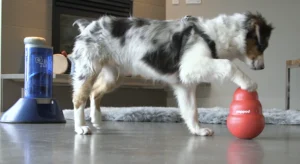
Concurrently, PupPod emerged with a focus on interactive cognitive challenges. Recognizing the deep mental needs of dogs, PupPod designed a high-tech puzzle game centered around a "Wobbler" toy. This device was engineered to engage dogs in problem-solving activities that require cognitive effort, going beyond simple fetch or chew toys. The PupPod system uses a combination of lights, sounds, and motion sensors to create progressively challenging games. A dog interacts with the Wobbler, and based on specific cues, must decide when to touch or not touch the toy to earn a reward. The genius of PupPod lies in its adaptive learning algorithm, which automatically increases the difficulty as the dog masters each level, ensuring sustained engagement and preventing boredom. This dynamic difficulty scaling ensures that the dog is continuously challenged, fostering mental agility and preventing stagnation, a common pitfall with static puzzle toys.
The Strategic Integration: A New Paradigm for Canine Care
The decision to integrate Pet Tutor with PupPod was a strategic move born from a shared understanding of canine needs and owner challenges. While both devices offered significant benefits independently, their combined potential was recognized as a game-changer. The Pet Tutor provided the automated, controlled reward delivery system, and PupPod offered the sophisticated, adaptive cognitive challenge. By pairing the two through a mobile device, owners could create a seamless, self-directed enrichment experience for their dogs.
The integration process is designed for simplicity. Owners connect their Pet Tutor device with the PupPod Wobbler toy via a mobile application, typically through Bluetooth or Wi-Fi, depending on the models. Once paired, the PupPod becomes the interactive interface that dictates when and how the Pet Tutor dispenses treats.
A Deep Dive into the Integrated Play Experience
The game progression offered by the Pet Tutor-PupPod combo is a masterclass in progressive learning and engagement:
-
Initial Acclimation (Level 1): The games begin with foundational simplicity. Motion detectors within the PupPod Wobbler sense when the dog interacts with the toy, perhaps through a sniff or a gentle nudge. This interaction immediately triggers the Pet Tutor to dispense a treat. This initial phase is crucial for establishing a clear cause-and-effect relationship for the dog: "Interact with PupPod = tasty reward." It builds positive association and encourages initial exploration without frustration.
-
Introducing Cognitive Challenge (Intermediate Levels): Once the dog demonstrates an understanding of the basic interaction, the system automatically introduces more complex rules. The PupPod begins to use distinct lights and sounds as cues. For instance, a green light might signal "touch me to get a treat," while a red light means "do not touch, or no treat." The dog must then engage its cognitive abilities to discriminate between cues, make a decision, and execute the correct action. This moves beyond simple motor response to genuine problem-solving.
-
Advanced Problem-Solving (Higher Levels): As the dog continues to master the intermediate levels, the games become progressively more intricate. This can involve sequences of lights and sounds, requiring the dog to remember patterns or specific timings. The adaptive algorithm ensures that the challenge level is always appropriate, preventing the dog from becoming either bored by easy tasks or frustrated by overly difficult ones. The system continuously analyzes the dog’s performance and adjusts the game’s complexity accordingly, creating an ever-evolving mental workout. This constant, tailored challenge is what keeps dogs engaged over extended periods, fostering sustained cognitive growth.
The multi-sensory feedback from PupPod (lights and sound) is critical. Dogs rely heavily on sensory information, and combining visual and auditory cues enhances their learning experience, making the games more engaging and effective.
Comprehensive Benefits and Far-Reaching Implications
The combined Pet Tutor and PupPod system delivers a comprehensive suite of benefits for both dogs and their human companions, addressing core needs in modern pet ownership:
-
Unprecedented Time Savings for Owners: This is perhaps the most immediate and tangible benefit. Owners can set up the system and allow their dog to engage in meaningful play and learning while they attend to other responsibilities. Whether it’s preparing dinner, focusing on work tasks, exercising, or assisting children with homework, the system operates autonomously, providing structured stimulation without requiring direct human intervention. This transforms passive downtime for dogs into active, enriching learning periods.
-
Enhanced Canine Confidence and Behavior: By providing opportunities for dogs to solve problems independently and earn rewards, the system significantly boosts their self-efficacy and confidence. This increased self-assurance can translate into a reduction of anxiety-driven behaviors, a decrease in destructive chewing or barking stemming from boredom, and an overall calmer, more well-adjusted demeanor. Dogs that are mentally stimulated are less likely to seek out inappropriate outlets for their energy and intelligence.
-
Promoting Cognitive Health and Longevity: The continuous mental engagement provided by the adaptive PupPod games is a powerful tool for cognitive maintenance. Just as humans benefit from brain games, dogs can experience improved neuroplasticity and delayed onset of age-related cognitive decline. Regular mental exercise keeps neural pathways active, potentially extending a dog’s cognitive lifespan and improving their quality of life in their senior years. This proactive approach to brain health is a significant contribution to veterinary preventative care.
-
Increased Physical Activity: Beyond mental stimulation, the system can be strategically used to encourage physical exercise. By placing the Pet Tutor dispenser and the PupPod Wobbler at opposite ends of a room or even in different rooms, owners can prompt their dog to move back and forth repeatedly to earn rewards. This simple setup can lead to a surprisingly significant amount of physical activity. A dog can easily walk a mile or more within a living room during an extended play session, contributing to their cardiovascular health, muscle tone, and weight management, particularly for dogs with limited outdoor access or those needing controlled exercise.
-
Enrichment-Based Meal Feeding: The system offers a revolutionary approach to mealtime. Instead of simply feeding a dog from a bowl, owners can load the Pet Tutor with their dog’s entire meal. The dog then "earns" their meal piece by piece through interaction with the PupPod. This transforms feeding from a passive event into an engaging, mentally stimulating activity, slowing down consumption (which can aid digestion) and prolonging satiety through effort. This can be particularly beneficial for dogs that eat too quickly or those prone to boredom after meals.
Diverse Applications and Target Audiences
The versatility of the Pet Tutor and PupPod combination makes it suitable for a wide array of dogs and owner situations:
- Busy Professionals: Ideal for owners who spend long hours away from home or who work from home and need uninterrupted focus.
- Dogs Prone to Boredom or Destructive Behavior: Provides a constructive outlet for energy and intelligence, redirecting undesirable actions.
- Dogs with Separation Anxiety (Mild Cases): Offers a comforting and engaging distraction during periods of owner absence, helping to build positive associations with being alone.
- Senior Dogs: Essential for maintaining cognitive function and providing gentle physical activity, helping to slow the progression of cognitive decline.
- Dogs Recovering from Injuries: Allows for controlled mental stimulation when intense physical activity is restricted.
- Puppies and Young Dogs: Supports early cognitive development and establishes positive learning habits from a young age.
- High-Energy Breeds: Helps channel their innate drive for activity and problem-solving in a structured manner.
- Owners Seeking Advanced Training Tools: Offers a sophisticated platform for teaching complex discrimination and problem-solving skills.
Statements from Industry and Expert Perspectives
"The integration of Pet Tutor and PupPod represents a significant leap forward in automated canine enrichment," stated a spokesperson for Smart Animal Training. "Our goal has always been to empower pet owners with tools that make positive reinforcement training more effective and convenient. By combining our automatic treat dispenser with PupPod’s intelligent puzzle games, we’re not just offering convenience; we’re delivering a comprehensive solution for a dog’s mental and physical well-being."
A representative from PupPod added, "We recognized that true enrichment requires both cognitive challenge and positive reinforcement. The synergy with Pet Tutor allows our adaptive games to have a direct, rewarding outcome, making the learning process incredibly powerful and engaging for dogs. This collaboration truly elevates the standard for smart pet technology."
Veterinarians and animal behaviorists have lauded such innovations. "Tools that facilitate consistent mental and physical stimulation are invaluable for canine health," commented Dr. Anya Sharma, a certified veterinary behaviorist. "Many behavioral issues stem from under-stimulation. Products like the Pet Tutor-PupPod combo offer a practical, science-backed approach for owners to meet their dogs’ needs, fostering better behavior and cognitive resilience, particularly as dogs age."
Early feedback from users has been overwhelmingly positive. "Before, my dog would pace and whine while I was on calls. Now, he’s engrossed in his PupPod games, earning treats from the Pet Tutor," shares Sarah M., a remote worker and dog owner. "It’s been a game-changer for both of us."
The Broader Impact and Future Landscape of Pet Technology
The Pet Tutor and PupPod integration is more than just a new product; it signals a growing trend in the "smart pet" market towards holistic, intelligent solutions for animal welfare. As artificial intelligence and machine learning continue to advance, future iterations of such technologies are likely to become even more personalized, adapting not just to a dog’s current performance but also to its individual learning style, breed characteristics, and even mood.
This evolution signifies a shift in pet care philosophy, moving beyond basic sustenance and shelter to actively cultivate a pet’s cognitive and emotional well-being through technological assistance. It positions technology as a complement, rather than a replacement, for human interaction, enhancing the quality of a dog’s life even during periods of owner absence. The potential for these systems to integrate with broader smart home ecosystems, providing insights into a dog’s activity levels, learning progress, and even subtle behavioral changes, is immense. This data could offer valuable information to owners and even veterinarians, enabling more proactive and personalized care.
In conclusion, the combination of Pet Tutor and PupPod stands as a testament to the ingenuity applied to modern pet care challenges. It democratizes access to sophisticated canine enrichment, making it easier and more convenient than ever before to keep dogs happy, active, and engaged. This integrated system not only saves precious time for busy owners but also profoundly enriches the lives of dogs, nurturing their minds and bodies for a healthier, more fulfilling existence. It heralds a future where advanced technology seamlessly supports the deep bond between humans and their canine companions, ensuring that even in the busiest of lives, every dog has the opportunity to thrive intellectually and physically.

