


The global creative community has reached a new milestone with the official conclusion of the 11th annual SkyPixel Photo and Video Competition, an event that has grown to become the world’s premier showcase for aerial and handheld imaging. Co-hosted by DJI and SkyPixel, the 2025 iteration of the contest drew nearly 95,000 submissions from 96 countries and regions, illustrating the massive scale of the modern creator economy and the rapid advancement of consumer and professional imaging technology. This year’s competition, which offered a prize pool valued at nearly $200,000 across 53 distinct award categories, highlights a decade-long evolution in how visual stories are told, transitioning from simple bird’s-eye views to complex, cinematic narratives that blend the boundaries between aerial and ground-based perspectives.
A New Benchmark for Aerial Artistry
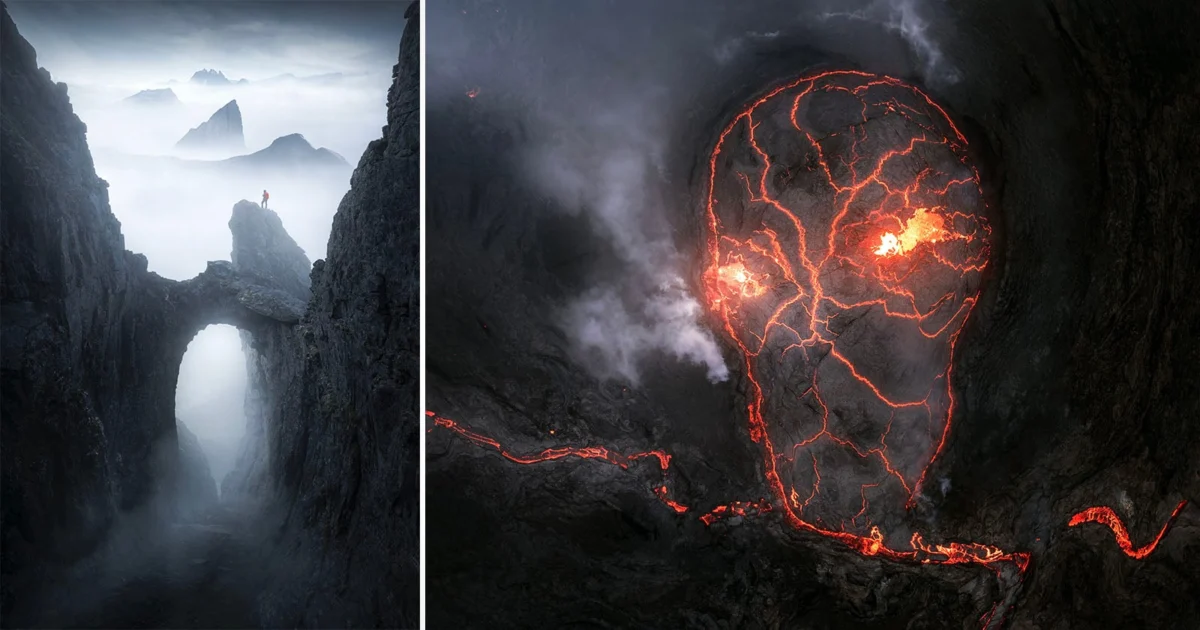
The 2025 competition was defined by its "Annual Best Photo" winner, titled “The Gate,” captured by renowned photographer Filip Hrebenda. Utilizing the DJI Mavic 3 Pro, Hrebenda documented a surreal scene in the remote northern reaches of Norway during the autumn of 2025. The image features a solitary figure standing atop a natural stone arch, suspended over a valley thick with mist, with jagged mountain peaks piercing the horizon.
Hrebenda’s victory underscores the technical capabilities of modern drone systems. The Mavic 3 Pro’s triple-camera system allowed for precise framing in an environment that was historically inaccessible to traditional photography. According to the photographer, the shot required a grueling ascent through dense fog to reach an elevation above the cloud layer. The resulting composition leverages the unique "compression" effect and perspective shifts possible only through high-altitude, stable flight platforms. The image has been lauded by the judging panel not only for its technical execution but for its ability to convey the raw, monumental scale of the Arctic wilderness.
Diversity in Perspective: The Top Photography Highlights
Beyond the grand prize, the "Annual Top 10 Photo" winners showcased a vast array of styles, from abstract patterns to high-intensity environmental phenomena. Among the most notable entries was “Carpet Fields” by F. Dilek Yurdakul. Captured in the Döşemealtı district of Antalya, Turkey, the image utilizes a top-down "God’s eye" view to document the traditional practice of drying handmade carpets in the sun. The DJI Mavic 2 Pro was used to turn the agricultural landscape into a vibrant, geometric tapestry of reds and pinks, demonstrating how aerial photography can transform cultural traditions into high art.
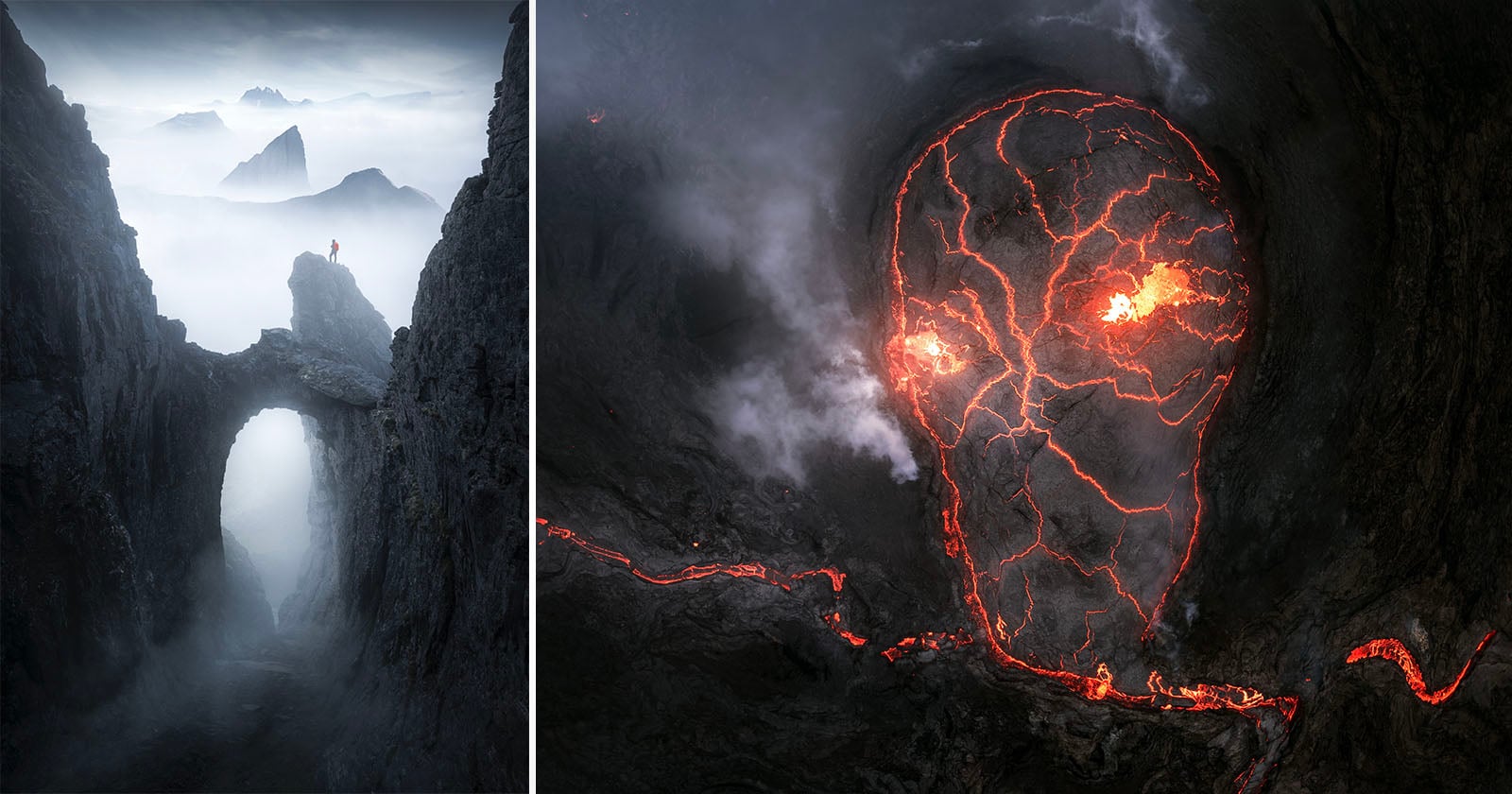
In stark contrast, the image “Smoking Skull” by the photographer known as Daniel provided a haunting look at the Fagradalsfjall volcanic eruption in Iceland. Captured with a DJI Air 3S, the photo depicts a cooling lava formation that eerily resembles a human skull, wreathed in smoke and glowing embers. This entry highlights the "S" series drones’ ability to handle high-contrast, low-light environments while maintaining the safety of the operator in hazardous volcanic zones. These winners reflect a broader trend in the 2025 competition: the shift toward using drones as essential tools for documenting the intersection of human culture and the volatile beauty of the natural world.
Cinematic Excellence in Motion: The Video Category
The videography segment of the 2025 SkyPixel competition saw an unprecedented level of production quality, with the "Annual Best Video (Aerial)" award going to Ellis van Jason for his film, “Africa Unseen.” This project represents the pinnacle of modern independent filmmaking, as van Jason spent years traversing the African continent to capture its diverse ecosystems and wildlife.
The technical requirements for “Africa Unseen” were immense. DJI reported that the creator managed over 35 terabytes of cinematic-grade 8K footage to produce the final seven-minute narrative. Van Jason employed a comprehensive ecosystem of DJI tools, including the Inspire 3 for high-end cinematic sequences, the Avata 2 for high-speed FPV (First Person View) shots through tight canopy spaces, and the Ronin 4D for stabilized ground-based shots. The film’s success is a testament to the democratization of filmmaking; tools that were once the exclusive domain of Hollywood studios are now accessible to individual creators capable of producing documentary-grade content.
In the "Annual Best Video (Handheld)" category, the top honor was awarded to AYANG for the film “Elsewhere The Gaze Can Always Arrive.” This category emphasizes the importance of handheld stabilization and ground-based storytelling, reflecting DJI’s expansion from a drone-centric company to a holistic imaging brand. The handheld winners typically utilized the Osmo and Ronin series, proving that the SkyPixel community is as much about terrestrial cinematography as it is about flight.
Competition Timeline and Participation Data
The 11th SkyPixel competition followed a rigorous schedule designed to accommodate creators from various seasonal climates.

- Launch: November 27, 2025 – The competition opened for global submissions across categories including Nature, Architecture, Portrait, and Sports.
- Submission Window: November 2025 to March 10, 2026 – A period characterized by a surge in winter-themed and expedition-based content.
- Judging Phase: March 2026 – A panel of industry experts, including world-renowned cinematographers and National Geographic contributors, evaluated the 95,000 entries based on visual impact, technical skill, and narrative depth.
- Announcement: April 2026 – The winners were revealed, followed by a series of global exhibitions and digital showcases.
The participation data for 2025 reveals a significant uptick in submissions from emerging markets in Southeast Asia and Latin America, though the traditional hubs of North America and Europe remained heavily represented. The inclusion of 96 countries marks the most diverse pool of participants in the contest’s history, suggesting that the barriers to entry for high-quality visual production are continuing to fall globally.
The Evolution of the SkyPixel Platform
SkyPixel was established in 2014 as a community for aerial photographers to share their work. Over the last decade, it has evolved into a massive social ecosystem and a critical feedback loop for hardware manufacturers. The 2025 competition results reflect how the community has matured. Early years of the competition were dominated by "novelty" shots—images that were impressive simply because they were taken from the air. Today, the judging criteria have shifted toward traditional photographic principles: composition, lighting, and emotional resonance.
Furthermore, the integration of "Handheld" categories into what was originally a drone contest marks a strategic shift. DJI’s dominance in the gimbal and action camera markets (via the Ronin, Osmo, and Action lines) has allowed SkyPixel to capture a broader segment of the creator economy. This synergy was evident in the 2025 winners, many of whom utilized "combo" workflows, switching between aerial and handheld units to maintain a consistent visual language throughout their projects.
Industry Implications and Analysis
The success of the 2025 DJI SkyPixel competition carries several implications for the future of the imaging industry. First, it confirms the "prosumer" segment’s demand for high-resolution, high-dynamic-range sensors in compact bodies. The prevalence of the Mavic 3 Pro and Air 3S among winners suggests that features like optical zoom and multi-focal length systems are becoming standard requirements for serious hobbyists and professionals alike.
Second, the competition highlights the growing importance of software and post-processing in the creative workflow. With 35TB of data mentioned in the winning video entry, the bottleneck for creators is no longer just capturing the image, but managing, editing, and color-grading massive datasets. This trend points toward a future where AI-driven editing tools and cloud-based storage solutions will become as vital as the drones themselves.

Finally, the competition serves as a bellwether for the "Responsible Flying" movement. By rewarding creators who navigate difficult-to-reach locations like the Norwegian fjords or Icelandic volcanoes, DJI and SkyPixel promote a narrative of drones as tools for environmental appreciation and scientific observation. The emphasis on "Remote and difficult-to-reach" locations in the winning descriptions suggests that the value of drone photography increasingly lies in its ability to bring the inaccessible parts of the planet to the global public.
Official Responses and Future Outlook
While DJI has not issued a formal transcript of executive speeches, the company’s official communication regarding the 2025 winners emphasizes a commitment to "empowering the next generation of visual storytellers." The 53 awards distributed this year, ranging from the latest drone hardware to professional-grade editing software and cash prizes, are intended to fuel further innovation within the community.
Looking forward to the 2026-2027 cycle, the industry expects a further push into AI-assisted flight and automated cinematography. As drones become more autonomous, the SkyPixel competition will likely continue to shift its focus away from the "pilot’s skill" and more toward the "director’s vision."
The 11th SkyPixel Photo and Video Competition has concluded not just as a contest, but as a comprehensive archive of the world’s current state. From the quiet, foggy heights of Norway to the bustling, colorful carpet fields of Turkey, the 2025 winners have provided a global audience with a renewed perspective on the beauty, complexity, and fragility of our world. As these 95,000 entries are archived and shared, they stand as a testament to a decade of technological progress and the enduring human desire to see the world from a different angle.

