


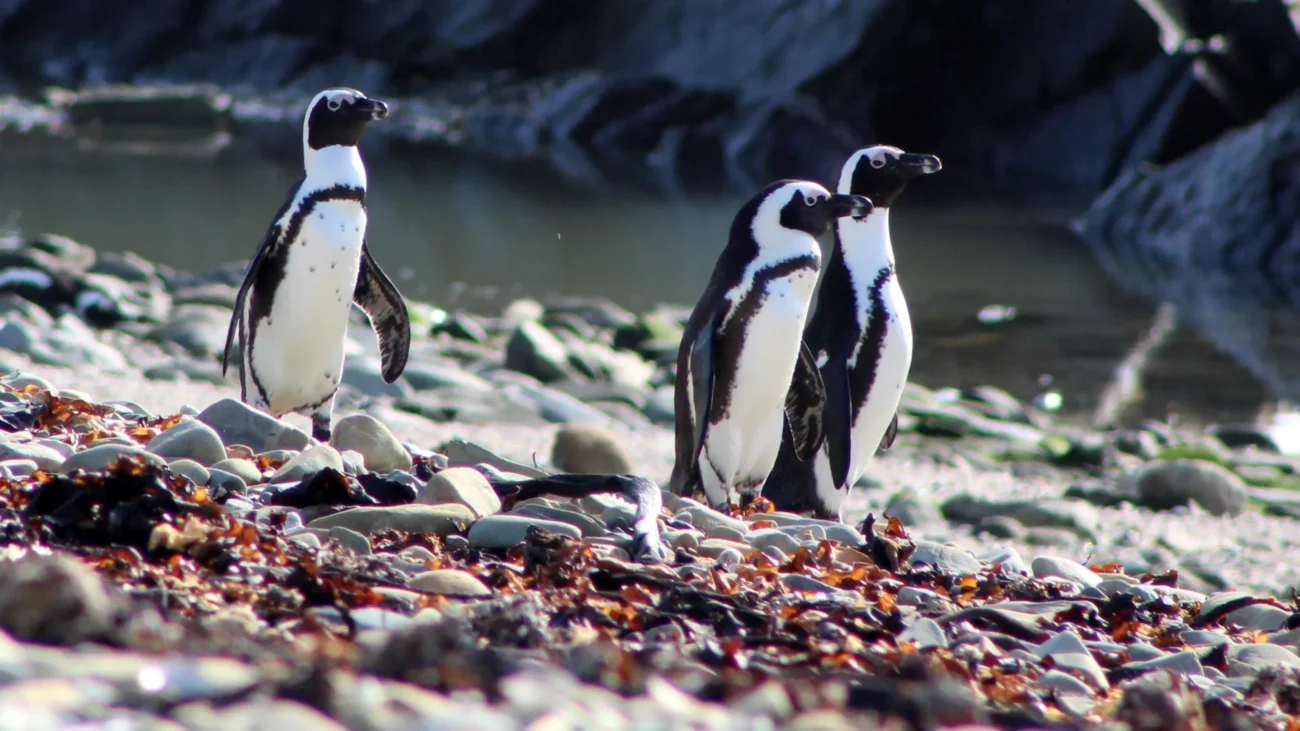
A groundbreaking study led by the University of St Andrews has unveiled a critical vulnerability for the Critically Endangered African penguin (Spheniscus demersus): these seabirds are significantly more likely to forage in the same waters as commercial fishing vessels during years when their primary food sources are scarce. This heightened overlap in foraging grounds directly translates to increased competition for dwindling prey, placing immense pressure on a species already teetering on the brink of severe decline. The research, published on November 17 in the prestigious Journal of Applied Ecology, introduces a novel metric, "overlap intensity," which moves beyond simply identifying shared spatial areas to quantify the number of penguins directly affected by these interactions with fishing fleets.
The Dire State of the African Penguin Population
The plight of the African penguin is a stark indicator of marine ecosystem health. Over the past three decades, their population numbers have plummeted by a staggering 80%. This precipitous decline is not attributable to a single factor, but rather a complex interplay of environmental changes and human pressures. Among the most significant drivers is direct competition with local fisheries that target sardines and anchovies – the very fish that form the cornerstone of the African penguin’s diet.
These crucial fisheries employ purse-seine nets, a fishing method designed to capture schooling fish by encircling them with a vast wall of netting. While economically vital for human communities, this technique can indiscriminately remove large quantities of prey that are essential for the survival of numerous marine predators, including the African penguin.
Dr. Jacqueline Glencross, the lead author of the study and a researcher at the Scottish Oceans Institute at the University of St Andrews, articulated the driving force behind this crucial research. "We were driven by the need for a more refined understanding of how many penguins are potentially impacted when fisheries operate in their vicinity, rather than just knowing where the overlap occurs," Dr. Glencross stated. "This new metric allows us to assess the scale of the problem with greater precision, which is vital for effective conservation."
Tracking Data Illuminates Alarming Overlap Trends
The research team meticulously analyzed tracking data collected from African penguins breeding on Robben and Dassen Islands, two key strongholds for the species. This extensive dataset was compiled through a collaborative effort involving scientists from the University of Exeter, the South African Department of Forestry, Fisheries and the Environment, and BirdLife South Africa, underscoring the multi-institutional commitment to addressing this conservation crisis.
The analysis revealed a dramatic and concerning surge in the overlap between penguin foraging areas and fishing vessel activity during years characterized by low fish biomass. In 2016, a year notably marked by critically low fish stocks, approximately 20% of the tracked penguins were observed feeding within the same marine zones frequented by active fishing vessels. In stark contrast, during years when fish populations were more robust, this figure dwindled to a significantly lower rate of around 4%.
These findings provide compelling empirical evidence that the competition between African penguins and commercial fisheries escalates dramatically when prey availability is limited. This intensified competition is particularly perilous during the critical chick-rearing period. During this demanding phase, adult penguins must locate and retrieve food with utmost speed and efficiency to sustain their rapidly growing offspring. Any impediment to their foraging success, such as increased competition from fishing fleets, can have catastrophic consequences for chick survival and, by extension, the long-term viability of penguin colonies.
A New Paradigm for Conservation and Fishery Management
The development of the "overlap intensity" metric represents a significant advancement in marine conservation science. By enabling researchers to quantify the population-level impact of human activities on endangered species, this tool offers a more robust framework for assessing ecological risks. It is poised to play a pivotal role in guiding the implementation of truly ecosystem-based fishery management strategies.
The implications of this research extend to the development and refinement of marine protected areas (MPAs). The study’s findings strongly support the concept of dynamic MPAs – designated areas that can be adjusted in real-time based on observed shifts in the foraging behavior of both predators and their prey. Such adaptive management approaches are crucial in a changing marine environment where prey distribution and abundance can fluctuate unpredictably.
Legal Battles and the Evolution of Fishing Restrictions
The urgent need for effective conservation measures for the African penguin has been underscored by recent legal challenges in South Africa. A significant court case was brought forth, questioning the adequacy of existing fishing restrictions in areas proximate to penguin breeding sites. Conservation organizations, alongside representatives from the fishing industry, engaged in a high court process that ultimately culminated in an agreement acknowledging the necessity of implementing more meaningful fishery closures around penguin colonies.
Following this landmark agreement earlier this year, the South African government took steps to reinstate fishing exclusion zones near Robben Island, one of the principal colonies extensively studied by Dr. Glencross and her team. These reinstated closures are designed to be more biologically significant, aiming to provide a more substantial refuge for foraging penguins.
Dr. Glencross emphasized the direct relevance of their research to these conservation efforts. "Our findings unequivocally highlight the critical importance of these fishery closures," she stated. "Areas that were previously unprotected, but exhibited high overlap intensity in our study, were precisely the locations where the African penguins faced the greatest ecological risk. This research provides the scientific backing to justify and refine these essential conservation measures."
Understanding the Ecological Interplay: A Deeper Dive
The African penguin, once numbering in the millions across its breeding range, has experienced a dramatic population crash since the mid-20th century. Factors contributing to this decline are multifaceted and include historical overfishing of their prey species, changes in oceanographic conditions leading to prey displacement, increased predation on eggs and chicks by invasive species like the black rat and the kelp gull, and direct mortality from oil spills and entanglement in fishing gear.
The current study zeroes in on the interaction between fishing and prey availability, a critical component of the species’ ecological puzzle. Sardines (Sardinops sagax) and anchovies (Engraulis capensis) are not merely food; they are the foundation of the marine food web in the southern African region. Their abundance directly influences the foraging success, breeding success, and ultimately, the survival rates of many seabird species, including the African penguin.
The purse-seine fishing method, while efficient for catching schooling fish, presents a significant challenge because it targets the same dense schools that penguins rely upon. When fish stocks are low, these schools may become smaller, more dispersed, or shift their location. However, fishing vessels, with their advanced technology, can still effectively locate and exploit these diminished resources. This creates a direct conflict: both the penguins and the fishing fleets are vying for the same limited food supply in the same areas, often near vital breeding colonies.
The "Overlap Intensity" Metric: A Sophisticated Approach
The innovative "overlap intensity" metric developed by the St Andrews team offers a significant leap forward from previous spatial overlap analyses. Traditional methods often focused on the percentage of area shared between species or human activities. While informative, these approaches did not adequately account for the density of penguins or the intensity of fishing effort within those shared areas.
"Overlap intensity" considers:
- Spatial Overlap: The geographical areas where penguins and fishing vessels are present.
- Penguin Density: The number of penguins foraging within a given area.
- Fishing Effort: The intensity and duration of fishing activities in that area.
By integrating these factors, the metric provides a more nuanced understanding of the actual pressure exerted on penguin populations. A small area with a high concentration of penguins and significant fishing activity could represent a much higher overlap intensity than a larger area with sparse penguin numbers and minimal fishing. This refined understanding is crucial for prioritizing conservation efforts and informing the design of effective fishing closures.
Supporting Data and Context: The Scale of the Problem
To further contextualize the study’s findings, it is important to consider the broader ecological and economic landscape. South Africa’s purse-seine fisheries are a significant contributor to the national economy, providing employment and a source of protein. However, the ecological sustainability of these fisheries is increasingly under scrutiny.
For instance, historical data on sardine and anchovy stocks have shown considerable natural variability, exacerbated by climate change and fishing pressure. Years of low recruitment (poor breeding success of fish) can lead to rapid stock depletion. The study’s focus on 2016, a year of documented low fish biomass, aligns with observed periods of ecological stress for many marine predators in the region.
The fishing grounds adjacent to Robben Island and Dassen Island are particularly important as they are located within the foraging range of breeding penguins. During the breeding season, penguins need to make frequent foraging trips to provision their chicks, requiring them to access reliable and abundant food sources close to their colonies. When these areas are heavily fished, the penguins face longer foraging trips, increased energy expenditure, and a higher likelihood of encountering fishing vessels, all of which negatively impact their reproductive success.
Broader Impact and Implications for Marine Ecosystem Management
The implications of this research are far-reaching, extending beyond the immediate conservation of the African penguin. The study provides a powerful example of how human activities can directly impact endangered species through resource competition. The "overlap intensity" metric could be adapted and applied to assess the ecological risks posed by various human activities, such as shipping, tourism, and other forms of resource extraction, to a wide range of marine wildlife.
The findings also reinforce the growing understanding of the need for adaptive and precautionary management in marine ecosystems. Instead of static management plans, which may become outdated as environmental conditions change, dynamic approaches that respond to real-time ecological data are essential. This includes:
- Dynamic Fishery Closures: Implementing temporary fishing bans in areas where prey is scarce and penguin foraging overlap is high.
- Spatial Planning: Identifying and protecting critical foraging habitats that are essential for the survival of marine predators.
- Ecosystem-Based Fisheries Management: Moving away from single-species management to a holistic approach that considers the entire ecosystem and the interactions between different species and human activities.
The legal battles and subsequent agreement in South Africa highlight a growing recognition among stakeholders – including government, industry, and conservationists – that the health of marine ecosystems is paramount for both biodiversity and long-term economic sustainability. The research from the University of St Andrews provides the crucial scientific evidence to support these collaborative efforts.
As Dr. Glencross eloquently stated, the research clarifies the rationale behind these protective measures. "This study provides the scientific underpinning for why those closures are absolutely necessary. Previously unprotected areas that exhibited high overlap intensity in our study were precisely where the penguins were most at risk. This evidence is invaluable for informing future conservation decisions and ensuring the survival of this iconic species." The future of the African penguin hinges on such informed, adaptive, and collaborative approaches to marine resource management.

