


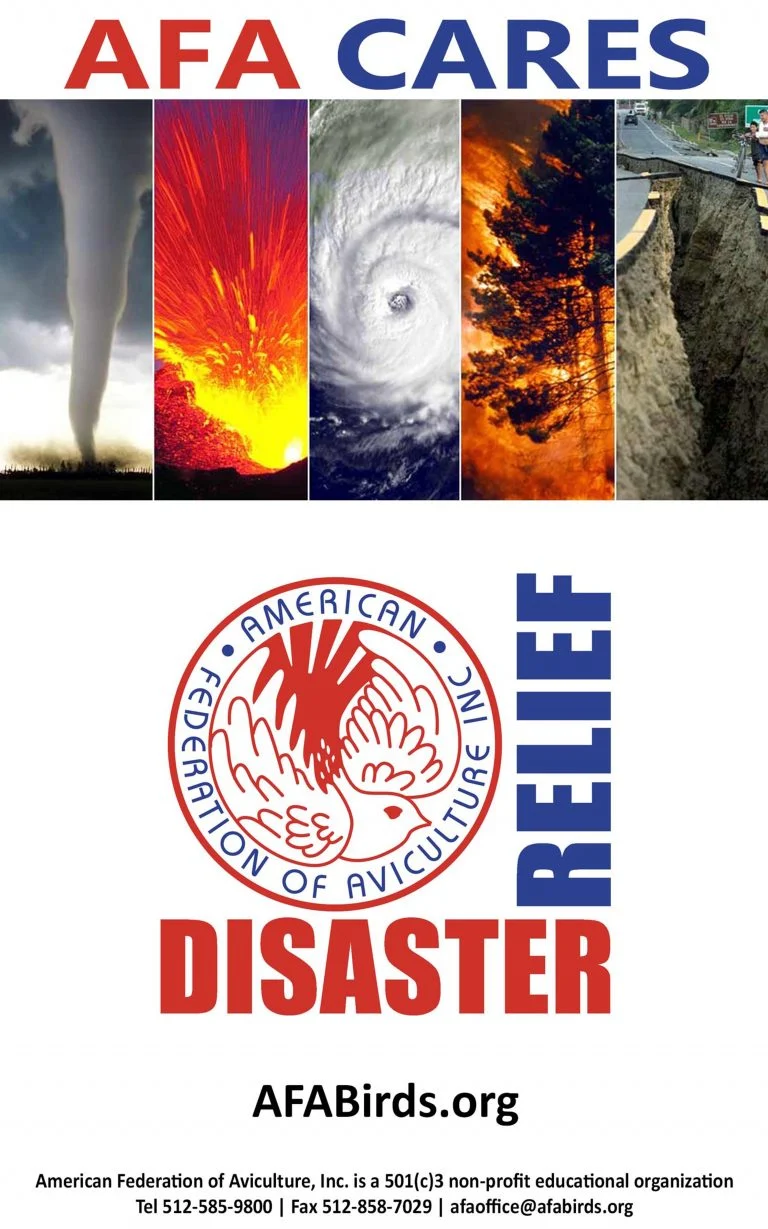
The American Federation of Aviculture (AFA) has established a sophisticated, decentralized disaster relief infrastructure designed to mitigate the risks associated with environmental catastrophes for captive bird populations across the United States. This network, comprised of Regional Directors and a dedicated cadre of localized volunteers, operates on a model of rapid deployment and proactive monitoring. By maintaining a presence in diverse geographic zones, the AFA Disaster Relief Team can expedite response times, ensuring that bird owners and aviculturists receive critical assistance during the onset of hurricanes, wildfires, floods, and other life-threatening events. The organization serves as a central hub for coordinating rescue efforts, providing specialized equipment, and offering a communication bridge between affected individuals and the broader avicultural community.
The necessity of such a specialized response team is underscored by the unique vulnerabilities of avian species. Unlike traditional companion animals such as dogs or cats, birds possess highly sensitive respiratory systems and are susceptible to extreme stress-induced pathologies. Consequently, the AFA’s mission extends beyond mere physical extraction; it encompasses a holistic approach to emergency management that includes pre-disaster education, logistical coordination during active crises, and post-disaster recovery efforts to reunite birds with their owners or find suitable long-term sanctuary.
The Strategic Architecture of the AFA Disaster Relief Team
The AFA’s disaster relief model is built upon a hierarchy of expertise and local knowledge. Regional Directors serve as the primary conduits for information, monitoring meteorological developments and geological threats within their specific jurisdictions. This localization is vital because the logistical requirements for a hurricane in the Gulf Coast differ significantly from the requirements for a wildfire in the Pacific Northwest or a blizzard in the Midwest.
When a disaster is imminent or has occurred, the AFA activates its communication network, allowing volunteers to provide real-time updates on road closures, air quality, and the availability of emergency shelters. For those in immediate need of assistance or for those who are aware of others struggling to secure their avian collections, the AFA provides a direct contact portal. This system ensures that resources—ranging from transport carriers to specialized bird feed—are directed toward the areas of greatest impact.
The Multidimensional Threats to Global Aviculture
Aviculturists face a spectrum of environmental hazards that vary by climate and topography. Mary Ellen LePage, a former Fire Chief for CalFire and a veteran in the field of emergency services, emphasizes that every disaster carries a unique timeline and "fury." Understanding these nuances is the cornerstone of effective planning.
- Atmospheric and Wind-Based Events: Hurricanes, tornadoes, and straight-line windstorms (such as derechos) present the dual threats of structural collapse and rapid barometric pressure changes. In these scenarios, the primary goal is the reinforcement of aviaries or the swift relocation of birds to hardened structures.
- Hydrological Disasters: Floods and storm surges can isolate properties, making ground-based rescue impossible. Planning for these events requires identifying high-ground relocation sites well in advance.
- Geological and Thermal Threats: Earthquakes and wildfires often occur with little to no warning. In the case of wildfires, the danger is not only the heat but also the toxic smoke, which can be fatal to birds even miles away from the front lines of the fire.
- Extreme Climatic Shifts: Snow and ice storms in northern regions or sandstorms in desert environments require specialized climate-controlled environments to prevent hypothermia or respiratory distress caused by particulate matter.
Comprehensive Pre-Disaster Infrastructure: The Planning Phase
The mantra of the AFA is "Plan! Plan! Plan!" Preparedness is not a reactive measure but a continuous process of resource accumulation and logistical mapping. The first step in any robust disaster plan is the acquisition and maintenance of transport supplies. Aviculturists are advised to store pre-assembled or collapsible carriers in easily accessible locations.
The logistical challenges of avian transport are significant. Carriers must be equipped with appropriate perches and secure water dishes. For collections that include non-tame or "wild" birds, the plan must include specialized capture equipment such as nets, towels, and heavy-duty gloves. To optimize efficiency during a crisis, the AFA recommends that all cage locks be keyed alike, preventing the loss of precious minutes fumbling for individual keys.

Furthermore, identification is a critical component of disaster recovery. Birds should be identifiable through leg bands or microchips. The AFA suggests maintaining duplicate sets of records—including photographs, veterinary history, and proof of ownership—stored in a digital "cloud" or at an off-site location. This ensures that even if a physical property is destroyed, the legal and medical history of the birds remains intact.
The Logistics of Avian Transit and Temporary Relocation
Evacuation is a complex operation that requires the identification of secondary and tertiary relocation sites. These sites, which may include barns, garages, or vacant commercial spaces, must be vetted for safety and environmental stability. It is essential to secure permission from the owners of these facilities long before an emergency occurs.
The choice of transit vehicle is equally critical. For larger collections, a high-capacity vehicle with a cargo section that shares the cabin’s ventilation and climate control is necessary. During major disasters, the risk of gridlock is high. The AFA advises that "the longer you wait, the roads will be gridlocked," and essential resources like gasoline and water may become unavailable. The directive is clear: when an evacuation order is issued, or when the threat becomes imminent, bird owners must move immediately.
Shelter-in-Place Requirements and Resource Management
In instances where evacuation is not feasible or necessary, aviculturists must prepare to shelter in place. This requires a self-sustaining infrastructure, including backup power generators, a long-term supply of potable water, and a rotating stock of bird food to prevent spoilage.
Communication remains a primary concern during shelter-in-place scenarios. Because street signs and landmarks are often destroyed in major storms or fires, the AFA recommends that owners know their precise GPS coordinates. This data is vital for rescue teams attempting to locate isolated properties. A written evacuation or shelter plan should be posted in a prominent location, such as a refrigerator or a front door, to guide emergency workers. This document should include:
- Contact information for the owner and their veterinarian.
- Detailed instructions for bird capture.
- Compatibility lists (which birds can be housed together).
- Dietary requirements and specific health concerns for individual birds.
- A map of where food, water, and tools are located on the property.
Professional Protocols for Avian Rescuers and Volunteers
The act of rescuing birds in a disaster zone is a specialized skill set that requires both physical dexterity and an understanding of avian psychology. The AFA instructs rescuers to prioritize birds whose lives are under immediate threat and to work in tandem with experienced handlers.
Accessing disaster zones often involves navigating law enforcement cordons. The AFA provides its volunteers with official identification, including magnetic vehicle signs, t-shirts, and name cards, to establish legitimacy. These credentials are often necessary to gain passage through police checkpoints or to coordinate with the Incident Command System (ICS).
The ICS, supervised by the Occupational Safety and Health Administration (OSHA), is the standard management hierarchy used by government agencies to handle emergencies. Every major disaster has an Incident Commander who oversees all operations. Rescuers are advised to work within this system, seeking permission from the Incident Commander or their representative to enter restricted areas. However, the AFA maintains a strict policy regarding the safety of its volunteers: no one should risk their life or welfare to enter an area that has been deemed too dangerous by authorities.
The Role of Local AFA Clubs and Community Support
The strength of the AFA lies in its grassroots network. Local bird clubs play a pivotal role in training volunteers on how to catch and handle non-tame birds. This training is often conducted during disaster planning meetings held throughout the year.
During the recovery phase, the AFA assists in locating temporary housing and sourcing food and supplies for displaced birds. Rescuers are tasked with maintaining the integrity of avian pairs and ensuring that leg bands are never removed. After the immediate crisis has passed, the focus shifts to notifying owners and coordinating the return of the birds to their original homes or to new, permanent facilities if the original property is no longer habitable.
Broader Socio-Economic and Ecological Implications
The impact of disasters on aviculture extends beyond the individual owner. Many aviculturists maintain rare or endangered species that are part of global conservation efforts. The loss of a single breeding pair during a hurricane or fire can represent a significant setback for the genetic diversity of a species.
Furthermore, the emotional toll on bird owners is substantial. Birds are long-lived, highly intelligent animals that often share a deep bond with their human caretakers. The AFA’s disaster relief efforts serve as a vital safety net that addresses both the biological needs of the birds and the psychological well-being of the avicultural community.
From an economic perspective, the cost of replacing specialized equipment and rebuilding aviaries can be astronomical. By providing a coordinated response and a repository of shared resources, the AFA helps mitigate these financial losses, ensuring the long-term sustainability of aviculture in the United States.
Conclusion and Contact Information
The American Federation of Aviculture remains committed to the safety and preservation of all avian species. Through the leadership of experienced professionals like Mary Ellen LePage and the tireless efforts of its Regional Directors, the organization provides a blueprint for disaster management that is both practical and compassionate.
For those requiring assistance, or for those who wish to join the AFA’s disaster relief efforts, the organization can be reached through its main business office at 512-585-9800 or via email at [email protected]. The AFA continues to advocate for the principle that in times of crisis, the welfare of our avian companions is a responsibility shared by the entire community. As the frequency and intensity of global environmental events continue to rise, the importance of a dedicated, specialized avian rescue infrastructure has never been more apparent.

