


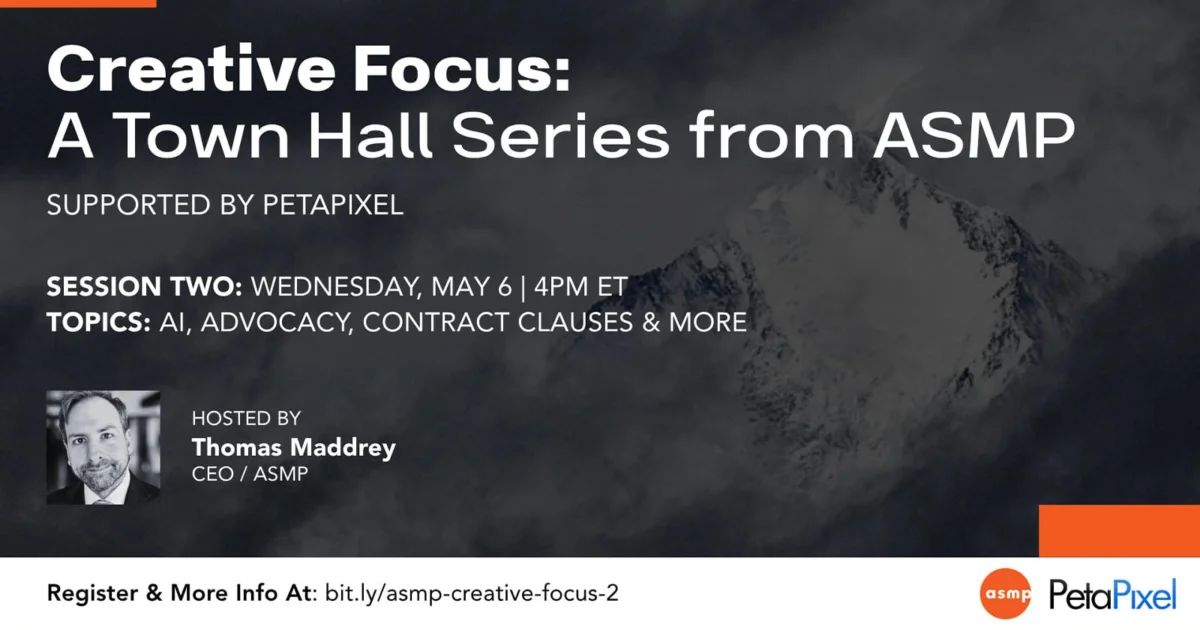
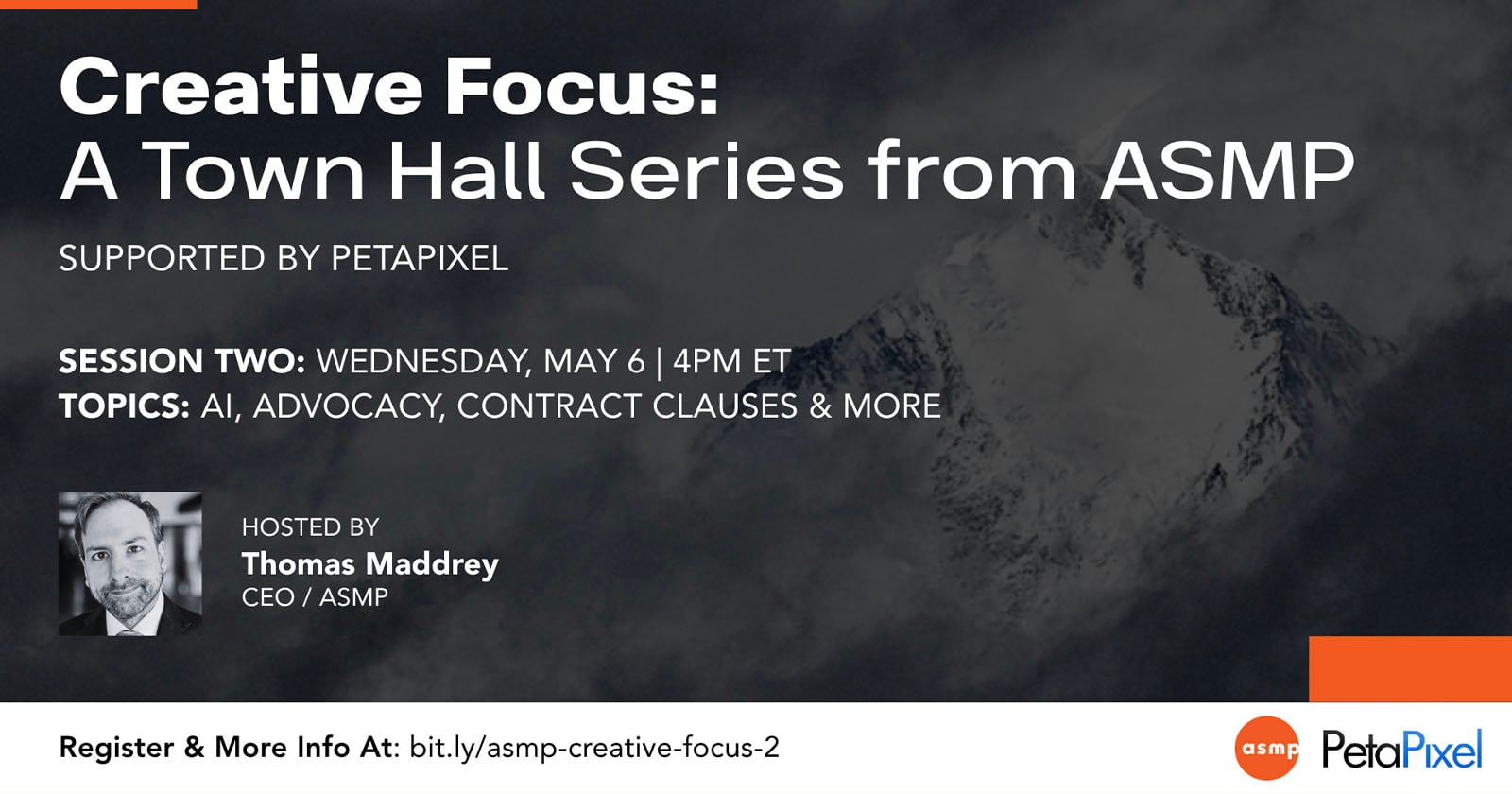
The American Society of Media Photographers (ASMP), in collaboration with the North American Nature Photography Association (NANPA) and supported by PetaPixel, has announced a specialized educational webinar designed to equip visual creators with the legal tools necessary to navigate the rapidly evolving landscape of generative artificial intelligence. Scheduled for Wednesday, May 6, at 4:00 PM ET, this session represents the second installment of the "Creative Focus: A Town Hall Series," a bi-weekly initiative aimed at demystifying the intersection of technology, law, and professional photography. Led by ASMP CEO and legal counsel Thomas Maddrey, the upcoming session will provide a granular look at how photographers can integrate specific AI provisions into their professional contracts, ensuring their intellectual property remains protected in an era where digital content is increasingly susceptible to algorithmic exploitation.
The emergence of generative AI has fundamentally altered the professional environment for photographers, videographers, and other visual artists. Tools such as Midjourney, DALL-E, and Adobe Firefly have moved from experimental novelties to industry-standard utilities, creating a dual-edged sword for the creative community. While these technologies offer unprecedented opportunities for workflow optimization and creative expansion, they also pose significant risks regarding copyright infringement, unauthorized data scraping, and the dilution of the value of human authorship. Thomas Maddrey emphasizes that the industry is currently at a crossroads, where the explosion of AI tools has not only upended traditional crafts but has also necessitated a complete overhaul of how creators communicate with their clients.
The Evolution of the Creative Focus Town Hall Series
The upcoming webinar follows a highly successful inaugural session held in late April, which laid the groundwork for understanding the broader implications of AI in photography. The first session focused on the foundational shifts occurring within the industry, addressing the initial anxieties felt by professionals and identifying the immediate technological changes impacting daily operations. For those unable to attend the debut event, the ASMP has made the full recording available, emphasizing the organization’s commitment to transparency and accessible education.
The second session, however, shifts from theoretical discussion to practical application. The primary focus will be two-fold: the drafting of specific contractual language and the mobilization of advocacy efforts. Maddrey, drawing on his extensive background in both the legal and creative fields, intends to provide attendees with concrete examples of contract clauses that address AI usage. This includes provisions that limit how clients can use delivered images for AI training, as well as disclosure requirements for when AI-generated elements are incorporated into a photographer’s workflow.
Contractual Protections in the Age of Synthetic Media
As AI models require vast datasets of existing imagery to function, professional photographers are increasingly concerned about their work being used to train the very tools that might eventually compete with them. Legal experts suggest that the most effective way to combat unauthorized training is through rigorous contractual language. The ASMP webinar will detail how to implement "Non-Training" clauses, which explicitly prohibit the use of a photographer’s work for the development or refinement of machine learning models without a separate, often more expensive, licensing agreement.
Furthermore, the webinar will address the issue of indemnification. As clients begin to request AI-generated content or "hybrid" images, the legal liability regarding copyright becomes complex. Since the U.S. Copyright Office has maintained that purely AI-generated images lack the "human authorship" required for copyright protection, photographers must be careful about what they guarantee to their clients. The session will cover how to draft "Disclosure of AI Usage" provisions, which protect the photographer by clearly defining which parts of a project were created through traditional means and which were assisted by generative tools. This clarity is essential for both parties to understand the copyrightable status of the final deliverables.
Advocacy and the Legislative Landscape
Beyond individual contracts, the ASMP is heavily involved in shaping the legislative future of AI. The May 6 session will provide an update on recent advocacy efforts in Washington, D.C., and beyond. This includes tracking the progress of various bills aimed at protecting the "Right of Publicity" and the "NO FAKES Act," which seek to prevent the unauthorized use of a person’s likeness or voice in AI-generated media.
The ASMP’s advocacy team has been working closely with the U.S. Copyright Office to voice the concerns of visual creators. Key issues include the "fair use" defense often cited by tech companies when scraping images from the internet and the need for a simplified "opt-out" system for creators. Maddrey and his team will explain how photographers can get involved in these efforts, whether through grassroots letter-writing campaigns or by providing testimony on how AI has impacted their business models. By providing verified, factual information, the ASMP aims to counteract the "incorrect and misleading information" that Maddrey notes has become mainstream in the AI debate.
Data-Driven Insights and Industry Shifts
The urgency of this town hall is underscored by recent data regarding AI adoption in the creative sector. According to various industry surveys, over 50% of creative professionals have already integrated some form of AI into their workflow, yet fewer than 15% have updated their legal agreements to reflect this change. This "legal gap" leaves many photographers vulnerable to disputes over ownership and usage rights.
The ASMP’s partnership with PetaPixel ensures that the information provided is not only legally sound but also current with the latest technological breakthroughs. For instance, the discussion is expected to touch upon the Content Authenticity Initiative (CAI) and the C2PA standard, which allow photographers to embed "Content Credentials" into their metadata. This metadata acts as a digital nutrition label, proving the provenance of an image and detailing any AI alterations. Integrating these technical tools with legal provisions creates a multi-layered defense for a photographer’s business.
A Collaborative and Interactive Format
Recognizing that every photography business has unique needs—ranging from wedding and portrait photographers to high-end commercial and editorial shooters—the ASMP has structured the town hall to be highly interactive. Maddrey has stated that while the organization has specific topics to cover, the ultimate goal is to address the specific concerns of the community. To this end, each session concludes with an open Q&A segment.
This interactive element allows participants to ask nuanced questions about specific client interactions or unique project requirements. "We have things we want to discuss, but what we want to talk about is what you want to hear," Maddrey remarked. This approach ensures that the webinar provides actionable advice rather than just abstract legal theory.
Broader Implications for the Future of Photography
The transition into an AI-integrated world represents one of the most significant shifts in the history of photography, comparable to the move from film to digital. However, the legal and ethical implications are arguably more profound. The ASMP Town Hall Series serves as a critical resource for maintaining the professional standards of the industry. By fostering a community that is well-informed and legally protected, the ASMP and its partners are working to ensure that the "human element" of photography remains both valued and viable.
The implications extend to the very concept of "truth" in media. As synthetic imagery becomes indistinguishable from traditional photography, the role of the professional photographer as a trusted witness becomes more vital. Legal contracts that guarantee the authenticity of an image are not just business documents; they are safeguards for the integrity of visual journalism and commercial art alike.
Registration and Accessibility
The "Creative Focus" webinar is free and open to the public, reflecting the ASMP’s mission to support the broader creative community regardless of membership status. However, pre-registration is mandatory for those who wish to participate in the live Q&A and receive the supporting materials, which often include template clauses and advocacy guides.
As the industry moves toward a future where AI is a ubiquitous presence, the ASMP’s proactive stance provides a roadmap for sustainability. By focusing on "verified" information and expert legal guidance, the organization aims to transform AI from a perceived threat into a manageable and potentially beneficial tool for the modern visual creator. The session on May 6 is expected to draw a significant audience of professionals eager to secure their careers against the uncertainties of the digital frontier.

