


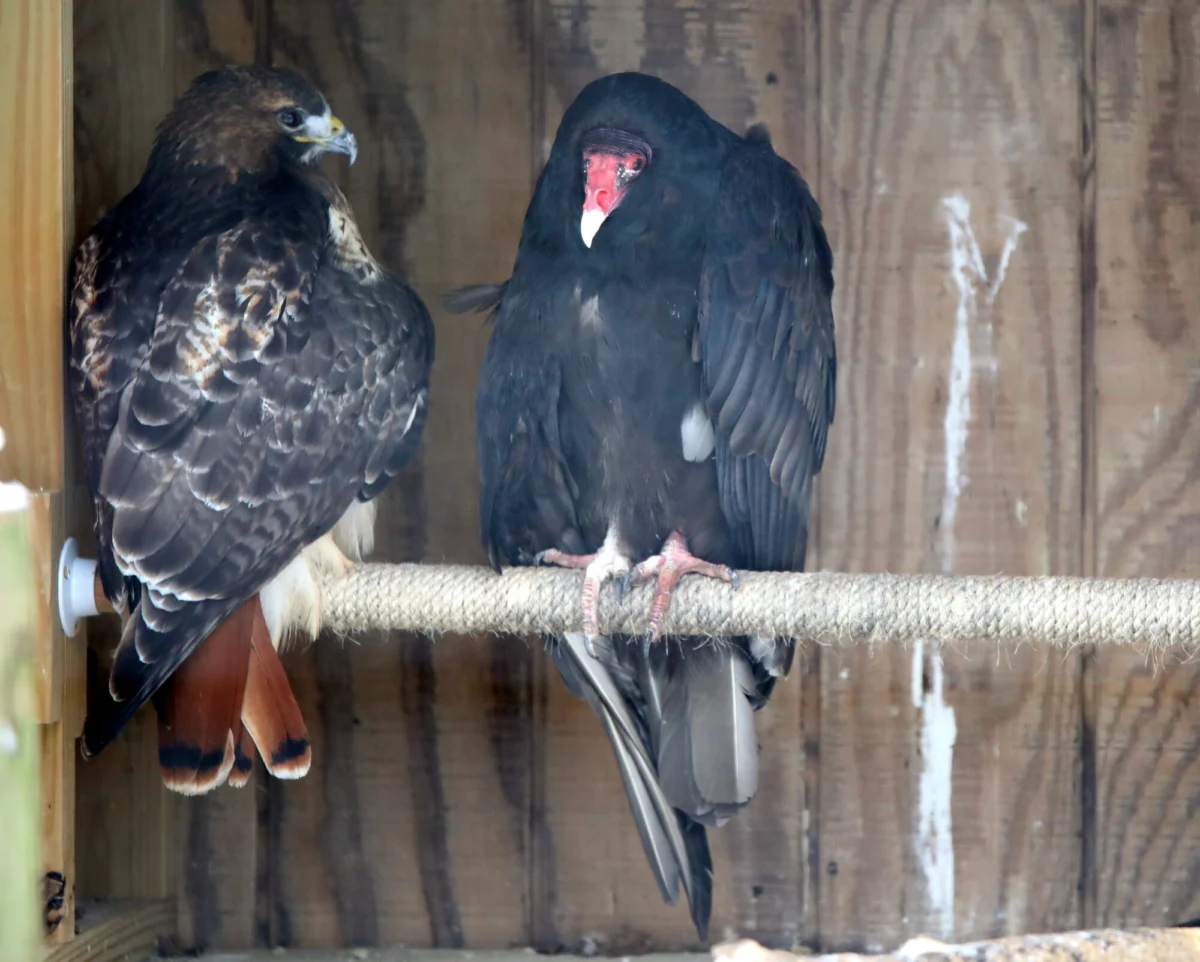
The Elmwood Park Zoo in Norristown, Pennsylvania, is home to a remarkable and enduring friendship that continues to captivate visitors and animal behaviorists alike. This is the story of Stan, a 20-year-old female Turkey Vulture, and Hunter, a 22-year-old female Red-tailed Hawk, two avian residents who have forged an improbable and deeply symbiotic bond over the past decade. Their shared aviary enclosure bears witness to a connection that transcends typical species boundaries, offering a unique insight into the complexities of animal companionship, particularly among those who share a common past of vulnerability and resilience.
The Genesis of an Unlikely Alliance: Shared Trauma and Sanctuary
The foundation of Stan and Hunter’s extraordinary friendship was laid in the summer of 2005, a period marked by parallel tragedies that ultimately led them to the sanctuary of the Elmwood Park Zoo. Both birds arrived at the facility with severe, human-inflicted injuries that rendered them permanently unable to survive in the wild, thus setting the stage for their eventual cohabitation and the development of their unique bond.
Hunter, the elder of the two, arrived at the zoo in July 2005 as a juvenile. She had been transferred from a rehabilitation center, which, sadly, is no longer operational. Her injury was particularly severe: an air-rifle pellet had become lodged in her right wing, causing a compound fracture of her humerus, the long bone in the upper wing. Despite the best efforts of veterinary professionals, the damage was irreparable, and the bone never healed properly. This left Hunter with a permanent impairment that severely limited her ability to fly, effectively grounding her for life. For a Red-tailed Hawk, a species renowned for its soaring flights and powerful hunting dives, this injury represented a profound loss of its natural existence.
Just a month later, in August 2005, Stan, the Turkey Vulture, joined the Elmwood Park Zoo family. Her journey to the zoo began after she was discovered injured and subsequently brought to Tri-State Bird Rescue & Research, a highly respected avian rehabilitation center located in Newark, Delaware, by the Newark Police Department. Similar to Hunter, Stan’s injury was also caused by a pellet, which had become embedded in her right wing. This incident likely resulted in a fracture to her radius and ulna, the two bones of the lower wing. Despite receiving immediate and specialized care, the fracture, much like Hunter’s, did not heal correctly. This left Stan with a similar, debilitating flight limitation, preventing her from performing the wide-ranging aerial reconnaissance flights characteristic of her species.
The striking similarity in the nature and origin of their injuries—both sustained from air-rifle pellets and resulting in permanent flight disabilities—created an immediate, albeit tragic, commonality. This shared vulnerability and physical limitation proved to be a pivotal factor in the formation of their bond. In a world where they could no longer navigate the skies with the freedom their wild counterparts enjoyed, they found solace and understanding in each other, a silent acknowledgment of their altered circumstances.
Decades of Devotion: A Bond Forged in Captivity
For over a decade, Stan and Hunter have been "bonded" companions, a term used by the dedicated staff at Elmwood Park Zoo to describe their deep and sustained connection. Their shared aviary enclosure provides a secure and enriching environment where their unusual interspecies friendship has blossomed into a model of mutual support and companionship.
The behaviors observed between Stan and Hunter consistently demonstrate the strength of their bond. One of the most striking examples occurs during feeding times. Hunter, the Red-tailed Hawk, a species typically known for its solitary and assertive hunting prowess, frequently gathers food and then shares it directly with Stan, the Turkey Vulture. This act of provisioning is highly unusual, especially given that in the wild, these species would typically avoid direct competition and certainly not engage in such cooperative feeding. Turkey vultures, as scavengers, are often opportunistic, while hawks are apex predators. Hunter’s consistent willingness to share her bounty with Stan underscores a level of trust and generosity that defies their natural instincts.
Beyond shared meals, their bond extends to acts of mutual grooming, known as allopreening. This behavior, commonly seen among individuals of the same species within social groups, involves birds preening each other’s feathers, particularly in hard-to-reach areas. For Stan and Hunter to engage in allopreening signifies a profound level of comfort, trust, and affection. It is a tactile expression of their bond, reinforcing their social connection and contributing to their overall well-being.
Perhaps the most poignant demonstration of their bond involves Stan’s behavior when Hunter lays eggs. Red-tailed Hawks typically lay clutches of 1-5 eggs, and while these eggs are infertile in captivity due to the absence of a male hawk, the maternal instinct remains. During these periods, Stan has been observed sitting on Hunter’s eggs, a behavior that mimics incubation. While it’s unlikely Stan would successfully incubate the eggs, her actions suggest a protective, supportive role, further blurring the lines of typical interspecies interaction and highlighting the depth of her empathy and attachment to Hunter.
The specific housing arrangement at the Elmwood Park Zoo, where Stan and Hunter share an enclosure without other birds, has undoubtedly played a significant role in fostering their bond. This exclusive cohabitation may have encouraged them to seek companionship from each other, leading to the development of the strong, lasting friendship they share today. Within this safe and consistent environment, each bird has found solace and comfort in the other, resulting in a unique and enduring companionship that serves as a testament to their adaptability and emotional capacity.
Contrasting Worlds: Turkey Vultures and Red-tailed Hawks in the Wild
To truly appreciate the extraordinary nature of Stan and Hunter’s friendship, it is essential to understand the typical ecological roles and social behaviors of their respective species in the wild. Their bond at Elmwood Park Zoo stands in stark contrast to how these birds would normally interact, or rather, avoid interaction, in their natural habitats.
Turkey Vultures (Cathartes aura): Nature’s Clean-Up Crew
Turkey Vultures are magnificent birds of prey, though often misunderstood due to their scavenging diet. Found widely across the Americas, from southern Canada to the southernmost tip of South America, they are crucial components of their ecosystems. Their primary role is that of a scavenger, feeding almost exclusively on carrion—dead animals. This diet is facilitated by their exceptional sense of smell, an uncommon trait among birds, allowing them to detect decaying carcasses from great distances.
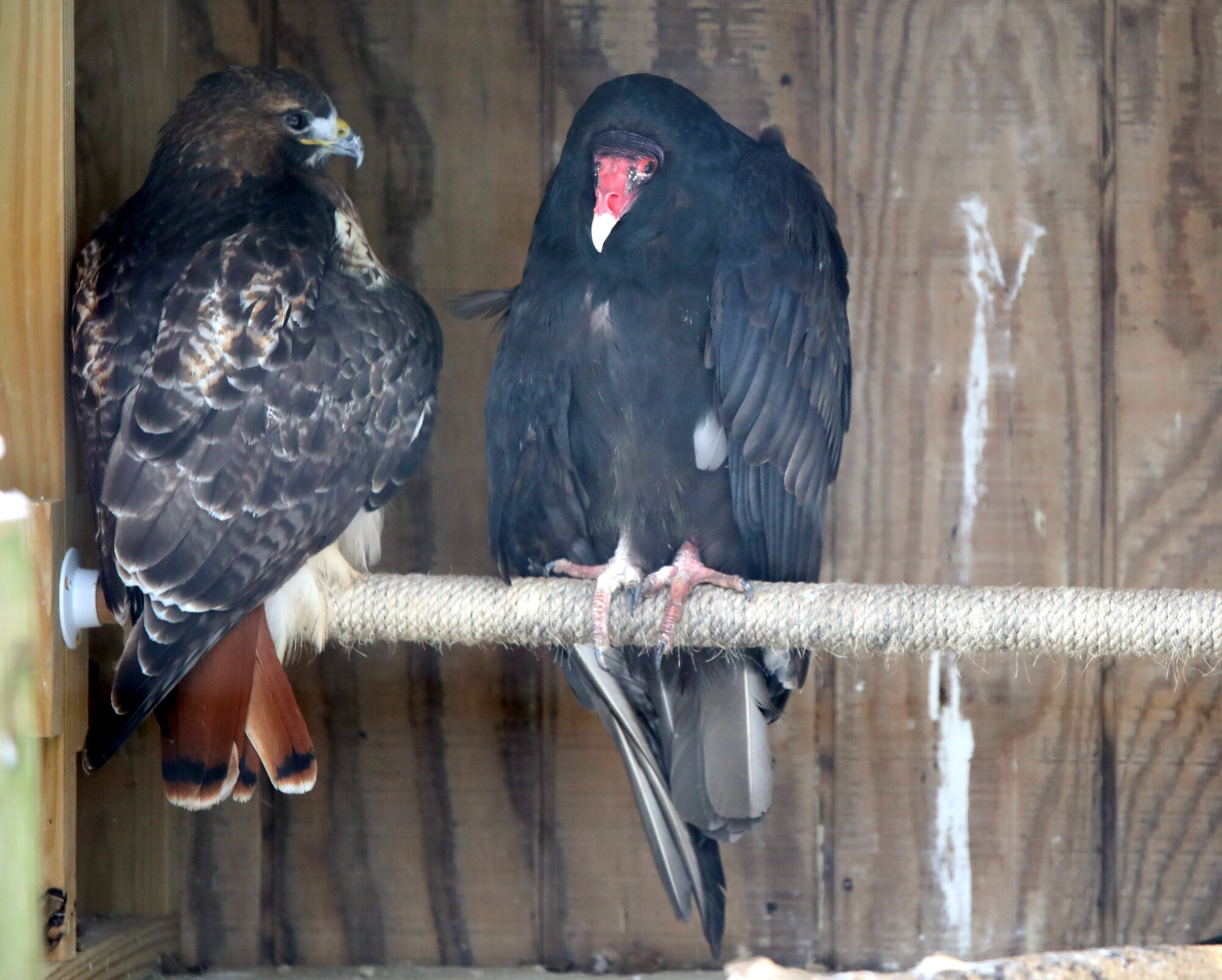
Physically, Turkey Vultures are characterized by their featherless red heads (in adults), broad wings, and a distinctive "dihedral" flight pattern, where their wings are held in a V-shape, allowing them to effortlessly soar on thermals for hours with minimal effort. They are generally social birds, often roosting in large communal groups, sometimes numbering in the hundreds, and may gather in smaller groups around large carcasses. While they exhibit social behaviors within their own species, forming strong interspecies bonds with a predatory bird like a hawk is virtually unheard of. Their primary interactions with other raptors would typically involve competition over food sources, where their large size might allow them to displace smaller scavengers, but direct amicable interaction with a hawk would be highly atypical.
Red-tailed Hawks (Buteo jamaicensis): Apex Predators of the Sky
Red-tailed Hawks are one of the most common and recognizable raptors across North America, from Alaska and Canada down to Central America. They are powerful and efficient predators, primarily feeding on small mammals such as rodents, rabbits, and squirrels, but also taking birds and reptiles. Their keen eyesight, sharp talons, and hooked beaks are perfectly adapted for hunting.
These hawks are known for their characteristic soaring flight, often seen circling high above open country, and their distinctive, raspy cry. They are generally solitary hunters, fiercely territorial, especially during the breeding season. While they form monogamous pairs for breeding, their interactions outside of this context are largely independent. In the wild, a Red-tailed Hawk would view a Turkey Vulture as a potential competitor for carrion (though vultures primarily consume older carrion) or simply another large bird in its territory. It is highly improbable that a Red-tailed Hawk would willingly share food with a Turkey Vulture, let alone engage in mutual grooming or egg-sitting. The natural dynamic between these two species would be one of mutual avoidance or, at most, cautious coexistence.
The profound divergence in their natural diets, hunting strategies, social structures, and typical interspecies interactions makes Stan and Hunter’s bond a truly extraordinary phenomenon, highlighting the significant adaptations animals can make within a captive environment.
The Role of Zoological Facilities: Beyond Entertainment
The story of Stan and Hunter also serves as a poignant illustration of the multifaceted role of modern zoological facilities like the Elmwood Park Zoo. Far from being mere places of entertainment, accredited zoos are vital institutions for wildlife conservation, education, scientific research, and animal welfare.
Elmwood Park Zoo, established in 1924, is deeply committed to these principles. It provides a permanent sanctuary for animals that, like Stan and Hunter, have sustained injuries or were born in circumstances that make their survival in the wild impossible. These non-releasable animals receive lifelong, specialized care, including advanced veterinary treatment, tailored diets, and enriching environments designed to promote their physical and psychological well-being. The zoo’s dedicated team of animal care specialists and veterinarians work tirelessly to ensure that every resident, regardless of its origin, receives the highest standard of care.
Furthermore, these animals become ambassadors for their species, offering invaluable educational opportunities for the public. Through their stories, visitors learn about wildlife biology, ecological roles, and the critical importance of conservation. Stan and Hunter, in particular, serve as powerful examples of resilience and the unexpected bonds that can form when animals are given a second chance. Their narrative subtly underscores the impact of human activities on wildlife, as their injuries were a direct result of human actions (air-rifle pellets). This provides a platform for discussing responsible interaction with wildlife and the dangers of poaching or indiscriminate use of firearms.
Inferred Statements and Broader Implications
While direct quotes are not provided, it is logical to infer the perspective of those closely involved with Stan and Hunter’s care. Animal care specialists at Elmwood Park Zoo would undoubtedly emphasize the unique nature of this bond. A zoo spokesperson might highlight the pair as an exemplary demonstration of the zoo’s commitment to animal welfare and its educational mission.
"Our animal care team has consistently observed the profound bond between Stan and Hunter," a hypothetical zoo official might state. "Their story is a testament to the emotional depth of animals and their capacity for complex social relationships, even across species lines. It’s truly inspiring to see how they rely on each other, especially given their challenging beginnings."
Veterinarians overseeing their health would likely attest to the positive impact of their companionship on their overall well-being. "While their physical injuries are permanent, their strong social bond undoubtedly contributes to their mental and emotional health," a vet could comment. "The consistent social interaction and mutual support they provide each other are vital components of their enriched lives here at the zoo."
The broader implications of Stan and Hunter’s friendship extend beyond the boundaries of their aviary. Their story challenges anthropocentric views of animal behavior, reminding us that emotional intelligence and complex social structures are not exclusive to humans or even to highly social species. It demonstrates that shared adversity can be a powerful catalyst for connection, even between individuals who would naturally be adversaries.
Moreover, their existence serves as a subtle, yet potent, conservation message. Their injuries, caused by human-made projectiles, underscore the pervasive impact humans have on wildlife. It is a stark reminder of the importance of coexisting responsibly with nature, protecting habitats, and advocating for laws that prevent harm to wildlife. The resilience shown by Stan and Hunter, in finding companionship and purpose despite their permanent disabilities, offers a message of hope and adaptability.
In an increasingly complex world, the simple, yet profound, friendship between a Turkey Vulture and a Red-tailed Hawk offers a compelling narrative about acceptance, empathy, and the extraordinary capacity for connection found within the animal kingdom. Stan and Hunter, living out their lives at the Elmwood Park Zoo, are more than just residents; they are living symbols of resilience, the unexpected beauty of interspecies bonds, and the enduring power of companionship in the face of adversity. Their story continues to educate and inspire, reminding us of the intricate tapestry of life and the remarkable lessons that can be learned from the animal world.

