


Maryland, a state recognized for its commitment to environmental stewardship and ranked as the fifth greenest state, offers a rich tapestry of habitats that support a remarkable diversity of avian life. Among its most fascinating feathered inhabitants are the woodpeckers, a group of birds celebrated for their vibrant plumage and energetic demeanor. These arboreal artisans play a crucial role in forest ecosystems, and Maryland is home to eight distinct species, each with its unique characteristics, ecological niches, and behaviors. This article delves into the world of Maryland’s woodpeckers, exploring their identification, habitats, diets, and the conservation considerations that impact their populations.
The Rich Avian Landscape of Maryland
Maryland’s varied geography, from the Appalachian Mountains in the west to the Atlantic coastal plain in the east, provides a mosaic of environments conducive to a wide array of bird species. Forests, wetlands, agricultural lands, and even suburban backyards all contribute to the state’s ecological richness. It is within these diverse landscapes that Maryland’s eight woodpecker species find the necessary resources for survival and reproduction. These birds are not merely decorative additions to the natural world; they are integral components of the forest ecosystem, contributing to nutrient cycling, pest control, and providing shelter for other species.
Understanding Maryland’s Eight Woodpecker Species
The presence of eight woodpecker species in Maryland underscores the state’s value as a haven for these distinctive birds. These species inhabit a range of environments within the state, from dense forests to more open woodlands and even human-modified landscapes. Understanding each species involves examining their physical characteristics, preferred habitats, dietary habits, nesting behaviors, and vocalizations.
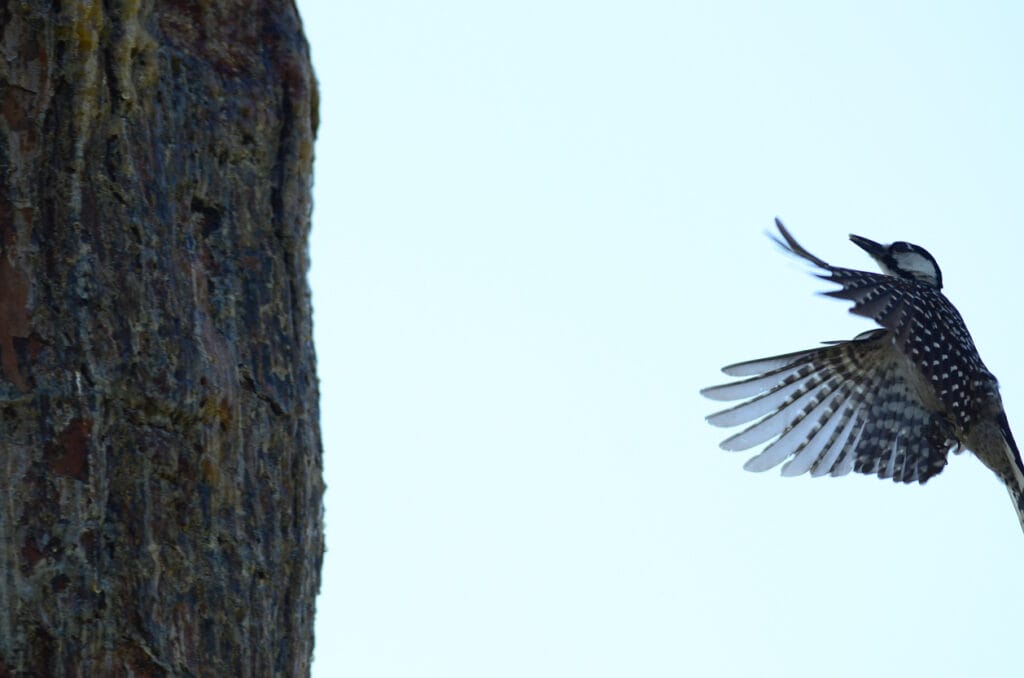
1. The Red-Cockaded Woodpecker (Picoides borealis)
The Red-Cockaded Woodpecker holds a special place in the conservation world, being the only woodpecker species in North America that exclusively excavates its roosting and nesting cavities in living pine trees infected with red-heart fungus. This unique dependency makes it particularly vulnerable to habitat changes. The species is named for a small, rarely seen red streak, or "cockade," on the sides of the male’s black cap. Adult Red-Cockaded Woodpeckers exhibit a striking black and white pattern, with a black head and nape, and distinct white cheek patches.
Their preferred habitat is mature longleaf pine forests, a landscape that has significantly diminished across their range due to historical logging and land-use changes. In Maryland, while historically present, their numbers have faced challenges, making any sightings a cause for significant interest among ornithologists and conservationists. The presence of the red-heart fungus is critical, as it softens the inner wood, making excavation possible for these birds. Their diet consists primarily of insects, including caterpillars, cockroaches, and spiders, supplemented by pine seeds and fruits.
The excavation process is a testament to their specialized adaptation. They do not drill into healthy, solid wood but rather target older trees weakened by the red-heart fungus. This process can take months to years to complete a suitable cavity. The cavities, once excavated, provide not only shelter but also protection from predators and harsh weather. Conservation efforts for the Red-Cockaded Woodpecker often involve prescribed burning to maintain the health of longleaf pine ecosystems and mimic natural fire regimes that historically favored these trees.
2. The Yellow-Bellied Sapsucker (Sphyrapicus varius)
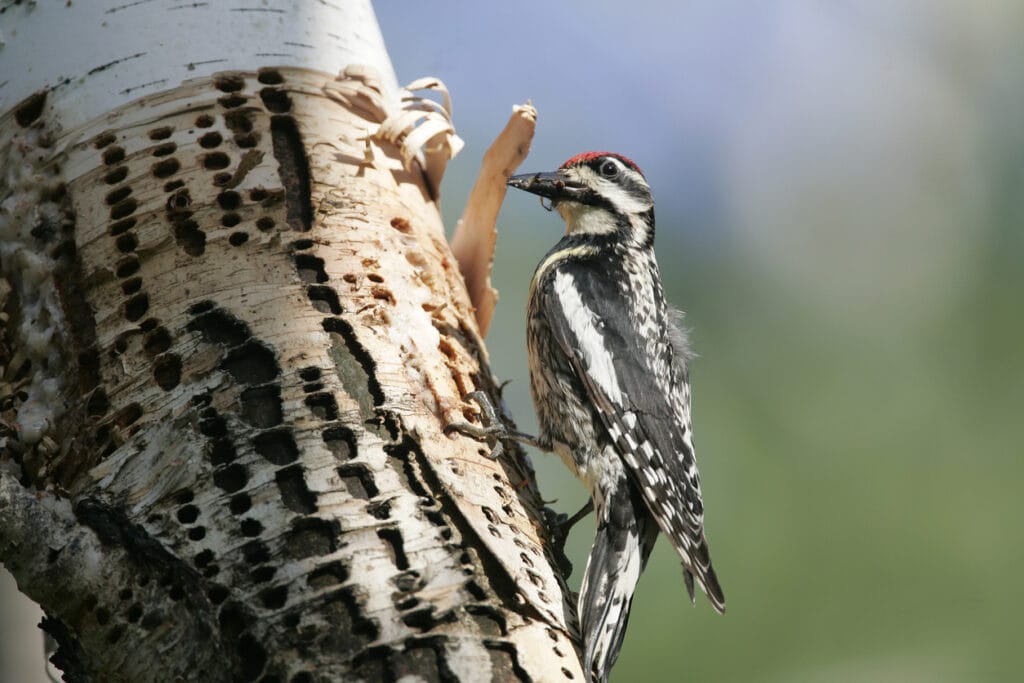
Despite its name, the Yellow-Bellied Sapsucker’s most striking feature is not its pale yellow underparts, but rather its boldly patterned plumage and distinctive feeding behavior. These migratory birds are primarily black and white, with prominent white stripes running down their necks and a bright red forehead. Males are distinguished by a red throat patch. They are relatively small, about the size of a robin, with relatively long wings and short bills.
Yellow-Bellied Sapsuckers are known for drilling small, uniformly spaced holes in the bark of various tree species. These "sap wells" allow them to feed on the tree sap, which is a crucial part of their diet, especially during migration and in winter. They also consume insects and other invertebrates attracted to the oozing sap, and sometimes eat berries and fruits. Their preferred trees include yellow birch, sugar maple, red maple, and young paper birch.
These birds are often observed during migration and overwintering periods in Maryland. Their unique feeding method creates microhabitats that can benefit other species, as insects congregate around the sap wells. The sapsucker’s drilling also can impact tree health, though in a healthy forest ecosystem, this is generally not a cause for major concern. Their vocalizations are often described as a cat-like mewing or a staccato drumming, which can become quite noticeable during the spring breeding season. They typically nest in the cavities of dead trees, laying between five and six eggs.
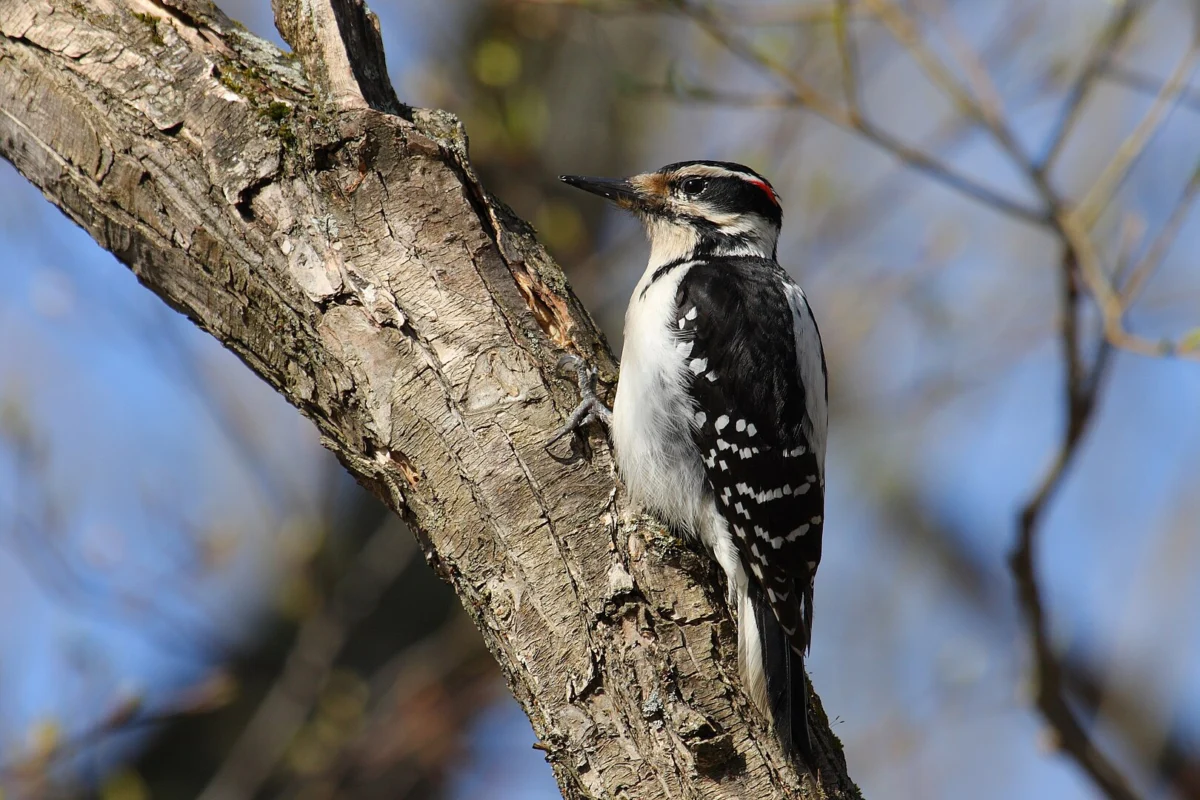
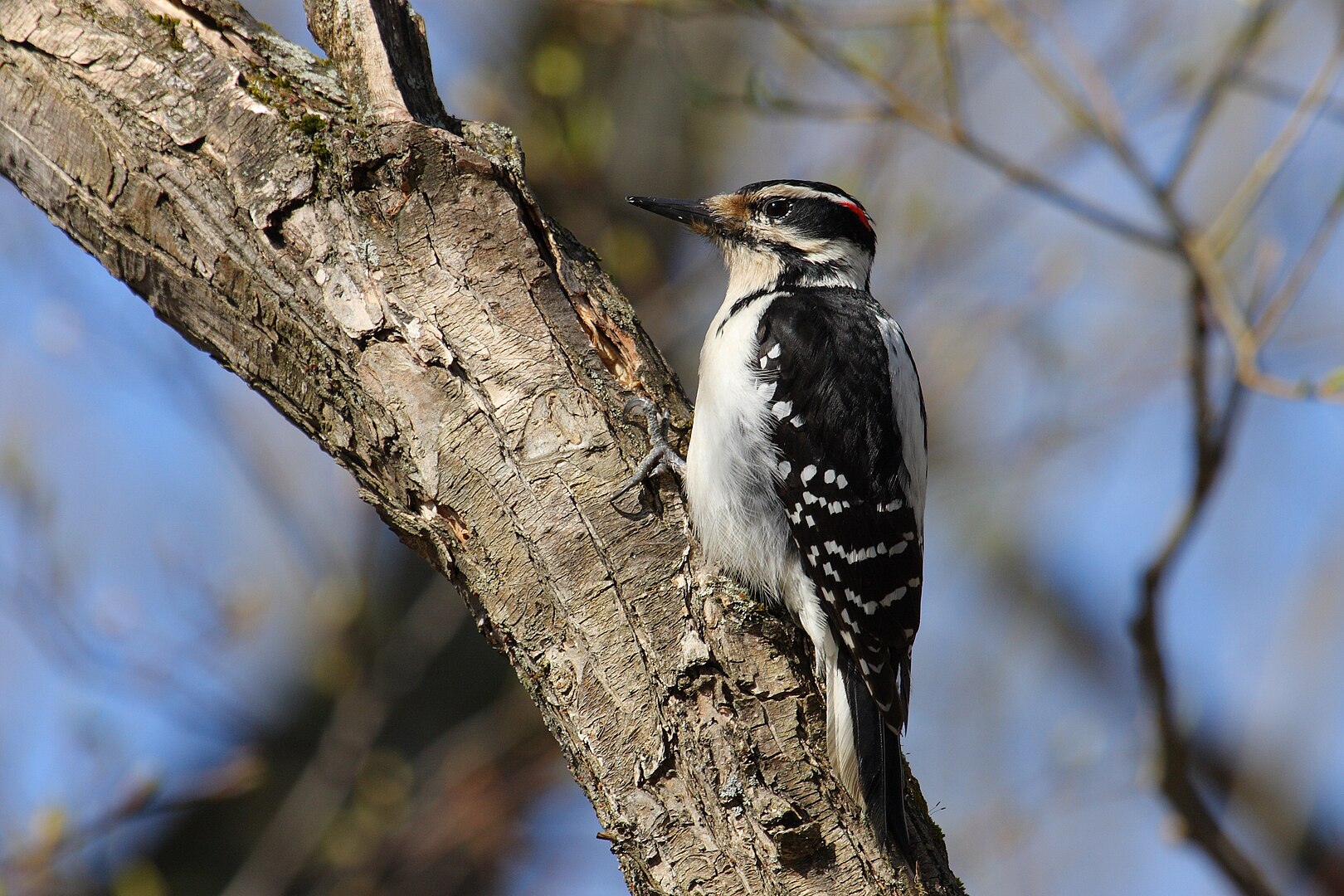
3. The Hairy Woodpecker (Dryobates villosus)
The Hairy Woodpecker is a medium-sized woodpecker characterized by its predominantly black and white plumage, a large white patch on its back, and a stout, chisel-like bill. Adult males sport a distinctive red streak on the back of their heads. This species is often confused with the smaller Downy Woodpecker, but the Hairy Woodpecker is notably larger and possesses a longer, more robust bill. Their calls are described as explosive and powerful, often a whinnying sound, differentiating them from the Downy’s higher-pitched calls.
Hairy Woodpeckers are typically found in mature forests, but their adaptability allows them to thrive in a variety of habitats, including swamps, urban parks, orchards, suburban backyards, and even cemeteries. They are active foragers, meticulously searching for wood-boring insects such as bark beetle larvae and ants, as well as spiders, millipedes, pupae, bees, and caterpillars. They often excavate cavities in dead trees for nesting, typically laying between three and six eggs. Their presence in a forest indicates a healthy mature woodland ecosystem with sufficient dead or decaying trees.
4. The Pileated Woodpecker (Dryocopus pileatus)
The Pileated Woodpecker is the largest woodpecker species in Maryland and North America, rivaling the size of a crow. Its striking appearance, dominated by a prominent bright red, triangular crest on its head, makes it instantly recognizable and perhaps the most iconic woodpecker species. Adults also feature bold white stripes down the sides of their necks, and males have an additional red streak on their cheek. Their loud, shrill, whiny calls are a hallmark of eastern forests, and their powerful drumming resonates through the trees.
These impressive birds are most commonly found in mature conifer forests but can also be observed at the edges of large cities. Contrary to popular belief, they often prefer drilling into dead trees or softer wood logs rather than live ones, excavating distinctive rectangular holes in their search for food, primarily carpenter ants. Their diet is rounded out with berries, wild fruits, and nuts. Pileated Woodpeckers are known to excavate new nesting cavities each year within dead trees, typically laying between three and five white eggs. Their presence is often an indicator of large, intact forest tracts.
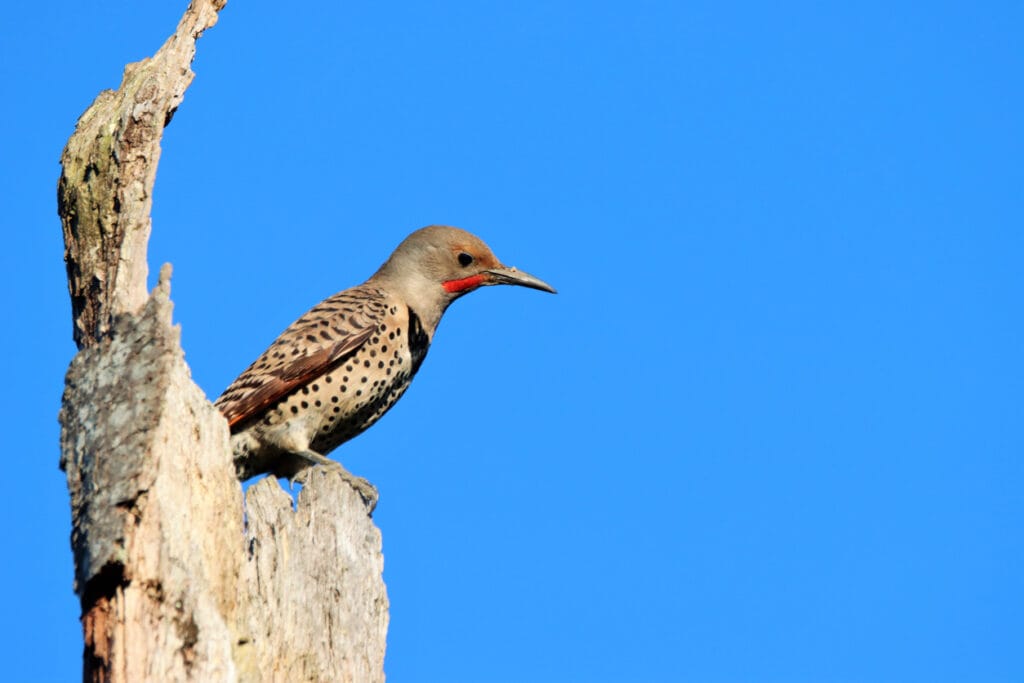
5. The Northern Flicker (Colaptes auratus)
The Northern Flicker is unique among Maryland woodpeckers for its distinctly non-traditional plumage. Instead of the typical black and white patterns, they exhibit brown and gray coloration, making them stand out. These relatively large birds possess large, curved bills and round, slim heads. A key identifier is the flash of yellow on their wing and tail feathers during flight, leading to their common name. They also feature darker streaks on their undersides, a red nape on their necks, and a white patch on their rumps. Males have a distinct black "mustache" stripe on their cheeks.
Northern Flickers are year-round residents in Maryland, favoring woodlands, particularly those with open fields and clearings. They are among the few woodpecker species that frequently forage on the ground, exhibiting a remarkable ability to walk vertically on tree trunks thanks to their zygodactyl feet (two toes forward, two toes backward). Their diet is heavily reliant on ants and beetles, but they also consume fruits. They communicate through repetitive piercing calls and deep tree drumming. They excavate cavities in trees for nesting, laying between five and eight white eggs. Their adaptability allows them to be seen in a variety of habitats, including suburban areas.
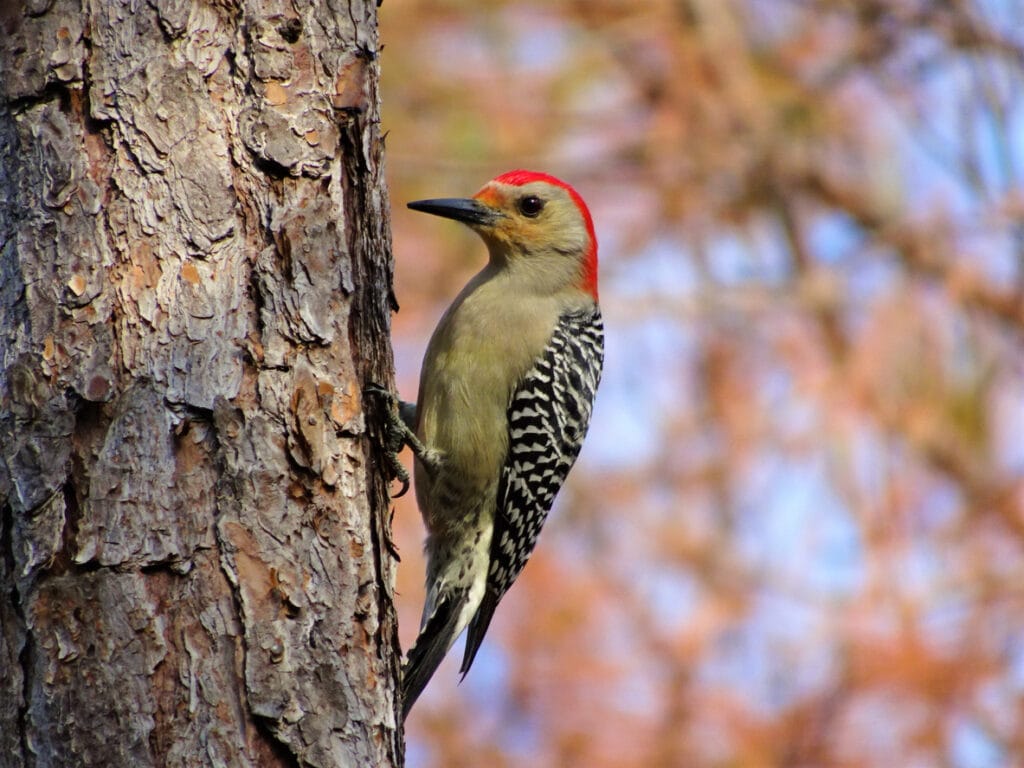
6. The Red-Bellied Woodpecker (Melanerpes carolinus)
The Red-Bellied Woodpecker, despite its name, displays more prominent black and white barring on its back than any significant red on its belly. The red coloration is primarily found on its head and nape. Adult females have red on the nape but lack the red crown seen on males. A fascinating sexual dimorphism exists in this species: males have longer and wider tongues than females, which aids them in foraging for a diverse range of food during the breeding season.
These woodpeckers are year-round residents in Maryland and are highly adaptable, inhabiting both forests and urban settings. This adaptability makes them a common sight around backyard feeders, where they consume insects, spiders, nuts, fruits, and seeds. Red-Bellied Woodpeckers tend to maintain the same nesting site for years, excavating cavities in dead trees or limbs and laying four or five white eggs. They are recognized by their varied loud calls, including trills and chuckles, as well as their distinctive drumming.
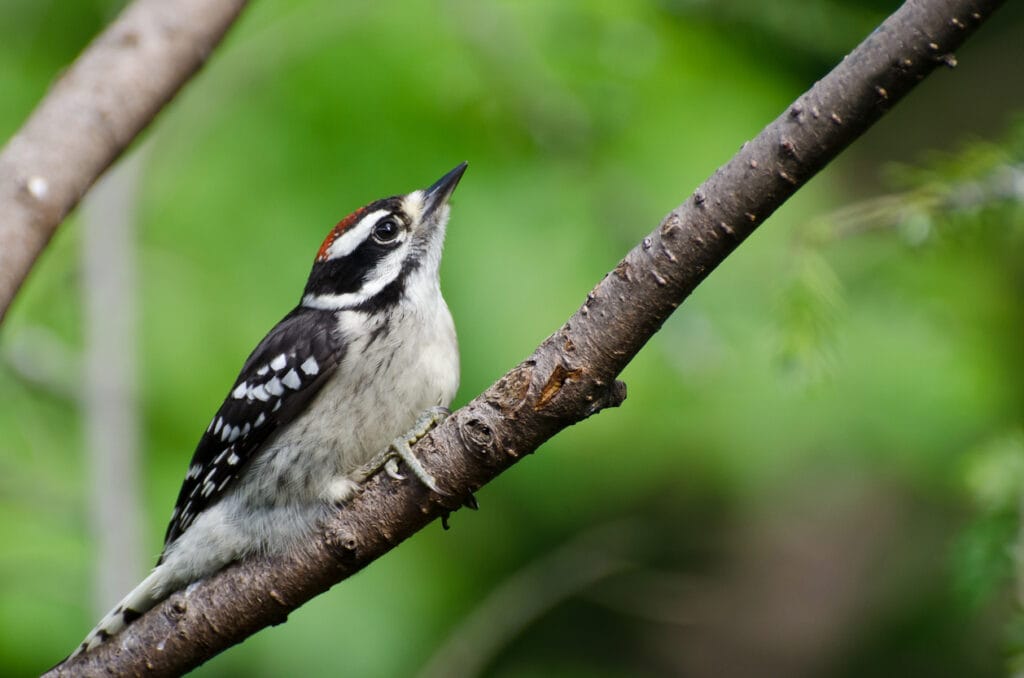
7. The Downy Woodpecker (Dryobates pubescens)
The Downy Woodpecker is the smallest woodpecker species found in both Maryland and North America, earning its name from the soft texture of its back feathers. Its plumage is a classic black and white pattern, with distinct horizontal bars on its wings and a white patch on its back. Adult males are distinguished by a small red patch on the back of their heads.
The Downy Woodpecker shares a visual resemblance with the Hairy Woodpecker, but can be distinguished by its smaller size and much shorter, daintier bill. Additionally, Downy Woodpeckers have white spots on their tail feathers, which are absent on the Hairy Woodpecker. These highly adaptable birds are found in a wide range of habitats, including open woodlands, urban yards, forest edges, and are frequently seen at backyard feeders, especially near wooded areas. Unlike many other woodpeckers, Downy Woodpeckers also forage in tall grass and weeds. Their high-pitched sounds, rattles, and peeps make them easily identifiable. They nest in cavities excavated in dead trees, laying between three and eight small white eggs. Their diet consists of nuts and larvae, but they also consume acorns, berries, and grains.

8. The Red-Headed Woodpecker (Melanerpes erythrocephalus)
The Red-Headed Woodpecker is a medium-sized species renowned for its striking coloration. It shares the typical black and white color combination with other woodpeckers but is immediately distinguished by its entirely bright red head. Their plumage is otherwise distinctive, featuring black upper parts, white bellies, and wings that are half black and half white. Crucially, only adult birds possess the signature red head; juveniles have brown heads that gradually turn red as they mature.
This species is identifiable by its shrill call, often described as a sharp "wee-ah" sound, and its loud drumming. Uniquely among woodpeckers, Red-Headed Woodpeckers are adept at catching insects in midflight, a behavior known as aerial insectivory. This skill allows them to supplement their diet beyond insects found within tree cavities. Their diet includes honeybees, midges, grasshoppers, beetles, nuts, seeds, wild fruits, and even small rodents. They exhibit a fascinating hoarding behavior, storing food in tree crevices and covering it with tree bark for later consumption. Red-Headed Woodpeckers are known to be fiercely territorial and may even destroy the eggs or nests of other birds. They typically nest in tree cavities, sometimes reusing sites previously occupied by other species, and lay four or five eggs.
Unfortunately, the Red-Headed Woodpecker has experienced a significant population decline, with estimates showing a loss of nearly 70% between 1966 and 2014, primarily attributed to severe habitat loss. This makes sightings of this vibrant bird increasingly precious.
Conservation and Ecological Significance
The presence and diversity of woodpecker species in Maryland are indicators of the health of the state’s ecosystems. These birds are not merely observers of their environment; they are active participants in shaping it. Their habit of excavating cavities provides essential shelter for numerous other species, including small mammals, other birds, and insects. The Red-Cockaded Woodpecker’s reliance on specific forest types and the red-heart fungus highlights the intricate interdependencies within an ecosystem. Similarly, the Yellow-Bellied Sapsucker’s sap wells create unique foraging opportunities for a variety of insects and birds.
The conservation status of some woodpecker species, particularly the Red-Cockaded Woodpecker and the Red-Headed Woodpecker, underscores the ongoing challenges related to habitat preservation and restoration. Declines in these populations serve as a stark reminder of the impact of human activities on biodiversity. Efforts to maintain mature forests, manage fire regimes, and protect crucial habitats are vital for ensuring the long-term survival of these species.
Where to Observe Woodpeckers in Maryland
For bird enthusiasts eager to observe these fascinating birds, Maryland offers several promising locations. The Pickering Creek Audubon Center is specifically noted for its potential to spot the impressive Pileated Woodpecker. Additionally, many woodpecker species are adaptable and can be found in various wooded areas, parks, and even suburban backyards, especially those with mature trees and a source of water. Utilizing resources like eBird, which tracks recent sightings, can help individuals locate active woodpecker populations in their area. The Red-bellied Woodpecker is often cited as one of the most common species, making it a frequent visitor to backyard feeders across the state.
Conclusion: Maryland’s Avian Architects at Work
Maryland’s commitment to environmental health provides a nurturing ground for its eight distinct woodpecker species. From the specialized Red-Cockaded Woodpecker to the diminutive Downy Woodpecker and the imposing Pileated Woodpecker, each species plays a vital role in the state’s ecological fabric. Their continued presence is a testament to the importance of preserving diverse habitats and understanding the intricate relationships that sustain avian life. By appreciating and protecting these avian architects, Maryland not only safeguards its natural heritage but also ensures the continued functioning of its vital forest ecosystems.
Frequently Asked Questions
Where can I find out more about local woodpeckers in Maryland?
For up-to-date information on woodpecker sightings and distribution, the eBird platform is an invaluable resource. It allows users to search for recent sightings, track specific species, and view data from particular geographic areas within Maryland.
What is the most common woodpecker in Maryland?
The Red-bellied Woodpecker is widely considered one of the most common woodpecker species found in Maryland, frequently observed in various habitats, including residential areas.
Where is a good place to see woodpeckers in Maryland?
The Pickering Creek Audubon Center is specifically recommended for viewing woodpeckers, with a notable chance of observing the Pileated Woodpecker. Beyond dedicated centers, mature forests, parks with a variety of tree species, and even well-wooded suburban backyards can be excellent locations for woodpecker observation.

