


In the late 1950s, the pharmaceutical world witnessed what remains perhaps the most harrowing cautionary tale in medical history. Thalidomide, a drug marketed as a sedative and a remedy for morning sickness, was introduced to the global market after extensive testing on various animal species. At the time, these tests were considered the gold standard for safety. However, the subsequent years revealed a catastrophic oversight: while the drug appeared benign in laboratory animals, it was profoundly teratogenic in humans. By the early 1960s, more than 10,000 infants across 46 countries were born with phocomelia—a condition characterized by severely malformed limbs—and thousands more did not survive birth. This era-defining tragedy served as a brutal awakening for the medical community, yet decades later, the reliance on animal models continues to pose significant risks to human health and the efficacy of drug development.
The thalidomide scandal led to a massive overhaul of drug regulations, most notably the 1962 Kefauver-Harris Amendment in the United States, which mandated that manufacturers prove both the safety and effectiveness of their products before they could reach the market. While these regulations were intended to protect the public, they solidified a system that heavily favors animal testing as a prerequisite for human clinical trials. However, modern scientific data suggests that this system may be fundamentally flawed. Despite passing rigorous animal safety screens, nearly 95% of drugs that enter human clinical trials ultimately fail. Many of these failures are not merely due to a lack of efficacy but are caused by unexpected toxicity that animal models failed to predict.
The Inherent Fallibility of Interspecies Extrapolation
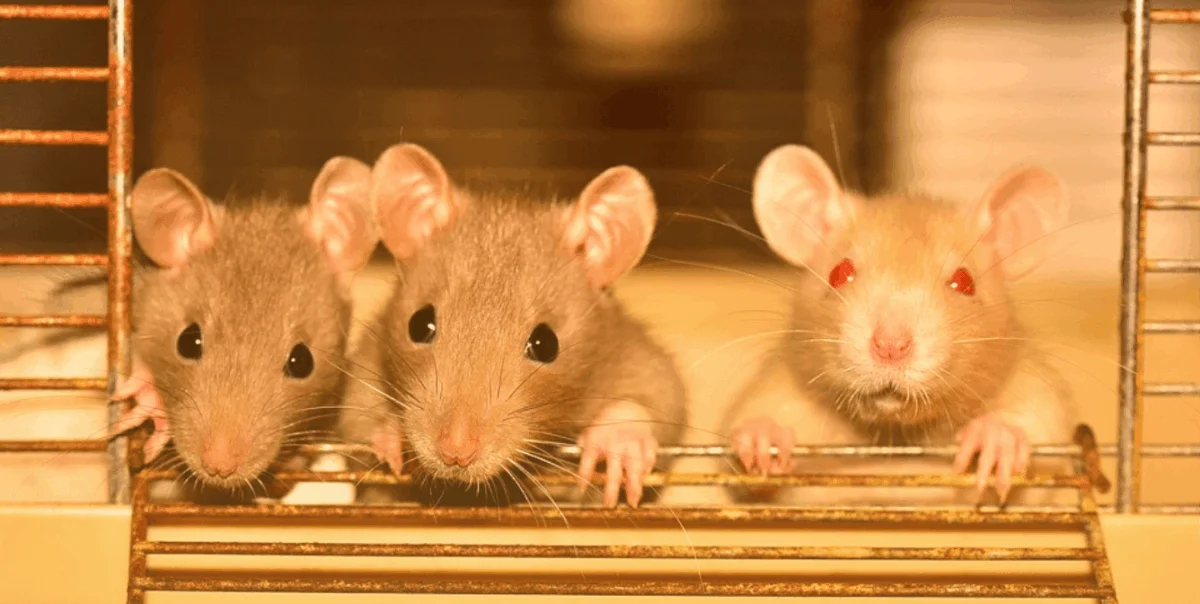
The core of the issue lies in the biological and physiological divergence between species. While humans share many genetic similarities with other mammals, the way these genes are expressed and the metabolic pathways through which drugs are processed vary significantly. For instance, the "hindsight" analysis of thalidomide revealed that while it did not cause birth defects in the mouse and rat strains initially tested, it did so in certain species of rabbits and primates—but only at specific dosages and timing. This highlights a critical flaw: there is no reliable way to predict in advance which animal species, if any, will accurately mirror a human reaction to a new chemical entity.
This biological divide often leads to two dangerous outcomes: false negatives, where a drug appears safe in animals but harms humans, and false positives, where a drug that could have been life-saving for humans is discarded because it proved toxic to a specific animal species. The following case studies illustrate the severe human cost of relying on these outdated models.
TGN1412: The Cytokine Storm of 2006
In March 2006, at Northwick Park Hospital in London, a Phase I clinical trial for TGN1412—a monoclonal antibody designed to treat leukemia and rheumatoid arthritis—turned into a medical emergency within minutes. The drug had been tested extensively in non-human primates at doses 500 times higher than those given to the human volunteers, with no ill effects observed.
Despite this "safety" profile, all six healthy human volunteers suffered a catastrophic systemic reaction known as a cytokine storm. Their immune systems went into overdrive, leading to multi-organ failure and excruciating pain. One participant’s head swelled so significantly that he was nicknamed the "Elephant Man" by the media. While all survived thanks to intensive care, several suffered permanent damage, including the loss of fingers and toes due to gangrene. This incident underscored that even our closest biological relatives, such as macaques, cannot always predict the nuances of the human immune response.
Vioxx and the Failure to Predict Cardiovascular Risk
Launched in 1999, Vioxx (rofecoxib) was hailed as a "miracle" nonsteroidal anti-inflammatory drug (NSAID) for arthritis patients, designed to be gentler on the stomach than aspirin. During its development, animal tests suggested that the drug might even have cardioprotective properties. However, the reality for human patients was the opposite.
By the time Merck voluntarily withdrew Vioxx from the market in 2004, it was estimated that the drug had caused between 88,000 and 140,000 cases of serious heart disease. An estimated 38,000 deaths were linked to the medication. The animal models used during the pre-clinical phase simply did not reflect the complex interactions within the human cardiovascular system that led to an increased risk of blood clots and strokes. This failure resulted in one of the largest drug recalls and legal settlements in pharmaceutical history, totaling nearly $5 billion.
The Lethal Toxicity of Fialuridine and Troglitazone
Liver toxicity remains one of the primary reasons drugs are withdrawn from the market or fail in development. In 1993, the drug fialuridine was being tested as a treatment for hepatitis B. It had passed safety tests in mice, rats, dogs, and monkeys. Yet, during a clinical trial at the National Institutes of Health (NIH), the drug proved lethal. Seven of the fifteen participants developed acute liver failure; five died, and two required emergency liver transplants to survive. Subsequent research indicated that fialuridine interfered with human mitochondrial DNA in a way that was not replicated in the animal models used.
Similarly, the diabetes medication troglitazone (Rezulin) was withdrawn in 2000 after it was linked to at least 63 deaths from liver failure. While the drug appeared safe in monkeys and rodents, it disrupted bile acid transport in humans—a metabolic process that varies significantly across species. A later study by the University of North Carolina emphasized that because bile acid compositions are species-specific, animal models are inherently poor predictors of human drug-induced liver injury (DILI).
The Economic and Ethical Toll of Failed Research
The reliance on animal models is not only a public health risk but also a massive economic burden. The cost of developing a single new drug is now estimated to be between $1 billion and $2.6 billion, largely due to the high failure rate in clinical trials. When a drug fails in Phase III after years of investment, the financial loss is staggering. If researchers could identify toxic or ineffective compounds earlier using human-relevant methods, the cost of medicine could potentially decrease, and life-saving treatments could reach the market faster.
From an ethical perspective, the current system subjects millions of animals to invasive procedures that often yield no benefit to human medicine. In the United States alone, it is estimated that over 100 million animals—including mice, rats, frogs, dogs, rabbits, and monkeys—are used in research and testing annually. The "3Rs" principle (Replacement, Reduction, and Refinement) has been the guiding ethical framework for decades, but critics argue that the "Replacement" aspect has been neglected in favor of maintaining the status quo.
The Technological Frontier: Organ-on-a-Chip and AI
The transition toward a more reliable, human-centric testing paradigm is already underway, driven by "New Approach Methodologies" (NAMs). One of the most promising technologies is the Organ-on-a-Chip (OOC). These microfluidic devices contain living human cells arranged to simulate the physiological environment of human organs, such as the liver, lungs, or heart.
A landmark study published in Nature Biomedical Engineering validated the predictive power of Liver-Chips. In a test involving 870 chips, the technology correctly identified nearly 87% of drugs that caused liver injury in humans, despite those drugs having passed animal tests. This outperformed all traditional animal-based toxicology models. Furthermore, when these individual "organs" are linked together, they create a "Body-on-a-Chip" that can simulate how a drug is metabolized and distributed throughout the entire human system.
Complementing these biological models are "in silico" methods—advanced computer algorithms and Artificial Intelligence (AI). In 2018, researchers demonstrated that an AI trained on a massive database of chemical structures could predict toxicity with greater accuracy than traditional animal tests. Additionally, computer simulations of human heart cells have shown a 90% accuracy rate in predicting drug-induced arrhythmias, a feat that animal models have historically struggled to achieve.
A Shift in the Regulatory Landscape
The momentum for change has reached the highest levels of government. In late 2022, the United States passed the FDA Modernization Act 2.0, a historic piece of legislation that removed the federal mandate requiring animal testing for new drug development. This law allows pharmaceutical companies to use modern, non-animal methods to demonstrate safety and efficacy, paving the way for a more streamlined and accurate drug approval process.
Other nations are following suit. The European Union has expressed a commitment to phasing out animal testing, and countries like South Korea and Canada are investing heavily in alternative research methods. These policy shifts reflect a growing consensus that the future of medicine lies in human biology, not in the proxies of other species.
Conclusion: Preventing Future Tragedies
The history of drug development is marred by tragedies that could have been avoided if the scientific community had possessed—and utilized—more human-relevant testing methods. From the devastating birth defects caused by thalidomide to the thousands of heart attacks linked to Vioxx, the evidence is clear: animal models are an imperfect and often misleading tool for ensuring human safety.
As we move further into the 21st century, the integration of Organ-on-a-Chip technology, AI-driven predictive modeling, and human-based genomic research offers a path forward. This transition promises a new era of "precision medicine," where drugs are developed and tested with a level of accuracy that was unimaginable during the thalidomide era. By prioritizing human biology over traditional but flawed animal models, the medical community can ensure that the tragedies of the past remain in the past, ultimately saving both human and animal lives.

