


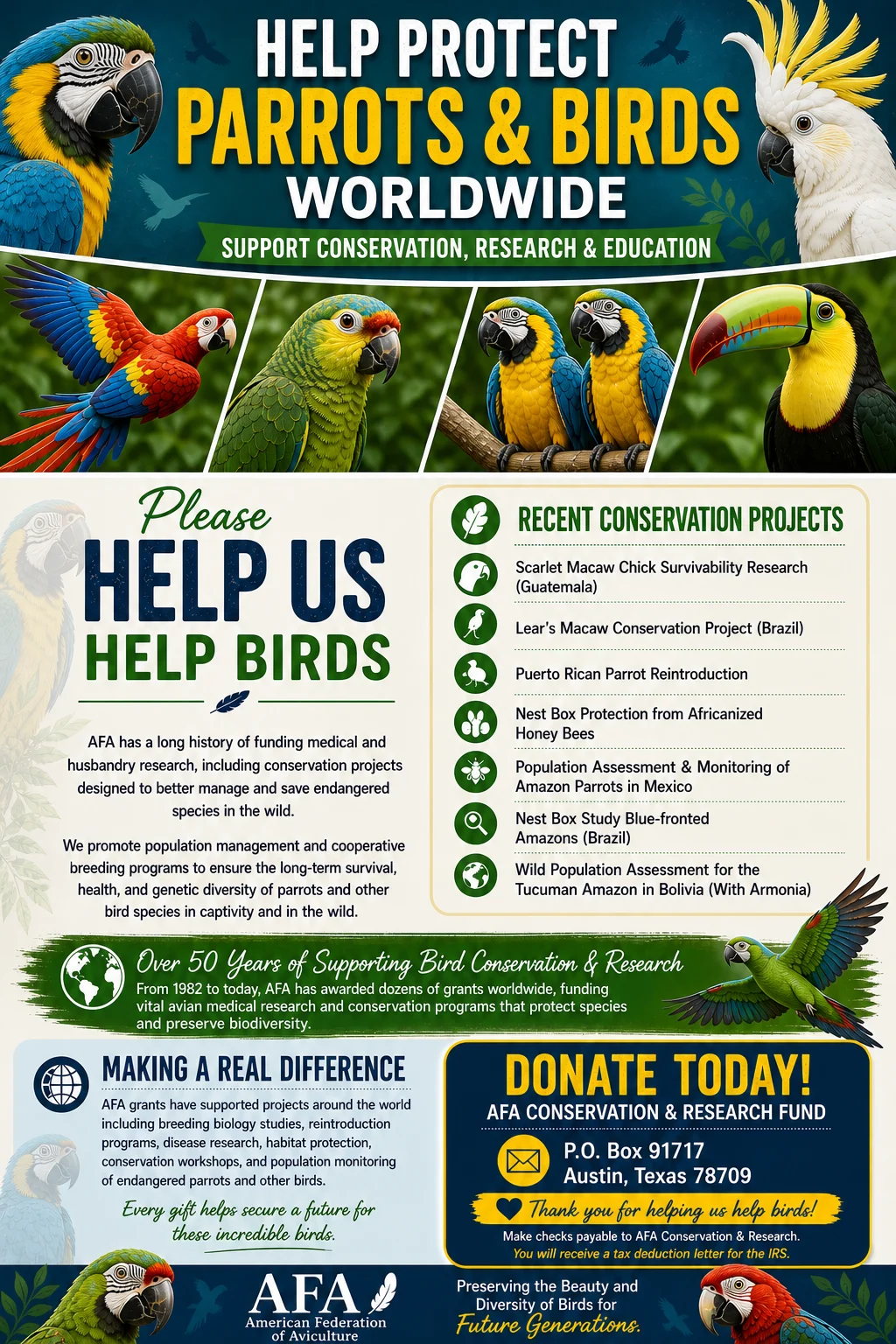
The American Federation of Aviculture (AFA) has officially launched its conservation roadmap for the 2024-2025 period, headlined by a significant financial partnership with Harrison’s Bird Foods. This collaboration, marked by a $25,000 donation presented to AFA Chief Financial Officer Janice Lang, underscores a renewed commitment to supporting wild parrot conservation projects within their native habitats. The funding is specifically earmarked to assist small-scale, high-impact field research and habitat restoration projects that align with the AFA’s mission to ensure the long-term survival of exotic birds both in the wild and in managed care.
Current Conservation Frontiers: Mexico, Guatemala, and Peru
A cornerstone of the AFA’s 2024 agenda is the continued support of the Chajul Biology Station in the Lacandon rainforest of southern Mexico. Operated by Natura Mexicana, this station addresses a critical crisis facing wild scarlet macaws. Due to rampant poaching for the illegal wildlife trade, the natural fledgling rate for these macaws has historically hovered near zero percent without human intervention. Through the 2024 fund-raising season, the AFA aims to raise an additional $5,000 to provide the station with essential medical and husbandry equipment, including portable incubators, brooders, and gram scales. To date, this program has successfully fledged over 150 scarlet macaws back into the wild, representing a significant victory for regional biodiversity.
In neighboring Guatemala, the AFA remains a key supporter of the Wildlife Conservation Society’s (WCS) Selva Maya Living Landscape Program. Since 2002, the WCS has worked within the Maya Biosphere Reserve to mitigate threats to scarlet macaw populations. Current efforts focus on experimental interventions designed to increase chick survivability, ensuring that recruitment rates within the wild population remain stable despite habitat fragmentation and environmental pressures.
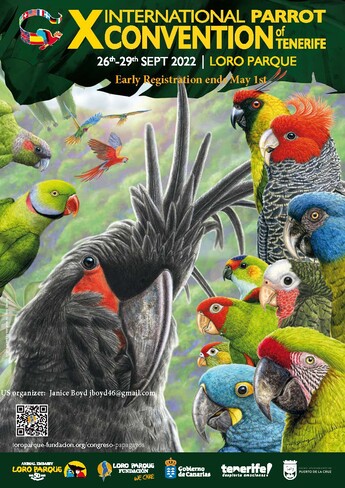
Further south, in the Tambopata region of Peru, the AFA is funding sophisticated physiological research. Led by investigators J. Jill Heatley, Lizzie Ortiz-cam, and Donald Brightsmith, the project utilizes i-STAT analyzers to determine electrolytes, venous blood gases, and lactate levels in wild macaws. This data provides an invaluable baseline for avian veterinarians and conservationists, helping them understand the nutritional and health requirements of free-flighted parrots. A specific area of interest is the "clay lick" phenomenon; researchers are investigating whether macaws visit these sites for essential electrolytes, a finding that could revolutionize how captive avian diets are formulated.
Scientific Innovation in Nest Protection
Beyond direct habitat monitoring, the AFA is spearheading the application of innovative biological protocols to protect nesting sites. One such project, led by Principal Investigator Caroline A. Efstathion, focuses on the "push-pull" prevention protocol to protect parrot nest boxes from colonization by Africanized honey bees. This method utilizes permethrin, a bird-safe insecticide, to repel scout bees while simultaneously using pheromone-baited traps to draw them to alternative nesting sites. By providing bees with south-facing boxes that better suit their preferences, researchers can ensure that primary parrot nesting cavities remain available for avian use. This research is critical, as Africanized bees are notoriously aggressive and can displace entire colonies of endangered parrots if left unchecked.
The AFA Grant Program: Empowering Local Action
The AFA’s Conservation Committee reviews applications annually for small grants, typically ranging up to $500, though larger amounts are considered for exceptional circumstances. These grants are targeted at projects that provide useful knowledge on avian medicine, husbandry, behavior, or field biology. The 2024-2025 cycle emphasizes projects with a high likelihood of success and clear, measurable objectives.
The application process is rigorous, requiring a detailed project description, budget breakdown, and a timeline for completion. The deadline for the next funding cycle is September 15, ensuring that funds are allocated for the following calendar year. This grassroots approach allows the AFA to support a diverse array of projects that might otherwise struggle to secure funding from larger, more bureaucratic environmental organizations.
Historical Context: The Birth of the AFA
The American Federation of Aviculture was not born out of a purely academic interest in birds, but rather out of a legislative and biological crisis. In the early 1970s, an outbreak of Exotic Newcastle Disease in California led to the mandatory euthanasia of thousands of healthy exotic birds by the USDA. This event, coupled with proposed state legislation that sought to ban the private ownership of exotic birds, served as a catalyst for bird owners and clubs to unite.
Formed in March 1974, the AFA was established as an "umbrella organization" to represent the interests of aviculturists. Over the last five decades, it has evolved into a non-profit 501(c)3 educational entity that monitors the Federal Register for pending legislation and represents the avicultural community at international forums such as the Convention on International Trade in Endangered Species (CITES).
Navigating the Regulatory Landscape: WBCA and ESA
The AFA plays a vital role in educating its members on the complex legal frameworks governing bird ownership and movement. Two primary pieces of U.S. legislation define the current landscape: the Wild Bird Conservation Act (WBCA) of 1992 and the Endangered Species Act (ESA) of 1973.
The WBCA effectively halted the mass importation of wild-caught birds for the U.S. pet trade. While this was a major step for conservation, it necessitated a shift toward domestic breeding. The law includes a "Clean List" of species—such as Cockatiels, certain Lovebirds, and various Rosellas—that can be imported if they are documented as captive-bred in their country of origin. For species not on this list, the only legal avenue for importation is through a "Cooperative Breeding Program" (CBP).

The ESA, signed by President Richard Nixon, focuses on protecting species from extinction. Once a species is listed under the ESA, it cannot be sold across state lines without a federal permit, such as a Captive-bred Wildlife (CBW) permit. Recent years have seen several species added to the ESA, including the Military Macaw and the Buffon’s Macaw. The AFA monitors these listings closely to ensure that responsible breeders can continue their work without falling afoul of shifting federal regulations.
Cooperative Breeding Programs: A Genetic Safeguard
Cooperative Breeding Programs (CBPs) are essential for maintaining genetic diversity within the U.S. avian population. These programs allow for the limited importation of species that are underrepresented in American aviculture. A CBP requires a program manager and at least two breeders who agree to adhere to strict USFWS regulations.
The AFA has served as the overseer for several successful CBPs, including those for the Red Siskin and the Blue-headed Macaw. Currently, the Blue-eyed Cockatoo (Cacatua ophthalmica) CBP, led by Mary Ellen LePage, has been expanded to include various black cockatoo species, such as the Gang-gang and the Red-tailed Black Cockatoo. These programs are not intended to supply the pet trade but are designed to establish sustainable, genetically diverse populations that can serve as a "safety net" for their wild counterparts.
International Advocacy and CITES
On the global stage, the AFA’s CITES Committee acts as a voice for aviculture. CITES is an international treaty designed to ensure that international trade in wild animals and plants does not threaten their survival. The treaty operates through three "Appendices" that provide varying levels of protection.

The AFA holds official Non-Governmental Observer (NGO) status, allowing representatives to attend CITES meetings and provide input on psittacine (parrot) issues. This involvement is crucial because international resolutions often influence domestic laws. By participating in these meetings, the AFA ensures that the expertise of the avicultural community is considered when global trade policies are drafted.
Broader Impact and Future Outlook
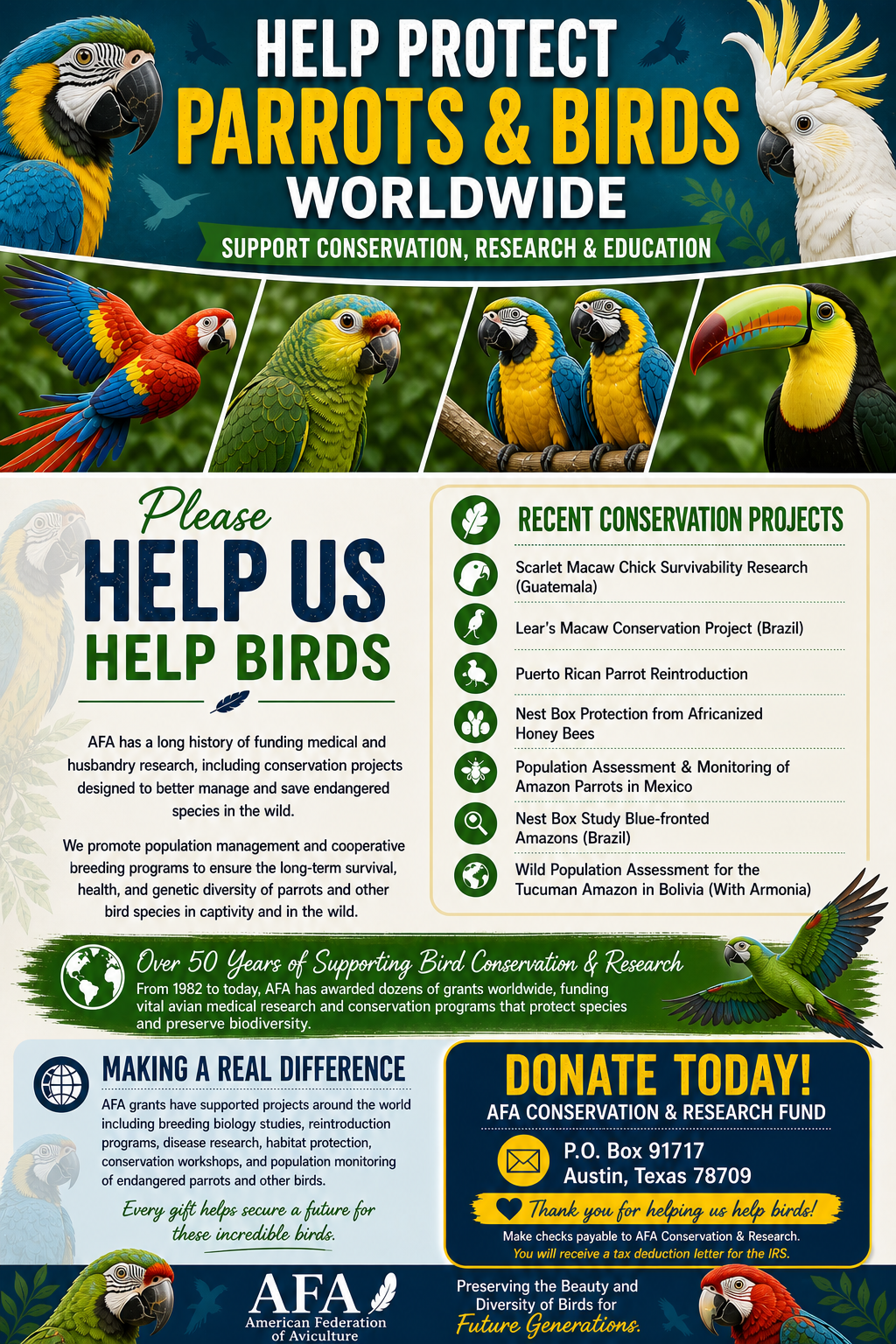
The work of the AFA in 2024-2025 represents a multi-faceted approach to conservation. By combining direct financial support for field projects with scientific research, legislative advocacy, and the management of captive populations, the organization addresses the threats to avian wildlife from every possible angle.
The partnership with Harrison’s Bird Foods is a testament to the power of industry collaboration in the non-profit sector. As habitat loss and climate change continue to pressure wild populations, the role of organizations like the AFA becomes increasingly critical. Through the promotion of sustainable breeding practices and the funding of cutting-edge field biology, the AFA is not just preserving birds for the present, but ensuring that future generations will continue to experience the beauty and complexity of avian life.
As the 2024 season progresses, the AFA continues to invite individuals and organizations to become "Conservation Partners." Through these collective efforts, the goal of creating self-sustaining populations of exotic birds—both in their native forests and in well-managed captive environments—remains a reachable horizon. For those involved in the world of aviculture, the message is clear: conservation is not a passive interest, but an active responsibility.

