


Minnesota’s woodlands, forests, and even backyard trees are home to a remarkable array of woodpeckers, each with its unique adaptations and ecological roles. These fascinating birds, known for their distinctive drumming and arboreal lifestyle, contribute significantly to the state’s biodiversity. While many associate woodpeckers with rapid head movements—some pecking up to 20 times per second at speeds exceeding 15 miles per hour—their presence in Minnesota offers a deeper look into avian resilience and adaptation. This comprehensive guide explores the eight woodpecker species found in the Land of 10,000 Lakes, detailing their characteristics, habitats, and behaviors.
The Dynamic Drumming of Minnesota’s Woodpeckers
The characteristic drumming of woodpeckers serves multiple purposes, from communication and territorial defense to foraging and courtship. This percussive behavior, often a hallmark of their presence, distinguishes them from many other avian species and makes them a popular subject for birdwatchers, photographers, and videographers alike. For residents and visitors of Minnesota, understanding these species can enhance their appreciation of the natural world and encourage conservation efforts.
Exploring Minnesota’s Eight Woodpecker Species
Minnesota hosts a diverse population of woodpeckers, each with distinct features and ecological niches. These eight species represent a spectrum of sizes, behaviors, and habitat preferences, showcasing the state’s rich natural heritage.
1. Downy Woodpecker: The Tiny Acrobatic Forager
The Downy Woodpecker ( Dryobates pubescens ) is the smallest woodpecker species found in Minnesota and is a ubiquitous presence across the United States. Weighing less than an ounce, these diminutive birds are often mistaken for their larger relatives, the Hairy Woodpecker. Their small stature, however, is a significant advantage, allowing them to forage in narrow crevices and on smaller branches inaccessible to other woodpeckers.

Physical Characteristics and Habitat:
Downy Woodpeckers exhibit a striking black and white plumage. Their backs are predominantly black, accented by white streaks on their wings and crowns. A distinctive red patch adorns the back of the male’s head, a feature absent in females. The rest of their bodies are generally white. They are commonly found wherever trees are present, including urban backyards, parks, and woodlands. Their adaptability allows them to thrive in a variety of environments, making them a frequent visitor to bird feeders.
Diet and Foraging Behavior:
Primarily bark foragers, Downy Woodpeckers meticulously search tree bark for insects, with ants forming a significant portion of their diet. Their small size enables them to exploit food sources that larger species cannot reach.
Social Behavior and Vocalizations:
Due to their size, Downy Woodpeckers often associate with mixed-species flocks, particularly with birds of similar size such as chickadees, seeking safety in numbers. Their calls are a series of quick chirps, often accompanied by light, short drumming. Unlike some of their larger cousins, their drumming is not particularly loud, making them a less intrusive presence in residential areas.
2. Hairy Woodpecker: A Larger, More Robust Relative
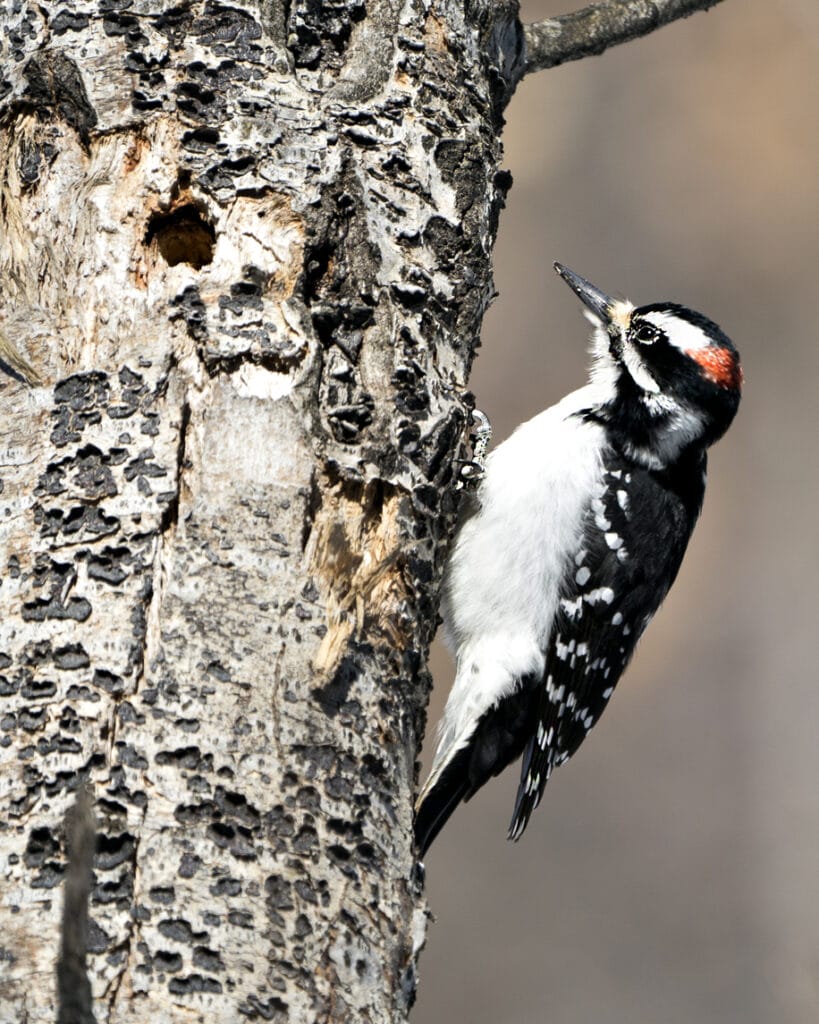
The Hairy Woodpecker ( Dryobates villosus ) shares a striking resemblance to the Downy Woodpecker, often leading to confusion. However, the Hairy Woodpecker is considerably larger, approximately 40% bigger and three times the weight of its smaller counterpart. This size difference is a primary distinguishing factor, though not always apparent from a distance.
Physical Characteristics and Habitat:
Like the Downy Woodpecker, the Hairy Woodpecker boasts a black and white coloration with males displaying a characteristic red patch on the back of their head. Their bills are noticeably longer and stouter than those of Downy Woodpeckers. They prefer larger trees and are more likely to be found in mature forests, larger woodlands, and less frequently in urban parks or suburban gardens compared to Downy Woodpeckers. They are present in Minnesota year-round.
Foraging and Diet:
Hairy Woodpeckers forage on tree trunks and branches, seeking insects and their larvae. Their larger size and stronger bills allow them to excavate deeper into wood for food.
Vocalizations and Drumming:
Their calls and drumming patterns are similar to those of the Downy Woodpecker but are significantly louder and more forceful, reflecting their larger size and musculature. Differentiating between the two species often requires careful observation of bill size, overall proportions, and behavior.
3. Black-backed Woodpecker: The Forest Specialist
The Black-backed Woodpecker ( Picoides arcticus ) is a striking species, roughly the same size as the Hairy Woodpecker, but less commonly encountered in the United States. It is primarily a Canadian species, preferring cooler climates, though it can be found year-round in Minnesota, particularly in the northern regions bordering Canada.
Physical Characteristics and Habitat:
This woodpecker is predominantly black, with distinctive white patches on its wings and often a white belly. A notable feature is the black crown with two white lines near the bill, resembling a mustache. Adult males possess a distinctive yellow patch on their forehead, which is absent in adult females but present in juveniles of both sexes. Their coloration provides excellent camouflage in darker or recently burned forests, a habitat they frequently utilize.
Diet and Foraging Behavior:
Black-backed Woodpeckers are specialized predators of wood-boring beetles. They exhibit a unique foraging technique, drilling small test holes to locate beetle tunnels and then inserting their long tongues to extract their prey.

Vocalizations:
Their calls are among the quietest of woodpecker species, consisting of single, quick chirps spaced apart. This subtle vocalization can make them challenging to locate.
4. Yellow-bellied Sapsucker: The Sap Drinker
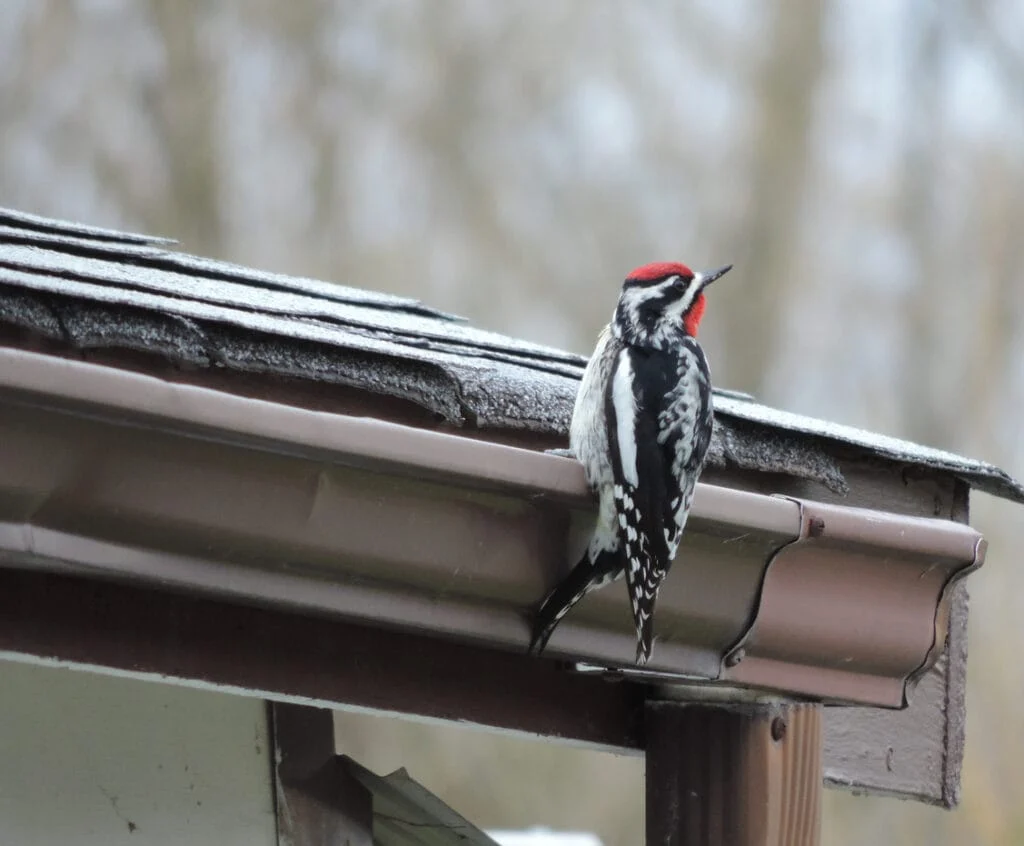
The Yellow-bellied Sapsucker ( Sphyrapicus varius ) is a medium-sized woodpecker, comparable in size to a robin, known for its unique feeding habits. They breed in the northern parts of Minnesota and migrate to the southern regions, ensuring their presence in the state for most of the year.
Physical Characteristics and Habitat:
These woodpeckers have a beautiful black and white plumage without a highly defined pattern. Both sexes sport a red forehead, while males also have a red throat. A small yellow patch on their chest gives them their name. They are often found in deciduous and mixed forests, preferring areas with young trees.
Diet and Unique Feeding Strategy:
The sapsucker’s diet is distinct; they are named for their practice of drilling rows of small, precise holes, known as "sap wells," into tree bark to drink the nutrient-rich sap. While they also consume insects and fruits, sap is their primary food source. This behavior indirectly benefits other species, such as Ruby-throated Hummingbirds, which feed on the sap and insects attracted to these wells.
Vocalizations:
Yellow-bellied Sapsuckers have a distinctive call described as "pew pew pew," a series of repeated notes without a set pattern.

5. Northern Flicker: The Ground-Foraging Specialist
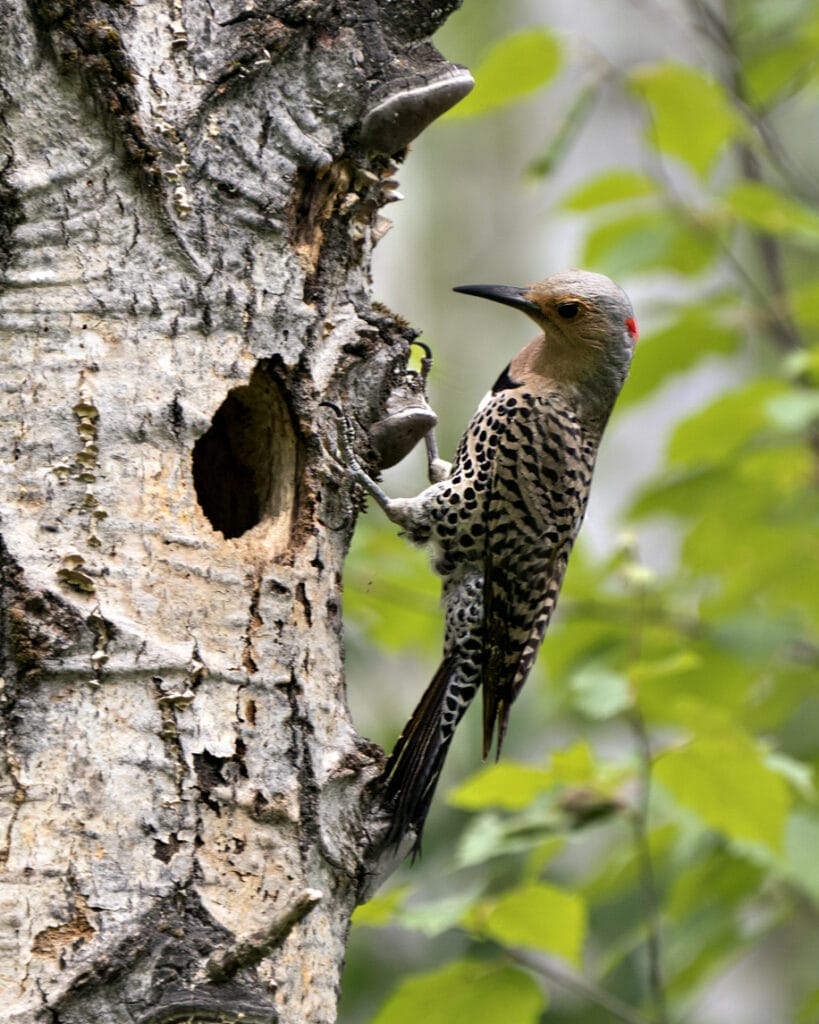
The Northern Flicker ( Colaptes auratus ) is a relatively large woodpecker, slightly smaller than a crow, and is a common sight in Minnesota year-round. They inhabit woodlands, backyards, and parks, often venturing onto the ground in search of food.
Physical Characteristics and Habitat:
Northern Flickers possess a striking plumage featuring gray bodies covered in black spots. They have a red patch on their nape and a distinctive black crescent on their chest. Males are identifiable by a black cheek stripe, while females have a black stripe instead. Their ground-foraging behavior is a key characteristic that sets them apart.
Diet and Foraging Behavior:
While they do forage in trees, Northern Flickers are particularly noted for their habit of foraging on the ground, where they primarily feed on ants and other ground-dwelling insects. This behavior can sometimes lead to them being startled by human activity.
Vocalizations and Drumming:
Northern Flickers are among the fastest drummers, especially during the mating season. They combine their calls with intense drumming, sometimes on resonant surfaces like metal, to attract mates. This can result in exceptionally loud and rapid drumming, particularly in urban environments where they may adapt to drumming on man-made structures.
6. Red-headed Woodpecker: The "Flying Checkerboard"
The Red-headed Woodpecker ( Melanerpes erythrocephalus ) is one of the most easily identifiable woodpeckers in Minnesota due to its striking appearance. They are typically seen during the breeding season from spring to summer, though they can be found year-round in the southeastern part of the state.

Physical Characteristics and Habitat:
Their most prominent feature is a brilliant red crown that covers their entire head. Their bodies display a unique black and white "checkered" pattern, earning them the nickname "flying checkerboard." This distinctive plumage makes them stand out against tree bark. Juveniles lack the red crown and blue feathers, possessing dark brown plumage that gradually matures. Red-headed Woodpeckers inhabit open woodlands, forest edges, and areas with dead trees.
Diet and Foraging Behavior:
These woodpeckers are omnivores, feeding on insects, fruits, seeds, and even the eggs of other birds. They are bark foragers but also actively hunt insects on the wing and consume berries and nuts.
Vocalizations:
Red-headed Woodpeckers produce a loud, harsh-sounding call that can be quite startling, often followed by softer chirps.
7. American Three-toed Woodpecker: The Rare Specialist
The American Three-toed Woodpecker ( Picoides dorsalis ) is a rare sight in Minnesota and across the United States. It is primarily found in the northeastern parts of Minnesota, favoring mature coniferous forests.
Physical Characteristics and Habitat:
As their name suggests, these woodpeckers possess only three toes instead of the typical four found in most woodpecker species. This unique adaptation allows them to lean back slightly more, potentially increasing the force of their drumming. They have a dark, barred back and a black and white striped head. Their habitat is restricted to specific forest types, often those with a high density of dead or dying trees.
Diet and Foraging Behavior:
Their diet consists mainly of wood-boring beetles and ants, which they extract from tree bark. The increased force of their drumming may aid in accessing these prey items within the wood.
Vocalizations:
American Three-toed Woodpeckers have a rapid call, typically a single loud chirp. Juveniles are notably noisier, emitting continuous chirps until fed.
8. Pileated Woodpecker: The Majestic Giant
The Pileated Woodpecker ( Dryocopus pileatus ) is the largest woodpecker species found in Minnesota, rivaling the size of a crow. They are present year-round in woodlands, forests, and backyards with suitable feeders and habitat.
Physical Characteristics and Habitat:
These magnificent birds are predominantly black with distinct white stripes along their neck and crown. Their most striking feature is a large, prominent crest on their head. Males can be distinguished by a red patch on their cheeks. Their numbers have seen fluctuations due to historical deforestation, but they are making a comeback in suitable habitats.
Diet and Foraging Behavior:
Pileated Woodpeckers primarily feed on the larvae of wood-boring beetles and carpenter ants, which they excavate from dead or dying trees. Their large size and powerful beaks allow them to create substantial holes in search of food.

Vocalizations:
Their calls are loud and distinctive, often described as a series of "wak wak wak wak" sounds. The speed and intensity of these calls can indicate the bird’s level of defensiveness or excitement.
Conservation and Coexistence
Woodpeckers in Minnesota, while adapted to human presence, are wild animals and can be defensive. It is crucial for observers to maintain a respectful distance and allow them to go about their natural behaviors. Providing food and water sources, such as suet feeders and bird baths, can be beneficial for local woodpecker populations. However, attempting to capture or domesticate these birds is ill-advised, as they are not suited for life as pets and their wild nature is essential for their survival and ecological role.
Frequently Asked Questions About Minnesota’s Woodpeckers
What is the most common woodpecker in Minnesota?
The Downy Woodpecker and the Northern Flicker are considered the most commonly observed woodpecker species in Minnesota due to their adaptability and widespread distribution.
Where can I find more information about local woodpecker sightings in Minnesota?
For up-to-date information on woodpecker sightings, resources like eBird are invaluable. This platform allows users to search for recent sightings, specific species, or observations within particular geographic areas, providing a real-time snapshot of avian activity across the state. This data is crucial for understanding population trends and habitat use, aiding both citizen scientists and ornithologists in their research and conservation efforts.

