



A Legacy of Innovation: The 25-Year Chronology of Lumix
The debut of the Lumix L10 is deeply rooted in the history of Panasonic’s imaging division. Launched in 2001 through a strategic partnership with Leica Camera AG, the Lumix brand was established to bridge the gap between traditional German optics and Japanese electronic innovation. Over the last two decades, Panasonic has reached several industry milestones, including the release of the world’s first Mirrorless Interchangeable Lens Camera (MILC), the Lumix G1, in 2008.

The LX series, specifically the LX100 (2014) and the LX100 II (2018), became cult favorites among enthusiasts for their large sensors and tactile manual controls. However, after 2018, the line appeared to go dormant as the industry shifted toward full-frame mirrorless systems. The L10 represents a strategic pivot, reclaiming a name—the "L10" was originally used for a 2007 DSLR—and applying it to a modern, high-performance compact. This move coincides with a broader market trend where photographers are increasingly seeking "Everyday Carry" (EDC) cameras that offer superior image quality to smartphones without the bulk of a full mirrorless kit.
Technical Specifications and Optical Engineering
The Lumix L10 is built around a 26-megapixel Micro Four Thirds sensor, the same high-speed chip found in the flagship GH7. This sensor is paired with the latest Venus Engine processor, enabling advanced computational features and improved noise handling. One of the defining characteristics of the L10 is its multi-aspect ratio capability. By using an oversized sensor and cropping into the image circle, the camera allows users to switch between 4:3, 3:2, 16:9, and 1:1 aspect ratios via a dedicated physical switch on the lens barrel. Despite the crop, the 26MP sensor ensures that most aspect ratios maintain approximately 20 megapixels of detail, a significant upgrade over the 17-megapixel output of the previous LX100 II.

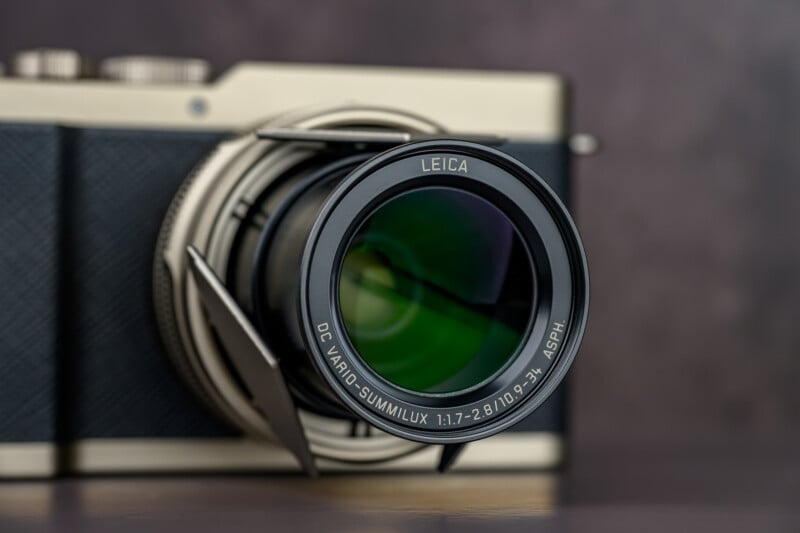
The optical heart of the L10 is a Leica DC Vario-Summilux 10.9-34mm f/1.7-2.8 lens, which provides a full-frame equivalent focal range of 24-75mm. Panasonic engineers have updated the lens assembly with improved internal coatings to reduce flare and ghosting, as well as enhanced weather resistance to mitigate the dust-entry issues that plagued previous generations. The lens also features a macro mode capable of 1:1 reproduction, allowing for extreme close-up photography, though the physical proximity required (3cm) presents lighting challenges for the user.

Design, Ergonomics, and Control Philosophy
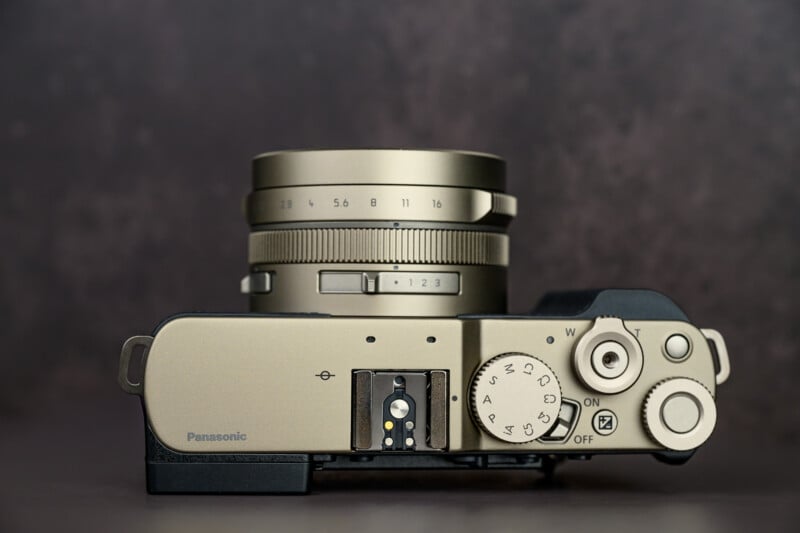
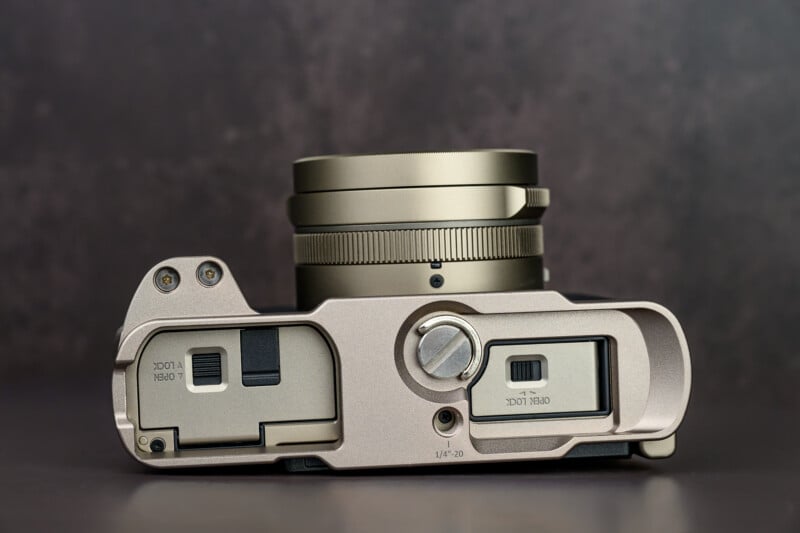
Weighing approximately 500 grams (18 ounces), the L10 is slightly larger than its predecessors but remains comparable in size to the Fujifilm X100VI or the Lumix S9. The body is constructed from magnesium alloy, offering a premium feel and durability. Panasonic has introduced a special "Titanium Gold" edition for the launch, priced at a $100 premium over the $1,499 standard black model. This special edition includes a champagne-gold finish, a matching automatic lens cap, a threaded shutter button for soft-release attachments, and a premium leather strap.

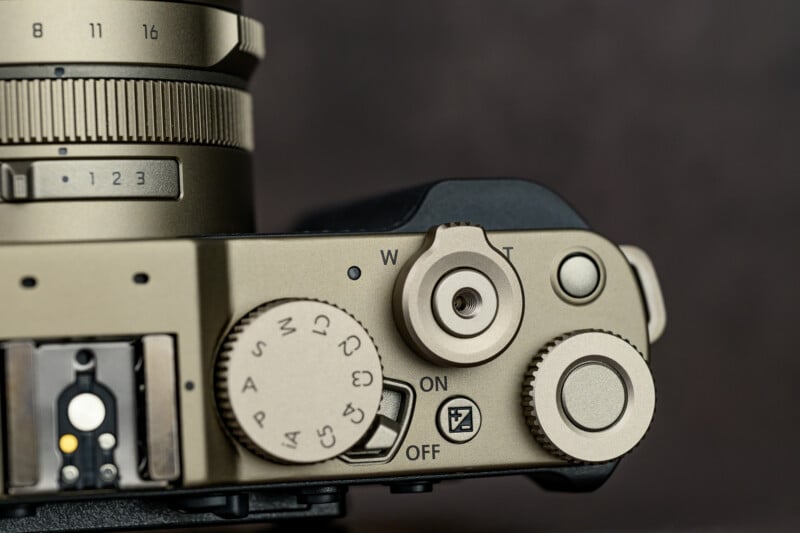
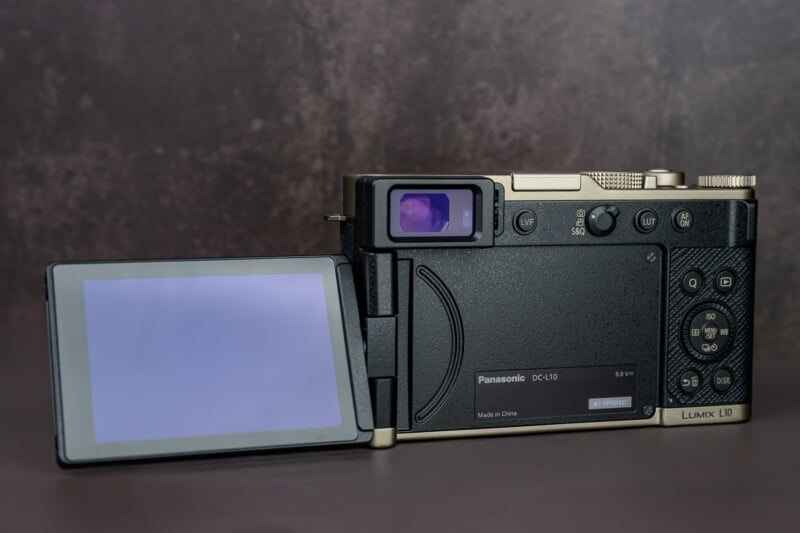
In a departure from the LX100 series, Panasonic has modified the top-plate control scheme. The dedicated shutter speed dial and exposure compensation dial have been replaced with a mode dial and a multi-function command dial. While this change may initially concern purists who prefer analog-style controls, the L10 offers extensive button customization. The rear thumb dial and the lens-based aperture ring provide a tactile shooting experience, while the inclusion of an AF-ON button caters to back-button focus techniques common in professional workflows.
The viewing experience is handled by a 2.36-million-dot Electronic Viewfinder (EVF) and a 1.84-million-dot fully articulating rear touchscreen. The transition to an articulating screen from the previous fixed or tilting designs reflects the L10’s dual-purpose nature, aiding in high-angle or low-angle composition.

Performance Data: Autofocus and Stabilization
A major technological leap for the L10 is the implementation of Phase Hybrid Autofocus (PDAF). By combining phase-detection and contrast-detection points, the camera achieves significantly faster and more reliable focus tracking than the "Depth from Defocus" (DFD) system used in earlier Lumix compacts. The L10 includes sophisticated AI-driven subject detection, capable of recognizing and tracking humans, animals, cars, and motorcycles.

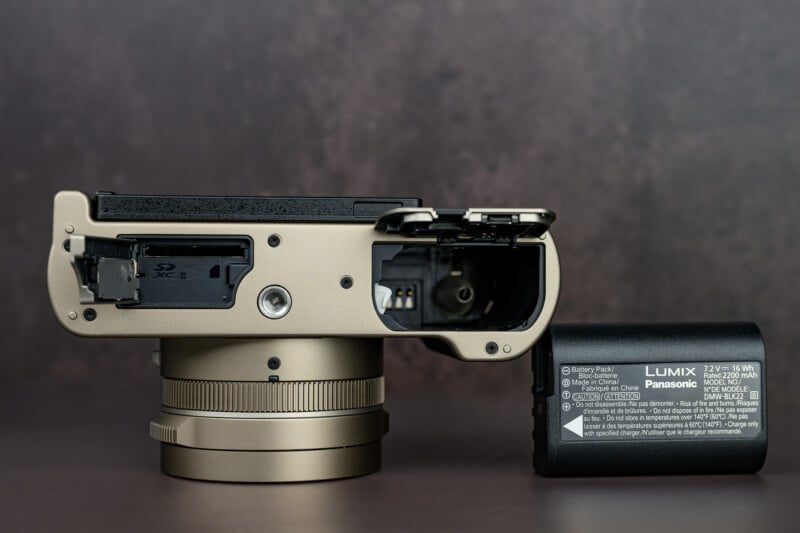
The camera utilizes a leaf shutter mechanism, which offers two distinct advantages: near-silent operation and high-speed flash synchronization up to 1/2000s. This makes the L10 an exceptionally capable tool for daylight flash photography and street portraiture. Furthermore, the L10 adopts the BLK-22 battery used in the Lumix S5 II and G9 II, providing a CIPA-rated battery life of approximately 400 shots per charge—a substantial improvement over older compact models.
Video Capabilities and the Lumix Lab Integration
While Panasonic has marketed the L10 primarily as a stills-focused camera, its internal hardware provides robust video specifications. The camera supports 10-bit internal recording, V-Log, and "Open Gate" capture, which utilizes the full 4:3 sensor area to allow for flexible cropping in post-production. This makes the L10 a viable B-roll camera for professional cinematographers or a high-quality tool for social media creators.
The L10 also integrates with the new "Lumix Lab" smartphone application. This ecosystem allows users to create custom Real-Time LUTs (Look-Up Tables) or "color recipes" on their mobile devices and wirelessly transfer them to the camera. Once loaded, these profiles can be applied directly to JPEGs and videos, enabling a streamlined "shoot-to-share" workflow that bypasses traditional computer-based editing.

Market Context and Competitive Analysis
The L10 enters a competitive but underserved segment of the market. Its primary rivals include the Fujifilm X100VI and the Ricoh GR III/IV. However, the L10 distinguishes itself by offering a versatile zoom lens and an EVF, whereas the Fujifilm and Ricoh models utilize fixed prime lenses.
| Feature | Lumix L10 | Fujifilm X100VI | Ricoh GR III |
|---|---|---|---|
| Sensor Size | Micro Four Thirds | APS-C | APS-C |
| Resolution | 26MP | 40MP | 24MP |
| Lens | 24-75mm (Equiv.) f/1.7-2.8 | 35mm (Equiv.) f/2.0 | 28mm (Equiv.) f/2.8 |
| AF System | Phase Hybrid | Phase Hybrid | Hybrid (Contrast/Phase) |
| Video | 4K 10-bit / V-Log | 6.2K 10-bit | 1080p |
| MSRP | $1,499 | $1,599 | $1,049 |
Industry analysts suggest that the L10’s $1,499 price point reflects the rising costs of premium optics and the global demand for high-end compacts. While the Micro Four Thirds sensor is smaller than the APS-C sensors found in its rivals, the L10 compensates with superior zoom versatility and advanced video features inherited from the GH7.
Broader Impact and Future Implications
The release of the Lumix L10 is more than just a product launch; it is a statement of intent for the Micro Four Thirds consortium. By placing its most advanced sensor and autofocus technology into a compact, stylish body, Panasonic is betting that the advantages of the MFT system—namely, the balance between size and performance—remain relevant in 2026.

The inclusion of professional features like V-Log and the BLK-22 battery suggests that Panasonic is listening to its core user base of travel and street photographers who demand reliability and consistency across their gear. Furthermore, the L10 serves as a bridge for the "smartphone-upgrader" demographic, offering the tactile satisfaction of a "real" camera with the connectivity and ease of use provided by the Lumix Lab app.

As Lumix enters its second quarter-century, the L10 stands as a testament to the brand’s origins. It honors the heritage of the LX series while embracing the future of hybrid imaging, ensuring that the Micro Four Thirds format continues to occupy a vital niche in the evolving landscape of digital photography. For photographers who have waited years for a compact that doesn’t compromise on speed or optical flexibility, the L10 arrives not just as a celebration of the past, but as a sophisticated tool for the future.

