


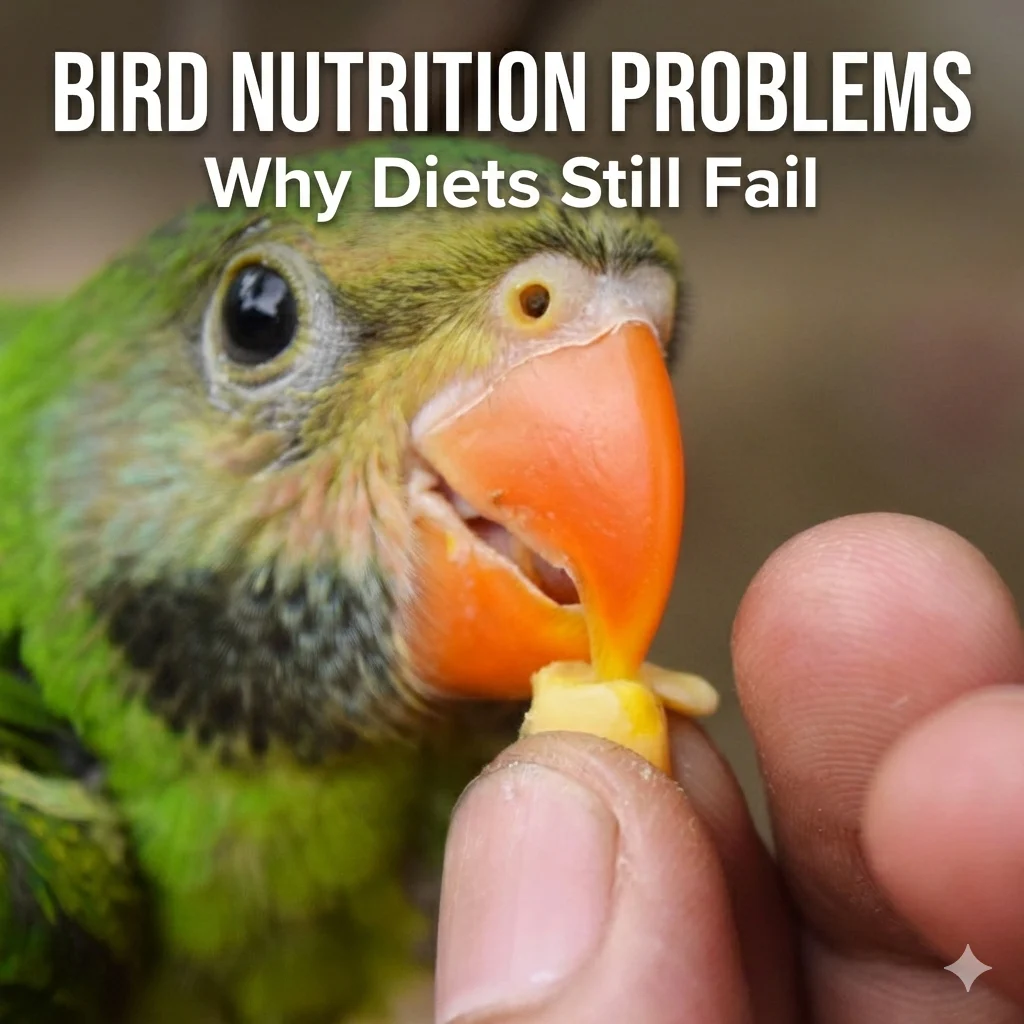
Despite the best intentions of avian caregivers, many pet birds consuming seemingly "good" diets continue to exhibit signs of weakness, dull feathers, or subtle health issues. This perplexing phenomenon often stems not from a lack of nutritional input, but from systemic failures in how those nutrients are absorbed and activated within the bird’s metabolism. The critical chain of intake, absorption, and activation must function seamlessly; if any link falters, the bird’s overall health and vitality can be compromised. This article delves into the intricate mechanisms behind common avian nutritional challenges, exploring why even well-fed birds can suffer from hidden deficiencies and how to build a truly robust dietary and environmental plan.
The Metabolic Paradox: Eating Well, Feeling Weak
The fundamental assumption that "eating enough" automatically equates to "being healthy" is often a pitfall in avian care. For parrots, like many other species, nutrient utilization is a multi-stage process. A prime example is calcium, a mineral vital for everything from bone density and eggshell formation to nerve transmission and muscle contraction. Even if a bird consumes ample calcium, its journey from the digestive tract into the bloodstream is dependent on adequate levels of vitamin D3. Without this crucial vitamin, intestinal transport proteins responsible for calcium absorption remain inactive, rendering dietary calcium largely unavailable. This metabolic bottleneck can lead to a cascade of subtle, yet significant, health problems that often go unnoticed until they become advanced.
Avian experts, including author and avian specialist Diane Burroughs, LCSW, frequently highlight that such deficiencies can manifest quietly. "My bird eats well – so why do they still look weak?" is a common query. The answer often lies beneath the surface of apparent wellness.
Understanding Critical Nutrient Functions
Three key nutritional elements frequently emerge as "missing links" in otherwise balanced diets:
- Calcium + D3: Egg & Bone Security
- Critical Functions: Supports strong bones, ensures proper eggshell formation, regulates nerve impulse transmission, facilitates muscle contraction, and maintains cardiovascular health.
- Impact of Deficiency: Leads to brittle bones, soft-shelled eggs (in hens), muscle weakness, tremors, and in severe cases, seizures or death.
- Amino Acids: Total Body Vitality
- Critical Functions: Building blocks for proteins essential for feather growth, muscle repair, enzyme production, hormone synthesis, and immune system function.
- Impact of Deficiency: Results in poor feather quality, stunted growth, muscle wasting, compromised immune response, and overall lethargy.
- Trace Minerals: Hormonal Balance & Beyond
- Critical Functions: Act as cofactors for countless enzymatic reactions, support thyroid function (iodine), aid immune response (zinc), and contribute to red blood cell formation (iron).
- Impact of Deficiency: Can lead to hormonal imbalances, reproductive issues, dull plumage, impaired immunity, and various metabolic dysfunctions.
Subtle Indicators of Underlying Deficiencies
Before overt illness strikes, birds often display nuanced symptoms that signal compromised nutrient status. Recognizing these early warning signs is paramount for timely intervention.
- Balanced Diet but Weak Grip in Parrots: One of the earliest and most frequently overlooked signs of inadequate calcium absorption is a subtle decline in neuromuscular control. Owners may observe their bird’s toes slipping more often on perches, a hesitant or less confident grip, or difficulty stabilizing during active movements. This is because calcium’s role in nerve signaling and muscle contraction means that even marginal circulating levels can first impact high-demand activities. According to veterinary studies, subclinical hypocalcemia can reduce muscle efficiency long before a bird appears acutely ill.
- Shorter Flights and Clumsy Landings: As calcium’s influence on neuromuscular function wanes, activities requiring precise coordination become challenging. Birds might exhibit shorter flight durations, an increased reluctance to take off, or noticeably clumsy and less controlled landings. These behavioral changes often precede any visible skeletal or organ damage and serve as critical indicators of systemic weakness.
- Dull Feathers Despite Eating Pellets: Feather quality is a robust biomarker for a bird’s overall metabolic health. Even birds consuming high-quality pelleted diets can develop dull, brittle, or poorly structured feathers if their bodies cannot effectively absorb and utilize essential minerals and amino acids. During molt, compromised mineral balance can lead to thinner feather shafts, a lack of natural sheen, or fragile edges, indicating an underlying inefficiency in nutrient metabolism rather than merely a poor diet choice.
The Challenge of Diet Conversion: Overcoming Neophobia
A common hurdle in improving avian nutrition is the parrot’s inherent neophobia—a strong aversion to novel foods. Parrots are highly routine-driven eaters, and presenting them with unfamiliar pellets, especially if they were raised on seeds, can trigger food refusal. This is not mere pickiness; for a parrot, choosing starvation over an unknown food is a primal survival instinct. Therefore, attempting a "cold turkey" pellet swap is not only ineffective but also dangerously risky, potentially leading to rapid and severe weight loss.
As Diane Burroughs emphasizes in her guide, "How To Convert a Bird To Pellets Fast – Stop the Seed Struggle," a successful transition isn’t about simply waiting for hunger to force a bird to eat. It’s about "supplementing the bridge" to ensure they receive critical nutrients like calcium and amino acids while they gradually learn to trust and accept the new food.
Safe Transition Strategies:
- Gradual Introduction: Birds do not inherently recognize pellets as food. The most effective method involves gradually mixing small amounts of pellets into their familiar seed diet, slowly increasing the proportion over several weeks or even months.
- Weight Monitoring: Preventing weight loss is paramount. Owners should weigh their bird weekly, or even daily during intensive phases, using a gram scale. A drop of more than 3-5% of body weight is a red flag, signaling insufficient intake and necessitating a slowdown or temporary pause in the transition process. Caloric stability must always take precedence over immediate nutritional optimization.
- Modeling and Positive Reinforcement: Birds learn through observation. Owners eating healthy foods in front of their birds, or placing pellets alongside favored treats, can encourage acceptance.
The Perils of Seed Addiction in Parrots
While seeds are a natural part of a parrot’s diet in the wild, an exclusive or heavily seed-based diet in captivity creates predictable and profound nutrient gaps. Commercial seed mixes are typically high in fat and calories, making them palatable, but critically deficient in bioavailable calcium, vitamin A, and essential amino acids.
Birds on seed-only diets may appear energetic initially, masking the slow development of nutrient imbalances that insidious affect their feathers, immune system, and bone strength. This preference for seeds is a learned feeding behavior driven by their texture and high fat content, not by an innate "nutritional wisdom." Over time, these deficiencies lead to:
- Vitamin A Deficiency (Hypovitaminosis A): Compromises epithelial tissue in the mouth, sinuses, and respiratory tract, making birds highly susceptible to secondary bacterial and fungal infections.
- Calcium Deficiency (Hypocalcemia): Weakens bones, impairs muscle function, and can lead to severe reproductive issues in hens.
- Trace Mineral Imbalances: Affects everything from thyroid function (iodine deficiency) to immune response (zinc deficiency) and feather pigmentation.
The most stable approach, supported by extensive veterinary research, combines a high-quality formulated pellet foundation with measured fresh vegetables and fruits, and controlled, supplemental seed use. This structured approach prevents the slow, insidious nutrient drift that characterizes seed-heavy diets.
Beyond Pellets and Veggies: The Role of Activation
"They eat pellets and veggies – so why isn’t it working?" This question highlights another crucial dimension: nutrient activation. Even with a perfectly balanced diet, if the body cannot activate or utilize those nutrients, deficiencies can still arise.
- Calcium and Vitamin D3: The Unbreakable Link: As previously noted, calcium in the bowl does not automatically translate to calcium in the bloodstream. Vitamin D3 is the critical hormone that activates intestinal transport proteins, enabling calcium to cross the gut wall and enter circulation. Without adequate D3, dietary calcium passes through the digestive system largely unabsorbed.
- The Indoor Paradox: Window Light Blocks UVB: Many indoor birds, despite living in brightly lit homes, remain metabolically "under-activated" when it comes to vitamin D3 synthesis. This is because standard window glass, while allowing visible light to pass, effectively blocks ultraviolet B (UVB) radiation – the specific spectrum of light required for a bird’s skin to synthesize vitamin D3. Consequently, indoor birds, especially those without access to unfiltered sunlight or specialized UVB lighting, are at a significantly higher risk of chronic vitamin D3 deficiency and subsequent calcium malabsorption.
The Efficacy of Supplements: Dose, Stability, and Delivery
"Do supplements in water actually work?" This common query points to the complexities of supplement delivery. Bird vitamin supplements can be highly effective, but only when three variables are meticulously controlled: ingredient stability, consistent intake, and bioavailability.
- Ingredient Stability: Many water-soluble nutrients, particularly certain vitamins, are sensitive to light, heat, and oxygen. When mixed into water, their efficacy can degrade rapidly, especially if the water sits for extended periods in warm or brightly lit environments.
- Consistent Intake: A bird’s daily water consumption can fluctuate significantly based on ambient temperature, activity level, and diet. If the dose of a supplement is dependent on consistent water intake, the actual amount consumed can vary unpredictably, leading to either under-dosing or, less commonly, over-dosing.
- Bioavailability: The form of the nutrient matters. Some forms are more readily absorbed and utilized by the bird’s body than others.
Food vs. Water Supplements:
Generally, food-based delivery systems offer greater dose reliability. When a supplement is mixed into a known portion of chop, soft food, or a specific treat, owners can more accurately confirm consumption. For critical nutrients like calcium, magnesium, biotin, or calming amino acids, which require consistent dosing for optimal effect, controlled food application reduces the risk of underdosing, waste, and unpredictable outcomes.
When is a Calcium Supplement Necessary?
The need for calcium supplementation is not universal but becomes critical under specific circumstances:
- Indoor Housing without UVB Exposure: This is a primary risk factor for low vitamin D3 and poor calcium absorption.
- Egg-laying Hens: Reproduction places immense demand on calcium stores.
- Birds with Weak Grip Strength or Neuromuscular Decline: These are direct indicators of potential calcium imbalance.
- Recurring Thin-Shelled Eggs: A clear sign of calcium deficiency in breeding females.
A properly formulated calcium, magnesium, and D3 combination is often recommended in these scenarios to maintain nerve signaling, muscle contraction, and bone stability when natural environmental input is insufficient. However, caution is paramount, as excessive calcium supplementation can lead to soft tissue mineralization, kidney strain, and metabolic imbalances.
The Seasonal Impact: Why Winter Worsens Conditions
"Why does everything get worse in winter?" For many parrots, particularly those originating from tropical regions where daylight hours and intensity remain relatively stable year-round, northern winters present a dramatic physiological challenge.
- Winter Light Loss and Vitamin D3: Shorter days and weaker sunlight significantly reduce natural UVB exposure. As discussed, UVB is essential for skin synthesis of vitamin D3. Reduced UVB directly translates to reduced D3 production, which in turn impairs calcium utilization, even if the dietary intake of calcium remains constant. This explains why subtle weaknesses often become more pronounced during late winter.
- Indoor Birds and Calcium Deficiency: The combination of natural winter light reduction and the complete blocking of UVB by indoor glass creates a perfect storm for vitamin D3 and calcium deficiencies in pet parrots. Diet alone cannot fully compensate for this impaired D3 activation.
- Seasonal Behavioral Changes: Light exposure is a powerful regulator of circadian rhythms, hormone signaling, and overall metabolic stability. Inconsistent or significantly shortened photoperiods can trigger a range of adverse effects, including irritability, reduced activity levels, decreased grip strength, and even delayed or poor-quality molts. When a bird’s physiology, adapted for tropical consistency, encounters dramatic seasonal shifts, both behavior and physical strength can decline in tandem.
Differentiating Deficiencies: When to Consult an Avian Vet
"Is this Vitamin A deficiency, calcium deficiency – or something worse?" It’s crucial to understand that while vitamin A and calcium imbalances are common, their symptoms can mimic other serious illnesses. Moreover, both low and excessively high levels of these nutrients can cause significant harm. The symptom lists provided are educational guides, not diagnostic tools.
Important Note: The following signs are illustrative and not a substitute for veterinary diagnosis. Bloodwork, radiographs, and other diagnostic tests performed by an avian veterinarian are the only reliable ways to confirm a deficiency or toxicity.
Signs of Vitamin A Deficiency in Parrots:
- Thickened or crusted nares (nostrils)
- Excessive sneezing or nasal discharge
- Oral abscesses (especially on the tongue or palate)
- Poor feather quality, stress bars
- Swelling around the eyes or eyelids
- Respiratory issues, including difficulty breathing or abnormal sounds
- General lethargy and reduced appetite
Note: While vitamin A is vital, excessive synthetic vitamin A supplementation can stress the liver and lead to toxicity. Balance, not simply "more," is the key.
Signs of Hypocalcemia (Calcium Deficiency) in Parrots:
- Weak or unsteady grip, "slipping toes"
- Muscle tremors or twitching
- Difficulty perching or balancing
- Shorter, clumsy flights
- Seizures (in severe, acute cases)
- Thin-shelled or soft-shelled eggs (in hens)
- Lethargy and reduced activity
Note: Just as with vitamin A, excess calcium can lead to serious issues like soft tissue mineralization (e.g., in kidneys) and metabolic imbalances. Supplementation must be precise and species-appropriate.
When to Call an Avian Vet Immediately:
Certain symptoms are emergency indicators and require immediate veterinary attention:
- Acute onset of seizures or tremors
- Severe weakness, inability to perch or stand
- Persistent respiratory distress
- Sudden, unexplained weight loss (over 5% in a few days)
- Severe bleeding or trauma
- Any symptom that is rapidly progressing or causing significant distress
These are not "watch and wait" symptoms. Acute calcium crashes, severe secondary infections due to vitamin A deficiency, or other systemic illnesses can progress rapidly. An avian veterinarian can perform necessary diagnostics and provide life-saving supportive treatment.
The Integrated Solution: Correcting the Metabolic Chain
"What actually fixes the problem?" The solution is rarely singular; it typically involves correcting multiple variables simultaneously. Nutrient imbalance, poor absorption, and inadequate environmental light exposure often overlap. Addressing only one aspect while ignoring others will likely yield only partial, temporary improvement. The best outcomes arise from a structured approach that tackles the entire metabolic chain.
-
Correcting Vitamin A Deficiency:
- Dietary Sources: Introduce dark leafy greens (kale, spinach, dandelion), orange and yellow vegetables (carrots, sweet potato, bell peppers), and certain fruits (mango, papaya).
- Formulated Pellets: Ensure the base diet is a high-quality pellet formulated to provide adequate, safe levels of vitamin A.
- Supplementation (if needed): Only under veterinary guidance, use a species-appropriate vitamin A supplement.
- Observation: Improvements are often seen first in oral tissue color and reduction of nasal discharge, rather than immediate feather changes. Consistency in dietary correction is vital.
-
Installing a Safe UVB Bird Light:
- Glass Blocks UVB: Reiterate that window light does not provide usable UVB.
- Purpose: A full-spectrum UVB lamp (specifically designed for birds) allows the bird’s skin to synthesize vitamin D3, which is essential for calcium absorption.
- Placement and Duration: Position the light at an appropriate distance from the cage, ensuring the bird can choose to be under it or move away. Provide 8-12 hours of exposure daily.
- Maintenance: UVB bulbs degrade over time, even if they still appear bright to the human eye. Replace them according to the manufacturer’s schedule (typically every 6-12 months).
-
Using Calcium, Magnesium & D3 Together:
- Synergy: Calcium alone is insufficient. Vitamin D3 activates its absorption, while magnesium supports proper calcium regulation, nerve transmission, and muscle function. These three nutrients work in concert.
- Targeted Support: Birds experiencing weak grip, seasonal decline, egg-laying stress, or those housed exclusively indoors often require an integrated supplement rather than isolated dosing.
- Measured Dosing: Over-supplementation can lead to kidney strain and soft tissue mineralization. Dosing should always be measured and species-appropriate, ideally guided by an avian veterinarian.
The Bottom Line: A Holistic Approach to Avian Health
Parrots do not fail because their owners lack care. They fail when one critical link in their complex metabolic chain is missing or compromised. The solution demands a holistic perspective: optimizing dietary intake, ensuring efficient absorption, and facilitating crucial nutrient activation. When intake, absorption, and activation are aligned through a structured diet, appropriate environmental light exposure, and targeted support (when indicated), remarkable improvements can be seen. Strength returns, grip improves, feathers regain their structure and sheen, and energy levels stabilize. If symptoms persist despite these efforts, diagnostic lab work and consultation with a qualified avian veterinarian become the indispensable next steps.

