


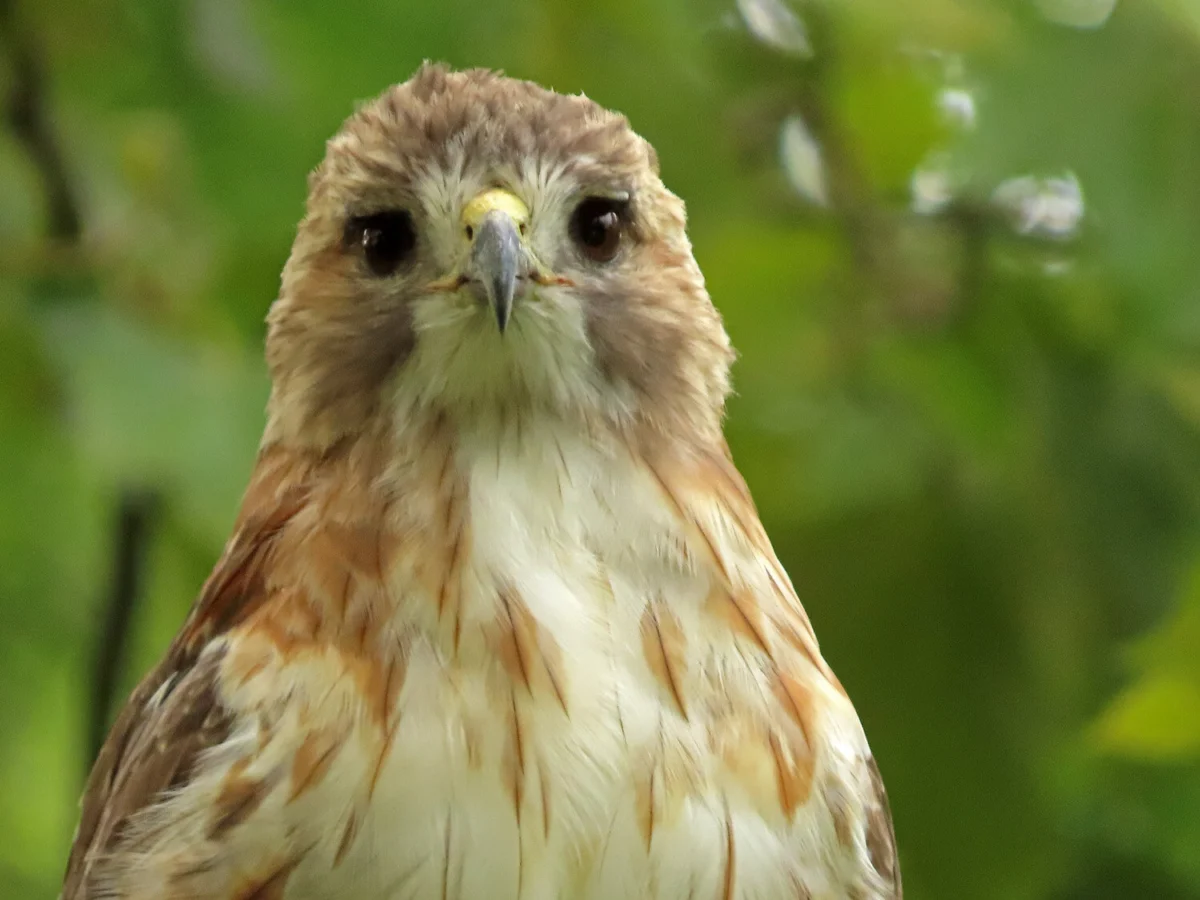
Georgia, affectionately known as the Peach State, boasts a diverse and captivating natural landscape, from the rolling Blue Ridge Mountains in the northeast to the vast Okefenokee Swamp in the southeast. This varied topography provides a rich tapestry of habitats that support a remarkable array of wildlife, including a fascinating spectrum of birds of prey. While the state ranks 32nd nationally in the number of recorded bird species with 438 sightings, its avian predators, particularly hawks, offer a compelling study in classification, identification, and ecological significance. This article delves into the intricacies of Georgia’s hawk population, clarifying taxonomic distinctions, detailing key species, and exploring their presence within the state.
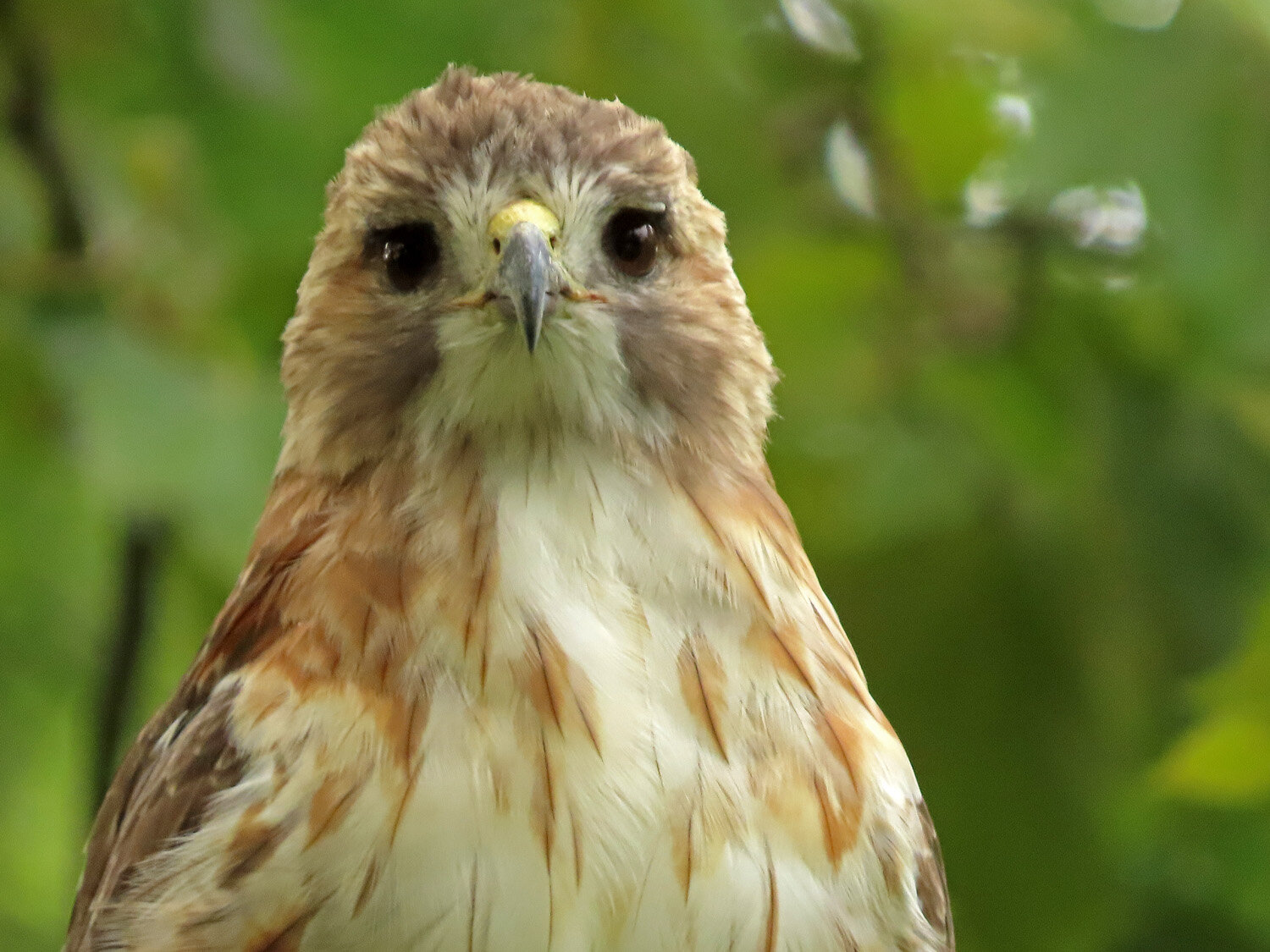
Understanding the classification of birds of prey can be complex, involving intricate hierarchical structures within scientific families. The order Accipitriformes encompasses most diurnal birds of prey. Within this order lies the family Accipitridae, a broad group that includes hawks, eagles, and kites. Further refining this classification, the subfamily Accipitrinae is recognized as containing "true hawks." This subfamily is then divided into several genera, including Accipiter, Microspizias, Erythrotriorchis, Megatriorchis, and Circus.
While the strict definition of "true hawk" pertains to the Accipitrinae subfamily, common parlance often extends the term "hawk" to include members of the Buteo genus. These birds, though not technically "true hawks" in the narrowest taxonomic sense, are widely recognized and referred to as hawks due to their similar ecological roles and general appearance. For the purpose of understanding Georgia’s hawk population, it is essential to include these commonly identified Buteo hawks.

Georgia’s diverse ecosystems, ranging from coastal estuaries and barrier islands to expansive forests and mountainous regions, provide suitable environments for a variety of raptor species. The state’s geographical features contribute to its status as a migratory flyway for many bird species, while also supporting resident populations of year-round avian predators.
The Hawks of Georgia: A Closer Look
Georgia’s avian checklist includes several species commonly identified as hawks, each with unique characteristics, habitat preferences, and ecological roles. Based on eBird sightings and general ornithological understanding, the following species are prominent:
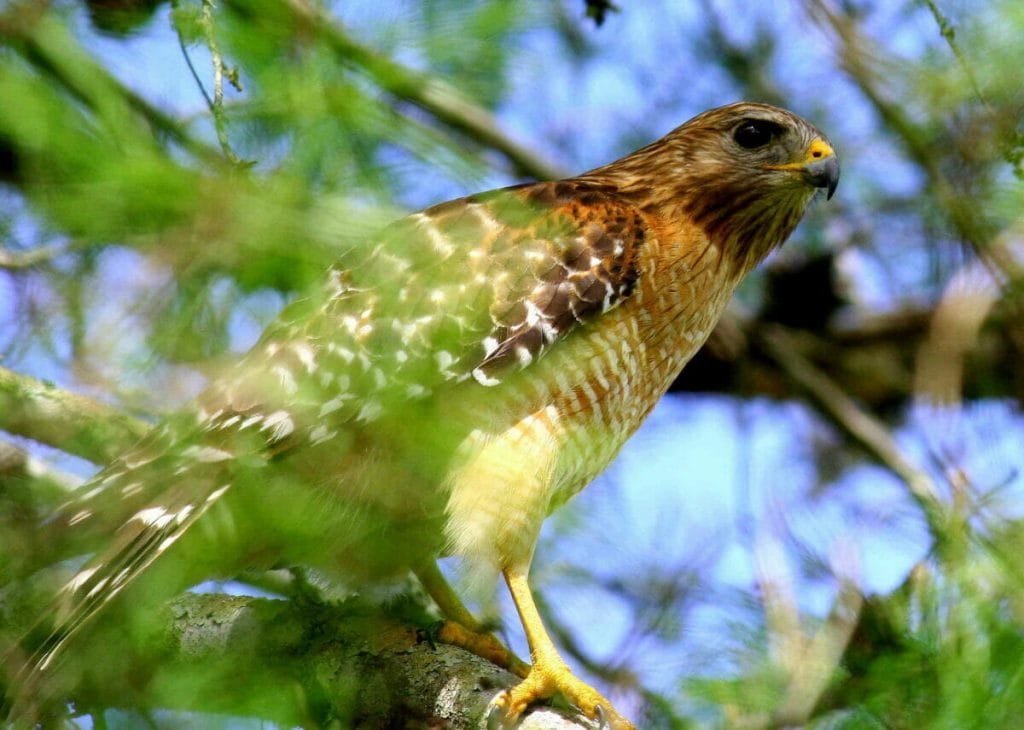
Red-shouldered Hawk (Buteo lineatus)
The Red-shouldered Hawk is a striking resident of Georgia, identifiable by its distinctive rufous (reddish-brown) coloring on the breast and head, extending to the shoulders. The underside of its wings and tail are marked with elegant black and white barring. These hawks typically measure between 16.9 and 24.0 inches in length, with a wingspan of 37.0 to 43.7 inches, and weigh between 17.1 and 27.3 ounces.
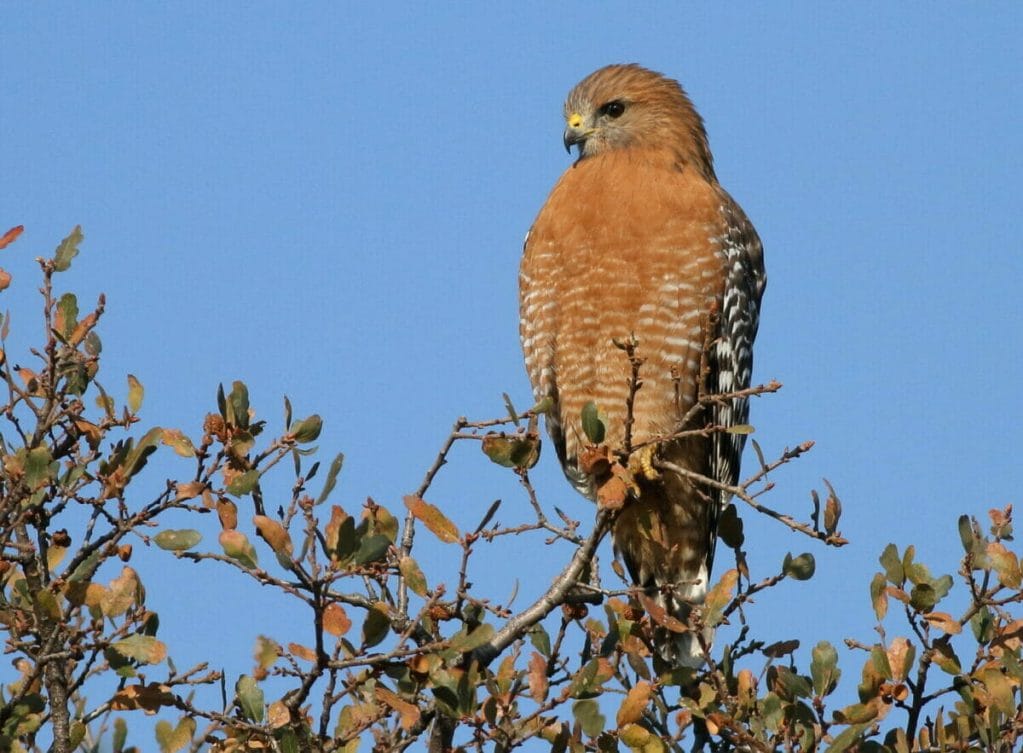
Distribution and Habitat: Red-shouldered Hawks are found throughout Georgia, inhabiting wooded areas, particularly those with access to water. They are year-round residents, their presence indicated by the rich sounds of their calls echoing through the forests. Their preference for mature forests, often near swamps, marshes, or rivers, highlights their reliance on specific environmental conditions for hunting and nesting.
Interesting Fact: The Red-shouldered Hawk is a formidable predator, adept at hunting small prey such as mice, voles, frogs, snakes, and even small birds. Their hunting strategy often involves perching in concealed locations within the forest canopy, patiently waiting for an opportunity to strike.
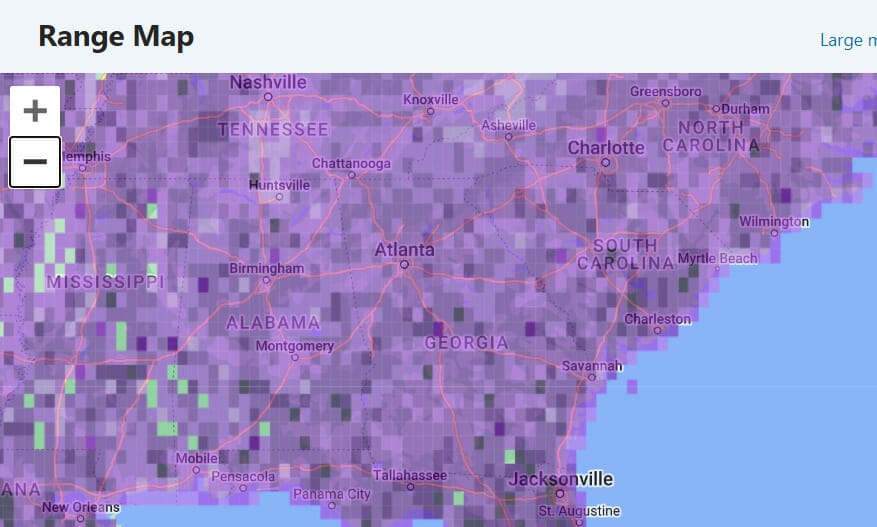
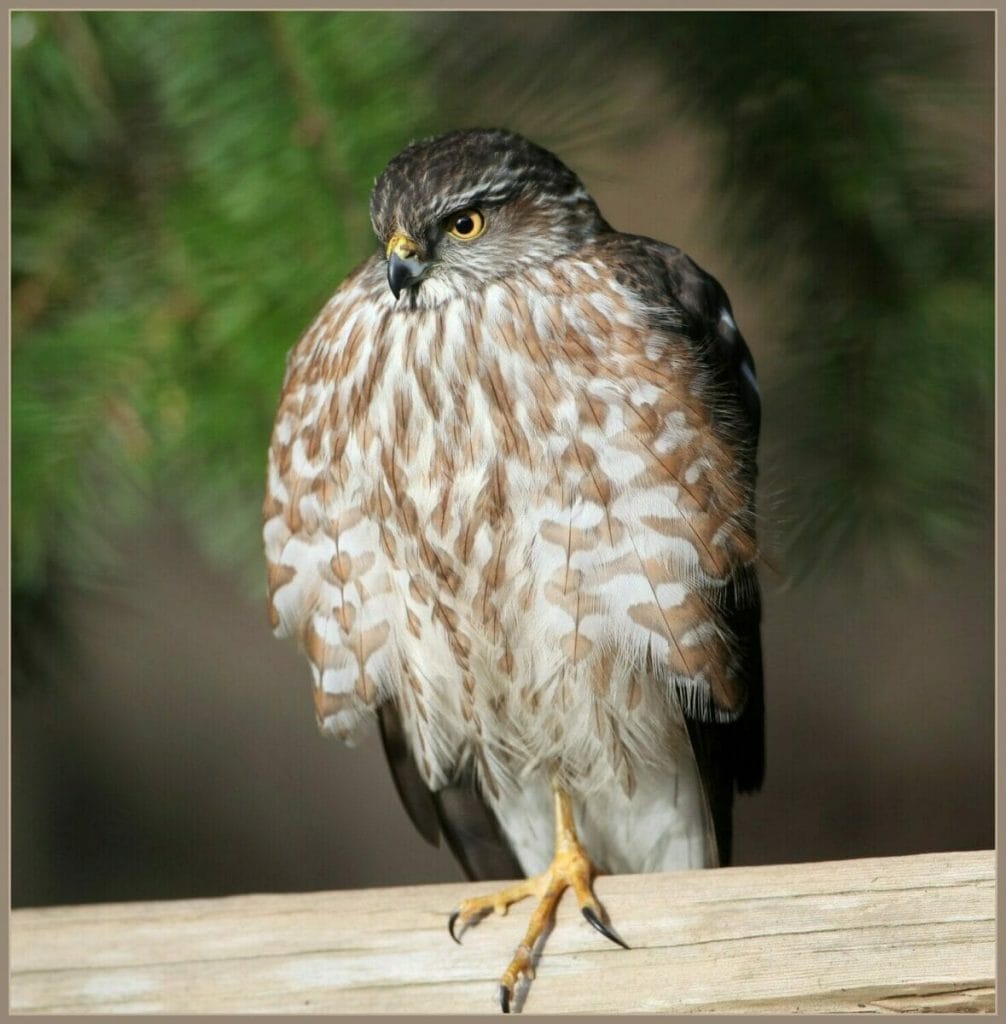
Cooper’s Hawk (Accipiter cooperii)
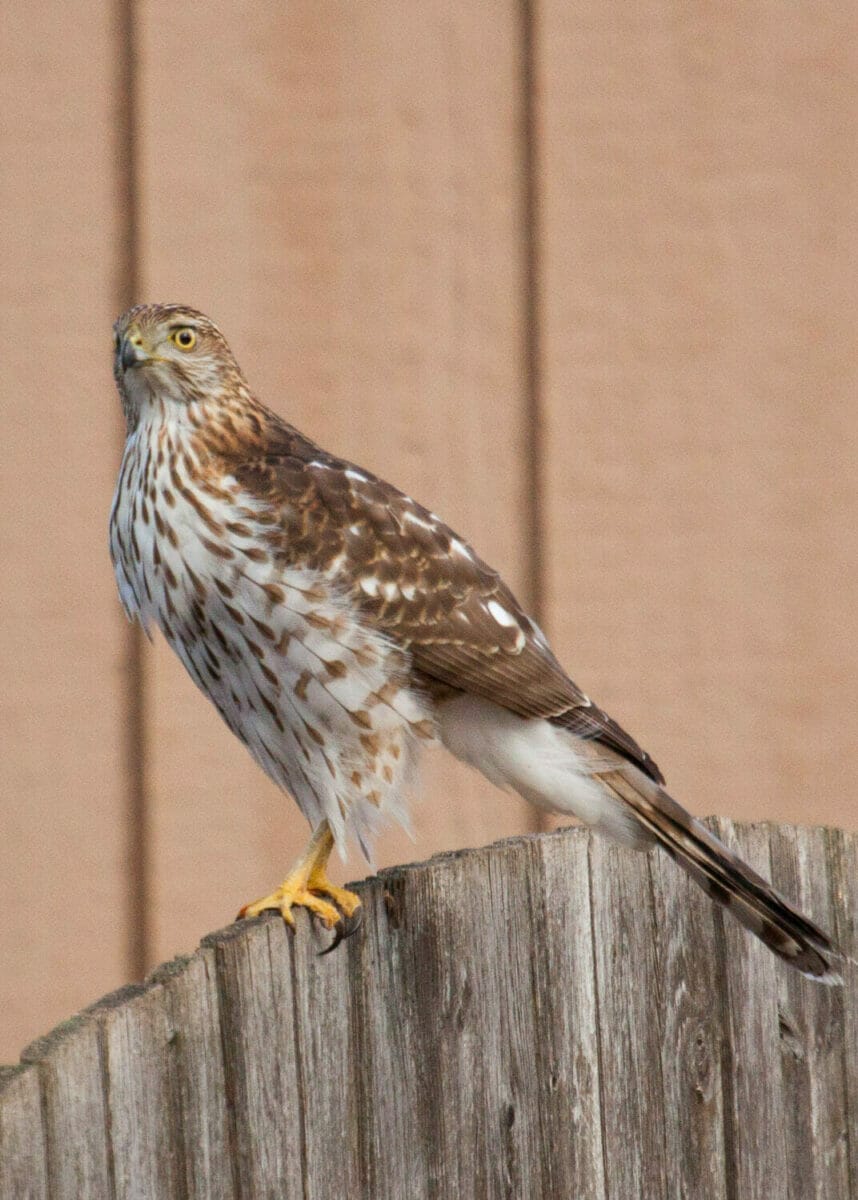
The Cooper’s Hawk, a member of the Accipiter genus, is a medium-sized hawk known for its agility and speed, particularly in wooded environments. Adult Cooper’s Hawks typically display a dark gray upper body with a reddish-orange or buffy underside marked by fine barring. Their eyes are a distinctive bright yellow to orange. Females are noticeably larger than males, a common trait in accipiters. Juvenile Cooper’s Hawks have a more streaked, brownish plumage.
Identification and Size: Adults measure between 14.6 and 17.7 inches in length with a wingspan ranging from 24.4 to 35.4 inches. Their weight falls between 7.8 and 24 ounces. The rounded tail and broad, rounded wings are characteristic of their flight style, allowing them to navigate dense forests with remarkable precision.
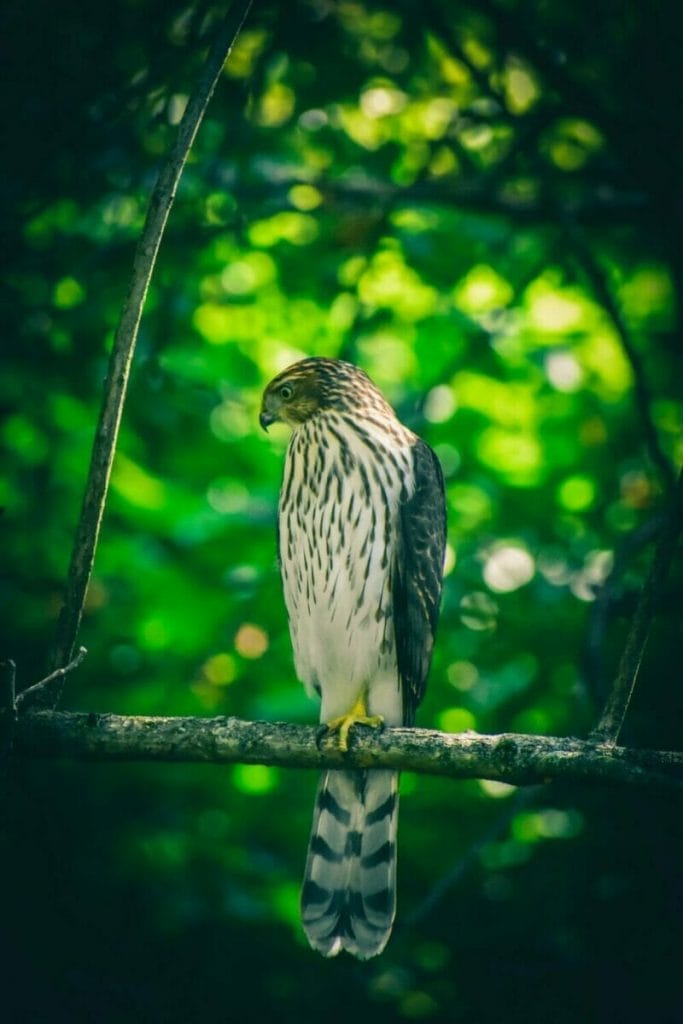
Distribution and Habitat: While migratory in many parts of North America, Cooper’s Hawks are resident in Georgia and can be observed year-round. They favor deciduous woodlands and forests, often found near forest edges or clearings where they can hunt effectively. Their ability to adapt to suburban and even urban environments with sufficient tree cover makes them a relatively common sight for observant residents.
Interesting Fact: Cooper’s Hawks are renowned for their ability to pursue and capture prey, primarily other birds, within the dense undergrowth of forests. They are known to kill their prey by squeezing it with their powerful talons, a swift and efficient method of dispatch.
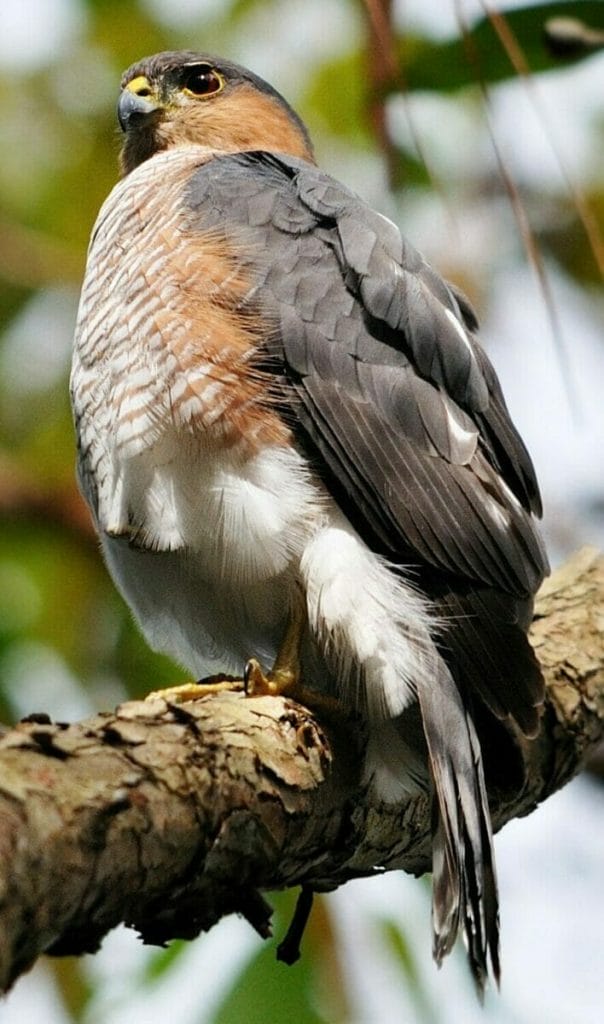
Sharp-shinned Hawk (Accipiter striatus)
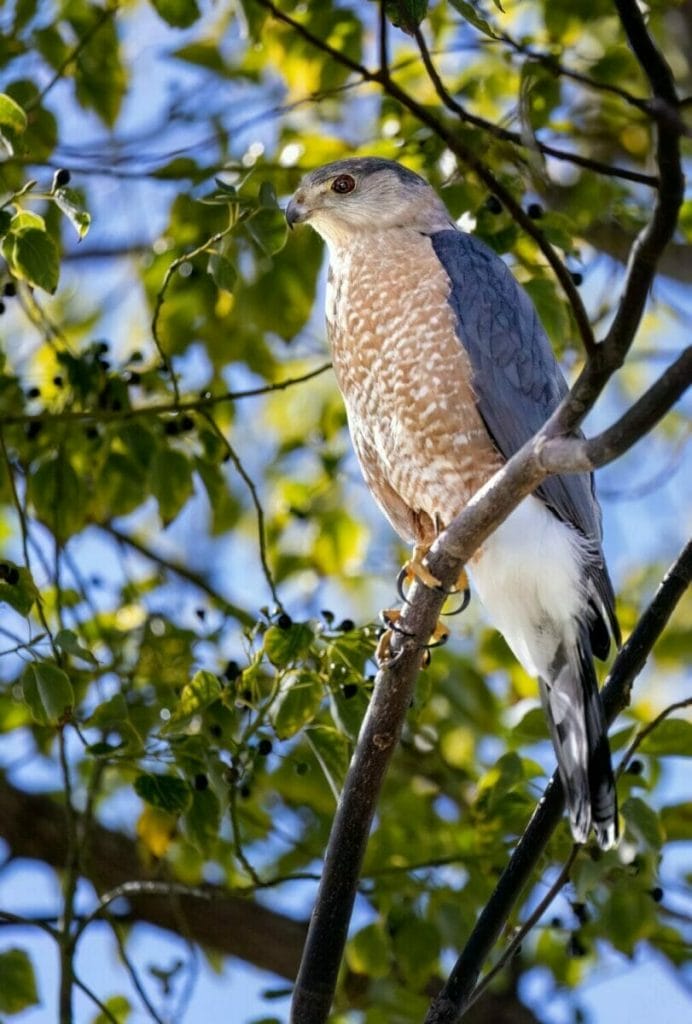
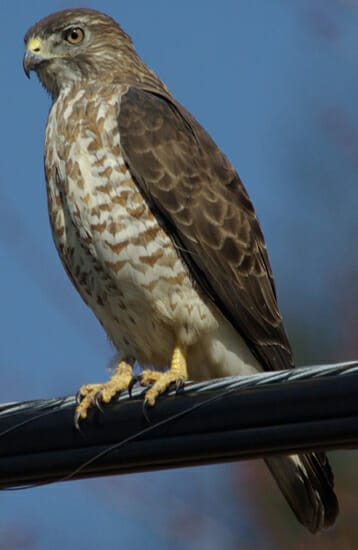
The Sharp-shinned Hawk, another accipiter, is often confused with the Cooper’s Hawk due to their similar appearance. However, the Sharp-shinned Hawk is considerably smaller. Adults exhibit a bluish-gray back and finely barred reddish or buffy underparts. Their tails are typically squared or slightly notched at the end, and their wingbeats are rapid. Like the Cooper’s Hawk, females are larger than males.
Identification and Size: This is the smallest of the North American accipiters, measuring between 9.4 and 13.4 inches in length with a wingspan of 16.9 to 22.1 inches. Their weight is considerably lighter, ranging from 3.1 to 7.7 ounces. A key identification feature is the shorter, straighter outer tail feathers compared to the rounded tail of the Cooper’s Hawk.
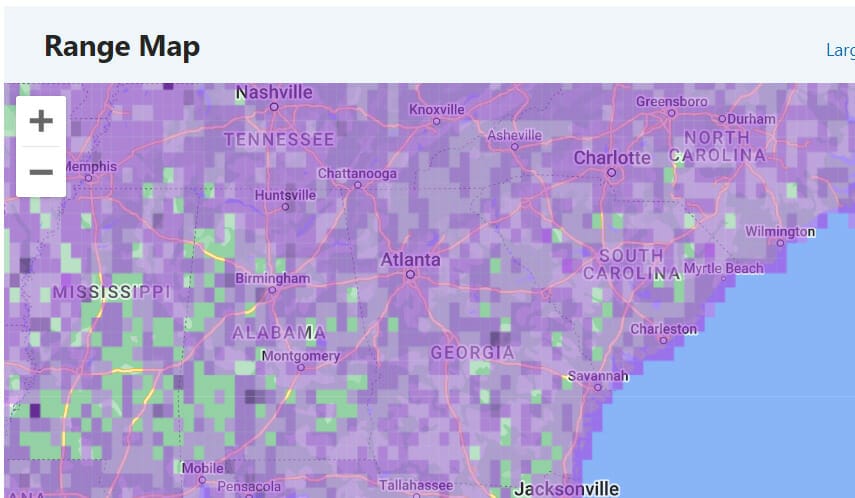
Distribution and Habitat: The Sharp-shinned Hawk is a migratory species in Georgia, present during the non-breeding season. They breed in Canada and the northern United States and migrate south for the winter. Their preferred habitats include dense coniferous or mixed forests, where they hunt small birds. Their elusive nature and preference for thick cover can make them challenging to spot.
Interesting Fact: The Sharp-shinned Hawk is a specialist predator, primarily feeding on small birds such as warblers, sparrows, and finches. Their hunting technique involves explosive bursts of speed and remarkable aerial maneuverability to surprise and capture their agile prey.
Red-tailed Hawk (Buteo jamaicensis)
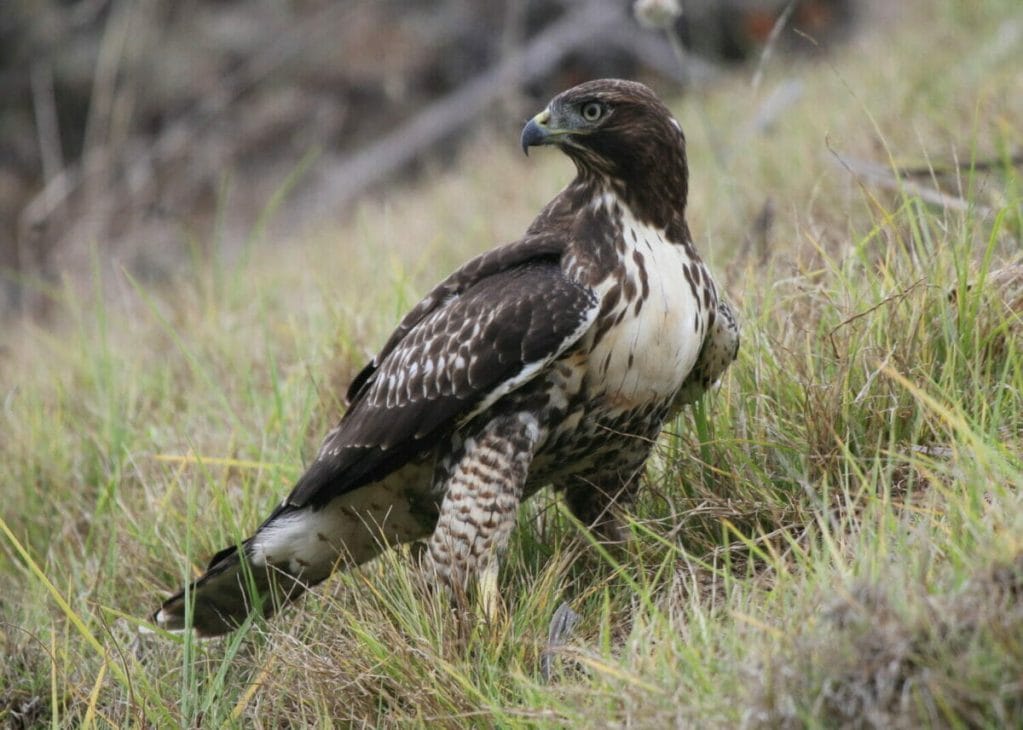
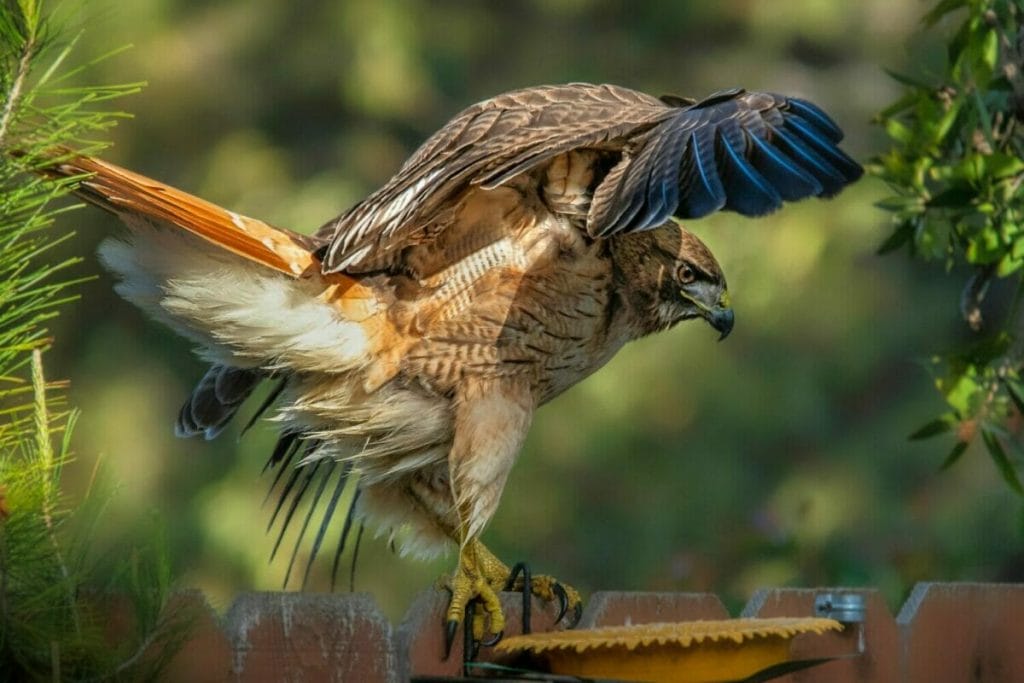
The Red-tailed Hawk is arguably the most widespread and recognizable hawk in North America and is a common resident of Georgia. Its most distinguishing feature, when visible, is the rich, brick-red tail of the adult bird. However, plumage can vary significantly, with some individuals exhibiting a pale underside with minimal red and brown markings. The male is smaller than the female.
Identification and Size: Red-tailed Hawks are large hawks, measuring between 17.7 and 25.6 inches in length with a substantial wingspan of 44.9 to 52.4 inches. Their weight ranges from 24.3 to 51.5 ounces, making them one of the larger hawks found in the state. Their broad, often soaring flight is characteristic, and their piercing call is famously used in many films to denote a wild or tense atmosphere.
Distribution and Habitat: This species is found throughout Georgia year-round, inhabiting a wide variety of open and semi-open habitats, including woodlands, grasslands, deserts, and even suburban areas. Their adaptability allows them to thrive in diverse environments, from open fields suitable for hunting small mammals to perched positions in tall trees or utility poles.
Interesting Fact: The distinctive call of the Red-tailed Hawk is so iconic that it has been dubbed the "screaming chicken hawk" by some due to its frequent use in film soundtracks. This vocalization is a key identifier, even when the bird itself is not clearly visible.
Broad-winged Hawk (Buteo platypterus)
The Broad-winged Hawk is a relatively small Buteo, characterized by its short body and wide wings. Adults typically display a brown upper body with distinctive barring on the breast. The wings are rufous towards the shoulders and transition to black and white towards the tips and on the tail.
Identification and Size: These hawks measure between 13.4 and 17.3 inches in length, with a wingspan of 31.9 to 39.4 inches. Their weight is between 9.3 and 19.8 ounces. Their flight is often described as more direct and less soaring than other Buteos, with deliberate wingbeats.
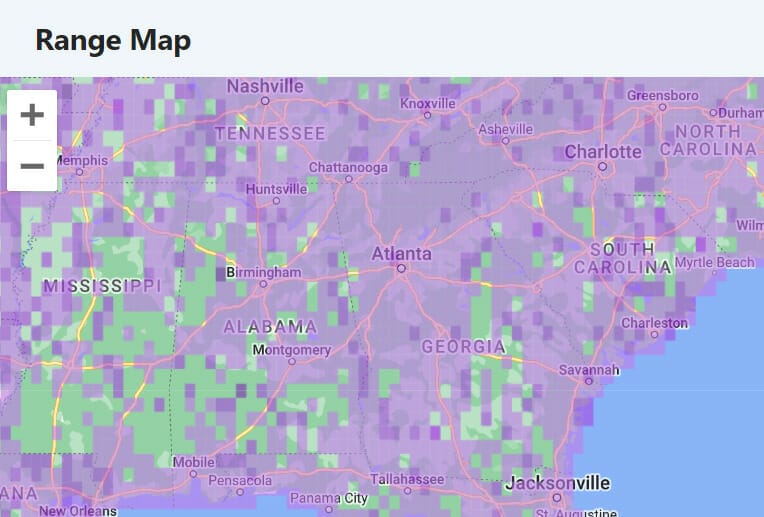
Distribution and Habitat: Broad-winged Hawks are summer visitors to Georgia, breeding in the state before migrating to Central and South America for the winter. They prefer mature, deciduous forests and woodlands, often found in areas with dense tree cover. Their breeding grounds are typically in the northern parts of their range, but they utilize Georgia’s forests during the warmer months.
Interesting Fact: During their extensive migrations, Broad-winged Hawks are known to gather in large flocks called "kettles." These impressive congregations of birds circle together in the sky, creating a spectacular natural phenomenon as they ride thermals on their journey south.
Short-tailed Hawk (Buteo brachyurus)
The Short-tailed Hawk is a more elusive species in Georgia, primarily found in the southern parts of the state. It is characterized by dark patches around its face framing a white throat. This species exhibits two morphs: a dark morph with a predominantly dark body and some white underwing patches, and a pale morph that is white underneath with black barring.
Identification and Size: Measuring between 15.3 and 17.3 inches in length with a wingspan of 32.7 to 40.5 inches, and weighing between 13.6 and 16.9 ounces, the Short-tailed Hawk is of medium size within the Buteo group. The dark morph is more common in the southeastern United States, including Georgia.
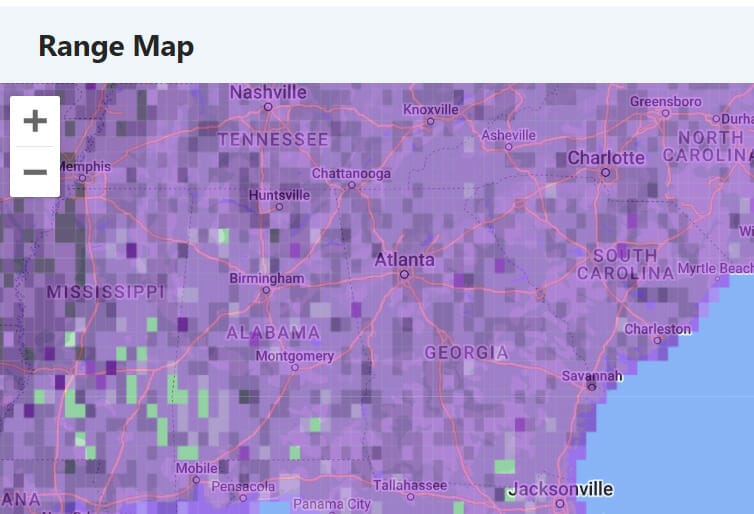
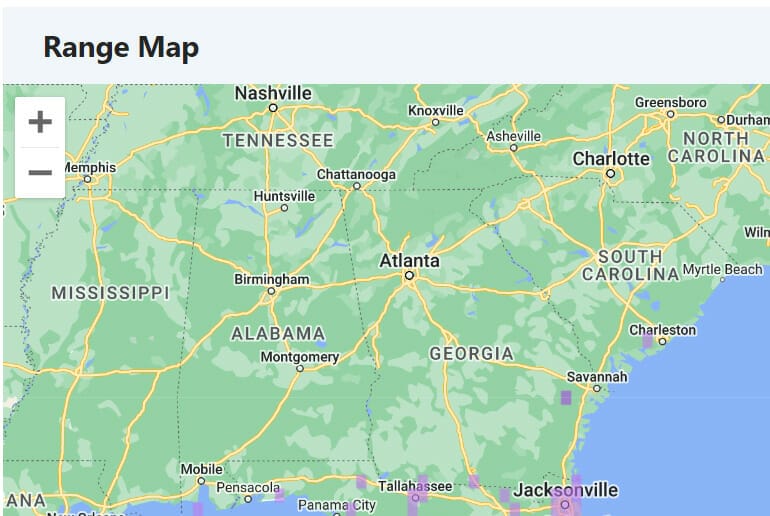
Distribution and Habitat: While established in south Florida, the Short-tailed Hawk is a rare visitor to Georgia, with fewer than 15 eBird sightings reported. Their preferred habitats include open woodlands and wetlands, areas that provide suitable hunting grounds for their prey. Their presence in Georgia is primarily noted during the breeding season, with some sightings in the southern regions.
Interesting Fact: The population of Short-tailed Hawks in Florida is predominantly of the dark morph. This suggests that any Short-tailed Hawks observed in Georgia are most likely to be this darker variant, offering a unique opportunity for birdwatchers.

Northern Goshawk (Accipiter gentilis)
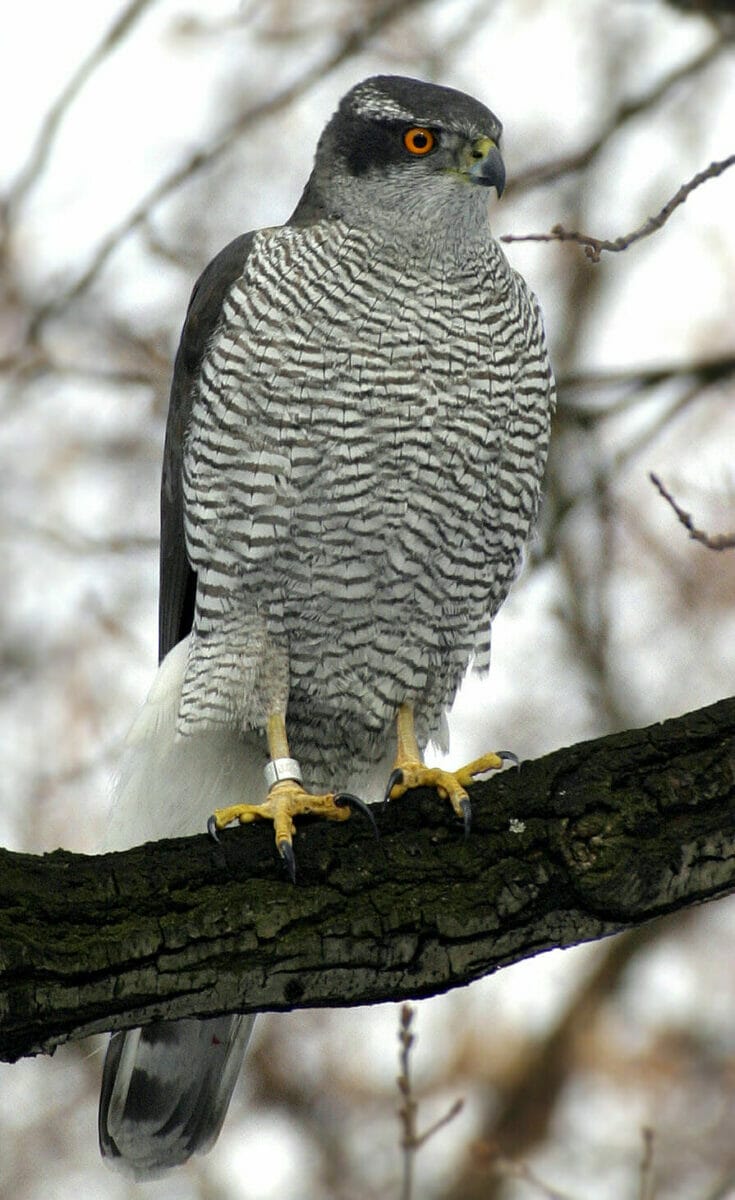
The Northern Goshawk is a large and powerful accipiter, though it is a very rare visitor to Georgia. Adults are distinguished by their dark gray backs, pale underparts with intricate markings, and striking red eyes, often complemented by a prominent white eyebrow stripe. Juvenile birds display varied brown plumage with streaking.
Identification and Size: This is a substantial accipiter, measuring between 20.9 and 24.0 inches in length with a wingspan of 40.5 to 41.1 inches. Their weight ranges from 22.3 to 48.1 ounces. Their formidable size and aggressive hunting style make them apex predators within their range.
Distribution and Habitat: The Northern Goshawk’s presence in Georgia is exceptionally rare, with only three eBird reports noted. The northwestern border of the state lies at the periphery of their natural range, which extends further north. They inhabit large, mature forests, preferring areas with dense canopy cover for hunting and nesting.
Interesting Fact: Northern Goshawks are known for their impressive nesting behavior. A mated pair may maintain up to eight different nest sites within their territory, utilizing them in rotation or returning to successful locations year after year. This strategy likely maximizes their reproductive success by providing flexibility and choice.
Northern Harrier (Circus hudsonius)
The Northern Harrier, belonging to the Circus genus, is an elegant and distinctive raptor. It is characterized by its gray upperparts and striking facial markings, with thick barring under its wings accentuating their length. Its long tail is also a prominent feature.
Identification and Size: Northern Harriers measure between 18.1 and 19.7 inches in length with a wingspan of 40.2 to 46.5 inches. They weigh between 10.6 and 26.5 ounces. Their flight is often low over the ground, with a distinctive buoyant, buoyant gait and steady wingbeats. A key identifier is the owl-like facial disc, which helps them locate prey by sound.
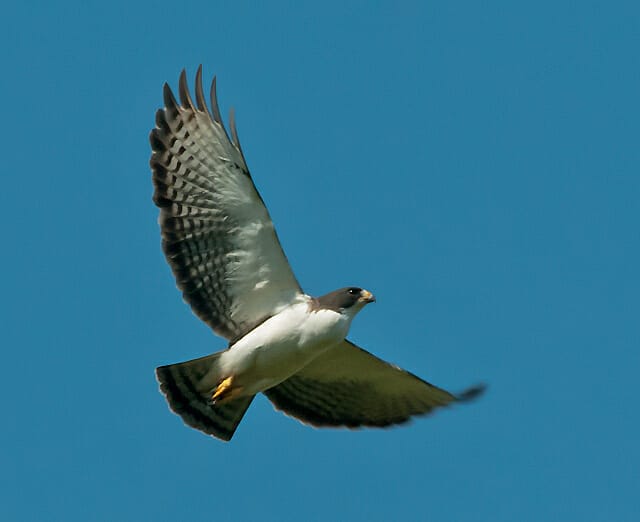
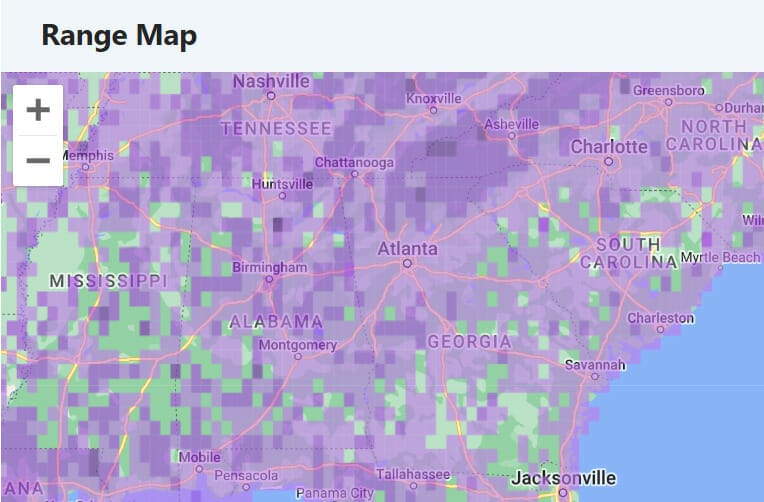
Distribution and Habitat: Georgia falls within the non-breeding range of the Northern Harrier. They are present in the state during the spring, autumn, and fall, favoring open habitats such as grasslands, marshes, and agricultural fields. Their hunting style involves gliding low over open terrain, using keen eyesight and hearing to detect small mammals and birds.
Interesting Fact: The Northern Harrier is unique among hawks for its owl-like facial disc, which funnels sound towards its ears, aiding in the detection of prey hidden beneath vegetation or snow. This adaptation is crucial for their hunting success in open environments.
Conclusion: A Rich Avian Landscape
In summary, Georgia hosts a fascinating array of birds commonly referred to as hawks, encompassing four species of Buteo (Red-shouldered, Red-tailed, Broad-winged, and Short-tailed Hawks), three species of Accipiter (Cooper’s, Sharp-shinned Hawks, and the Northern Goshawk), and one Circus species, the Northern Harrier. While the initial impression might be that Georgia’s varied geography would support an even greater diversity of hawks, the state also boasts a significant population of other birds of prey. These include three species of eagles—the Bald Eagle, Golden Eagle, and Osprey—and three species of falcons—the Peregrine Falcon, American Kestrel, and Merlin. This broader spectrum of raptors underscores Georgia’s importance as a habitat for avian predators, offering ample opportunities for observation and study.
The presence and distribution of these hawks are intrinsically linked to the state’s diverse ecosystems. From the dense forests favored by accipiters to the open fields sought by harriers and the varied woodlands utilized by Buteos, each species plays a vital role in the intricate food web of Georgia’s natural environments. Understanding these distinctions not only enhances our appreciation for these magnificent birds but also highlights the importance of habitat conservation to ensure their continued presence.
FAQ
-
What is the largest bird of prey in Georgia?
Among the species discussed as hawks, the Red-tailed Hawk is the largest, closely followed by the Northern Harrier. These large raptors command respect for their size and predatory prowess. -
How do you tell if a bird is a hawk or a falcon?
Falcons are generally smaller, more slender, and possess a distinctive notch at the top of their bill, known as a tomial tooth, which aids in killing prey. Hawks, on the other hand, lack this specific bill adaptation and tend to have broader wings, better suited for soaring and maneuvering through varied terrains.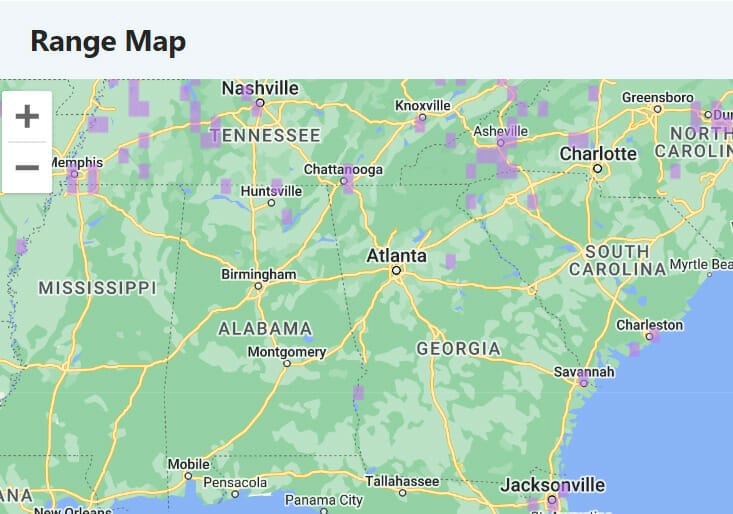
-
Can a hawk lift a dog?
While large hawks, such as the Red-tailed Hawk, possess the strength to carry significant prey, it is highly unlikely that they would attempt to lift a domestic dog. Their prey typically consists of small mammals, reptiles, and birds. The notion of a hawk preying on a dog remains largely in the realm of theoretical possibility rather than observed behavior.

