


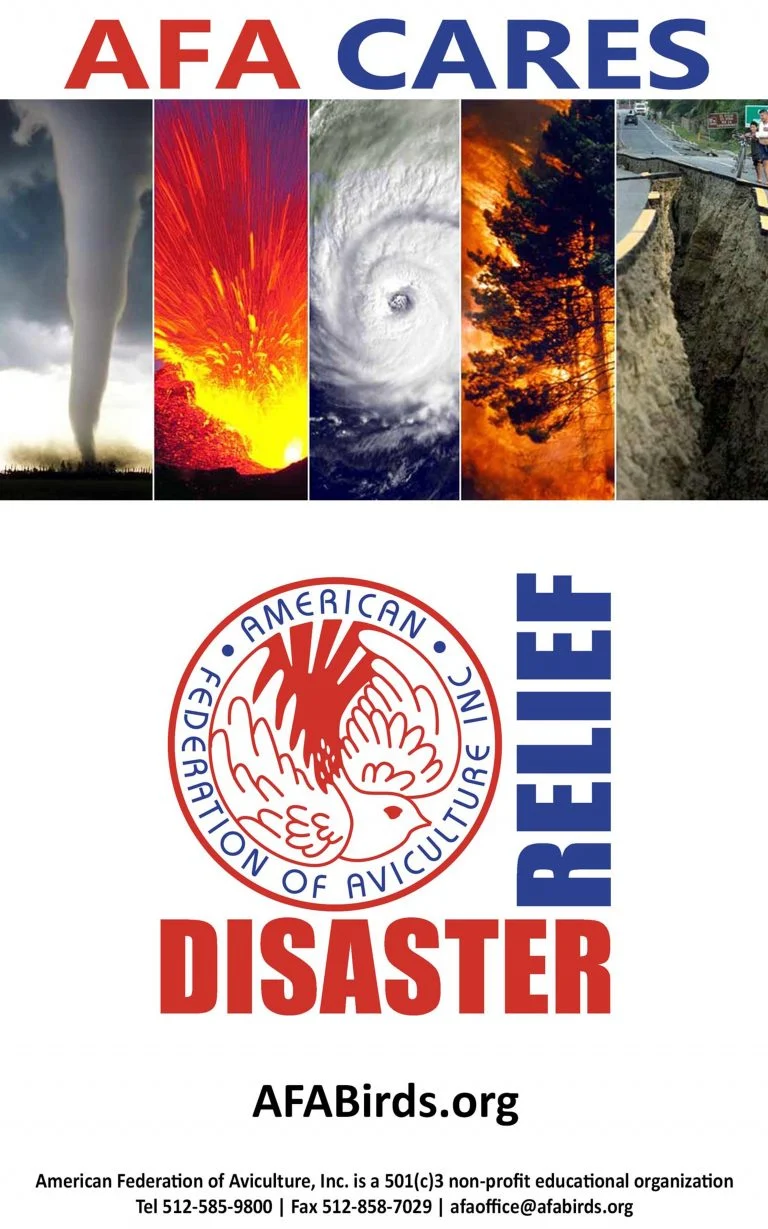
The American Federation of Aviculture (AFA) has officially mobilized its Disaster Relief Team, a national network of Regional Directors and specialized volunteers, to provide emergency assistance to bird owners across the United States. This strategic deployment is designed to expedite response times during climate-related events and geological emergencies, ensuring that local experts who are intimately familiar with their respective regions can monitor weather conditions and intervene as crises arise. By maintaining a decentralized structure, the AFA aims to bridge the gap between emergency services and the specific, often overlooked needs of avian populations.
The Critical Need for Avian-Specific Disaster Management
Aviculture presents unique challenges during emergency scenarios that standard domestic pet protocols often fail to address. While many municipal emergency plans account for dogs and cats, birds—ranging from small finches to large macaws and valuable breeding stock—require specialized transport, climate-controlled environments, and highly specific dietary needs. Mary Ellen LePage, a former Fire Chief for CalFire and a veteran in emergency management, emphasizes that the volatility of disasters such as hurricanes, tornadoes, floods, earthquakes, and wildfires necessitates a proactive rather than reactive approach.
According to data from the Federal Emergency Management Agency (FEMA) and the 2006 Pets Evacuation and Transportation Standards (PETS) Act, the failure to provide for animals during disasters often leads to human casualties, as owners frequently refuse to evacuate without their pets. For bird owners, the stakes are compounded by the extreme sensitivity of avian respiratory systems to smoke and airborne toxins, which can prove fatal long before a fire reaches a property.
A Chronology of Preparedness: Pre-Disaster Logistics
The efficacy of a rescue operation is determined weeks or months before an event occurs. The AFA outlines a rigorous timeline for preparedness that begins with the acquisition of specialized hardware.
1. Transportation and Housing Infrastructure:
The primary hurdle in avian evacuation is the sheer volume of equipment required. Owners are advised to maintain a fleet of "travel carriers" or collapsible cages that are easily accessible. In high-density aviaries, storing these units by hanging them from garage ceilings or keeping them near permanent enclosures can save critical minutes. LePage suggests that all locks on permanent flights and transport cages should be keyed alike to prevent "key fumbling" during high-stress evacuations.
2. Identification and Documentation:
In the chaos of a mass evacuation, proving ownership is a common legal hurdle. The AFA recommends a dual-layer identification system: physical identifiers like leg bands or microchips, and a secondary "digital footprint." Owners should maintain off-site or cloud-based records of all birds, including photographs, veterinary records, and DNA sexing certificates. This documentation is vital for reclaiming birds from temporary shelters or proving ownership in the event of theft during the confusion of a disaster.

3. Strategic Relocation Planning:
A robust evacuation plan must identify at least three potential relocation sites outside the immediate threat zone. These sites—ranging from private barns and garages to commercial warehouses—must be vetted for safety and environmental suitability. For large-scale breeders, this often involves reciprocal agreements with other aviculturists in different geographical regions.
Operational Tactics for Impending Threats
As a disaster transition from a theoretical possibility to an imminent threat, the AFA advises a shift in tactical operations. The decision-making process during this window is critical to survival rates.
The "When in Doubt, Get Out" Protocol:
LePage highlights a common mistake: waiting for mandatory evacuation orders. For bird owners, the window for safe departure is significantly shorter than for the general public. Road closures, gridlock, and the lack of ventilated transport options mean that avian evacuations should ideally commence 24 to 48 hours before a predicted storm landfall or when a wildfire is within a specific mile-radius.
Logistical Self-Sufficiency:
In scenarios where evacuation is not possible, or for those sheltering in place, self-sufficiency is mandatory. This includes maintaining a three-week supply of specialized avian diets, filtered water, and a reliable power source. Portable generators are essential for maintaining climate control and air filtration systems, as many tropical species cannot survive the extreme temperature fluctuations or poor air quality associated with power outages and smoke.
The Incident Command System and Professional Rescue Operations
When owners are unable to facilitate their own evacuation, the AFA Disaster Relief Team steps in to coordinate with governmental agencies. Modern disaster response in the United States is governed by the Occupational Safety and Health Administration (OSHA) under the Incident Command System (ICS). This standardized approach ensures that all responders—from local police to federal agencies—operate under a single chain of command.
Gaining Access to Restricted Zones:
A significant challenge for private rescuers is the "hard closure" of disaster zones by law enforcement. The AFA provides its volunteers with magnetic vehicle signage, official identification cards, and branded apparel to establish legitimacy. If blocked at a checkpoint, AFA representatives are trained to request communication with the Incident Commander (IC) to negotiate access for animal life-saving missions.
Technical Rescue Equipment:
Professional avian rescue requires more than just cages. Rescuers often deploy with a specialized toolkit that includes:
- High-tensile wire cutters for emergency cage entry.
- Chainsaws for clearing debris or fallen trees blocking aviary access.
- Professional-grade bird nets and heavy-duty towels for capturing un-tame or stressed birds.
- GPS coordinates for properties where street signs have been destroyed.
Data-Driven Analysis of Avian Vulnerability
Historical data from events like Hurricane Katrina and the California wildfire seasons of 2020 and 2021 reveal that avian mortality in disasters is frequently linked to two factors: heat stroke and respiratory failure. Unlike mammals, birds do not have sweat glands and rely on panting and wing-shunting to cool down. In a crowded transport vehicle without proper ventilation, temperatures can reach lethal levels in minutes.
Furthermore, the psychological impact of disasters on highly intelligent psittacines (parrots) cannot be overstated. Chronic stress during a rescue can lead to self-mutilation (feather plucking) or a suppressed immune system, making them susceptible to opportunistic infections in temporary shelters. The AFA’s protocol emphasizes the use of opaque cage covers and pheromone-based calming agents where applicable to mitigate these risks.
Official Responses and Community Impact
The American Federation of Aviculture continues to advocate for the inclusion of specialized avian care in municipal disaster planning. The organization operates a dedicated hotline (512-585-9800) and email response system ([email protected]) to facilitate real-time coordination between those in need and those with the resources to help.
"The goal is not just rescue, but reunification," says the AFA leadership. Following an evacuation, the organization works to track the location of displaced birds, ensuring they are housed in bio-secure environments to prevent the spread of avian diseases like PBFD or Pacheco’s disease, which can be a risk in communal sheltering situations.
Implications for the Future of Aviculture
The increasing frequency and intensity of extreme weather events have forced a paradigm shift in how the avicultural community views disaster preparedness. No longer a niche concern for those in hurricane alleys or fire-prone canyons, emergency planning is now considered a fundamental aspect of responsible bird ownership.
The broader impact of these efforts extends to conservation. Many private aviculturists hold species that are extinct or critically endangered in the wild. The loss of a single breeding colony due to a preventable disaster represents a significant blow to global biodiversity. By professionalizing the rescue process and providing a structured framework for avian emergency management, the AFA is protecting not only individual pets but also the genetic heritage of the avian world.
As the AFA Disaster Relief Team continues to refine its strategies, the emphasis remains on the "Plan! Plan! Plan!" mantra. Through education, inter-agency cooperation, and a dedicated volunteer base, the organization aims to ensure that when the next disaster strikes, the avian community is not left behind. Bird owners are encouraged to review their personal evacuation plans annually, update their emergency kits, and remain in close contact with local AFA chapters to ensure a coordinated and effective response when every second counts.

