


The 2026 Memorial Day sales window has emerged as a pivotal moment for the imaging industry, characterized by a level of price aggression rarely seen since the transition to mirrorless technology began a decade ago. While spring sales typically offer incremental discounts on older stock, this year’s holiday event features substantial price reductions on flagship bodies, high-speed storage solutions, and professional-grade support systems. Major manufacturers, including Sony, Nikon, and Panasonic, have aligned their promotional calendars to target both professional photographers and the burgeoning "creator" demographic, resulting in a marketplace where high-end gear is becoming increasingly accessible to a broader audience.
The Evolution of Holiday Sales Cycles in the Imaging Sector
The 2026 retail landscape reflects a significant shift in how photography equipment is marketed. Historically, the largest discounts were reserved for the "Black Friday" window in late November. However, a combination of stabilized global supply chains and a saturated mirrorless market has forced retailers and manufacturers to seek secondary "peaks" throughout the year. Memorial Day has become that secondary peak, strategically positioned at the start of the summer travel and wedding seasons.
This year’s chronology began in early May with "Spring Savings" events, but as the holiday weekend approached, retailers like B&H Photo and others transitioned into deeper "Holiday Specials." These deals are not merely clear-outs of legacy DSLR stock; they represent a concerted effort to move current-generation mirrorless hardware. The data indicates that discounts are averaging between 15% and 30% across the board, with specific bundles—particularly those involving Nikon and Sony—reaching price drops of up to $1,000.
Professional Mirrorless Systems: Flagship Power at Mid-Range Pricing
The most striking aspect of the 2026 Memorial Day event is the reduction in price for professional-grade hybrid cameras. Nikon and Sony, the traditional market leaders, are competing heavily in the full-frame segment, while Panasonic is making a significant play for the video-first creator market.
Nikon’s Aggressive Market Positioning
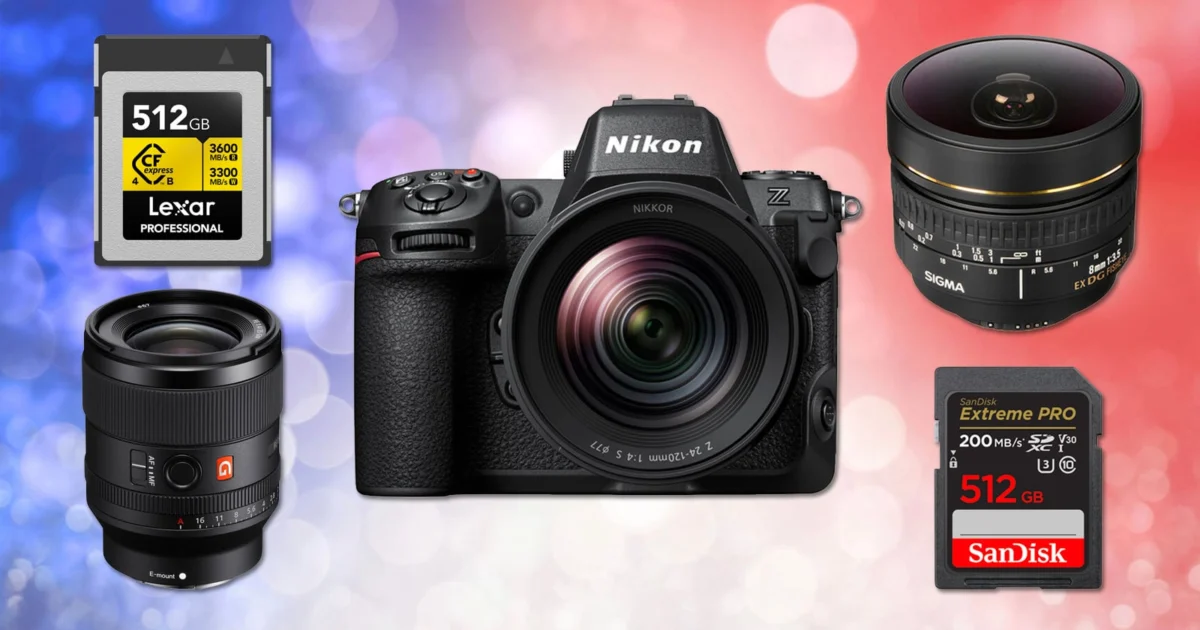
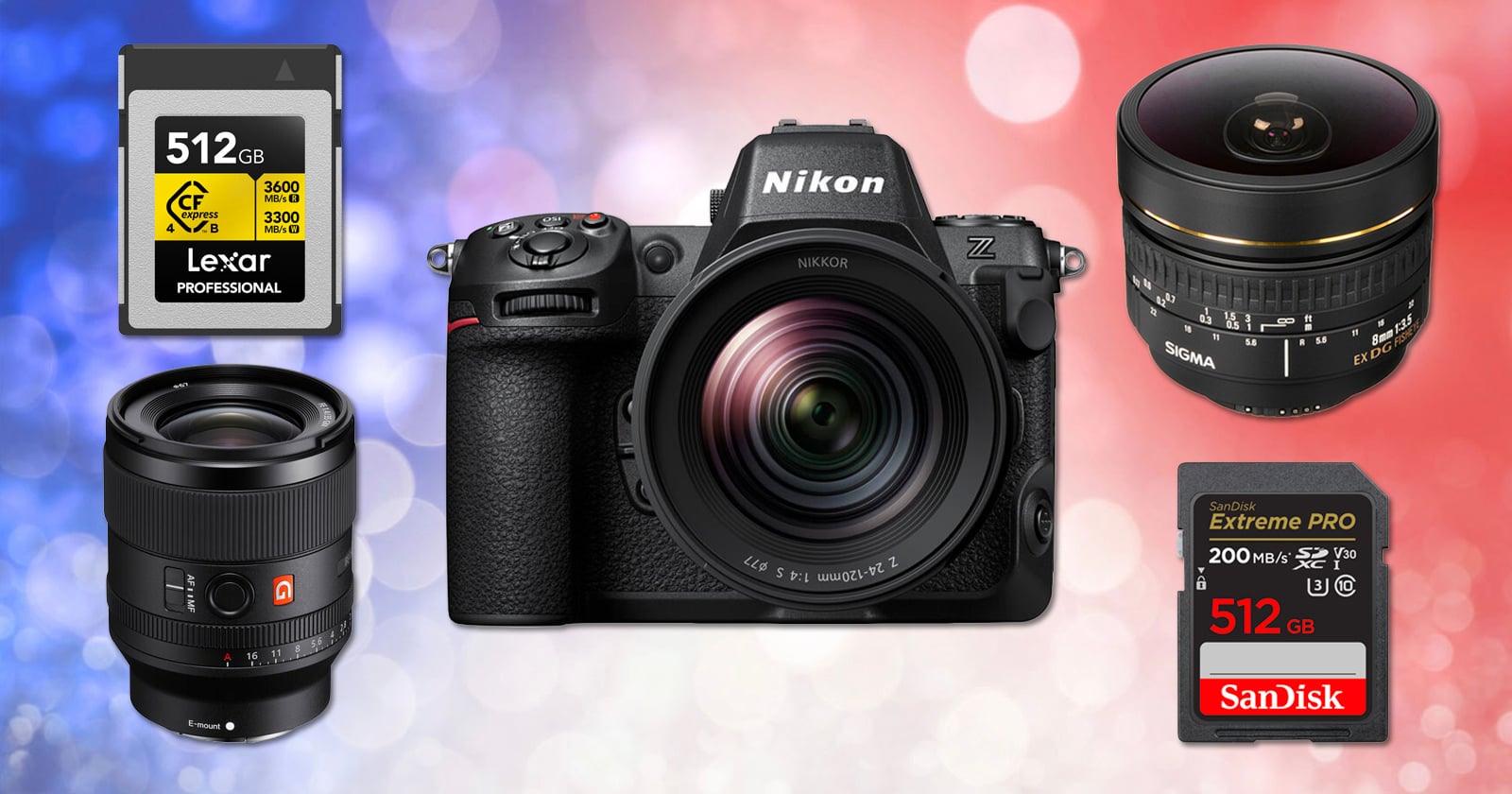
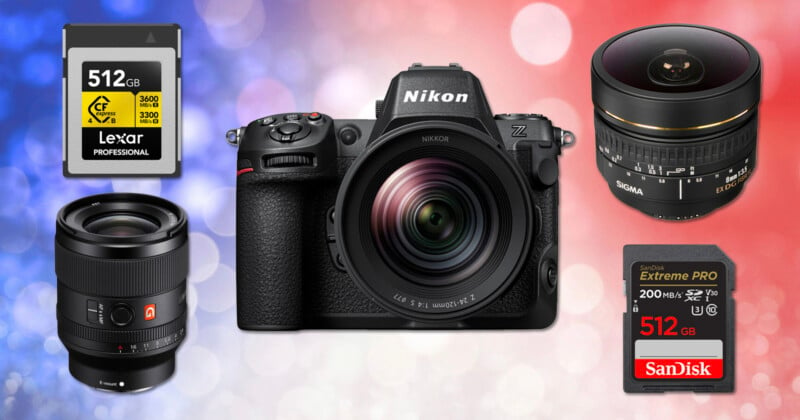
Nikon has taken a dominant stance this season, offering some of the most significant discounts in the industry. The Nikon Z8, often cited as the "mini-Z9" for its ability to capture high-resolution stills and 8K video in a more compact form factor, is currently bundled with the 24-120mm f/4 lens at a $900 discount, bringing the price to $4,297. Even more notable is the Nikon Z6 III bundle, which includes a 28-400mm f/4-8 superzoom lens. This kit has seen a price reduction of $1,000, settling at $2,997. Industry analysts suggest this move is intended to lock users into the Z-mount ecosystem during the peak travel months when a single-lens "do-it-all" solution is most appealing.
Sony’s Ecosystem Incentives
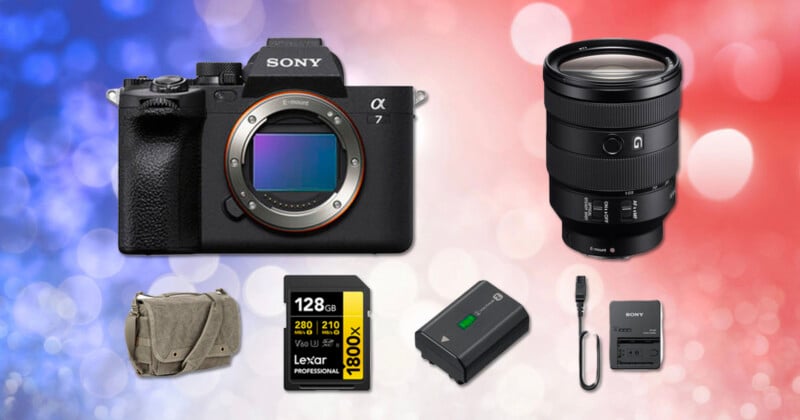
Sony continues to leverage the popularity of its a7 IV, a camera that remains a benchmark for the "prosumer" hybrid market. The discounts here are structured around "Essentials" and "Basic" bundles, which include the versatile 24-105mm f/4 G lens. With discounts reaching up to $900, Sony is targeting photographers who are either upgrading from cropped-sensor (APS-C) systems or migrating from rival brands. The inclusion of accessories like high-speed SD cards and carrying cases in these bundles increases the perceived value, making it a "turnkey" solution for new buyers.
Panasonic’s Focus on the Creator Economy
Panasonic’s strategy for 2026 focuses on compact full-frame technology. The Lumix S9, paired with an 18-40mm lens, is being offered at $1,398 (down from $1,798). This camera’s lifestyle-oriented design and white/silver finish represent a departure from the "workhorse" aesthetic of the Lumix S5 IIX, which is also on sale. The S5 IIX, bundled with a 24-60mm f/2.8 lens for $2,548, remains the choice for professional filmmakers who require internal ProRes recording and advanced phase-hybrid autofocus.
Optics and Third-Party Competition: The Sigma Factor
While first-party lenses from Sony and Nikon are seeing modest discounts, third-party manufacturers like Sigma are utilizing the Memorial Day window to capture market share. Sigma’s "Art" series lenses, known for their optical excellence, are seeing some of the highest percentage-based discounts of the year.
The Sigma 28mm f/1.4 DG HSM Art lens for Sony E-mount has dropped from $879 to $599, a price point that makes professional-grade wide-angle glass accessible to hobbyists. For those in the telephoto market, the Sigma 300-600mm f/4 DG OS Sports lens is currently priced at $6,099. While still a premium investment, this represents a strategic discount for sports and wildlife photographers ahead of the summer outdoor season.
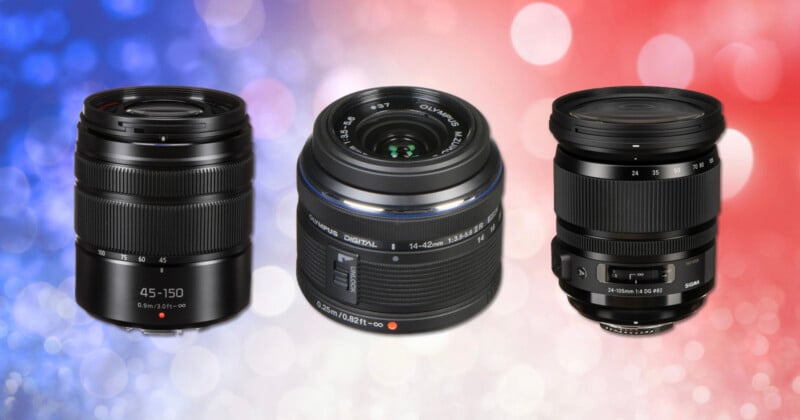
Even legacy systems are benefiting from the sale. Sigma’s 24-105mm f/4 Art lens for Nikon F-mount and the 8mm f/3.5 Fisheye are seeing deep cuts, signaling a "last call" for DSLR users to stock up on high-quality glass before these mounts are fully phased out in favor of mirrorless alternatives.
The Shift to Next-Generation Storage: CFexpress 4.0 and High-Capacity SD
Data management has become a critical bottleneck for modern creators shooting 4K and 8K video. Consequently, memory card deals are a highlight of the 2026 sales event. The most significant development is the price drop on CFexpress 4.0 Type B cards.
Lexar’s 512GB Professional Gold CFexpress 4.0 card is currently available for $400, reflecting a massive $450 discount. This price correction is a response to the rapid adoption of the 4.0 standard, which offers double the theoretical speeds of CFexpress 2.0. For photographers using the Nikon Z8 or Fujifilm GFX100 II, this storage speed is essential for clearing the buffer during high-speed RAW bursts.
Simultaneously, SanDisk is maintaining its grip on the SDXC market by discounting 512GB and 1TB cards. The 1TB Extreme microSDXC, now priced at $200, is particularly relevant for drone pilots and action camera users who require massive storage for extended remote shoots where offloading data to a computer is not immediately possible.
Support Systems: Professional Stability at a Lower Entry Point
The Memorial Day sales extend into the "hardware" of photography—tripods and bags. In this category, premium brands like Gitzo and Pelican are offering rare discounts.
Gitzo, often regarded as the gold standard for tripod construction, has discounted its Mountaineer Series 2 Carbon Fiber Tripod with Fluid Head by $1,000. This 50th-anniversary kit is aimed at professional hybrid creators who need a single support system capable of handling both high-resolution still photography and smooth cinematic pans. Similarly, the Gitzo Legende Series 1 Travel Tripod is now $500, targeting the high-end travel market.
In terms of transport, the Pelican Aegis 22” Carry-On Rolling Hybrid Duffel is priced at $150. Pelican’s move into "hybrid" luggage—combining the protection of a hard case with the flexibility of a duffel—reflects a broader industry trend toward more versatile travel gear.
Implications for the Professional and Hobbyist Markets
The scale of these discounts suggests several key implications for the remainder of 2026:
- Accelerated Mirrorless Migration: By pricing the Nikon Z6 III and Sony a7 IV bundles so aggressively, manufacturers are incentivizing the final holdouts of the DSLR era to make the switch. The price gap between a used professional DSLR and a brand-new mirrorless kit has narrowed to its smallest margin yet.
- The Democratization of High-End Video: With the Lumix S5 IIX and Nikon Z8 seeing near-thousand-dollar cuts, high-bitrate video and 8K capabilities are no longer restricted to high-budget production houses. Independent creators are now equipped with the same tools as commercial studios.
- Storage as a Commodity: The massive price drop in CFexpress 4.0 technology indicates that high-speed storage is moving from a "luxury" add-on to a standard requirement. As file sizes continue to grow, the industry is forcing a faster transition to higher speed standards.
- Summer Travel Influence: The focus on "travel-friendly" gear—compact zooms, lightweight carbon fiber tripods, and carry-on rolling cases—shows that retailers are banking on a surge in summer tourism and outdoor photography.
Conclusion
The 2026 Memorial Day camera deals represent more than just a holiday sale; they are a snapshot of an industry in a state of high-speed evolution. As the line between professional cinema cameras and consumer mirrorless bodies continues to blur, the accessibility of this technology becomes the primary battleground for market share. For the consumer, this translates into a unique opportunity to acquire "future-proof" gear at prices that were previously reserved for entry-level models. Whether for a professional updating a fleet of bodies or a hobbyist preparing for a summer expedition, the current market conditions offer a rare alignment of technological peak and price trough.

