


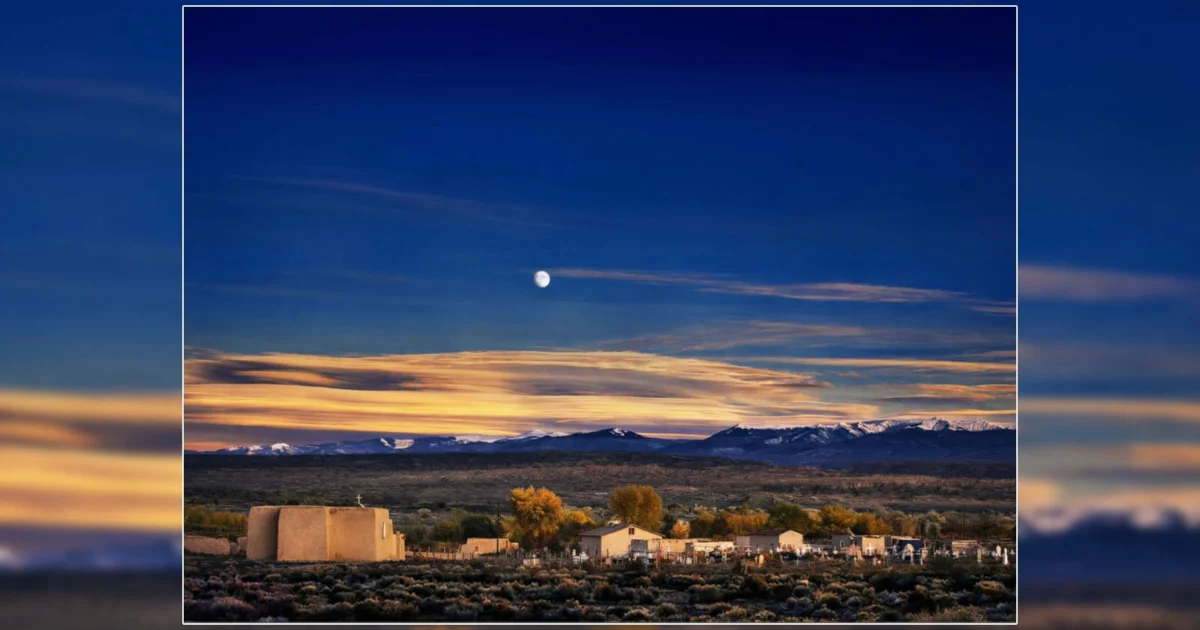
The intersection of legacy fine art and generative artificial intelligence has reached a volatile flashpoint in the New York City art world. The Danziger Gallery, a prominent fixture in the photography market, recently sparked a heated dispute with the Ansel Adams Publishing Rights Trust after displaying and offering for sale an AI-generated, colorized version of Adams’ most celebrated masterpiece, "Moonrise, Hernandez, New Mexico, 1941." The incident, which unfolded during the prestigious Photography Show at the Park Avenue Armory, has raised profound questions regarding the moral rights of deceased artists, the legal status of AI-derived imagery, and the ethical responsibilities of galleries in the digital age.
The controversy centers on a work that is explicitly labeled as "A.I. Generated." According to the gallery’s own description, the piece was created using a prompt that directed the software to "Make a realistic color version of Ansel Adams’ iconic ‘Moonrise Over Hernandez’." The listing further detailed a production process that took place between November 2025 and April 2026, involving proofing, regeneration, and manual adjustments in Adobe Photoshop. The final product was printed by master printer Esteban Mauchi in editions of ten across three specific sizes: 20 x 24 inches, 24 x 30 inches, and 30 x 40 inches. By presenting this work at The Photography Show, an event organized by the Association of International Photography Art Dealers (AIPAD), the gallery placed the AI-generated image alongside authentic, high-value historical prints, where items frequently command prices in the tens of thousands of dollars.
The Significance of Moonrise, Hernandez, New Mexico
To understand the gravity of the Trust’s objection, one must consider the status of the original photograph in the canon of American art. Captured by Ansel Adams on October 31, 1941, "Moonrise, Hernandez, New Mexico" is widely regarded as one of the most famous photographs ever taken. It depicts a moon rising over a small village and a graveyard, with snow-capped mountains in the background illuminated by a setting sun.
The image is not merely a snapshot but a triumph of technical skill and darkroom mastery. Adams famously struggled to find his light meter that evening and calculated the exposure based on the known luminance of the moon. Over the decades, Adams personally printed more than 1,300 copies of the image, constantly evolving his interpretation of the scene. In earlier versions, the sky was a lighter gray; in later, more sought-after prints, he used intense darkroom manipulation to turn the sky into a deep, obsidian black, making the moon and the white crosses of the graveyard pop with ethereal brilliance.
Because "Moonrise" is the definitive example of Adams’ "Zone System"—a photographic technique for determining optimal film exposure and development—the creation of a "realistic color version" via AI is seen by many purists as a fundamental negation of Adams’ artistic intent. For the Ansel Adams Trust, however, the issue is less about the medium of AI and more about the unauthorized commercial exploitation of Adams’ name and labor.
A Chronology of the Dispute
The conflict moved from the gallery floor to the public sphere in late April 2026. According to a formal statement released by the Ansel Adams Trust via social media and reported by various art news outlets, the Trust was neither consulted nor notified prior to the work’s appearance at the Park Avenue Armory.
Upon being alerted to the existence of the AI-generated print, the Trust reportedly contacted James Danziger, the gallery’s founder, in real-time. The Trust asserted its rights and requested the immediate removal of the work from the exhibition. Despite this direct communication, the work remained on display for the duration of the AIPAD show, which ran from April 22 through April 26.
The situation escalated when the Trust discovered that the gallery was not merely selling a one-off experiment. Correspondence shared with the Trust suggested that Mr. Danziger intended to use the Adams name and the "Moonrise" project as a proof-of-concept for a broader commercial venture. This venture reportedly aims to pursue AI colorization of works from other prominent artists’ estates, potentially opening a new, and highly controversial, revenue stream in the secondary art market.
As of the latest reports, the offending image remains listed on the Danziger Gallery’s website. The gallery has not issued a formal public rebuttal to the Trust’s allegations, nor has it responded to inquiries regarding the copyright status of the generated work.
The Stance of the Ansel Adams Trust
The Ansel Adams Trust has been careful to frame its objection not as a rejection of technology, but as a defense of "human dignity" and "moral rights." Ansel Adams himself was a lifelong innovator. He famously compared the photographic negative to a composer’s score and the print to a performance. He was also an early advocate for the potential of electronic photography, once predicting that computers would eventually provide photographers with unprecedented creative control.
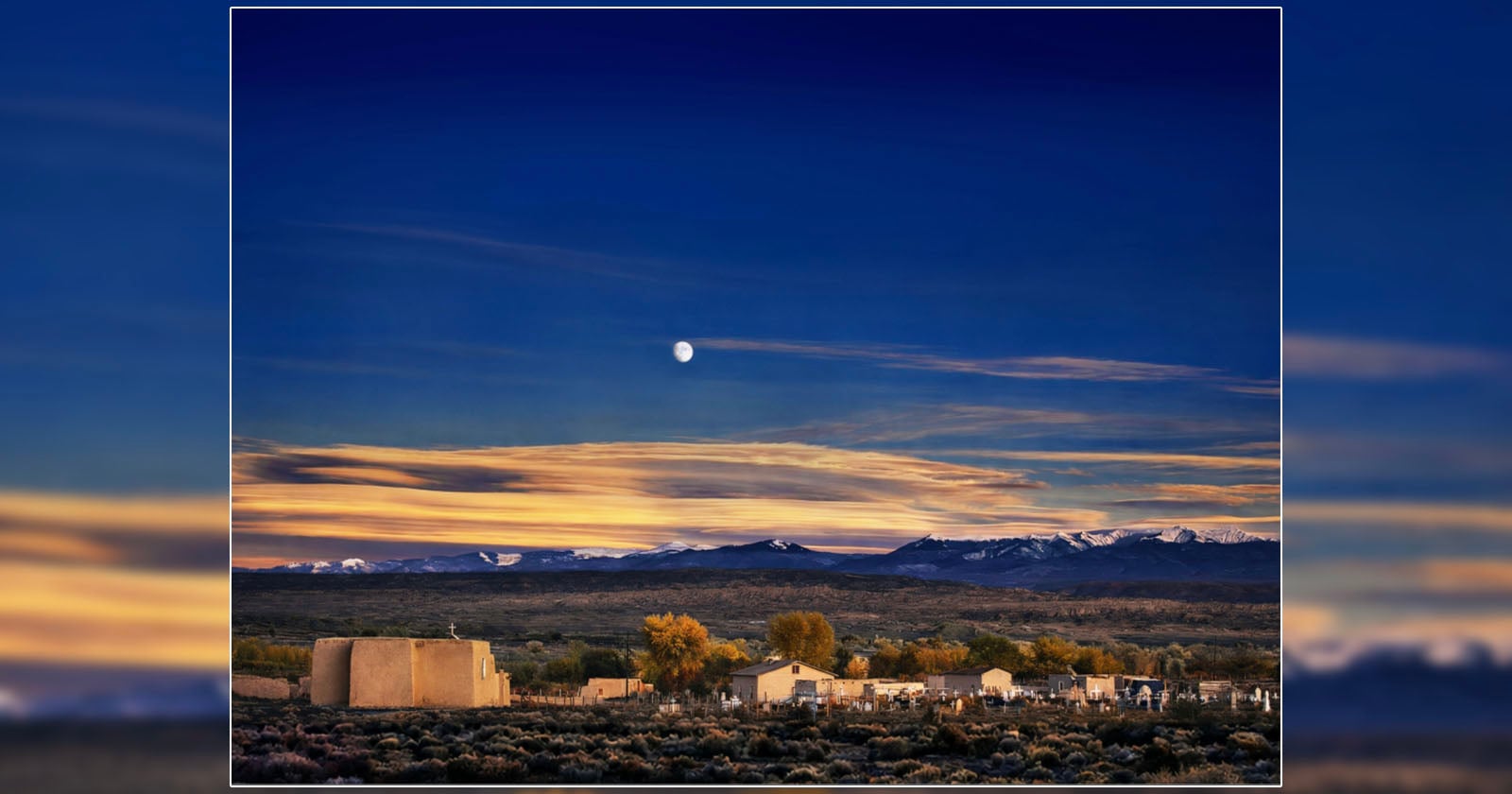
"Ansel was an innovator who expanded the expressive and technical possibilities of his medium," the Trust stated. "The Trust’s concerns are not about AI or creative experimentation in the abstract. This is fundamentally about artists’ rights and moral rights—and respect for human dignity. No one should trade on another person’s name, reputation, and labor for private commercial ends without consent and candor."
The Trust characterized the gallery’s actions as a "gross failure of ethical and professional judgment," particularly given Adams’ historical role in establishing photography as a respected fine art. The fact that the unauthorized sale took place at AIPAD—an organization dedicated to maintaining high standards of integrity in the photography trade—was described by the Trust as "especially egregious and disheartening."
Legal Implications and the Copyright Vacuum
The legal landscape surrounding this dispute is complex and currently favors the Trust in terms of ethics, but remains murky in terms of copyright. Under current United States law, AI-generated images that lack "significant human authorship" are ineligible for copyright protection. A 2025 ruling by the U.S. Court of Appeals reaffirmed that works created entirely by autonomous machines cannot be registered for copyright.
This creates a paradoxical situation for the Danziger Gallery. If the "Moonrise" colorization is considered a purely AI-generated work, the gallery cannot claim ownership of the image, and anyone could theoretically replicate and sell it. However, if the gallery argues that the "photoshopping" and "proofing" conducted by the gallery staff constitute "significant human authorship," they might attempt to claim a new copyright.
Conversely, the Trust holds the rights to Adams’ original works and his "Right of Publicity." In many jurisdictions, the right of publicity protects a famous individual’s name and likeness from unauthorized commercial use even after their death. By using the prompt "Make a realistic color version of Ansel Adams’ iconic ‘Moonrise Over Hernandez’," the gallery is explicitly leveraging Adams’ name and the specific composition of his copyrighted work to create a derivative product.
Legal experts suggest that while the AI output itself might not be copyrightable, the act of using a copyrighted seed image or a specific artist’s name for a commercial product could constitute copyright infringement or a violation of trademark and publicity rights.
Broader Impact on the Art Market
The Danziger-Adams controversy is being closely watched by estates, galleries, and AI developers worldwide. It represents a potential "Pandora’s Box" for the art market. If a gallery can successfully sell AI-generated versions of black-and-white classics, it could lead to a flood of "reimagined" works by artists like Dorothea Lange, Edward Weston, or Henri Cartier-Bresson.
For collectors, the presence of AI-generated derivatives poses a risk to the scarcity and value of original prints. The fine art photography market is built on the provenance and the physical connection to the artist’s hand or their authorized darkroom. Introducing "Editions of 10" of an AI-generated colorization threatens to dilute the brand of the original artist while confusing less-informed buyers about what constitutes an "original" work.
Furthermore, the ethical debate over colorization is not new. In the 1980s, film critics and directors—most notably Orson Welles and Woody Allen—protested vehemently when media mogul Ted Turner began colorizing classic black-and-white films. The argument then, as it is now, was that the choice of black-and-white was an aesthetic decision central to the work’s identity. To "correct" it with color is to deface the artist’s original vision.
Conclusion
The standoff between the Danziger Gallery and the Ansel Adams Trust serves as a definitive case study for the challenges facing the art world in 2026. As generative AI becomes more sophisticated, the temptation to "update" or "monetize" historical archives will only grow.
The Ansel Adams Trust has signaled that it will continue to fight for the "actively stewarded legacy" of the photographer. Whether this dispute will move into a courtroom remains to be seen, but the industry reaction suggests a growing consensus: while AI may be a powerful tool for creation, its use in the commercialization of established legacies requires a level of transparency and authorization that was conspicuously absent in the case of the colorized "Moonrise." For now, the art world remains divided, caught between the frontier of technological possibility and the essential need to protect the integrity of human artistic achievement.

