


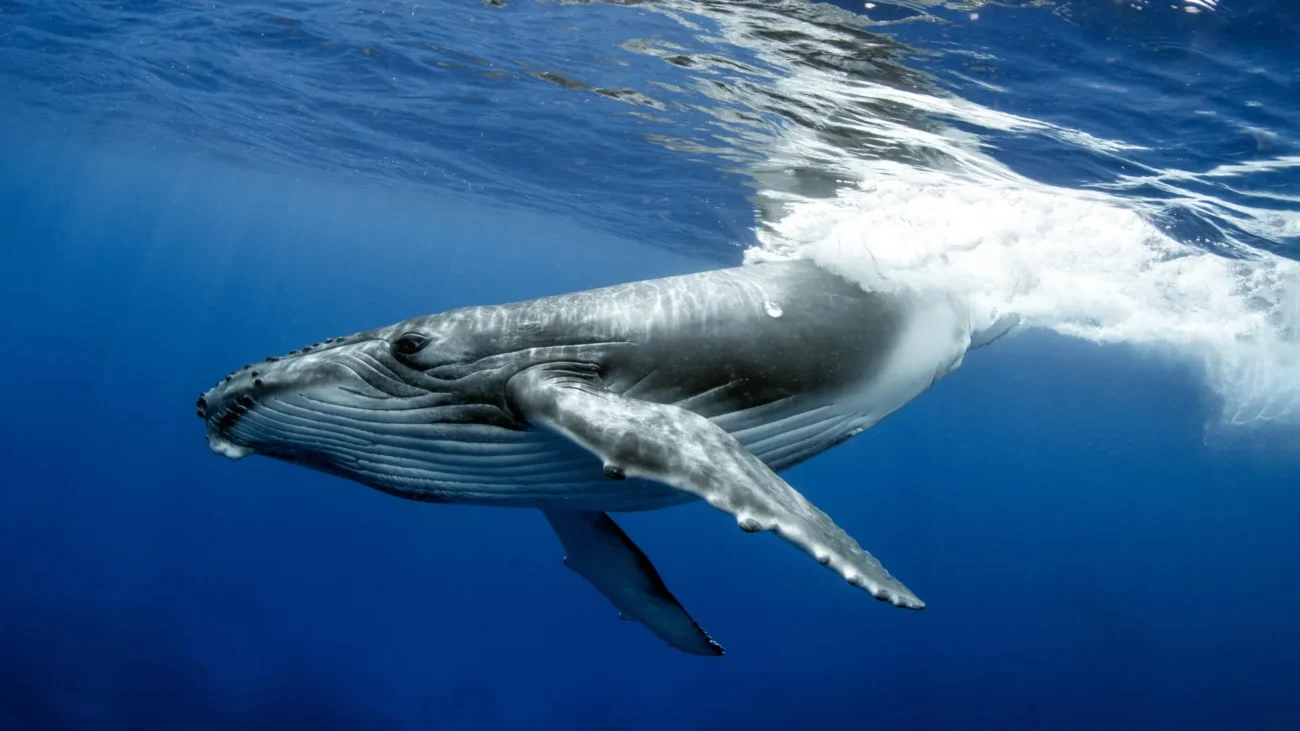
In a groundbreaking discovery that redefines our understanding of marine mammal endurance and connectivity, scientists have documented an unprecedented migration by humpback whales, confirming a remarkable journey between the breeding grounds off eastern Australia and Brazil. This monumental feat, spanning over 14,000 kilometers of open ocean, represents the greatest confirmed distance ever recorded between individual humpback whale sightings globally. The findings, published in the prestigious journal Royal Society Open Science, underscore the vastness of whale migratory routes and the crucial role of long-term research and international collaboration in unraveling these oceanic mysteries.
The study, a testament to decades of dedicated observation and technological advancement, utilized an extensive database of fluke photographs – the unique patterns on a whale’s tail – to identify individual animals across vast oceanic distances. This meticulous process, a cornerstone of cetacean research, allowed scientists to connect the dots between whales sighted in disparate corners of the globe, separated by continents and entire ocean basins. The implications of this discovery are far-reaching, offering profound insights into the resilience of these marine giants, the interconnectedness of global whale populations, and the potential impacts of a changing climate on their ancient migratory pathways.
A Tale of Two Tails: Unraveling an Epic Journey
The extraordinary narrative of these record-breaking migrations began with the meticulous comparison of tens of thousands of humpback whale fluke photographs. Each whale possesses a unique fingerprint in the intricate patterns and nicks on its tail, a biological signature that allows researchers to distinguish individuals and track their movements over time. This powerful identification method, combined with sophisticated data analysis, has been instrumental in piecing together the complex lives of these elusive creatures.
One of the whales that made headlines for its incredible journey was first photographed in Hervey Bay, Queensland, a renowned humpback whale aggregation site in eastern Australia, in 2007. This individual was observed again in the same locale in 2013, establishing a pattern of presence in Australian waters. However, its migratory story took a truly astonishing turn when it was later sighted near São Paulo, Brazil, in 2019. The minimum straight-line distance between these two distinct breeding grounds is an astounding approximately 14,200 kilometers, a distance comparable to that between Sydney, Australia, and London, England.
Scientists caution that this documented distance is a conservative estimate. Given that only the initial and final points of the whale’s journey were recorded, its actual migratory path was likely even more circuitous and extensive. The precise route taken across the immense Pacific and Atlantic Oceans remains a subject of ongoing investigation, highlighting the vast, uncharted territories these whales traverse.
A second humpback whale’s journey proved to be even more remarkable, setting a new global benchmark for the longest known movement of an individual. This whale was initially photographed in 2003 at Abrolhos Bank, off the coast of Bahia, Brazil. This area is a vital nursery ground for humpback whales, teeming with activity. At the time of its first sighting, the whale was observed swimming in a pod of nine adult whales, suggesting a vibrant social dynamic within the Brazilian breeding grounds.
The passage of time, a mere blink in the lifespan of a whale, revealed the second chapter of its epic voyage. Twenty-two years later, in September 2025, the same individual was sighted, this time alone, in Hervey Bay, Australia. The documented distance between these two sightings was a staggering 15,100 kilometers, surpassing all previously recorded individual humpback whale movements and solidifying its place in the annals of marine biology. This extraordinary connectivity between geographically distant populations offers a profound glimpse into the resilience and migratory capabilities of humpback whales.
Decades of Dedication: The Power of Long-Term Research and Citizen Science
The discoveries detailed in the Royal Society Open Science paper are not the product of a single expedition or a fleeting observation. Instead, they are the culmination of persistent, multi-decadal research efforts, bolstered significantly by the invaluable contributions of citizen scientists worldwide. The study drew upon a comprehensive archive of 19,283 high-quality fluke photographs, meticulously collected between 1984 and 2025. These images originated from both professional researchers and a global network of citizen scientists who have contributed their observations through platforms like Happywhale, a global whale tracking initiative.
The process of identifying these long-distance travelers involved a sophisticated interplay of technology and human expertise. Automated image recognition software was employed to conduct the initial broad comparisons of fluke photographs. This technology efficiently sifted through thousands of images, flagging potential matches. However, the ultimate confirmation rested on the keen eyes and dedicated efforts of scientists who manually reviewed every possible match, ensuring the accuracy and reliability of the findings. This rigorous verification process is paramount in establishing such extraordinary claims.
Dr. Cristina Castro, lead researcher from the Pacific Whale Foundation, emphasized the pivotal role of citizen science in this breakthrough. "This kind of research highlights the value of citizen science," Dr. Castro stated. "Every photo contributes to our understanding of whale biology and, in this case, helped uncover one of the most extreme movements ever recorded." Her sentiment underscores how public engagement in scientific endeavors can lead to discoveries that would otherwise remain hidden.
The Rarity and Significance of Inter-Breeding Ground Travel
Despite the dramatic nature of these record-breaking migrations, researchers are quick to point out their relative rarity. Across more than four decades of data encompassing nearly 20,000 identified humpback whales, only these two individuals were found to have traveled between the eastern Australian and Brazilian breeding regions. This represents a mere 0.01 percent of the whales included in the comprehensive records, underscoring the exceptional nature of these long-distance exchanges.
Stephanie Stack, a Ph.D. candidate at Griffith University and co-author of the study, highlighted the significance of such rare events. "Discoveries like this are only possible because of investment into long-term multi-decadal research programs and international collaboration," Stack explained. "These whales were photographed decades apart, by different people, in opposite parts of the world, separated by two different oceans, and yet we can connect their journey."
Broader Implications: Genetic Diversity, Cultural Exchange, and Climate Change
Even though these transoceanic migrations are uncommon, scientists believe they play a crucial role in the long-term health and resilience of whale populations. These rare exchanges can facilitate the maintenance of genetic diversity across geographically separated populations. By moving between distant breeding grounds, individual whales can introduce new genetic material, preventing inbreeding and bolstering the overall adaptability of the species.
Furthermore, these migratory individuals may act as conduits for cultural exchange. Humpback whale songs are known to spread and evolve across ocean basins, much like musical trends among human populations. It is plausible that whales undertaking these long journeys could transport new song patterns or innovations from one breeding population to another, contributing to the dynamic evolution of whale vocalizations.
The findings also lend significant support to the "Southern Ocean Exchange" hypothesis. This theory proposes that humpback whales from different breeding populations may converge in shared feeding grounds in the Antarctic. During their return migrations, some whales might deviate from their usual routes, potentially ending up in entirely new breeding regions. This study provides tangible evidence for such inter-population movements and their potential long-term consequences for the distribution and connectivity of whale populations.
Looking ahead, researchers express concern that climate change could influence the frequency of these rare crossings. Alterations in Antarctic sea ice extent and shifts in the distribution of Antarctic krill, the primary food source for humpback whales, may compel whales to explore new feeding areas or alter their migratory routes. These environmental changes could potentially lead to an increase in such long-distance movements as whales adapt to a changing ocean. Understanding these shifts is critical for effective conservation strategies in an era of rapid environmental transformation.
The research team’s commitment to unraveling the mysteries of humpback whale migration continues, with hopes that future investigations will shed further light on the motivations, challenges, and ecological significance of these epic oceanic journeys. The extraordinary voyages of these two humpback whales serve as a powerful reminder of the vastness of our planet’s oceans and the incredible, often unseen, lives of its inhabitants.

