


When first encountering the world of domestic rat ownership, many individuals express surprise, often followed by a cascade of questions. While the initial curiosity might be fleeting, the depth of engaging and often amusing idiosyncrasies exhibited by these intelligent rodents warrants a more detailed exploration. Beyond the common perception, rats possess a rich tapestry of behaviors that make them remarkably fascinating and consistently entertaining companions. This article delves into some of these endearing habits, highlighting the intricate layers of their personalities and the unique ways they interact with their environment and human caretakers. While some of these behaviors are more prominent during supervised out-of-cage time, they nonetheless offer a profound glimpse into the complex emotional and social lives of rats.
Bruxing and Boggling: A Symphony of Contentment
Among the most recognized and cherished behaviors of pet rats are "bruxing" and "eye boggling." These two phenomena are intrinsically linked and serve as significant indicators of a rat’s emotional state, primarily happiness and contentment.
Bruxing is the act of teeth grinding. While it serves a practical purpose in naturally trimming their ever-growing incisors, it is also a crucial form of emotional expression for rats. Similar to a cat’s purr, bruxing can signify pleasure and relaxation. Owners often describe the sound as a gentle clicking or grinding, a comforting auditory cue that their rat is feeling safe and at ease. However, bruxing can also occur when a rat is experiencing stress or fear, albeit typically with a different intensity and accompanying body language. Understanding the context is key to interpreting this behavior.

Eye boggling, on the other hand, is a more visually striking behavior. It involves a rapid, involuntary movement of the eye muscles, causing the eyes to bulge outwards and retract repeatedly. This action is so pronounced that it can resemble a cartoon character’s exaggerated expression. The visual effect is often described as both comical and endearing, adding to the unique charm of rats.
The fascinating interplay between bruxing and boggling is what makes them so significant. Eye boggling is almost exclusively observed when a rat is also bruxing intensely. This connection arises from the physiological mechanics: the powerful, rapid movements of the jaw muscles, situated behind the eyes, cause the eyeballs to vibrate and protrude. When a rat is experiencing profound happiness, this coordinated muscle activity results in the characteristic boggling. Thus, a rat that is simultaneously bruxing and boggling is a clear signal of a deeply content and joyful animal.
The author’s personal experience highlights a common initial reaction to this behavior among new owners. The sheer unnaturalness of the eye movement, especially before widespread access to information about rat behavior, led to genuine alarm. In one instance, a vet was consulted, but without the rat demonstrating the behavior at that moment, the owner was dismissed with the suggestion that the observation might have been imagined. This anecdote underscores the importance of disseminating accurate information about common, yet unusual-seeming, animal behaviors, particularly as veterinary education may not always cover such specific niche observations. The advent of the internet has been instrumental in connecting owners and confirming that these seemingly alarming displays are, in fact, normal and indicative of a happy rat.
Fastidious Groomers: The Myth of the Filthy Rat
Contrary to the persistent stereotype of rats as unsanitary creatures, both wild and domestic rats are remarkably fastidious groomers. This meticulous self-care is a constant activity, often performed with an almost obsessive focus. Owners are privy to this trait through frequent observations of their pets.

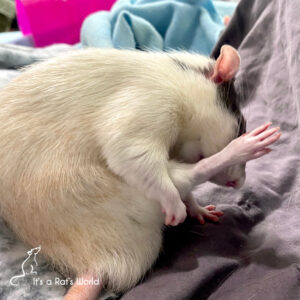
Rats dedicate significant portions of their day to bathing, meticulously cleaning nearly every inch of their bodies. They employ a variety of techniques, using their paws to wipe down their fur and their teeth to nibble away any dirt or debris. This dedication to cleanliness can make them appear almost contortionistic, as they contort their bodies to reach every difficult spot. A particularly noteworthy aspect of their grooming is their dedication to cleaning their feet, often splaying out their toes to ensure each one receives thorough attention.
However, there is one area that often escapes their diligent cleaning routine: their tails. In decades of observation, witnessing a rat groom its tail is a rare event, often prompting a double-take. For owners who do observe this infrequent behavior, it is considered a sign of an exceptionally quirky rat. This selective grooming of the tail, while their bodies are kept impeccably clean, adds another layer of peculiarity to their otherwise hygienic habits.
Allogrooming: Social Bonds and Unsolicited Services
The concept of grooming extends beyond self-care for rats, encompassing a significant social behavior known as allogrooming. Rats frequently groom their cagemates, strengthening social bonds and reinforcing group cohesion. This behavior is also extended to their human companions, though it can sometimes manifest in ways that are both endearing and slightly intrusive.
When a rat is touched by its owner, it may immediately initiate grooming, as if to erase the scent or perhaps to offer a reciprocal cleaning service. While this can feel like a subtle critique of the human’s cleanliness, it is more accurately interpreted as a social gesture. Rats can become quite persistent in their allogrooming efforts, often developing preferences for particular areas of their human’s body.
Some rats show a particular fascination with their owner’s hair, gently licking or nibbling at it. Others focus on the face, with some rats taking it upon themselves to meticulously groom their owner’s cheeks and eyelids. While the intention is likely benevolent, the "gentle" nibbles can sometimes feel less than gentle on sensitive facial areas.
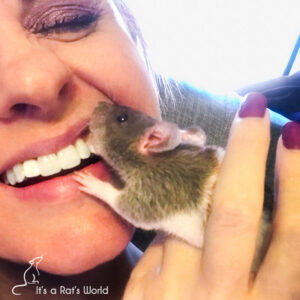
A common target for allogrooming is the owner’s fingers and nails. Some rats even develop a habit of "nail biting" their humans, an act that, while potentially ticklish or slightly uncomfortable, is performed with the perceived intention of providing a "rat-icure" or trimming their owner’s nails. This unsolicited grooming service, though sometimes delivered with more enthusiasm than finesse, highlights the rats’ desire to interact and care for their human family members.
Rodentistry: The Dedicated Dental Hygienists
One of the most unusual and memorable forms of allogrooming is what has been termed "rodentistry." This refers to the peculiar habit some rats develop of intensely grooming their owner’s teeth. The term itself, coined within the rat-owning community, speaks to the dedicated nature of this behavior.
Rats exhibiting rodentistry will often attempt to shove their heads into their human’s mouth, driven by an apparent desire to clean the teeth. The exact motivation remains a subject of speculation, but it is likely an extension of their innate grooming instincts, applied to a novel and intimate target. The process can be somewhat alarming, involving sharp little paws and an unwavering focus, but the rats are persistent in their "dental" examinations.
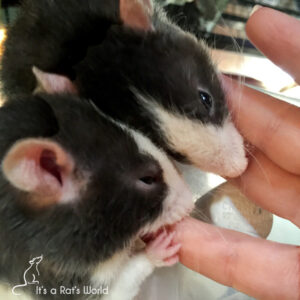
The author recounts an experience with a rat named Rory, who was both an eye-boggler and a dedicated rodentist. Rory would persistently attempt to pry open his owner’s mouth, using his paws and nose to gain access to his "patient’s" teeth. Despite the owner’s protests and the minor scratches that resulted, Rory’s determination was met with amusement and a secret appreciation for his unwavering commitment to his self-appointed role. This behavior, while certainly peculiar, underscores the deep bond and unique ways rats express their affection and attention.
Culinary Critics: Uninvited Taste-Testers
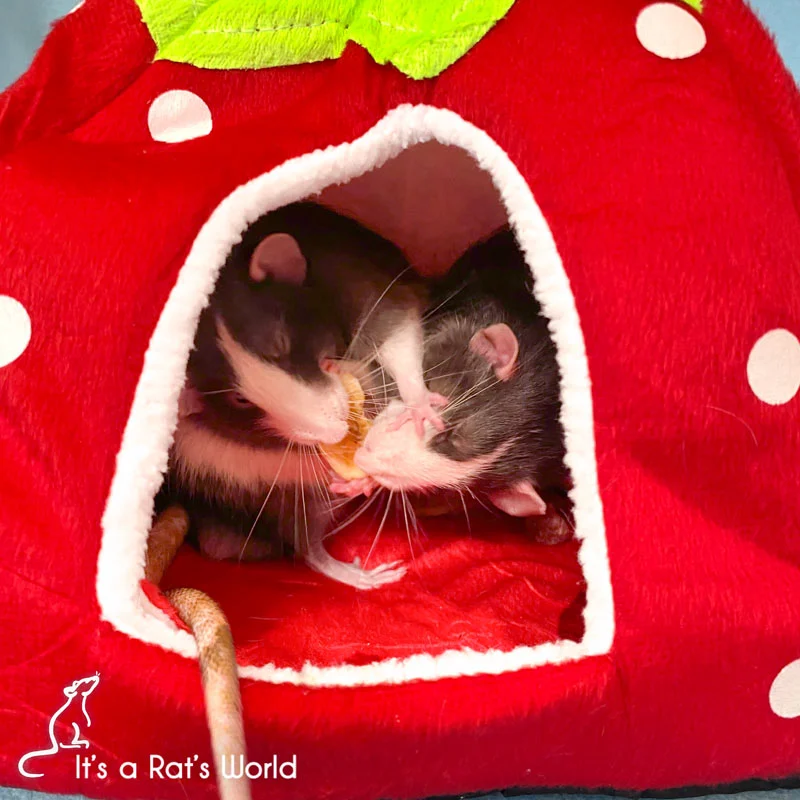
When it comes to food, rats exhibit a striking lack of conventional manners. If given out-of-cage time while their human is eating, they will invariably approach with the expectation of sharing, or more accurately, claiming a portion of the meal. There is no polite asking or begging; instead, rats will exhibit a swift and direct approach, aiming to snatch food from plates or even directly from fingers. They are not deterred by the food being in the mouth and are known to dive in or, at the very least, attempt to lick the lips clean.
This behavior is not unique to their interactions with humans; rats are equally bold when it comes to sharing food with their cagemates. They are known to steal food from each other, even from within another rat’s mouth. This uninhibited approach to food sharing and acquisition is a fundamental aspect of their social dynamics.
Even beverages are not safe from their inquisitive palates. Rats are often observed perching on the edge of glasses or mugs, eagerly partaking in whatever liquid is available. This "taste-testing" behavior, while potentially disruptive to a human’s meal, is a testament to their opportunistic nature and their social inclination to share resources, albeit in their own unique and somewhat assertive way.
The Art of Relaxation: Back-Sleeping and Tandem Drinking
While most rats prefer to sleep in a more protected posture, some exhibit a remarkable inclination to sleep on their backs. This behavior, known as "back-sleeping," is generally less common, likely due to a rat’s inherent instinct to feel vulnerable when exposed. However, for some rats, the comfort and relaxation of sleeping sprawled out on their backs outweigh any perceived risk.
This unusual sleeping posture can be a source of significant amusement for owners. The image of a rat completely at ease, belly-up, is undeniably endearing. In some instances, this behavior can even become contagious within a rat group, with individuals influencing their cagemates to adopt the same relaxed sleeping position.
Adding another layer of quirkiness to their sleeping habits, some rats exhibit a preference for "drinking in tandem." This involves multiple rats attempting to drink from the water bottle nozzle simultaneously. This behavior can be so pronounced that it can disrupt the access of other rats to water, especially if one rat is positioned in a way that blocks the nozzle.
The author’s experience with a rat named Potter illustrates this phenomenon. Potter had a habit of sleeping on his back directly beneath the water bottle, effectively creating a blockade for his cagemates. He also disliked drinking alone, actively seeking out cagemates to join him at the water bottle. This behavior, which he even performed while lying on his back, demonstrates a strong social codependency and a desire for shared experiences, even during basic needs like hydration. This tendency for communal drinking has been observed in other rats, indicating it is not an isolated quirk but rather a facet of their social nature.

A Universe of Quirks Awaiting Discovery
The behaviors discussed herein represent only a fraction of the myriad of fascinating and often amusing traits that domestic rats possess. Their capacity to surprise and delight their owners is seemingly endless, with each rat possessing the unique ability to imbue even common behaviors with a personal touch. The moment an owner believes they have encountered every peculiar habit a rat can exhibit, these intelligent creatures invariably find a way to present a new and unexpected behavior, reinforcing their status as truly captivating companions. The ongoing observation and documentation of these unique traits contribute to a deeper understanding and appreciation of these often-misunderstood animals, revealing them to be far more complex and endearing than popular misconceptions might suggest. Owners are encouraged to share their own observations of these delightful quirks, further enriching the collective knowledge of rat behavior.

