


The People for the Ethical Treatment of Animals (PETA) has intensified its oversight of the University of Massachusetts Chan Medical School (UMass Chan), releasing a detailed report and a formal complaint regarding the research practices of Heather Gray-Edwards, a prominent experimenter at the institution. The allegations, based on public records, published research papers, and internal institutional data, suggest a pattern of severe animal suffering involving sheep, calves, and cats bred specifically to develop debilitating neurodegenerative diseases. According to the advocacy group, these experiments involve invasive procedures such as brain and spinal injections, often allegedly performed without adequate pain relief, leading to calls for the National Institutes of Health (NIH) to terminate millions of dollars in federal funding.
The controversy centers on Gray-Edwards’ work within the UMass Chan Department of Radiology and the Horae Gene Therapy Center. For over a decade, her research has focused on developing gene therapies for rare and fatal human neurodegenerative disorders. However, the methods employed have drawn sharp criticism from animal welfare advocates who argue that the physical and psychological toll on the animals involved exceeds ethical boundaries and fails to provide human-relevant data.
The Scope of Experimental Procedures
According to the report released by PETA on May 13, 2026, and updated on May 20, Gray-Edwards’ research involves the genetic manipulation of animals to simulate human conditions such as Maple Syrup Urine Disease (MSUD) and Tay-Sachs disease. The documentation describes a series of experiments where calves are bred to carry genetic mutations that cause a buildup of toxic molecules in the brain.
In the case of the calf experiments, the animals begin to show symptoms within the first days of life. These symptoms include extreme weakness, tremors, seizures, and severe cognitive confusion. PETA alleges that some of these calves are intentionally left untreated to serve as a control group, resulting in brain damage so extensive that the animals lose the ability to stand within 72 hours. At this stage, the calves are typically euthanized. Those that remain in the study for longer periods are subjected to repeated sedation, blood draws, and spinal taps. The report highlights a particular concern regarding the intentional withholding of analgesics, which experimenters claim is necessary to avoid interfering with the progression of the disease and the accuracy of the data.
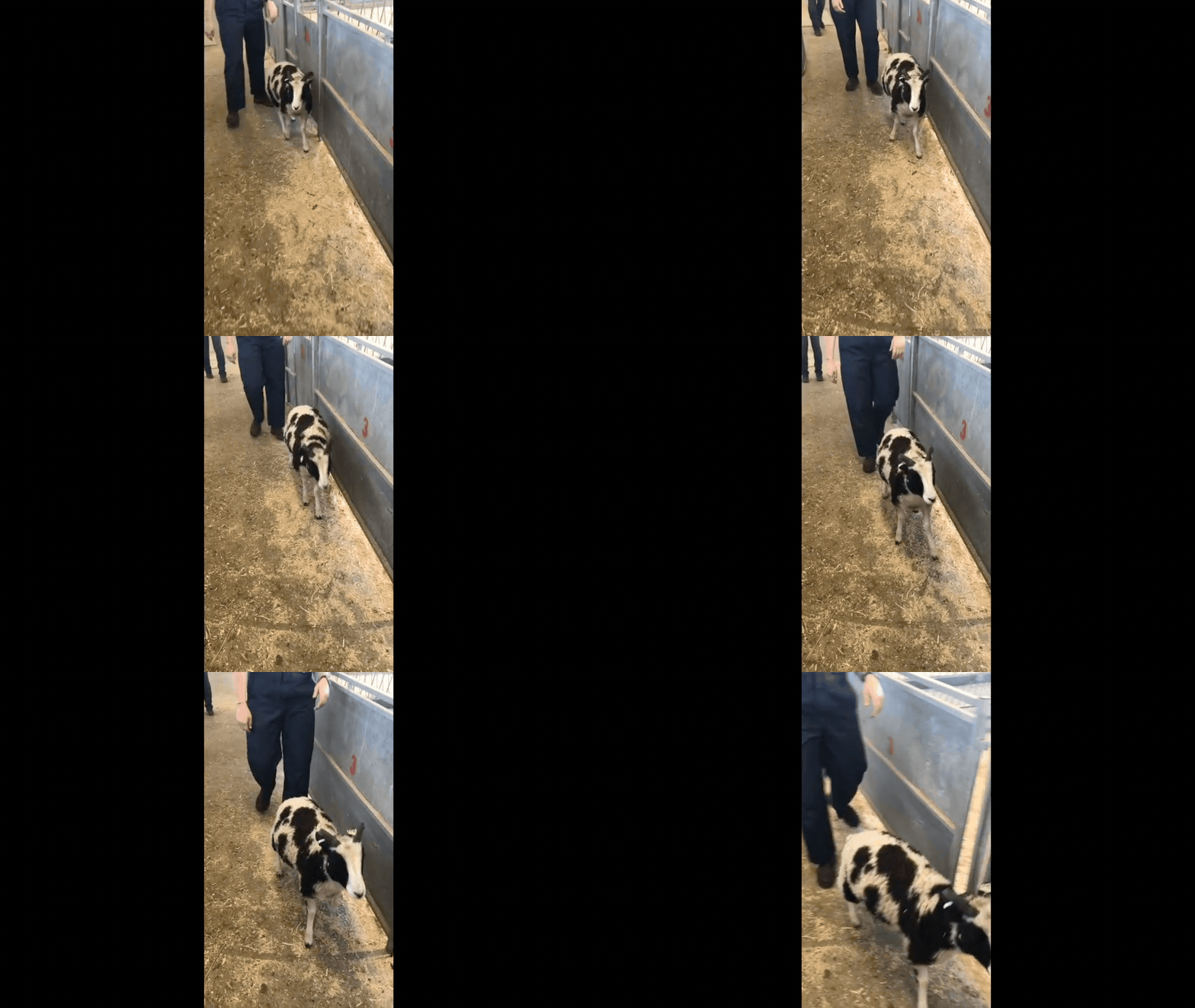
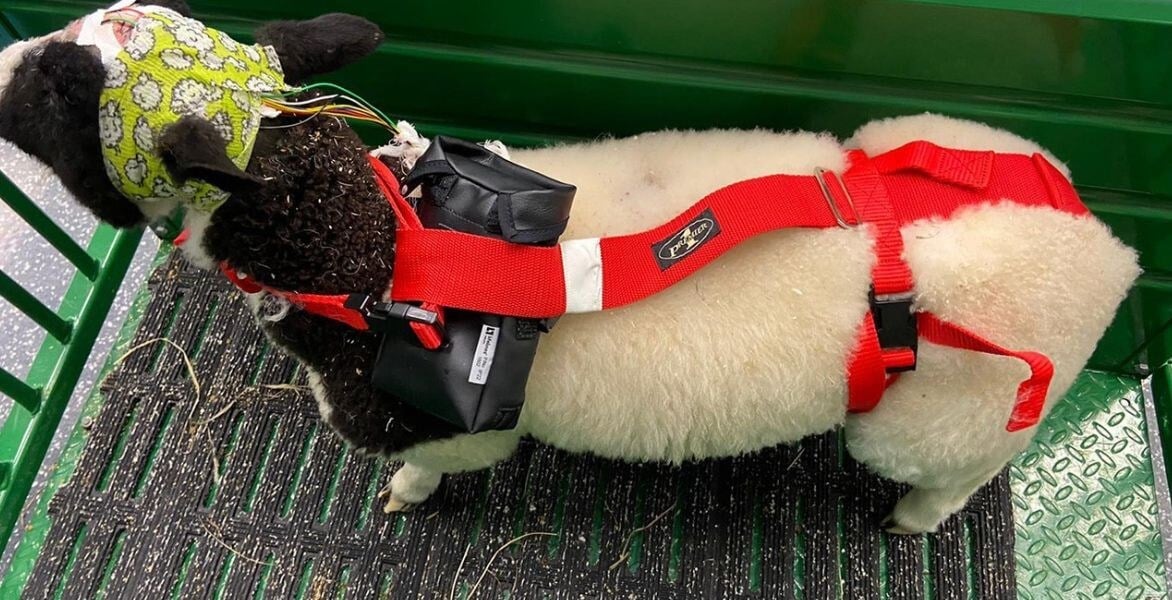
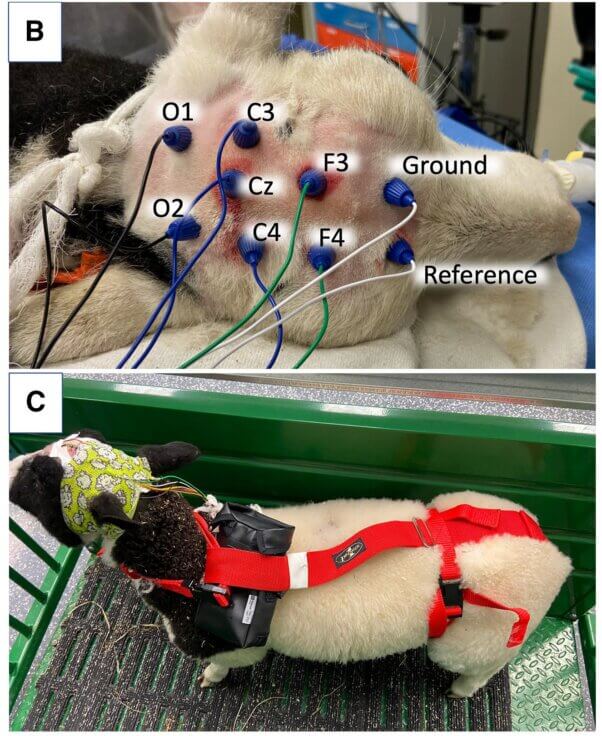
The research also extends to sheep, which are utilized to study motor dysfunction and organ degeneration. PETA’s investigation uncovered evidence of sheep undergoing invasive brain surgeries and spinal injections. As the neurodegenerative conditions progress, the sheep reportedly suffer from visual impairment and coordination loss. Records indicate that these animals are subjected to maze tests, where their declining cognitive and motor functions are tracked. The advocacy group describes the animals in these tests as "lost, unsteady, and afraid," noting that they are often isolated from their herds, which causes significant psychological distress to social species like sheep.
Feline Research and Skull Procedures
Further scrutiny has been directed toward a 2025 paper co-authored by Gray-Edwards, which details experiments on cats. These felines were bred to suffer from genetic mutations that lead to progressive muscle deterioration and early death. The research methodology involved "jamming needles" into the cats’ skulls to harvest spinal fluid and injecting viral vectors directly into the brain tissue.
According to the published findings, the cats experienced tremors and motor impairments consistent with human neurodegenerative decline. PETA alleges that the skulls of the cats were sliced open to facilitate these injections, and that the animals were subjected to numerous invasive procedures before being killed for dissection and analysis. The advocacy group argues that such "crude" methods are antiquated in an era where non-animal, human-relevant research models—such as 3D organoids and advanced computational modeling—are becoming increasingly available.
Financial Oversight and NIH Funding
The financial scale of these experiments is a primary focal point of PETA’s current campaign. Since 2013, Gray-Edwards’ research projects have received more than $10 million in federal funding. As of May 2026, active grants from the National Institutes of Health (NIH) totaling nearly $3 million are supporting her ongoing work.
In a formal letter addressed to the National Institute of Neurological Disorders and Stroke (NINDS), PETA urged federal regulators to "yank funding" for the experiments. The organization argues that the NIH has a responsibility to ensure that taxpayer dollars are not used to fund research that violates basic animal welfare standards or fails to demonstrate a clear path to human clinical success.
"UMass Chan has a well-documented history of failing to follow even the bare minimum animal care standards," the organization stated. "We are urging the National Institutes of Health to immediately suspend these grants and investigate the ethical lapses occurring within these laboratories."
Institutional History and Regulatory Background
The allegations against Gray-Edwards do not exist in a vacuum. UMass Chan Medical School has previously faced criticism and regulatory scrutiny regarding its animal research facilities. Past reports from the U.S. Department of Agriculture (USDA) and internal compliance audits have highlighted various animal welfare violations at the university, including:
- Understaffing: Reports have indicated that the veterinary and caretaking staff have at times been insufficient to monitor the volume of animals housed in the laboratories.
- Treatment Delays: Instances where animals showing signs of distress or post-operative complications were not treated in a timely manner.
- Anesthesia Failures: Documentation of animals regaining consciousness or experiencing pain during procedures due to inadequate sedation protocols.
- Starvation Protocols: Concerns regarding the intentional restriction of food for certain behavioral experiments, which PETA claims jeopardizes both the welfare of the animals and the reliability of the resulting scientific data.
The university, in its general defense of animal research, has historically maintained that its work is essential for the development of life-saving treatments for conditions that currently have no cure. UMass Chan emphasizes that all research is subject to review by the Institutional Animal Care and Use Committee (IACUC), a federally mandated body designed to ensure that animal use is justified and that pain is minimized.
Chronology of Recent Events
- 2013: Heather Gray-Edwards begins receiving significant NIH funding for large-animal models of neurodegenerative diseases.
- 2020–2024: Multiple papers are published detailing the use of sheep and calves in gene therapy trials, highlighting the "efficacy" of large-animal models in predicting human outcomes.
- September 30, 2025: A study titled "Five-year analysis of efficacy and safety of a bidirectional AAV gene therapy in Tay-Sachs sheep" is published in the Journal of Clinical Investigation, providing the basis for some of PETA’s recent findings.
- May 13, 2026: PETA launches its public campaign against Gray-Edwards, releasing a dossier of alleged abuses and sending a formal complaint to the NINDS.
- May 20, 2026: PETA updates its report with further details on the feline experiments and renews its call for a total cessation of animal-based research at UMass Chan.
Scientific and Ethical Implications
The debate over the use of large animals like sheep and calves in medical research touches on a fundamental tension in modern science. Proponents of the research argue that the complex brain structure of these animals is a necessary intermediary between mouse models and human clinical trials. For diseases like Tay-Sachs or MSUD, which involve intricate metabolic pathways and large-scale brain architecture, researchers claim that "in vitro" (test tube) or "in silico" (computer) models cannot yet replicate the systemic effects of a potential cure.
However, the ethical cost of this research is increasingly under the microscope. The "3Rs" principle—Replacement, Reduction, and Refinement—is the international standard for animal research. PETA’s allegations suggest that UMass Chan is failing in the "Refinement" category by not providing adequate pain relief and in the "Replacement" category by not transitioning to newer, non-animal technologies.
Furthermore, critics of animal modeling point to the high failure rate of drugs that pass animal trials but fail in human patients. Some studies suggest that upwards of 90% of basic research discoveries, many derived from animal models, fail to lead to human treatments. This "translational gap" has led some in the scientific community to advocate for a "human-centric" approach to research, focusing on human tissues and genetic data rather than inducing artificial diseases in other species.
Conclusion and Future Outlook
As of late May 2026, the National Institutes of Health has not issued a formal public response to PETA’s request for funding withdrawal. The University of Massachusetts Chan Medical School continues to operate its research programs under the oversight of federal and institutional regulators.
The outcome of this controversy could have significant implications for the future of gene therapy research. If the NIH decides to investigate or pull funding, it could signal a shift in how federal agencies weigh the "necessity" of large-animal models against the ethical concerns raised by advocacy groups. For now, the "den of depravity" described by PETA remains a focal point in the ongoing national dialogue regarding the ethics of scientific progress and the treatment of the animals that serve as its subjects.
The public and the scientific community remain divided, with the life-saving potential of gene therapy on one side and the harrowing descriptions of animal suffering on the other. PETA continues to urge the public to contact UMass administration to demand a transition toward human-relevant, non-animal research methods, asserting that true medical advancement should not be built on a foundation of "ethically barren" experimentation.

