


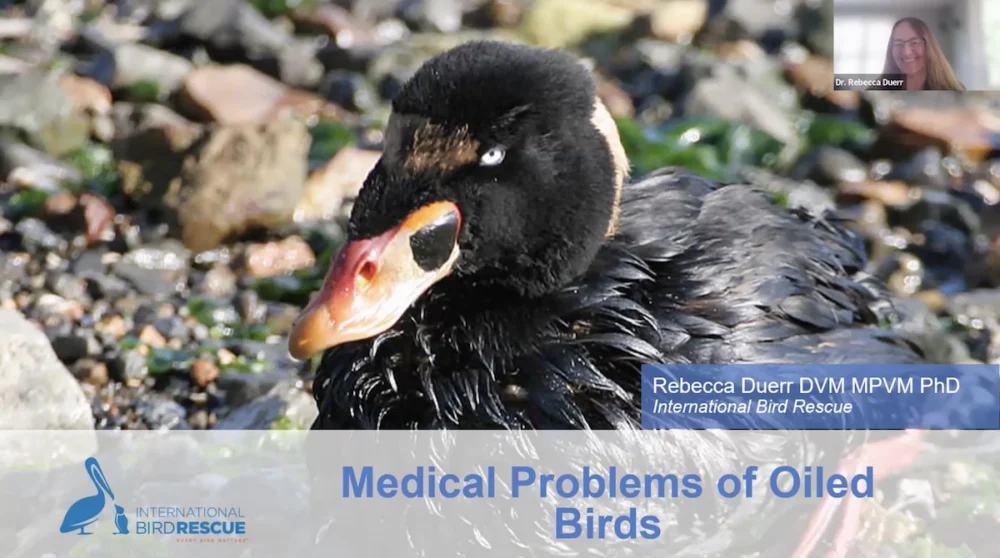
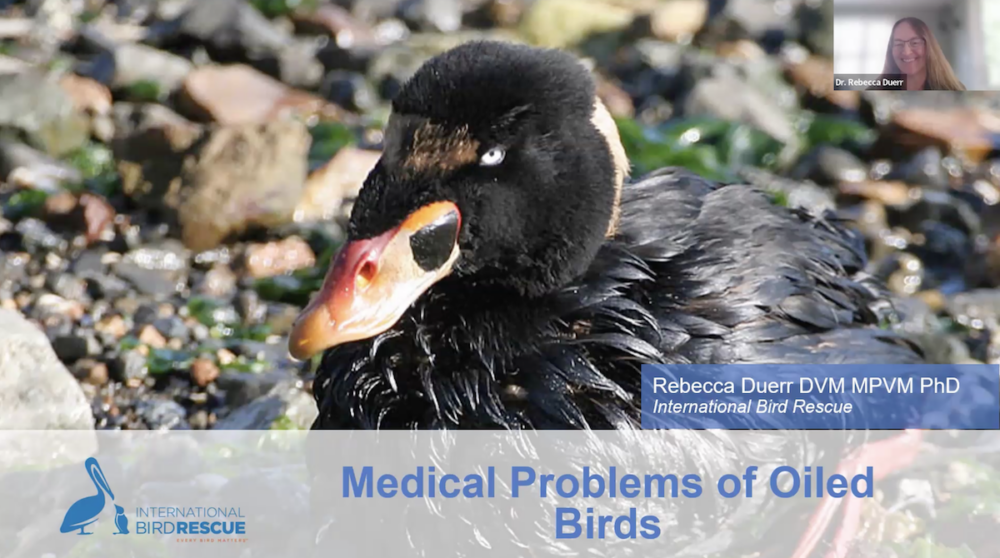
The Kansas State University College of Veterinary Medicine Exotics Club hosted a pivotal virtual seminar on April 21, 2026, featuring Dr. Rebecca Duerr, DVM, MPVM, PhD, a renowned expert in the field of avian and wildlife medicine. This educational initiative, facilitated through the Lafeber Company Veterinary Student Program, aimed to equip the next generation of veterinary professionals with the specialized knowledge required to manage the complex physiological and pathological challenges faced by birds affected by petroleum contamination. As global energy demands continue to intersect with sensitive avian habitats, the role of the veterinarian in oil spill response has evolved from a volunteer-based support role into a highly technical clinical discipline.
Dr. Duerr’s presentation provided an exhaustive overview of the multi-systemic failures induced by oil exposure, emphasizing that the visible coating of feathers is merely the precursor to a cascade of internal medical crises. The seminar served as a bridge between theoretical academic knowledge and the practical, high-stakes environment of wildlife rehabilitation during environmental disasters.
The Pathophysiology of Petroleum Exposure in Avian Species
The primary clinical concern in oiled wildlife is the immediate loss of feather integrity. Dr. Duerr detailed how petroleum hydrocarbons disrupt the microscopic structure of a bird’s plumage. Feathers are engineered with a complex system of barbs and barbules that interlock to create a waterproof and airtight seal. This structure is essential for both thermoregulation and buoyancy. When oil coats these feathers, the interlock is broken, allowing water to penetrate the downy layer and reach the skin.
This breach in insulation leads to rapid heat loss. In aquatic species, such as loons, grebes, and alcids, the resulting hypothermia can be fatal within hours. To compensate for the loss of core body temperature, affected birds enter a state of hypermetabolism, rapidly depleting their glycogen stores and fat reserves. This metabolic demand often occurs at a time when the bird is unable to hunt or forage, leading to a state of emaciation and severe dehydration.
Beyond the external physical effects, the internal toxicity of oil represents a significant clinical hurdle. Dr. Duerr highlighted that birds instinctively attempt to remove oil through preening, which leads to the ingestion of toxic hydrocarbons. These substances cause acute gastrointestinal irritation, often manifesting as hemorrhagic enteritis. Furthermore, the absorption of polycyclic aromatic hydrocarbons (PAHs) leads to systemic toxicity, including hemolytic anemia, hepatic necrosis, and renal impairment. The inhalation of volatile organic compounds (VOCs) evaporating from the oil can also cause aspiration pneumonia and severe damage to the respiratory mucosa.
Chronology of Clinical Intervention and Stabilization
The management of oiled birds follows a strict chronological protocol to maximize survival rates. Dr. Duerr emphasized that the "wash" is not the first step, but rather one of the final stages of the primary clinical intervention. The timeline of care is generally categorized into three distinct phases: stabilization, decontamination, and post-wash conditioning.
Phase I: Stabilization (Days 1–3)
Upon arrival at a care facility, the immediate priority is the reversal of life-threatening conditions. Clinical teams focus on thermoregulation, fluid therapy, and nutritional support. Dr. Duerr noted that birds are often in a state of shock; therefore, aggressive fluid resuscitation—often involving intravenous or intraosseous catheters—is required to address dehydration and metabolic acidosis.
During this phase, medical staff also administer gastroprotective agents and toxin binders, such as activated charcoal or specialized clays, to mitigate the effects of ingested petroleum. Only when a bird’s blood chemistry, packed cell volume (PCV), and total protein (TP) levels have stabilized can the animal proceed to the wash phase.
Phase II: Decontamination
The decontamination process is a high-stress event for the patient. Dr. Duerr described the industry-standard method, which involves a series of tubs containing warm water (102–105°F) and a 1% to 5% solution of specific dish detergents known for their effective surfactant properties. The water temperature is critical; it must be warm enough to melt the oil but not so hot as to cause thermal injury or exacerbate the bird’s metabolic stress.
Phase III: Post-Wash Conditioning and Release
Following the wash, birds are moved to drying pens equipped with specialized pet dryers. Once dry, the birds must regain their waterproofing. This is achieved by allowing the birds access to clean water pools where they can preen and realign their feather structure. Success is measured by the bird’s ability to remain buoyant and dry after extended periods on the water.
Supporting Data and Advancements in Restraint Techniques
A critical component of the seminar involved the discussion of recent research aimed at improving outcomes for birds undergoing the high-stress decontamination process. Dr. Duerr referenced a landmark 2024 study published in the Journal of Avian Medicine and Surgery by Kelley et al., titled "Comparison of manual restraint with and without sedation on outcomes for wild birds undergoing decontamination."
The study addressed a long-standing debate in wildlife medicine: whether the benefits of sedation outweigh the risks of anesthesia in compromised patients. The research compared birds handled via traditional manual restraint to those administered midazolam and butorphanol for sedation. The findings suggested that while manual restraint remains the standard, light sedation can significantly reduce the physiological stress markers (such as corticosterone levels) and the physical struggle during the wash, potentially leading to lower secondary injury rates.
This data is vital for veterinary students to understand, as it represents the shift toward "fear-free" wildlife medicine, where the psychological state of the animal is considered as important as its physical stability.
The Role of the Lafeber Company Student Program
The presentation was part of the Lafeber Company Student Program, an initiative designed to provide veterinary students with access to specialized experts who are often not part of the standard core curriculum. By sponsoring these sessions, Lafeber facilitates a deeper understanding of exotic and wildlife medicine, fields that are increasingly relevant as environmental health and "One Health" initiatives gain global prominence.
The partnership with the Kansas State University College of Veterinary Medicine Exotics Club highlights a growing interest among students in non-traditional veterinary paths. As wildlife habitats face increasing threats from industrialization, the demand for veterinarians who can respond to environmental disasters is at an all-time high.
Broader Implications and Environmental Policy
The clinical management of oiled birds has implications that extend far beyond the walls of the veterinary clinic. Dr. Duerr’s work underscores the importance of the Oiled Wildlife Care Network (OWCN) and similar organizations that provide a structured response framework. These organizations ensure that response efforts are not just well-intentioned, but are scientifically grounded and humanely executed.
From a policy perspective, the success rates of wildlife rehabilitation often influence the public perception of oil spill impacts and can affect the legal assessments of Natural Resource Damage Assessments (NRDA). If veterinarians can demonstrate high survival and release rates, it changes the narrative from one of inevitable loss to one of potential recovery. However, Dr. Duerr cautioned that rehabilitation is not a substitute for prevention. The medical complexities involved in "cleaning" a single bird—requiring dozens of gallons of water, specialized personnel, and weeks of care—highlight the massive logistical and biological costs of petroleum accidents.
Analysis of Veterinary Challenges in the Field
The seminar concluded with a fact-based analysis of the ongoing challenges in avian oil spill response. One of the primary hurdles remains the "unknown" variables of different petroleum products. The toxicity and viscosity of crude oil differ significantly from refined products like diesel or bunker fuel, each requiring slight adjustments in medical protocols.
Furthermore, the "success" of a release is often difficult to track. While birds may leave the facility in good health, long-term survival and reproductive success in the wild are harder to quantify without expensive satellite telemetry. Dr. Duerr encouraged students to look toward research as a way to refine these post-release metrics.
As the virtual session at Kansas State University ended, the message was clear: the medical treatment of oiled birds is a sophisticated discipline that requires a mastery of avian physiology, toxicology, and emergency medicine. Through the continued efforts of experts like Dr. Duerr and the support of programs like those offered by Lafeber, the veterinary community is better prepared than ever to mitigate the biological toll of environmental disasters.
For students and professionals who were unable to attend the live session, the recording and the detailed PowerPoint presentation remain available as critical resources. These materials provide a roadmap for the stabilization and treatment of some of the most vulnerable patients in the veterinary world, ensuring that the lessons learned from past spills are applied to future conservation efforts.

