


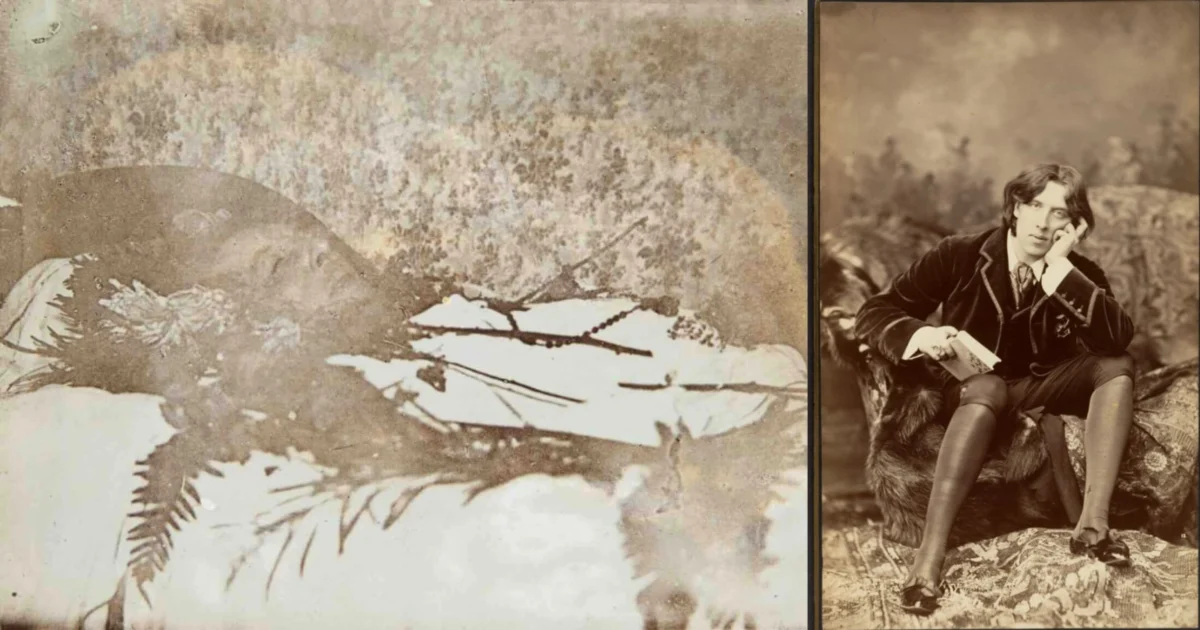
The final photographic record of Oscar Wilde, captured mere hours after his death in a modest Paris hotel room, has surfaced as a centerpiece of historical and literary interest following its recent sale at auction. The image, which depicts the legendary playwright and wit in repose on November 30, 1900, was sold by the auction house Bonhams for a staggering $375,000 (£279,800). This figure represents a monumental surge over the initial conservative estimate, which had placed the item’s value between $5,375 and $6,719 (£3,000 to £5,000). The sale underscores the enduring fascination with Wilde’s tragic final years and the rarity of artifacts from his period of exile in France.
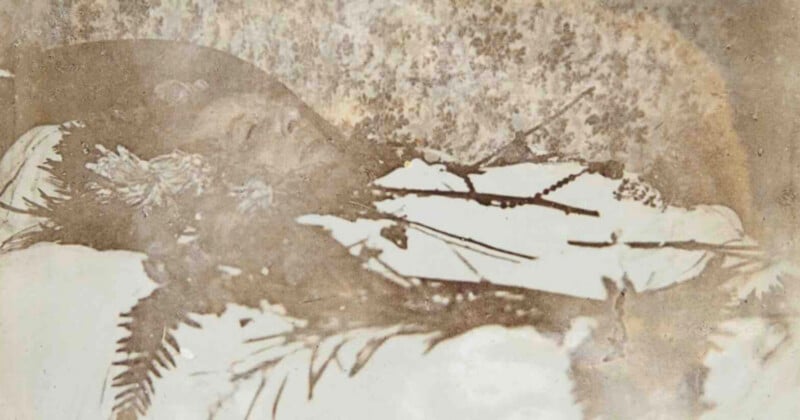
The photograph was taken by Maurice Gilbert, a French marine infantryman and one of Wilde’s loyal companions during his final months. The image captures the poet lying on his deathbed at the Hôtel d’Alsace, surrounded by a somber arrangement of flowers and foliage. Despite the technical limitations of the era and the "unsuccessful" nature of the exposure as described by Wilde’s contemporaries, the print remains one of the most poignant relics of the Victorian era’s most controversial literary figure.
A High-Stakes Auction and the Market for Wildeana
The auction at Bonhams drew international attention from collectors, historians, and literary institutions. The fact that the final price exceeded the high estimate by more than fifty times indicates a significant shift in the market for Wilde-related memorabilia. Experts suggest that the rarity of the photograph—of which only a handful of prints are known to exist—combined with its intimate and tragic subject matter, contributed to the bidding frenzy.
Wilde’s late-life artifacts are notoriously scarce. Following his 1895 conviction and subsequent bankruptcy, most of his personal effects, including his extensive library and household furniture, were sold off to pay creditors. During his exile in Paris, he lived under the pseudonym Sebastian Melmoth, moving through a world of diminishing resources and social isolation. Consequently, items that can be definitively linked to his final days in Paris carry immense historical weight. The $375,000 price tag reflects not just the value of the photograph as a physical object, but its status as a primary document of a pivotal moment in literary history.
Chronology of the Final Hours: November 30, 1900
The circumstances surrounding the creation of the photograph are well-documented through the letters and diaries of Wilde’s inner circle. Oscar Wilde had been in failing health for several months, suffering from the complications of a chronic ear infection—a condition that likely began during his time in prison and eventually led to meningitis.
By late November 1900, Wilde’s condition had become terminal. He was residing in Room 16 of the Hôtel d’Alsace on the Rue des Beaux-Arts. On the morning of November 30, his breathing became labored. Present at his bedside were his devoted friend and literary executor Robert Ross, the writer Reginald Turner, and the hotel’s proprietor, Jean Dupoirier. Wilde passed away at approximately 1:50 p.m. at the age of 46.
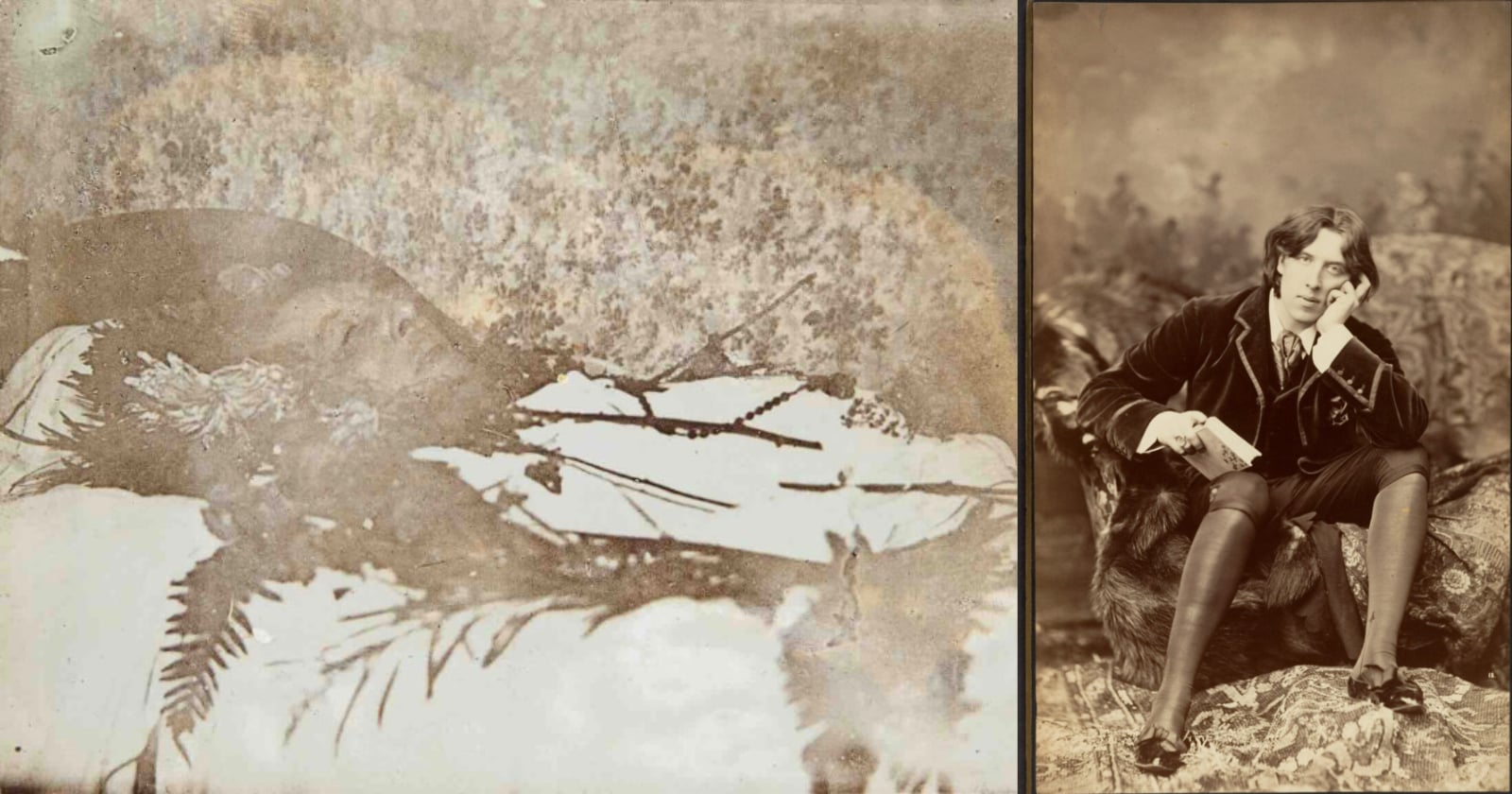
Following his death, the room was prepared for mourners. Dupoirier and Ross dressed the body in a white nightshirt and arranged the room with ferns and flowers, a gesture intended to provide the "Apostle of Aestheticism" with a final environment of beauty. It was in this setting, approximately three hours after the official time of death, that Robert Ross requested Maurice Gilbert to document the scene.
Technical Challenges: Magnesium Flashes and Borrowed Cameras
The photograph is a testament to the experimental and often volatile nature of early 20th-century indoor photography. To capture an image inside a dimly lit hotel room, Gilbert had to utilize a borrowed camera and an early form of artificial lighting known as a magnesium flash.
In 1900, photography was still largely dependent on natural light. Capturing "instantaneous" images indoors required a chemical reaction that could produce an intense burst of light. Photographers used magnesium powder, which, when ignited, created a brilliant but dangerous flash. These early flashes were notoriously difficult to time and often produced a thick cloud of acrid white smoke, which could obscure the subject or ruin subsequent shots.
Robert Ross later reflected on the attempt with disappointment, writing that the photograph was "unsuccessful" because "the flashlight did not work properly." The resulting image is indeed characterized by a stark, high-contrast quality, typical of magnesium lighting, which casts deep shadows and gives the scene a ghostly, ethereal appearance. However, what Ross viewed as a technical failure is today seen as a hauntingly appropriate visual representation of Wilde’s diminished state at the end of his life.
Historical Context: From the Height of Society to Parisian Exile
To understand the significance of this photograph, one must look at the dramatic trajectory of Wilde’s life. In the early 1890s, Oscar Wilde was the toast of London. His plays, such as The Importance of Being Earnest and An Ideal Husband, were critical and commercial triumphs. He was the primary spokesperson for the Aesthetic Movement, famously declaring that "Life imitates Art far more than Art imitates Life."
However, his downfall was swift and brutal. In 1895, Wilde embarked on a disastrous libel suit against the Marquess of Queensberry, the father of his lover, Lord Alfred Douglas. The suit collapsed, leading to Wilde’s own arrest and trial for "gross indecency"—a legal term used to criminalize homosexual acts. He was sentenced to two years of hard labor, which he served primarily at Reading Gaol.
Upon his release in 1897, Wilde was a broken man, both physically and financially. He fled to France, never to return to England. His final three years were spent in a state of "genteel poverty," relying on the charity of friends and a small allowance from his estranged wife, Constance. The deathbed photograph serves as the final chapter of this narrative, showing the man who once dazzled London salons lying in a quiet, rented room in a foreign city.
The Tradition of Post-Mortem Photography
The existence of the photograph is also a reflection of Victorian social customs. Post-mortem photography, or memento mori (remember you must die), was a common practice in the 19th and early 20th centuries. Before the widespread availability of personal cameras, a photograph taken after death was often the only visual record a family had of a loved one.
For a figure of Wilde’s stature, the photograph served a dual purpose. It was a personal keepsake for his closest friends, but it was also a historical record. Ross, who spent the rest of his life managing Wilde’s estate and rehabilitating his reputation, understood that Wilde was a figure of historic importance. Despite the "unsuccessful" flash, the decision to document the body was an act of preservation, ensuring that the world would have a final glimpse of the man who had redefined the English language.
Implications and the Rehabilitation of Wilde’s Legacy
The high value placed on this photograph at auction reflects the total rehabilitation of Oscar Wilde’s reputation in the 21st century. Once a pariah whose name was removed from theater playbills, Wilde is now celebrated as a martyr for individual liberty and LGBTQ+ rights. In 2017, he was among the thousands of men posthumously pardoned by the British government under "Turing’s Law" for historical homosexual offenses.
The sale of this photograph also highlights the ongoing interest in the "materiality" of history. In a digital age, the physical presence of a 124-year-old silver gelatin print, developed from a plate exposed in a smoke-filled room in Paris, offers a tangible connection to the past. It serves as a stark reminder of the human cost of the era’s rigid moral codes.
The anonymous buyer of the photograph now possesses one of the few surviving windows into the final moments of a man who famously quipped, "My wallpaper and I are fighting a duel to the death. One or the other of us has to go." While the wallpaper of the Hôtel d’Alsace is long gone, this photograph ensures that the image of Wilde in his final hour remains preserved for posterity.
As this artifact moves into a new collection, it continues to provoke discussion about the intersection of art, celebrity, and tragedy. The photograph is more than a mere likeness; it is a document of the end of an era, marking the close of the Victorian age and the silent departure of its most vibrant, and ultimately most wounded, creative spirit.

