


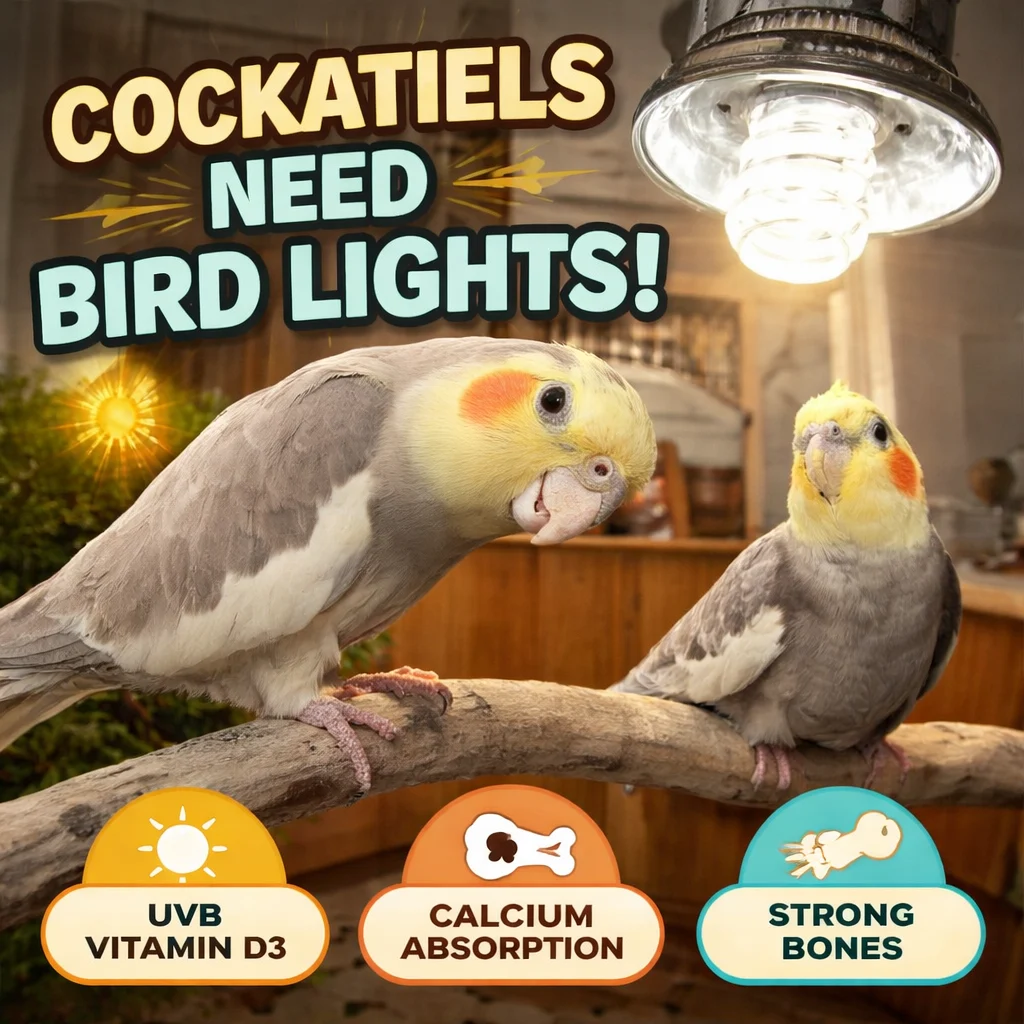
For countless bird owners, the seemingly bright interiors of their homes provide an adequate environment for their feathered companions. However, a growing body of scientific evidence and veterinary consensus highlights a critical oversight in this common perception: the indispensable role of ultraviolet B (UVB) light for the health and well-being of indoor birds. This article delves into the physiological imperatives, safety protocols, and practical applications of avian UVB lighting, emphasizing its transition from a niche recommendation to a fundamental component of responsible bird husbandry.
The Indispensable Role of UVB in Avian Physiology
Birds, unlike many mammals, are uniquely adapted to synthesize Vitamin D3 primarily through exposure to specific wavelengths of ultraviolet radiation, particularly UVB light (ranging from approximately 290 to 320 nanometers). This vital process begins when UVB rays interact with 7-dehydrocholesterol present in the bird’s skin or in the preen gland oil, which birds then spread over their feathers during preening. The UVB converts this precursor into pre-vitamin D3, which then undergoes thermal isomerization to active Vitamin D3. Once formed, Vitamin D3 is crucial for calcium absorption and metabolism, bone mineralization, immune system function, and overall endocrine health. Without adequate Vitamin D3, calcium cannot be properly absorbed from the diet, leading to a cascade of severe health issues, even if the bird receives a calcium-rich diet.
The misconception that a brightly lit room or proximity to a window is sufficient for UVB exposure is widespread but scientifically incorrect. Standard window glass, even clear panes, effectively filters out almost all beneficial UVB wavelengths. Similarly, most artificial indoor lighting, including incandescent, fluorescent, and LED bulbs designed for human environments, does not emit the necessary UVB spectrum for avian Vitamin D3 synthesis. This leaves indoor birds in a state of chronic UVB deprivation, mimicking the conditions of prolonged cloudy weather or deep shade, regardless of how "bright" their indoor environment appears to the human eye.
Historical Context and Evolving Avian Care Standards
The understanding of avian photobiology and the specific need for UVB light is a relatively recent development in the long history of keeping birds as companions. For centuries, captive birds were often housed without any consideration for their specialized light requirements, leading to a host of undiagnosed health problems that were often attributed to diet, genetics, or unknown causes.
Pioneering research in the late 20th and early 21st centuries, particularly within zoological institutions and academic veterinary departments, began to unravel the critical link between UVB exposure and avian health. Studies on wild bird populations confirmed their natural exposure patterns to sunlight, while investigations into captive birds revealed the high prevalence of metabolic bone disease, hypocalcemia, and reproductive issues directly attributable to Vitamin D3 deficiency caused by lack of UVB. This led to a paradigm shift in avian husbandry, moving beyond generic "full-spectrum" lighting—which often only mimics visible light and some UVA—to emphasize the targeted provision of UVB. Manufacturers began developing specialized avian and reptilian UVB lamps, initially linear fluorescent tubes, and later compact fluorescent and even some advanced LED systems capable of emitting the necessary wavelengths. This evolution mirrors a broader trend in companion animal care, where scientific understanding increasingly informs best practices, ensuring that captive environments more closely meet the biological needs of their inhabitants.
Recognizing the Silent Signs of Light Deficiency: A Diagnostic Overview
The effects of insufficient UVB exposure are often subtle and insidious, progressing gradually over months or even years before manifesting as overt clinical signs. Birds, as prey animals, instinctively hide weakness and illness, making early detection challenging for even vigilant owners. Veterinarians frequently advise proactive measures rather than reactive treatment once symptoms become apparent, as by then, the deficiency may be severe and potentially irreversible.
Key indicators that an indoor bird may be suffering from UVB deficiency include:
- Skeletal Abnormalities: Weak grip strength, often one of the earliest signs. More advanced cases can lead to osteodystrophy, characterized by brittle bones, easy fractures, and lameness. In young birds, "splayed legs" or other developmental bone deformities can occur. Egg-binding in female birds is a common and life-threatening complication, as proper calcium metabolism is essential for strong eggshell formation and muscle contractions during laying.
- Feather Quality Decline: Dull, faded, or discolored feathers, poor feather growth, or chronic feather plucking can be linked to overall poor health, including nutritional deficiencies exacerbated by lack of D3.
- Behavioral Changes: Increased lethargy, decreased activity levels, irritability, aggression, or even signs of depression can be observed. A bird’s circadian rhythm, which influences sleep-wake cycles and mood, can be disrupted by the absence of natural light cycles, including UVB.
- Reproductive Issues: Beyond egg-binding, overall reduced fertility, poor egg quality, and weakened offspring are common in breeding birds lacking adequate UVB.
- Immunosuppression: Vitamin D3 plays a role in immune system modulation. Chronic deficiency can lead to a compromised immune response, making birds more susceptible to infections.
- Neurological Symptoms: In severe, prolonged cases of hypocalcemia, neurological signs such as tremors, seizures, or ataxia (lack of coordination) can develop, indicating critical calcium imbalances affecting nerve and muscle function.
It is crucial for bird owners to understand that a bird may appear outwardly healthy, maintain a good appetite, and receive a high-quality diet, yet still suffer from the internal effects of UVB deficiency. Regular veterinary check-ups, combined with an informed assessment of the bird’s environment, are essential for early intervention.
Navigating Safety and Best Practices: Dispelling Misconceptions
While the benefits of UVB lighting are clear, concerns about its potential dangers are also valid. Like any powerful tool, UVB lights must be used correctly to be safe and effective. Misinformation or improper application can lead to harm, reinforcing the importance of adhering to expert guidelines.
Addressing the "Are Bird Lights Dangerous?" Question:
Used incorrectly, any UV source can indeed be harmful. The risks primarily stem from overexposure, incorrect distance, or using lamps not designed for avian use. However, when used as directed, bird-safe UVB lights are specifically engineered to mimic the short, controlled, and beneficial natural exposure birds would receive in the wild, without the harmful intensity or duration of direct, unfiltered sunlight.
"Can Too Much UV Cause Cancer?"
Excessive, prolonged exposure to any form of UV radiation can damage tissues, including the eyes and skin, and theoretically increase the risk of certain cancers in birds, similar to humans. This is why controlled exposure is paramount. The goal is to provide enough UVB for Vitamin D3 synthesis without causing phototoxicity. Recommendations from avian veterinarians and lamp manufacturers generally suggest limiting direct UVB exposure to short daily sessions, typically 1 to 3 hours, depending on the lamp’s intensity and the bird’s species and distance from the lamp. The use of an automated timer is highly recommended to ensure consistent, safe duration and to prevent accidental overexposure.
Critical Parameters for Safe and Effective UVB Lighting:
- Distance: This is arguably the most crucial factor. The intensity of UVB radiation diminishes rapidly with distance. Each avian UVB lamp manufacturer provides specific recommendations for the optimal distance between the lamp and the bird’s primary perching area, usually ranging from 6 to 18 inches (15-45 cm). Too close, and the bird risks overexposure; too far, and the UVB intensity will be too low to be effective. Owners should refer to the lamp’s specifications and consider using a UV meter for precise measurement if possible. The setup should also allow for a "UVB gradient" within the cage, enabling the bird to move into and out of the direct UVB zone, mimicking natural behavior.
- Duration: As mentioned, 1 to 3 hours daily is a general guideline. Some species from very sunny regions might benefit from slightly longer, while species from dense forest canopies might need less. The key is consistency and moderation, often timed to coincide with morning or late afternoon light cycles.
- Fixture Type: The lamp should be housed in an appropriate fixture, often with a reflector, to direct the light efficiently towards the cage. Electronic ballasts are preferred for fluorescent lamps as they prevent the invisible flickering (at 100-120 Hz) that can be stressful to birds, who have superior flicker fusion rates compared to humans.
- Lamp Type and Replacement: Only use lamps specifically marketed as "avian UVB" or "reptile UVB" lamps from reputable manufacturers. Avoid general "full-spectrum" bulbs that do not emit UVB, and never use tanning lamps or medical UV lamps, which emit dangerously high levels of UV. UVB lamps, particularly fluorescent types, degrade over time, losing their UVB output long before their visible light fails. Most avian UVB lamps need to be replaced every 6 to 12 months, even if they still appear to be working. Mark the installation date and schedule regular replacements.
- Placement: The lamp should be positioned above or slightly to the side of the cage, not directly in front, to avoid shining directly into the bird’s eyes for prolonged periods. It should also be positioned where it cannot be chewed or damaged by the bird.
Implementing a Phototherapy Program: A Step-by-Step Guide
Integrating UVB lighting into a bird’s environment requires thoughtful planning and consistent application.
- Species-Specific Assessment: Different bird species have evolved in different light environments. A macaw from a sunny rainforest canopy may have different needs than a finch from a dense undergrowth. Consult with an avian veterinarian or reputable avian expert to understand your bird’s specific requirements.
- Lamp Selection: Choose an avian-specific UVB lamp appropriate for the size of your bird and cage. Linear fluorescent tubes (e.g., T5 or T8) are often recommended for larger cages due to their wider coverage, while compact fluorescent lamps may be suitable for smaller enclosures.
- Optimal Placement: Install the lamp directly above or beside the primary perching area. Ensure the recommended distance is maintained. The lamp should be outside the cage, protected from the bird, but without any barriers (like plastic covers or glass) between the lamp and the bird.
- Automated Schedule: Use a heavy-duty appliance timer to ensure the lamp turns on and off consistently for the recommended 1 to 3 hours daily. This prevents accidental overexposure and establishes a predictable routine for the bird.
- Ongoing Monitoring: Observe your bird for any changes in behavior, activity levels, or feather condition. While improvements are gradual, consistent observation helps confirm the program’s effectiveness. Regular veterinary check-ups remain crucial for overall health assessment.
- Regular Replacement: Adhere strictly to the manufacturer’s recommended replacement schedule for the UVB lamp (typically 6-12 months). Mark the date of installation to avoid guesswork.
Broader Implications and Future Directions
The widespread adoption of avian UVB lighting represents a significant advancement in pet bird welfare. Beyond the immediate health benefits for individual birds, there are broader implications:
- Economic Impact: While an initial investment, providing UVB lighting is a form of preventive care that can significantly reduce the likelihood of costly veterinary interventions for conditions like metabolic bone disease, egg-binding, and other deficiency-related ailments. The cost of a lamp and its replacements is minimal compared to emergency vet visits, surgeries, or long-term medication.
- Ethical Considerations: As our understanding of animal sentience and specific biological needs grows, providing an environment that fully supports an animal’s natural physiology becomes an ethical imperative. UVB lighting is not merely a luxury but a fundamental requirement for many captive avian species.
- Advancements in Technology: Research continues into more efficient, longer-lasting, and safer UVB light sources, including LED technology capable of emitting specific UVB wavelengths without excessive heat or power consumption. This will make UVB provision even more accessible and sustainable for bird owners in the future.
In conclusion, for any bird living predominantly indoors, avian UVB lighting is not merely an optional accessory but a critical component of a comprehensive care plan. By understanding the scientific basis for its necessity, adhering to strict safety protocols, and implementing a well-managed phototherapy program, bird owners can ensure their feathered companions thrive, enjoying stronger bones, vibrant feathers, stable moods, and a significantly enhanced quality of life. The journey from "bright house is enough" to "UVB is indispensable" marks a pivotal moment in responsible avian care, underscoring the commitment to meeting the intricate biological needs of these remarkable creatures.

