


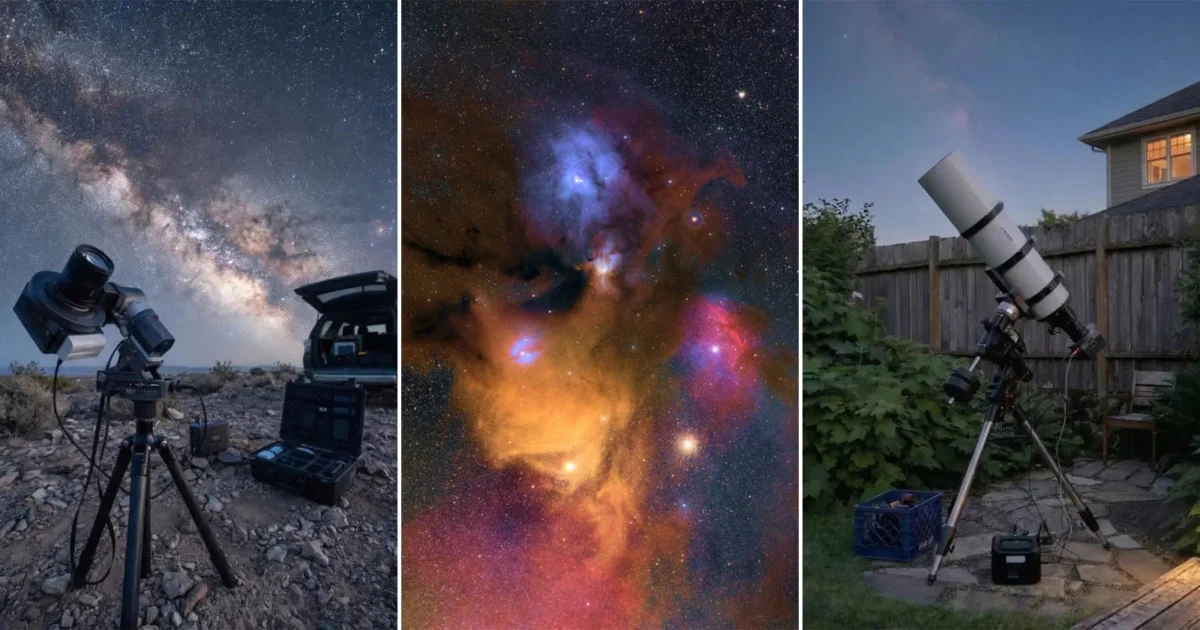
The landscape of celestial imaging is undergoing a significant transformation with the introduction of the ArcBlue C42, a device positioned as the world’s first smart full-frame astrophotography system. Designed to bridge the gap between complex professional-grade observatory equipment and user-friendly consumer electronics, the C42 aims to simplify the notoriously difficult discipline of deep-sky photography. By integrating a high-performance full-frame sensor with automated tracking and onboard processing, ArcBlue is targeting both seasoned astronomers looking for a streamlined workflow and novices who have previously been intimidated by the steep learning curve of the hobby.
A Paradigm Shift in Astrophotography Accessibility
Astrophotography, particularly the capture of deep-sky objects (DSOs) like nebulae, galaxies, and star clusters, has traditionally required an extensive array of equipment and a deep understanding of celestial mechanics. A standard setup often involves a specialized telescope, a dedicated cooled astronomy camera, an equatorial mount, a secondary guiding camera, and a laptop running complex sequencing software. The ArcBlue C42 seeks to consolidate these disparate components into a single, cohesive ecosystem.
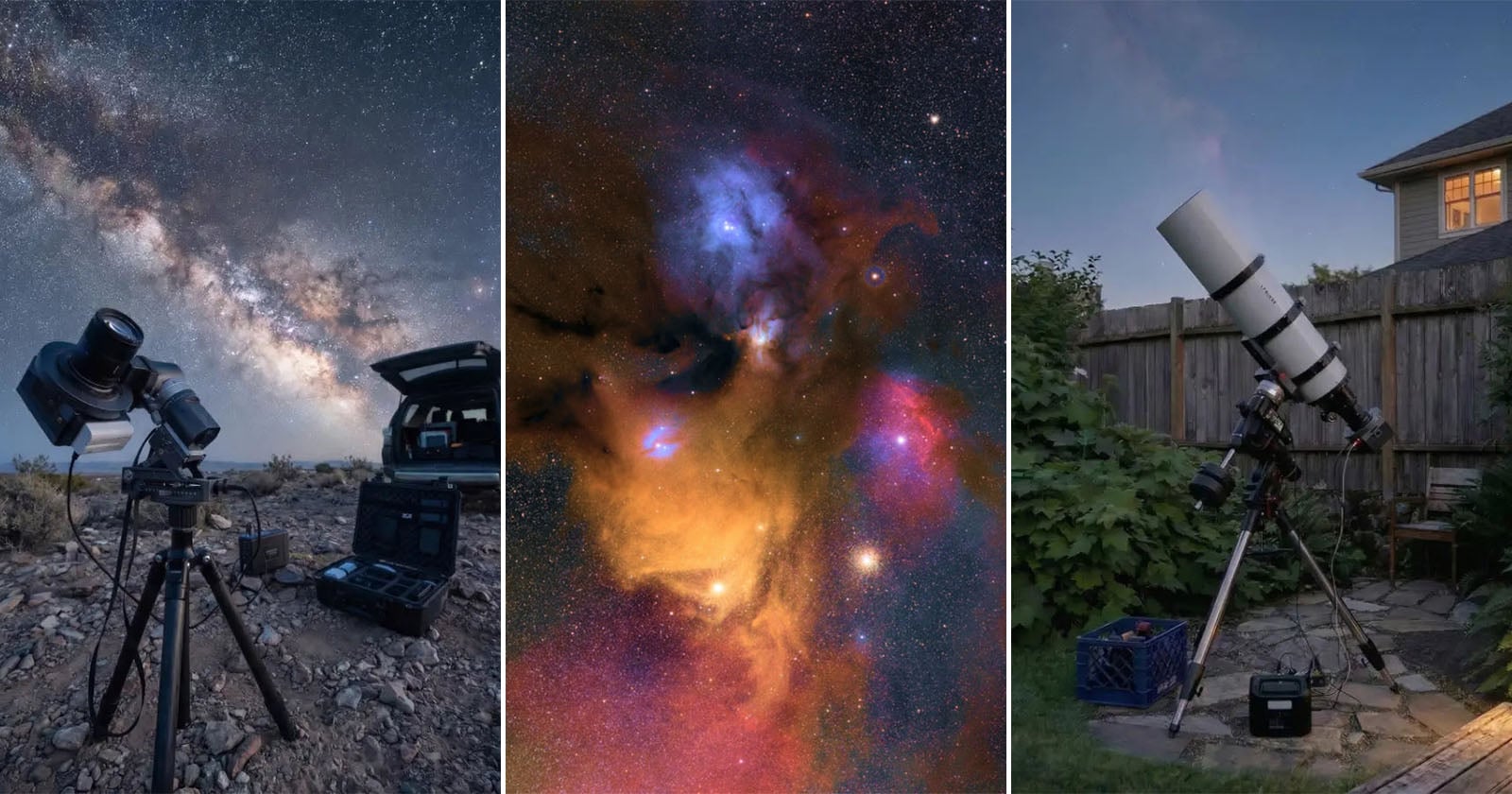
The primary hurdle for beginners is the equatorial mount. Because the Earth rotates, stars appear to move across the sky. To capture the faint light of distant galaxies, long exposure times are necessary; however, without a system to counteract Earth’s rotation, these exposures result in "star trails" rather than sharp points of light. The C42 addresses this through a fully automated tracking and guiding system. By automating the alignment and tracking process, the device allows users to focus on composition and target selection rather than the minutiae of mechanical calibration.
Technical Specifications: The Power of Full-Frame Imaging
At the heart of the ArcBlue C42 is the Sony IMX410, a 24-megapixel back-illuminated (BSI) full-frame CMOS sensor. This specific sensor has earned a reputation for excellence in the photography industry, having been utilized in acclaimed cameras such as the Sony A7 III, Nikon Z6 series, and the Panasonic Lumix S1. Its integration into a dedicated astrophotography system marks a departure from many existing "smart telescopes" that typically utilize smaller 1/2-inch or 4/3-inch sensors.
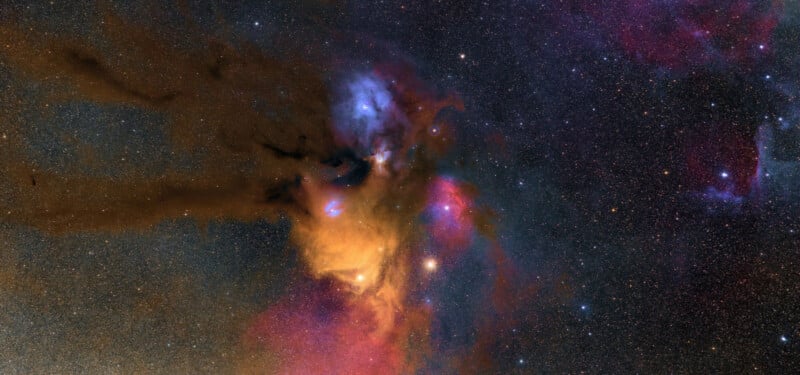
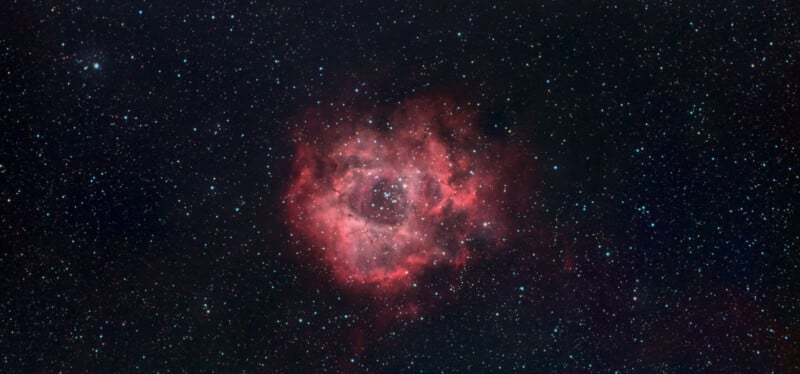
The choice of a full-frame sensor provides two critical advantages: field of view and signal-to-noise ratio (SNR). In the context of deep-sky imaging, a larger sensor area captures a wider swath of the night sky, making it ideal for large nebulae like the Rosette or the Rho Ophiuchi cloud complex. Furthermore, the larger physical pixels (approximately 5.94 microns) on the IMX410 are more efficient at gathering photons, which is essential when imaging objects millions of light-years away.
To supplement the sensor’s raw capabilities, ArcBlue has implemented an active Thermoelectric Cooling (TEC) system. In long-exposure photography, sensors generate heat, which manifests as thermal noise or "hot pixels" in the final image. The C42’s cooling system is capable of reducing the sensor temperature to 30°C below the ambient environment. This reduction in heat significantly lowers the noise floor, allowing for cleaner shadows and more intricate detail in the faint outer filaments of nebulae.
Automation and the Integrated User Experience
The ArcBlue C42 operates on an "open platform" philosophy, distinguishing it from the "closed" systems often found in the smart telescope market. While devices from competitors like Unistellar or Vaonis are integrated units where the optics cannot be changed, the C42 features a native Sony E-mount. This allows photographers to attach a vast library of existing lenses, from ultra-wide-angle glass for Milky Way landscapes to massive telephoto lenses for deep-space targets.
The setup process is designed to be completed in minutes. According to the manufacturer, a user simply needs to level the tripod, point the camera roughly North (or South, depending on the hemisphere), and activate the system. The onboard computer then takes over, performing "plate solving"—a process where the camera takes a photo, analyzes the star patterns against an internal database, and determines exactly where it is pointing.
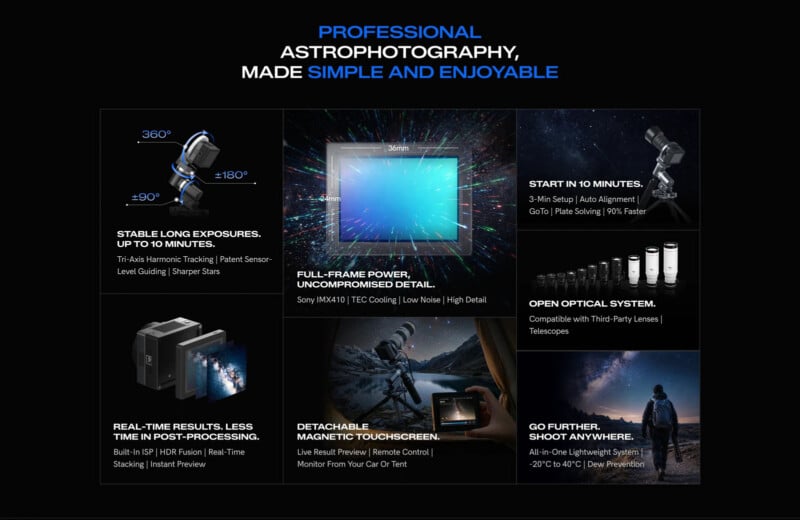
Once aligned, the user interacts with a detachable touchscreen or a smartphone app to select a target from a catalog of thousands of celestial objects. The C42 then slews to the target and begins the acquisition process. This level of automation removes the need for manual polar alignment, a task that often frustrates those new to the hobby.
Real-Time Processing and Software Integration
Capturing the data is only half the battle in astrophotography; the other half is post-processing. To produce the vibrant, high-contrast images seen in professional galleries, hundreds of individual exposures must be "stacked" to improve the signal-to-noise ratio. The ArcBlue C42 performs this stacking in real-time. As the camera captures each frame, the onboard processor aligns it with previous frames and merges them, allowing the user to watch the image "develop" on the screen as more detail emerges.
For advanced users, the C42 does not sacrifice control for the sake of simplicity. The system supports RAW file output, ensuring that data-rich files are available for manual processing in software like PixInsight or Adobe Photoshop. This dual-path approach—real-time stacking for immediate gratification and RAW output for professional editing—positions the C42 as a versatile tool for various skill levels.
Chronology of Development and Market Context
The journey of the ArcBlue C42 became public in April 2024, when the company showcased a prototype at the National Association of Broadcasters (NAB) Show in Las Vegas. The reveal generated significant interest within the imaging community, as it represented a middle ground between traditional DSLR astrophotography and the emerging smart telescope trend.
The rise of smart telescopes over the last five years has prepared the market for the C42. Companies like DwarfLab, with their ultra-portable Dwarf II and Dwarf 3, and Vaonis, with the Vespera series, have proven that there is a massive appetite for automated astronomy. However, many of these devices are limited by their fixed optics and smaller sensors. The ArcBlue C42 is the first to bring the "smart" workflow to a full-frame, interchangeable lens format, effectively creating a new sub-category of "Smart Astro-Cameras."
Broader Implications for the Photography Industry
The introduction of the ArcBlue C42 carries several implications for the broader photography and astronomy markets:
- Lowering the Barrier to Entry: By removing the requirement for specialized knowledge of equatorial mounts and polar alignment, the C42 could significantly expand the population of active astrophotographers. This democratization of the hobby mirrors the way digital sensors replaced film, making the medium more accessible to the masses.
- Pressure on Traditional Manufacturers: As "smart" features become standard in niche fields like astrophotography, traditional camera manufacturers like Sony, Canon, and Nikon may face pressure to integrate more advanced celestial tracking or internal stacking features into their mainstream mirrorless bodies.
- The "Smart" Ecosystem Growth: The C42’s ability to interface with existing telescopes via industry-standard adapters suggests a move toward a more modular "smart" future. Instead of buying a new telescope, users may simply buy a "smart head" like the C42 to modernize their existing optical tubes.
Launch Details and Future Outlook
ArcBlue has announced that the C42 will officially launch via a Kickstarter campaign in the near future. While the final retail price has not been disclosed, the company has opened a registration portal on its website for prospective "early bird" backers. This crowdfunding approach is common for innovative hardware in the photography space, allowing the company to gauge demand and fund the initial mass-production run.
Industry analysts suggest that the success of the C42 will depend largely on its software stability and the precision of its internal tracking motors. In astrophotography, even a microscopic vibration or a slight tracking error can ruin a multi-hour exposure. If ArcBlue can deliver on its promise of "stable long exposures" in a consumer-friendly package, the C42 could become a benchmark for the next generation of imaging devices.
As the campaign approaches, the astronomical community remains cautiously optimistic. The prospect of a full-frame, cooled, and automated system that fits in a backpack is a compelling proposition. Whether it can truly replace the complex rigs of veteran astronomers remains to be seen, but for the modern creator looking to capture the cosmos, the ArcBlue C42 represents a significant leap forward in technological integration.

