


Rachel Fordyce’s routine commute to her entomology lab at Cornell University began with a cost-saving strategy: parking at Ithaca’s East Hill Plaza and traversing East Lawn Cemetery on foot. It was during one such spring walk in 2022 that an unusual spectacle unfolded before her. The air, she observed, was alive with bees. This seemingly innocuous sighting, born from a desire to economize, would soon blossom into a groundbreaking scientific discovery, revealing one of the largest and oldest known aggregations of ground-nesting bees ever documented.
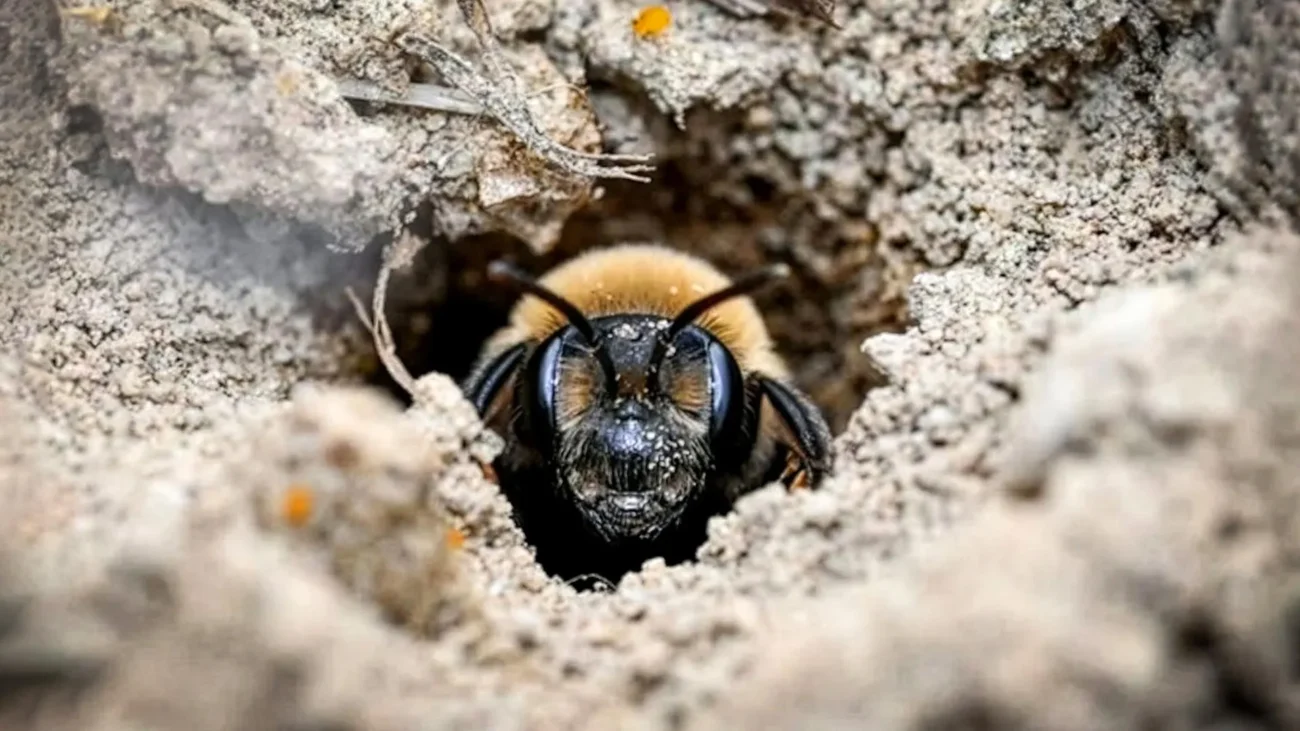
Fordyce, an entomology lab technician, collected a sample of the abundant insects, carefully placing them in a jar before presenting them to her supervisor, Bryan Danforth, a professor of entomology in Cornell’s College of Agriculture and Life Sciences. "These are all over the cemetery," she informed him, her voice likely tinged with curiosity. The specimens were identified as Andrena regularis, commonly known as the "regular mining bee." This solitary wild bee species, vital for the pollination of crops and wild flora, constructs its nests underground.
This single observation by Fordyce initiated a cascade of research that has fundamentally reshaped scientific understanding of urban biodiversity and the critical role of solitary bees. Subsequent investigations by a team of Cornell researchers, including lead author Steve Hoge ’24, an undergraduate researcher at the time, revealed that East Lawn Cemetery harbors an astonishing population of approximately 5.5 million Andrena regularis bees, concentrated within a surprisingly compact 1.5-acre area. This density is staggering, equating to more than 200 honeybee hives and exceeding Manhattan’s human population by more than threefold.
"I’m sure there are other large bee aggregations that exist around the world that we just haven’t identified, but in terms of what is in the literature, this is one of the largest," stated Hoge, reflecting on the study published on April 13th in the esteemed journal Apidologie. The research not only documented this remarkable aggregation but also delved into the biology of these often-overlooked wild bees, underscoring their profound importance as pollinators for economically significant crops, such as apples, a cornerstone of New York’s agricultural landscape.
The Unlikely Sanctuary: East Lawn Cemetery as a Bee Metropolis
The emergence of this remarkable bee population in an urban cemetery is a testament to the often-unforeseen ecological niches that can develop within human-altered landscapes. East Lawn Cemetery, established in 1878, has a history of providing a tranquil refuge for wildlife. Historical records indicate that A. regularis has been a consistent inhabitant of the cemetery grounds since at least the early 1900s, suggesting a long-standing relationship between the bees and this specific location.
This discovery significantly bolsters the growing understanding that older cemeteries, particularly those situated in urban environments, can serve as crucial sanctuaries for biodiversity. These tranquil spaces, often characterized by mature trees, undisturbed soil, and a lack of intensive management, can harbor a surprising array of plant and animal life, including rare flora, diverse insect populations, and various bird and mammal species.
Keven Morse, the superintendent of East Lawn Cemetery, shared his long-term observations, which have spanned his family’s 46 years of managing the non-profit institution. His anecdotal evidence paints a vivid picture of the cemetery’s rich wildlife. "I’ve seen deer, geese, hawks, foxes, coyotes, and countless bees during my family’s 46 years helping manage the nonprofit cemetery," Morse remarked. He noted that despite the sheer abundance of bees, he has never been stung. "And of course, bees, which he said have never stung him," Morse added, highlighting the docile nature of these solitary nesters.
Morse also described areas within the cemetery where bee activity is particularly intense. "I just felt bad having to mow in certain areas," he admitted. "There’s probably three or four sections where they really migrate heavy, there’s a lot of them." These observations align perfectly with the researchers’ findings regarding the ideal habitat conditions that cemeteries often provide. The peaceful, rarely disturbed nature of these grounds, coupled with a general absence of pesticide use, creates an environment conducive to the survival and proliferation of ground-nesting bees.
The Hidden Majority: Understanding Solitary Ground-Nesting Bees
While the public imagination is often captured by the industriousness of honeybees, the vast majority of bee species worldwide – approximately 75% – are solitary ground nesters, much like Andrena regularis. "It’s the most common lifestyle for bees," Professor Danforth emphasized, highlighting a fundamental aspect of bee biology that often goes unnoticed.
Steve Hoge’s initial research into A. regularis revealed a surprising scarcity of detailed scientific literature. One of the most comprehensive references he could find dated back to 1978, presenting a significant opportunity for the Cornell team to contribute substantially to the documented understanding of this species.
The life cycle of A. regularis is intricately tied to its subterranean existence. Female bees meticulously excavate individual underground nests. Within these burrows, they construct specialized brood chambers. Each chamber is provisioned with a carefully gathered mixture of pollen and nectar, serving as the sole food source for the developing larva. After depositing an egg, the female seals the chamber, and the larva proceeds through its developmental stages entirely beneath the surface.
A particularly fascinating aspect of A. regularis biology, as identified by Hoge, is their overwintering strategy. "This species overwinters as adults, which is relatively rare, and that’s part of the reason why they come up out of the ground so early in the spring, timed to the apple bloom," he explained. This early emergence is crucial for their role as pollinators.
The bees’ activity is closely synchronized with the blooming periods of early-season flora. In New York, they typically emerge in April, coinciding with the return of consistently warm daytime temperatures, generally reaching around 70 degrees Fahrenheit. Their pollination efforts extend to a variety of vital food sources, including fruit trees and wildflowers that burst into bloom at the start of the growing season.
The proximity of Cornell Orchards, located roughly one-third of a mile from East Lawn Cemetery, is likely a significant factor in supporting such a massive bee population. The abundance of spring flowers in the orchards provides a rich and consistent food source during the bees’ critical emergence and mating periods. Furthermore, Danforth noted a preference among A. regularis for sandy soil, a geological characteristic that East Lawn Cemetery possesses in ample quantities, further enhancing its suitability as a nesting habitat.
Unveiling the Numbers: Innovative Methods for Counting Millions
Estimating the population of such a vast aggregation of subterranean insects presented a unique scientific challenge. To accurately gauge the bee population and meticulously study their emergence patterns, the research team employed a novel monitoring method utilizing emergence traps. These specialized devices, designed as small mesh tents, cover less than a square meter of ground. As insects emerge from their underground nests, they are funneled by the trap’s design into securely attached glass jars, allowing for precise collection and identification.
"You capture a whole community of animals coming out of the ground with this approach," Danforth elaborated, emphasizing the comprehensive nature of the sampling method.
Between March 30th and May 16th of 2023, the research team strategically placed 10 of these emergence traps across various locations within the cemetery. The meticulous collection yielded an impressive 3,251 insects, representing a diverse community of 16 species, including bees, beetles, and flies. Dominating these samples by an overwhelming margin was Andrena regularis.
By extrapolating the number of bees captured in each trap to the cemetery’s estimated total area of approximately 6,000 square meters, researchers were able to calculate an average bee density. This density calculation led to an estimated total population ranging from approximately 3 million to a staggering 8 million bees, with the most probable average estimate settling at 5.5 million individuals.
Beyond population size, the emergence traps provided valuable insights into the temporal dynamics of the bee life cycle. Distinct differences in emergence timing were observed between male and female A. regularis. Male bees, typically appearing first, emerged during warmer periods in April, strategically positioning themselves to await the arrival of the females. This synchronized emergence is a crucial evolutionary adaptation. "The males come out first and wait for the females, so that they have the best opportunities to mate and pass on their genes," Hoge explained, detailing the evolutionary advantage of this early male emergence.
The Shadow of Parasitism and the Call for Conservation
The study also shed light on the ecological interactions within this bee metropolis, documenting the presence of brood parasitism by nomad bees, specifically Nomada imbricata, also known as cuckoo bees. These parasitic bees employ a cunning strategy: they stealthily observe A. regularis females as they diligently prepare their underground brood cells. Once a female mining bee has provisioned a cell with pollen and nectar and laid her egg, the nomad bee seizes the opportunity to deposit her own egg within the same cell, often before the host female can seal it.
Upon hatching, the nomad larvae exhibit aggressive behavior, incapacitating and consuming the host bee’s larva. They then proceed to consume the vital stores of pollen and nectar that were intended for the legitimate A. regularis offspring. This parasitic relationship, while a natural part of the ecosystem, can exert pressure on the host bee population.
Recognizing the immense ecological value of these aggregations and the potential threats they face, Danforth and his colleagues have initiated a global citizen science initiative. This program actively encourages the public to report any ground-nesting bee aggregations they encounter, thereby creating a widespread network for identifying and safeguarding these critical habitats.
"These populations are huge, and they need protection," Danforth stated with urgency. "If we don’t preserve nest sites, and someone paves over them, we could lose in an instant 5.5 million bees that are important pollinators." The implications of such a loss extend far beyond the immediate disappearance of these insects. The potential destruction of such a vital pollinator hub could have cascading effects on local ecosystems and agricultural productivity.
The collaborative effort that brought this discovery to light included postdoctoral researchers Jordan Kueneman and Katherine Odanaka, undergraduate students Steve Hoge ’24 and Cassidy Dobler ’26, and lab technician Rachel Fordyce, whose initial observation served as the catalyst. Funding for this significant research was generously provided by the Cornell Atkinson Center for Sustainability, the National Science Foundation, and the Federal Capacity Funds program, underscoring the broad recognition of its scientific importance. The discovery at East Lawn Cemetery serves as a potent reminder that even in the most unexpected urban corners, nature can reveal extraordinary resilience and vital ecological significance.

