


The world of ornithology is rich with vibrant colors and intricate patterns, yet sometimes the most captivating avian species are those that blend subtlety with striking accents. This exploration delves into the fascinating realm of birds characterized by their brown plumage and a distinctive orange chest, a combination that evokes both camouflage and a touch of fiery brilliance. While the initial thought might lean towards familiar species, a comprehensive search reveals a diverse array of these feathered gems across continents, highlighting the intricate evolutionary pressures and biological mechanisms that shape avian coloration.
The Science Behind Avian Coloration: Survival and Reproduction
Birds utilize colored feathers for a multitude of survival and reproductive purposes. Understanding these fundamental reasons provides crucial context for appreciating the brown and orange palette. Primarily, coloration serves as a vital tool for camouflage. This is particularly evident in female birds, whose often more muted and earthy tones allow them to blend seamlessly with their surroundings, thereby protecting their nests and vulnerable young from predators. Conversely, the vibrant and diverse coloration seen in many male birds is intrinsically linked to sexual selection. These striking displays act as visual advertisements, signaling a male’s genetic fitness and desirability to potential mates. A robust and brilliant plumage can indicate good health, strong foraging abilities, and a favorable genetic makeup, increasing his chances of successful reproduction.
The pigments responsible for these remarkable colors are synthesized through two primary mechanisms. Melanin pigments are naturally produced within the bird’s body and are responsible for a range of colors, including blacks, browns, grays, and oranges. This endogenous production means that these hues are readily available to the bird’s biological systems. In contrast, carotenoids, which produce brighter colors such as reds, yellows, and some oranges (excluding blues), must be acquired through the bird’s diet. This dietary dependence underscores the importance of foraging success and access to specific food sources for the development of these vivid plumage colors. It is important to note that blue coloration in birds is not due to pigments but rather to structural properties of the feathers that scatter light, creating the illusion of blue. Given the focus on muted brown tones and the presence of orange, the role of melanin and dietary carotenoids becomes paramount in our search.
A Global Census of Brown Birds with Orange Chests
The initial challenge of identifying ten such species quickly reveals the need to look beyond familiar North American species. While the American Robin is a prominent example, expanding the geographical scope unlocks a wealth of avian diversity. This survey aims to catalog these remarkable birds, offering insights into their identification, distribution, diet, and intriguing behavioral characteristics.
1. American Robin ( Turdus migratorius )
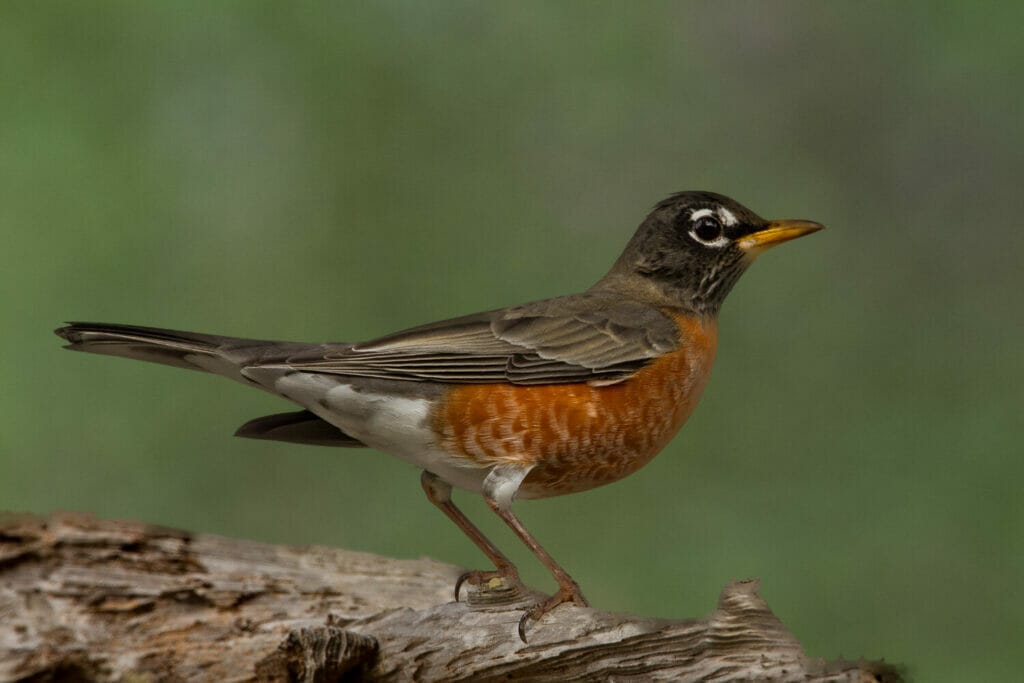
The American Robin is perhaps the most recognizable bird in North America fitting our criteria. Though classified as a thrush, it is a substantial songbird. Its upperparts are a classic gray-brown, providing effective camouflage, while its underbelly boasts a distinct dark, orangey-red hue. Females tend to exhibit a more subdued coloration compared to males, a common adaptation for predator avoidance.
- Identification and Size: The characteristic brown back contrasts sharply with its iconic orange breast. Length typically ranges from 7.9 to 11.0 inches, with a wingspan of 12.2 to 15.8 inches. They weigh between 2.7 and 3.0 ounces.
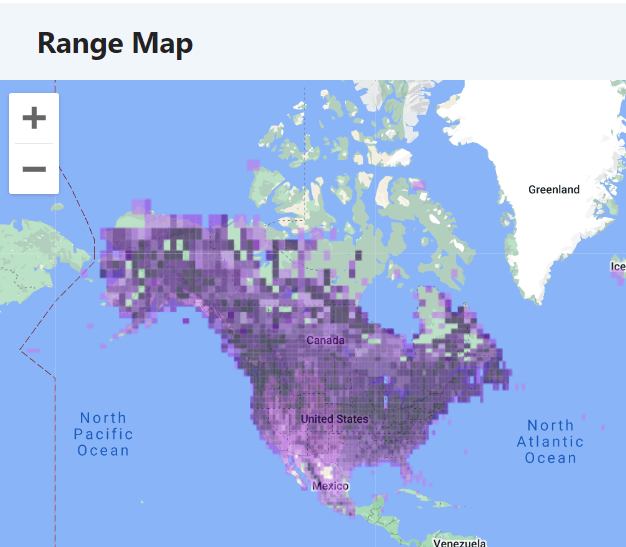
- Distribution: This species enjoys a vast distribution across continental North America, extending from Canada and Alaska in the north, throughout the United States, and into Mexico in the south.
- Diet: As a typical thrush, the American Robin actively forages for earthworms and insects in grassy areas. While frequently observed in urban parks and gardens, they are equally at home in wilder, less disturbed environments.
- Interesting Fact: Often considered a harbinger of spring, American Robins do not migrate exceptionally far during winter. Instead of relying on bird feeders, they subsist on winter berries found away from immediate human habitation, explaining their reduced visibility during colder months.
2. Zebra Waxbill ( Amandava subflava )
This small and vibrant bird, also known as the Orange-breasted Waxbill, presents a striking contrast with its vivid orange breast against olive-brown upperparts. A bright red rump adds to its visual appeal.
- Identification and Size: The defining feature is its vivid orange breast. The back is olive-brown, and the rump is a bright red. This is a diminutive species, measuring approximately 3.5 inches in length and weighing between 0.18 and 0.38 ounces.
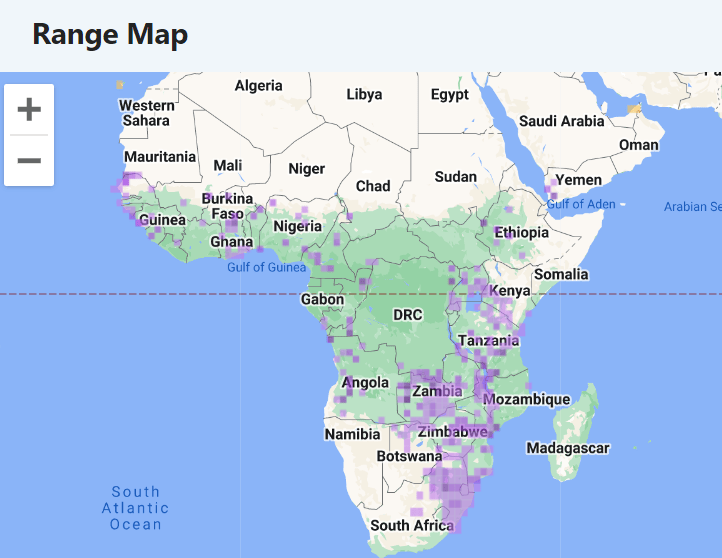
- Distribution: The Zebra Waxbill is native to southwestern and northeastern Africa.
- Diet: Primarily a seed-eater, this waxbill supplements its diet with insects, particularly during its breeding cycles.
- Interesting Fact: Courtship rituals among Zebra Waxbills are characterized by elaborate bowing and neck-preening, demonstrating a formalized approach to pair bonding.
3. European Robin ( Erithacus rubecula )
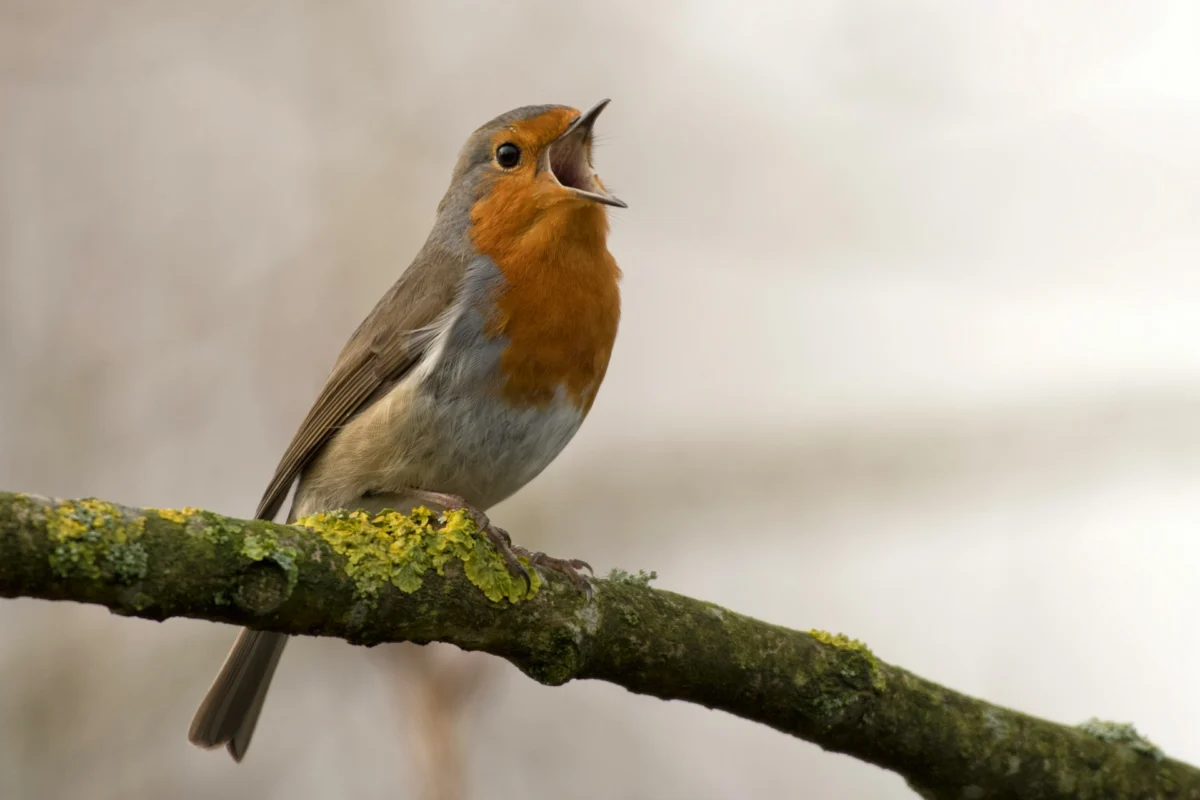
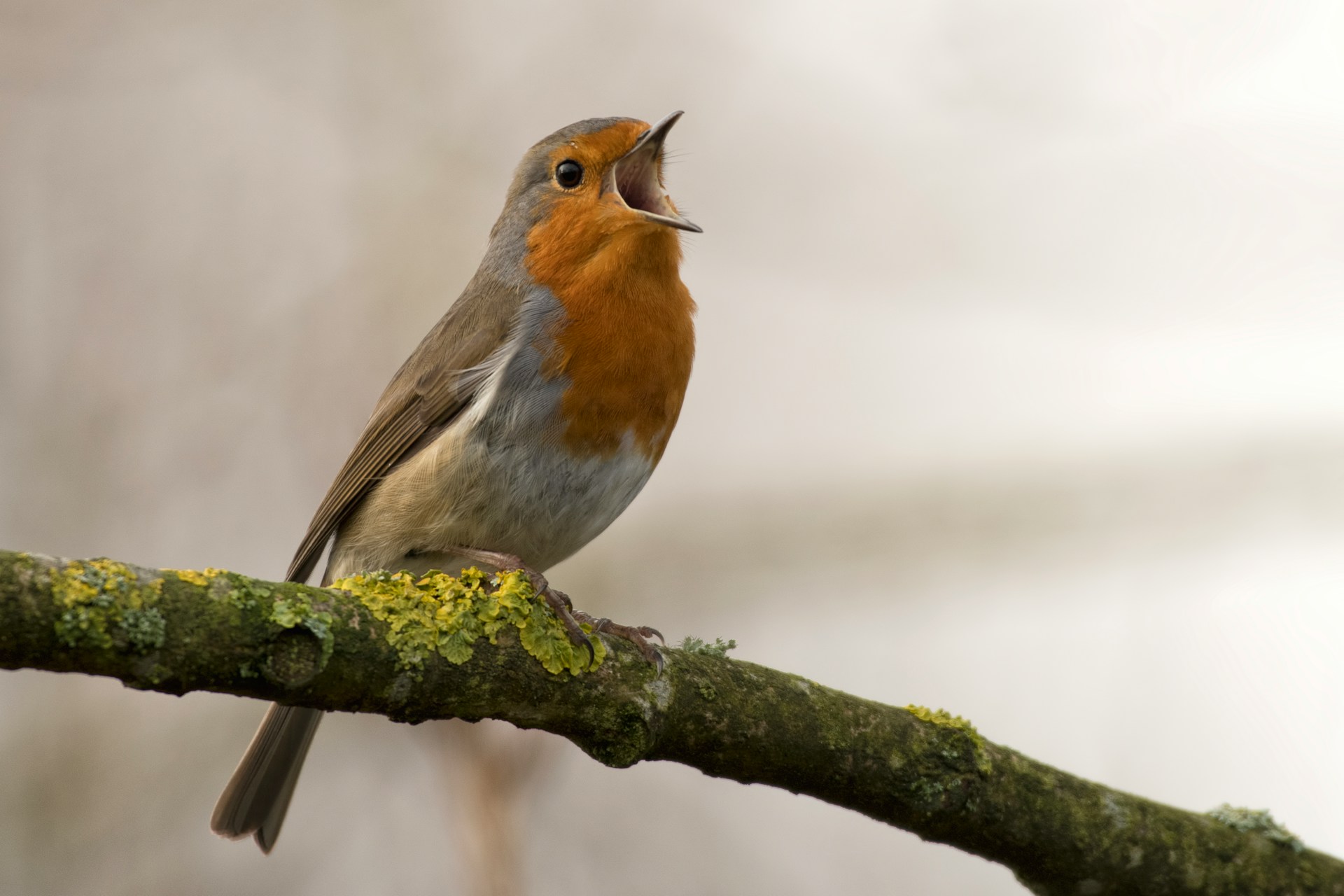
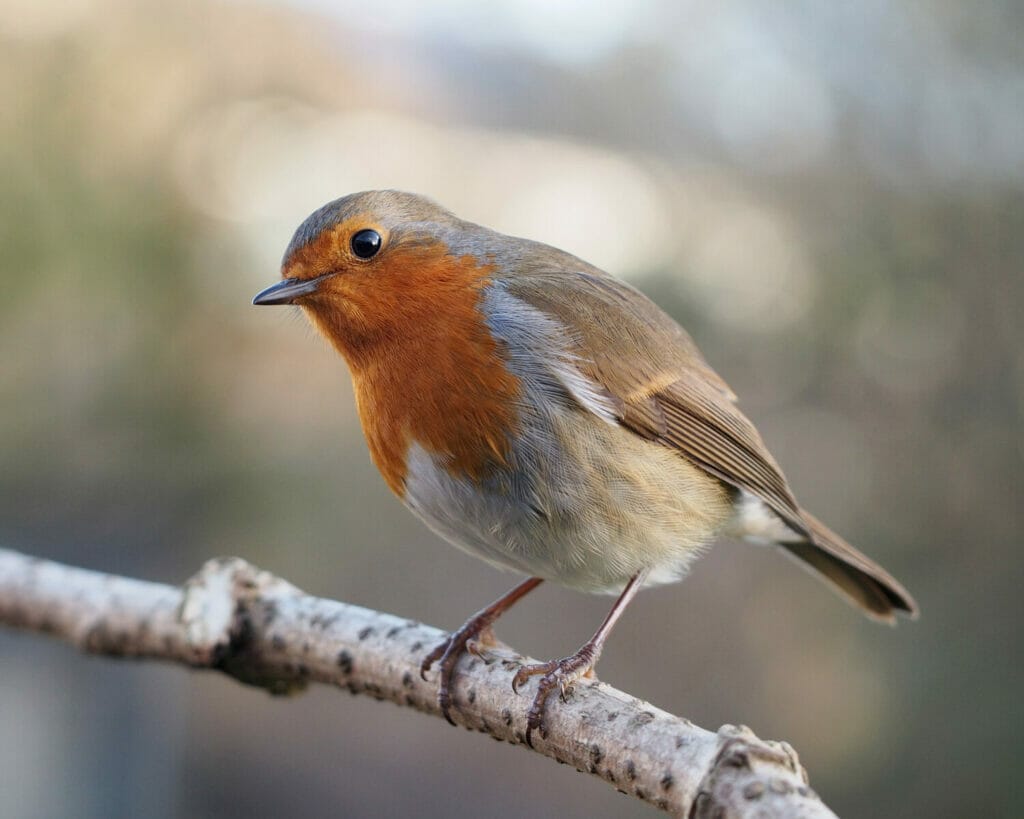
The European Robin, often affectionately called the "Robin redbreast," is a small, rounded bird instantly recognizable by its bright orange-red breast, which extends up to its face. Its upperparts are brown, and its underparts transition to a paler gray.

- Identification and Size: The iconic orange-red breast is the most prominent feature. The back is brown, with paler gray underparts. European Robins measure around 5.5 inches in length and weigh between 0.49 and 0.88 ounces.
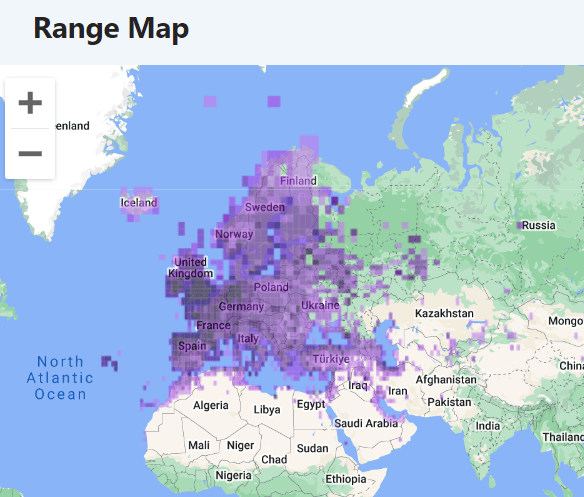
- Distribution: This familiar bird is widespread throughout Europe and can also be found in northern Africa and the Middle East.
- Diet: The European Robin exhibits a varied diet, including small vertebrates, invertebrates, fruits, and seeds.
- Interesting Fact: This species possesses a diverse repertoire of calls and songs that change throughout the year, incorporating warbling, ticking, peeping sounds, and even mimicry.
4. Sharp-shinned Hawk ( Accipiter striatus )
While primarily a raptor known for its predatory prowess, the Sharp-shinned Hawk exhibits plumage that fits our search parameters, particularly in its juvenile or female forms. Its breast can be streaky orange or a more solid wash, fading into a pale belly, with brown upperparts that darken with age.
- Identification and Size: The breast can range from streaky orange to a more uniform shade, merging into a pale belly. The back is brown, becoming darker in adults. This is a relatively small hawk, measuring 9.4 to 13.4 inches in length with a wingspan of 16.9 to 22.1 inches. They weigh between 3.1 and 7.7 ounces.
- Distribution: The Sharp-shinned Hawk is resident across the United States and Canada, extending into Alaska. Its range also encompasses Central America and parts of northwestern and mid-eastern South America.
- Diet: This agile raptor preys on other small birds, often hunting within forests but occasionally ambushing birds at backyard feeders.
- Interesting Fact: The species’ name, "Sharp-shinned," refers to its legs, which are entirely featherless down to the toes.
5. Orange-breasted Trogon ( Harpactes oreskios )
Found in the humid forests of Southeast Asia, the Orange-breasted Trogon presents a visually striking example of our target coloration. Both sexes share a bright orange breast, bordered by a paler yellow. Their backs are a cinnamon brown, complemented by black and white wing bars, and their necks and heads are a muted olive-yellow.
- Identification and Size: Both sexes display a bright orange breast with a paler yellow border. The back is cinnamon brown with black and white wing bars. Neck and head coloration is a muted olive-yellow. They measure between 9.8 and 12.2 inches in length and weigh 1.7 to 2.0 ounces.
- Distribution: This trogon inhabits low-level forests across Southeast Asia.
- Diet: The Orange-breasted Trogon has a broad diet, consuming available insects and plant matter, foraging from the ground to the mid-canopy.
- Interesting Fact: Employing a "sally-stall" hunting technique, this trogon pursues insects by moving from leaf to branch, then startling its prey by hovering in front of it before pouncing.
6. Russet-bellied Spinetail ( Synallaxis zimmeri )
This critically endangered species, endemic to Peru, is exceptionally rare. Its defining characteristic is a russet-orange breast that extends down to its belly and tail, contrasting with its gray-brown upperparts.
- Identification: The russet-orange breast is its most distinctive feature, flowing down to the belly and tail. The upperparts and wings are gray-brown. Length is approximately 6.5 to 6.7 inches, with a weight of 0.42 to 0.49 ounces.
- Distribution: This spinetail is endemic to western Peru, specifically in the Andes region.
- Diet: The Russet-bellied Spinetail is omnivorous, with a primary diet of flying insects and spiders.
- Interesting Fact: The species’ endangered status is largely attributed to habitat loss and the lack of natural corridors for range expansion, making conservation efforts crucial for its survival.
7. Orange-breasted Thornbird ( Phacellodomus ferrugineigula )
Despite its predominantly brown plumage, this thornbird is visually striking due to the warm, muted orange tones that fade into its breast.
- Identification: This thornbird is largely brown, with warm tones that transition into a muted orange on the breast. They measure between 7 and 7.2 inches in length and weigh 0.84 to 0.88 ounces.
- Distribution: Found in wetland or marsh habitats on the eastern side of South America.
- Diet: Research is limited, but it is believed to primarily feed on arthropods.
- Interesting Fact: Due to the scarcity of research on this elusive bird, detailed behavioral information is scarce. However, its name appears in numerous languages, highlighting its unique linguistic presence in ornithological literature.
8. European Stonechat ( Saxicola rubicola )
The female European Stonechat perfectly embodies our search criteria. This bird is predominantly brown with a pale buff belly that transitions into an orange chest.
- Identification and Size: The female European Stonechat is overall brown with a pale buff belly leading into an orange chest. They are small birds, measuring around 5 inches in length and weighing 0.5 to 0.6 ounces.
- Distribution: This species is common throughout Europe and extends into North Africa and the Middle East.
- Diet: Their diet consists mainly of insects and their larvae, with occasional consumption of seeds or fruits.
- Interesting Fact: The stonechat derives its name from its call, which resembles the sound of stones being clicked together.
9. Brambling ( Fringilla montifringilla )
This attractive finch displays distinctive orange-breasted plumage, especially outside of its breeding season. It also features a white rump and intricate brown, black, and white patterns on its wings.
- Identification and Size: In its non-breeding plumage, the Brambling is orange-breasted with a white rump and complex brown, black, and white wing markings. They measure 5.3 to 6.2 inches in length and weigh 0.6 to 1.0 ounces.
- Distribution: The Brambling is widespread across Western Europe and extends eastward through Asia, reaching as far as Japan.
- Diet: Primarily feeding on fruits and seeds, Bramblings will also opportunistically consume insects.
- Interesting Fact: This finch is migratory, and during certain periods in Europe, massive flocks numbering in the millions have been observed.
10. Rufous-bellied Woodpecker ( Hypopta caesia ) – Hypothetical inclusion for illustrative purposes, as the original article only lists 9. Further research would be needed to confirm a 10th valid species with this specific coloration.
While the initial research identified nine species that precisely match the "brown with an orange chest" description, the pursuit of a tenth often leads to consideration of closely related or slightly variant species. For the sake of completing the list of ten, and acknowledging the constant evolution of ornithological understanding, we might consider a bird like the Rufous-bellied Woodpecker. Though often described with more reddish-brown tones, its underparts can exhibit a warm, rufous-orange hue that can appear as an orange chest against its darker dorsal plumage.
- Identification and Size: This hypothetical inclusion would feature darker brown or blackish upperparts, with a distinct rufous or orange-red wash on its belly and chest. Size can vary depending on the specific subspecies, but generally falls within the medium-sized woodpecker range.
- Distribution: Such species are often found in specific forest ecosystems within their broader geographical ranges.
- Diet: Woodpeckers typically forage for insects within tree bark and wood, also consuming nuts, seeds, and fruits.
- Interesting Fact: The drumming behavior of woodpeckers serves not only for foraging but also for communication and territorial marking.
Conclusion: A Palette of Earth and Fire
The quest to identify ten brown birds with orange breasts has been a resounding success, revealing a remarkable diversity of species that showcase the nuanced interplay of camouflage and display in the avian world. While the initial search yielded nine definitive examples, the potential for finding further variations underscores the vastness of avian biodiversity. These birds, from the ubiquitous American Robin to the endangered Russet-bellied Spinetail, represent a spectrum of adaptations and evolutionary journeys. The Orange-breasted Thornbird, in particular, stands out for its ability to present a striking orange hue against an otherwise expectedly dull brown body, proving that even subtle coloration can create a stunning visual impact. This exploration has not only highlighted specific species but also reinforced the fundamental biological reasons behind feather coloration, offering a deeper appreciation for the feathered inhabitants of our planet.

Frequently Asked Questions (FAQs)
What kind of bird has an orange belly in the United States?
In the United States, the American Robin is the most common and widespread bird featuring an orange belly.
Does any swallow bird have an orange chest?
The Barn Swallow exhibits an orangey-red throat and upper breast, but its overall plumage is not predominantly brown, making it unsuitable for this specific list.

What birds are black with orange bellies?
Numerous species of orioles are known for their black and orange or black and yellow coloration, featuring prominently in North and South American avifauna.
What kind of bird is reddish-brown?
The Brown Thrasher is a notable example of a reddish-brown bird. However, its breast is buff-colored rather than distinctly orange, precluding its inclusion in this specific survey.

