


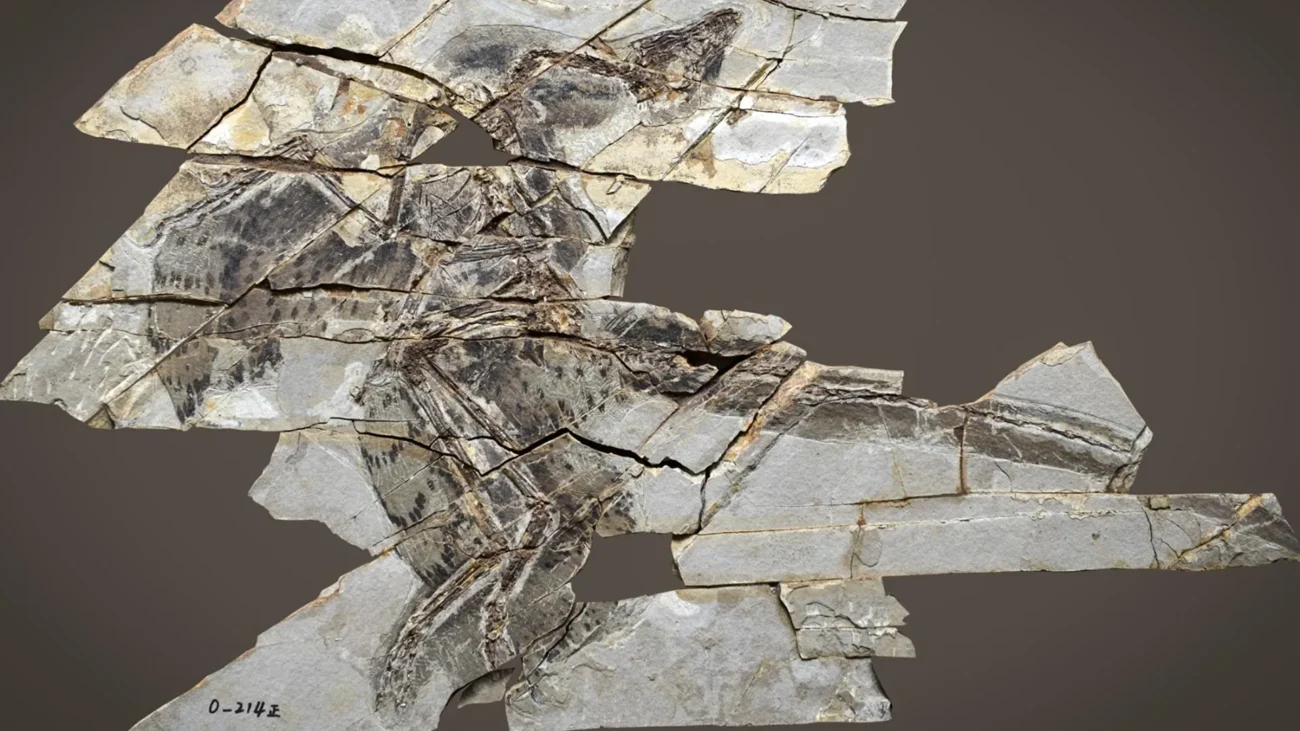
A groundbreaking study analyzing exceptionally preserved dinosaur fossils with intact feathers has revealed that some of these ancient creatures, despite possessing elaborate plumage, had already lost the ability to fly. This remarkable discovery, led by researchers from Tel Aviv University, challenges long-held assumptions about the evolutionary trajectory of flight and underscores the intricate, multifaceted nature of wing development in both dinosaurs and their avian descendants. The findings, published in the prestigious journal Communications Biology by Nature Portfolio, offer an unprecedented glimpse into the lives of animals that roamed the Earth approximately 160 million years ago.
Unraveling the Mystery of Flightless Feathered Dinosaurs
The research team, headed by Dr. Yosef Kiat, an ornithologist specializing in feather biology at Tel Aviv University’s School of Zoology and the Steinhardt Museum of Natural History, collaborated with scientists from China and the United States. Their investigation centered on a collection of nine exquisitely preserved fossils of Anchiornis, a small, feathered dinosaur belonging to the Pennaraptora group. Pennaraptora, which emerged around 175 million years ago during the Jurassic period, represents a lineage of feathered dinosaurs considered to be distant ancestors of modern birds. Crucially, this is the only dinosaur lineage to have survived the catastrophic mass extinction event that marked the end of the Mesozoic Era 66 million years ago.
The significance of these fossils lies not only in the presence of feathers but in the preservation of their original coloration and detailed structures. This level of preservation is exceedingly rare, attributed to unique fossilization conditions in eastern China. The Anchiornis specimens displayed wing feathers that were distinctly white with a prominent black spot at their tips. This precise detail allowed researchers to move beyond inferences based solely on skeletal morphology and delve into functional aspects of the feathers themselves.
The Evolutionary Journey of Feathers: From Insulation to Aerodynamics
To understand the implications of the Anchiornis findings, it’s essential to contextualize the evolution of feathers. Dinosaurs diverged from other reptiles approximately 240 million years ago. Not long after, on an evolutionary timescale, many dinosaur species began developing feathers. Initially, feathers are believed to have served crucial roles beyond flight, such as insulation for thermoregulation and for display. The lightweight, protein-based structures provided an evolutionary advantage in a variety of environmental conditions.
The appearance of Pennaraptora around 175 million years ago marked a pivotal moment. Scientists widely believe that this group evolved feathers with an aerodynamic purpose, laying the groundwork for the eventual emergence of true flight. However, the Anchiornis study suggests a more complex narrative, one where the development of flight was not a linear progression but involved periods of both acquisition and loss of this capability. This phenomenon mirrors the evolution of flightless birds seen today, such as ostriches, emus, and penguins, which have secondarily lost the ability to fly after evolving from flying ancestors.
Molting Patterns: A Fossilized Clue to Flight Capability
The key to unlocking the flightless nature of Anchiornis lay in the detailed analysis of its feather molting patterns. Dr. Kiat explained the fundamental principles of feather growth and replacement. "Feathers grow for two to three weeks," he elaborated. "Reaching their final size, they detach from the blood vessels that fed them during growth and become dead material. Worn over time, they are shed and replaced by new feathers—in a process called molting, which tells an important story."
In modern birds that rely on flight, molting is a highly organized and gradual process. This methodical shedding and replacement of feathers maintain the symmetry and aerodynamic integrity of the wings, allowing the bird to continue flying even during the molting period. In stark contrast, flightless birds exhibit a more random and irregular molting pattern, as the urgency to maintain flight capability is absent. The molting pattern, therefore, serves as a critical indicator of an animal’s ability to fly.
The research team meticulously examined the Anchiornis fossils, noting a continuous line of black spots along the edges of the wing feathers. More tellingly, they identified developing feathers whose black spots were misaligned with the established pattern, indicating that these new feathers were still in the growth phase. This observation, coupled with the overall arrangement of the feathers, pointed towards an irregular, non-gradual molting sequence.
"Based on my familiarity with modern birds, I identified a molting pattern indicating that these dinosaurs were probably flightless," Dr. Kiat stated. This finding is particularly significant because it allows scientists to infer a functional trait—the ability to fly—from fossilized evidence, going beyond the skeletal structures that typically dominate paleontological discoveries.
Broadening the Understanding of Wing Evolution
The implications of this study extend far beyond Anchiornis. The research team posits that the development of flight throughout the evolution of dinosaurs and birds was a far more intricate and dynamic process than previously understood. It suggests that certain species may have initially developed basic flight capabilities only to lose them later in their evolutionary history. This concept of "flight loss" adds a crucial layer of complexity to the narrative of avian evolution.
The study highlights how environmental pressures, shifts in ecological niches, or changes in predator-prey dynamics could have influenced the selective pressures on flight. In environments where flight was no longer a primary advantage for survival or reproduction, the energetic cost of maintaining flight could have led to a gradual loss of this ability. This mirrors the evolutionary pathways of modern flightless birds, which often inhabit stable environments with few aerial predators.
The meticulously preserved coloration of the Anchiornis feathers was instrumental in this discovery. While fossilized skeletons provide invaluable information about anatomy, they rarely offer insights into soft tissues or functional capabilities. The ability to analyze the color patterns and growth stages of the feathers allowed researchers to infer behavioral and physiological traits that would otherwise remain hidden.
Expert Reactions and Broader Scientific Impact
The findings have generated considerable interest within the paleontological community. Dr. Anya Sharma, a paleontologist specializing in Mesozoic ecosystems at the University of Cambridge, commented, "This study is a game-changer. For years, the presence of feathers on many non-avian dinosaurs has been a source of fascination and debate regarding their function. The work by Dr. Kiat and his colleagues provides compelling evidence that the story of flight evolution was not a simple, upward climb towards aerial mastery. It involved experimentation, adaptation, and even regression."
Dr. Sharma further elaborated on the broader impact: "This research compels us to re-evaluate many of our assumptions about feathered dinosaurs. It underscores the importance of studying exceptionally preserved fossils and utilizing novel analytical techniques to extract more information from the fossil record. The complexity of wing evolution, as revealed by this study, suggests that the path to modern birds was paved with diverse evolutionary experiments, not all of which led to sustained flight."
The identification of Anchiornis as a flightless feathered dinosaur adds to a growing list of species that demonstrate the varied roles feathers played in dinosaur evolution. These include dinosaurs with ornamental feathers, those using feathers for insulation, and others potentially utilizing them for gliding or rudimentary flight.
A Timeline of Flight Evolution Insights
- ~240 Million Years Ago: Dinosaurs diverge from other reptiles.
- ~200 Million Years Ago: Early feathered dinosaurs begin to emerge, with feathers likely serving primarily for insulation and display.
- ~175 Million Years Ago: The Pennaraptora lineage, considered distant ancestors of modern birds, appears, with evidence suggesting the evolution of feathers for aerodynamic purposes.
- ~160 Million Years Ago: Anchiornis, a Pennaraptoran dinosaur with distinct black-tipped wing feathers, roams the Earth.
- Present Day: Analysis of exceptionally preserved Anchiornis fossils reveals irregular molting patterns, indicating a loss of flight capability despite the presence of elaborate wing feathers.
- 66 Million Years Ago: The Cretaceous-Paleogene extinction event wipes out most dinosaur lineages, with only avian dinosaurs (birds) surviving.
Future Directions and Unanswered Questions
This study opens new avenues for research into dinosaur flight. Future investigations will likely focus on identifying other feathered dinosaurs that may have experienced a similar loss of flight. The development of advanced imaging techniques and biochemical analyses of fossilized soft tissues could provide even more detailed insights into the physiology and behavior of these ancient creatures.
Furthermore, understanding the specific environmental or ecological factors that might have driven the loss of flight in species like Anchiornis will be a key area of future inquiry. Did changes in food availability, increased terrestrial predation, or shifts in habitat favor ground-dwelling lifestyles over aerial ones? Answering these questions will paint a more complete picture of the evolutionary pressures that shaped the diverse forms and functions of feathers.
In conclusion, the discovery that Anchiornis, a dinosaur adorned with flight-ready feathers, was likely incapable of flight, serves as a powerful testament to the intricate and often non-linear nature of evolution. It underscores that the journey to flight was not a simple, unidirectional path but a complex tapestry of innovation, adaptation, and even loss, highlighting the remarkable diversity and ingenuity of life on Earth over millions of years. The study of feather molting, once considered a minor detail, has emerged as a crucial tool for deciphering the evolutionary history of one of nature’s most extraordinary adaptations.

