


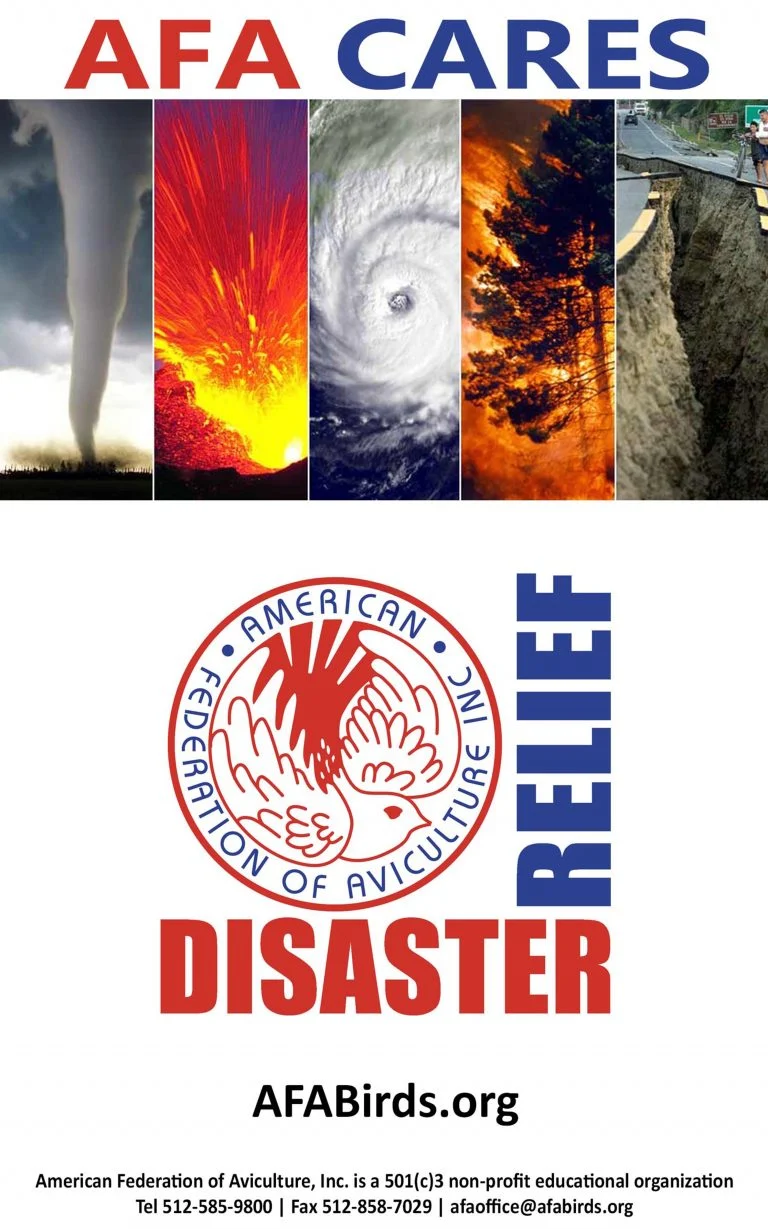
The American Federation of Aviculture (AFA) has officially activated its comprehensive Disaster Relief Team, a specialized network of Regional Directors and local volunteers positioned across the United States to address the unique challenges of avian rescue during natural disasters. This mobilization comes as part of a broader initiative to standardize emergency preparedness for aviculturists, ensuring that both private owners and professional breeders have access to rapid response resources when facing hurricanes, wildfires, floods, or other catastrophic events. By utilizing a decentralized structure, the AFA aims to expedite response times by leveraging local volunteers who monitor regional weather conditions and ground-level developments in real-time, providing a critical link between affected bird owners and the logistical support necessary for survival and recovery.
The Infrastructure of Avian Disaster Response
The AFA Disaster Relief Team is not merely a reactive body but a structured organizational framework designed to operate within the complexities of modern emergency management. The team is comprised of Regional Directors who oversee specific geographic sectors of the United States. This hierarchy allows for a more nuanced understanding of regional threats—ranging from the ice storms of the Northeast to the wildfires of the West Coast. When a disaster is imminent, these directors activate local networks of volunteers who are often already integrated into the avicultural community. This "neighbor-helping-neighbor" model is essential because birds, unlike more common domestic pets such as dogs or cats, require highly specialized handling, transport, and environmental controls.
In the event of a crisis, the AFA serves as a central hub for communication. Bird owners in need of assistance, or those who are aware of others struggling to secure their flocks, are encouraged to contact the AFA Disaster Relief Team through official channels. The organization provides a streamlined intake process to match needs—such as emergency housing, transportation, or food supplies—with available resources in non-affected areas.
Expert Guidance on Emergency Preparedness
Mary Ellen LePage, a former Fire Chief for CalFire and a prominent voice in the avicultural community, emphasizes that the efficacy of any rescue operation is dictated by the quality of the pre-disaster planning phase. According to LePage, the diversity of potential disasters requires a multi-faceted approach to preparedness. While a hurricane might offer several days of warning, an earthquake or a fast-moving wildfire provides only minutes for decision-making.
The primary pillar of LePage’s strategy is the "Plan! Plan! Plan!" methodology. This involves the pre-assembly of essential supplies, which must be kept in a state of constant readiness. For bird owners, this includes maintaining a fleet of travel carriers or collapsible cages that are easily accessible. These units should be pre-equipped with perches and secure water dishes to minimize the time spent fumbling with hardware during an evacuation. For those with large collections or aviaries, LePage suggests hanging emergency carriers from garage ceilings or storing them near permanent flights to save space while ensuring they remain within reach.

Logistical Challenges in Avian Evacuation
Transporting birds presents a unique set of logistical hurdles that are rarely encountered with other animals. Birds are highly sensitive to stress and environmental changes, particularly air quality. During wildfires, smoke inhalation can be fatal to birds long before the flames reach their location. Therefore, an evacuation plan must account for the biological vulnerabilities of the species.
Key logistical considerations include:
- Identification and Documentation: Ensuring birds are identifiable through leg bands or microchips is paramount for post-disaster reunification. The AFA recommends maintaining duplicate sets of records, including health certificates and proof of ownership, stored in a secure, off-site digital or physical location.
- Transportation Vehicles: Large-scale evacuations require vehicles with proper ventilation. If rental trucks are utilized, they must have airflow to the cargo section to prevent overheating or respiratory distress.
- Evacuation Routes: Gridlock is a common feature of mass evacuations. The AFA advises owners to leave well before mandatory orders are issued, as police blockades often prevent return trips to rescue animals left behind.
- Toolkits: A specialized emergency kit for bird owners should include wire cutters, nets, towels, and gloves for catching untamed birds. In some scenarios, a chainsaw may be necessary to clear debris or access damaged aviaries.
Integration with the Incident Command System (ICS)
A critical component of the AFA’s professional response is its alignment with the Occupational Safety and Health Administration (OSHA) and the Incident Command System (ICS). In the United States, large-scale disaster areas are managed by an Incident Commander who oversees all government and volunteer operations. For bird rescuers to be effective, they must operate within this legal and professional framework.
The AFA provides its volunteers with magnetic vehicle signs, apparel, and identification cards to establish legitimacy when interacting with law enforcement at checkpoints. Without such credentials, rescuers may be denied entry to affected zones. However, the AFA maintains a strict policy regarding personal safety: volunteers are instructed never to bypass official orders or risk their lives to enter a dangerous area. Instead, they are encouraged to work through the Incident Commander’s office to obtain legal permission for animal recovery efforts.
Data and Environmental Context
The necessity for specialized avian relief is underscored by the sheer scale of bird ownership in the United States. According to the American Pet Products Association (APPA), millions of households own birds, ranging from small parakeets to large, long-lived macaws and cockatoos. Unlike dogs, which are often included in standard Red Cross or FEMA sheltering plans under the PETS Act (2006), birds often fall into a "niche" category that local human-centric shelters are ill-equipped to handle.
Furthermore, the increasing frequency and intensity of climate-related disasters have placed a higher burden on private organizations like the AFA. Data from the National Oceanic and Atmospheric Administration (NOAA) indicates a significant rise in "billion-dollar disasters" over the last decade. For aviculturists, these statistics translate to a higher statistical probability of facing an evacuation event. The AFA’s Disaster Relief Team acts as a necessary bridge where government services may lack the specialized knowledge or equipment to handle exotic avian species.
Instructions for Volunteer Rescuers and First Responders
For those acting as rescuers, the AFA has issued specific protocols to ensure the welfare of the birds and the efficiency of the operation. The priority is always to rescue birds whose lives are under immediate threat. Rescuers are encouraged to work in teams, preferably including at least one experienced bird handler who understands the nuances of avian behavior.
When on-site, rescuers should:
- Search for Disaster Plans: Many owners post evacuation plans in obvious locations (e.g., on the refrigerator or near the aviary). These plans often contain vital information regarding which birds can be housed together and their specific dietary needs.
- Use Alternative Housing if Necessary: If standard carriers are unavailable, rescuers are advised to use ventilated plastic storage bins, cardboard boxes, or even paper bags for small species as a temporary measure.
- Maintain Identity: It is crucial to keep pairs together when possible and to label all containers with the location from which the birds were taken. Leg bands should never be removed during a rescue.
- Post-Evacuation Tracking: Once birds are moved to a safe location, the AFA assists in tracking owners to facilitate reunification. The organization also helps coordinate the delivery of food and medical supplies to temporary housing sites.
Broader Impact and Avicultural Implications
The AFA’s proactive stance on disaster relief reflects a broader shift within the avicultural community toward professionalization and high-level advocacy. By providing a structured response to emergencies, the AFA not only saves individual lives but also protects the genetic diversity of rare and endangered species held in private collections. Many aviculturists maintain birds that are part of international conservation efforts; the loss of these birds in a disaster would be a blow to global biodiversity.
Moreover, the AFA’s work highlights the importance of community resilience. By fostering a network of trained volunteers, the organization ensures that the knowledge required to handle sensitive species is distributed geographically, reducing the risk that a single regional disaster could wipe out the collective expertise of the community.
In conclusion, the American Federation of Aviculture’s Disaster Relief Team represents a vital lifeline for the avian community. Through a combination of expert-led planning, integration with national emergency management protocols, and a robust volunteer network, the AFA is setting a standard for specialized animal rescue. As environmental challenges continue to evolve, the importance of such dedicated, species-specific organizations will only grow, ensuring that our feathered companions are not forgotten in the wake of the storm. For those seeking assistance or looking to volunteer, the AFA remains available through its main business office at 512-585-9800 or via email at [email protected].

