


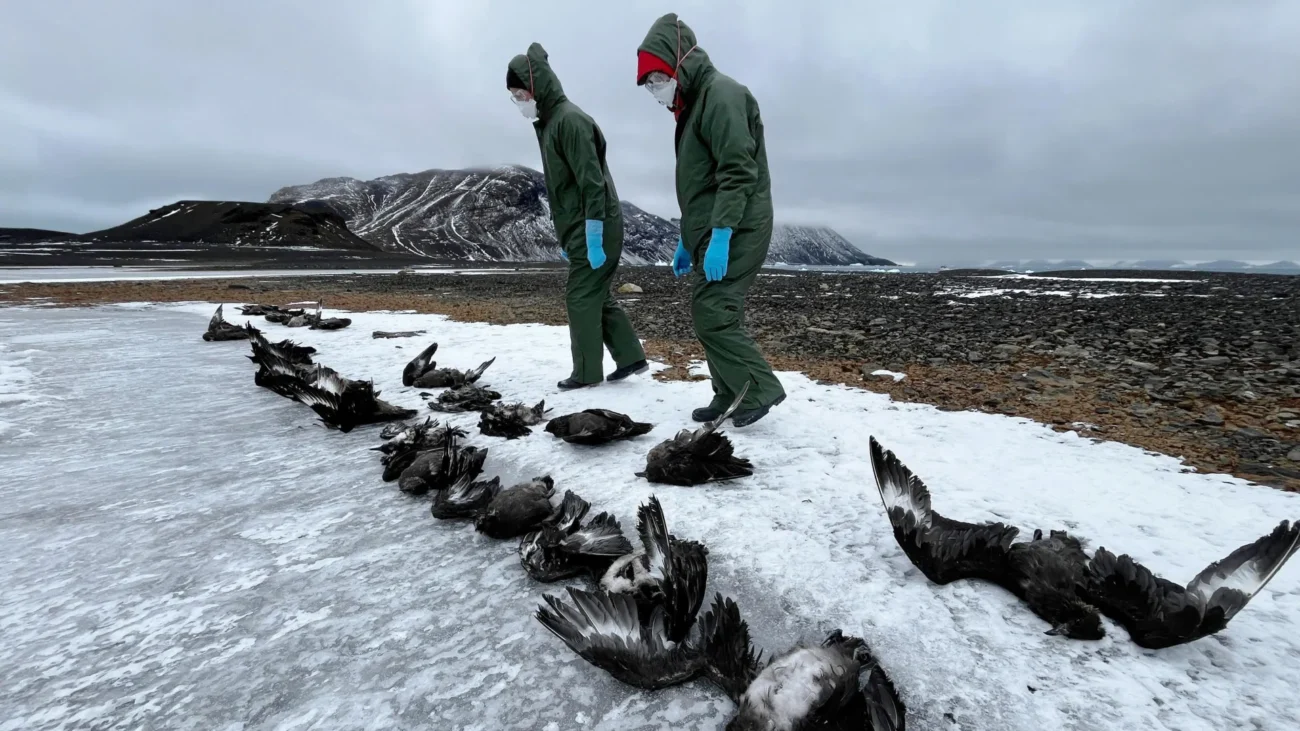
The pristine wilderness of Antarctica has been tragically impacted by a devastating outbreak of highly pathogenic avian influenza virus H5N1, marking the first confirmed wildlife die-off from the virus on the continent. During the austral summers of 2023 and 2024, more than 50 skuas succumbed to the virulent disease, a grim discovery detailed in a recent study published in the esteemed journal Scientific Reports. This groundbreaking research, a collaborative effort spearheaded by Erasmus MC in The Netherlands and the University of California, Davis, sheds critical light on the insidious spread of H5N1 into one of the planet’s most remote and ecologically sensitive regions.
A Scavenger’s Dilemma: The Skuas’ Vulnerability
Skuas, characterized by their robust build and dark plumage, are formidable seabirds that inhabit the polar and subpolar extremes of the globe. As apex predators and opportunistic scavengers, they play a vital role in the Antarctic ecosystem, acting as nature’s cleanup crew by consuming carcasses. However, this very ecological niche, while essential for maintaining environmental balance, appears to have inadvertently placed them at heightened risk of contracting and disseminating the H5N1 virus. Researchers hypothesize that their scavenging behavior, which involves frequent contact with deceased animals, may have facilitated the rapid transmission of the virus throughout their populations and potentially across the vast Antarctic landscape.
The initial detection of H5N1 in Antarctic wildlife occurred earlier in 2024, when scientists identified the virus in a kelp gull and two skuas found deceased in January and February. Prior to this comprehensive study, however, definitive proof linking the virus as the direct cause of death for these birds remained elusive.
"We knew there were animals with the infection, but this is the first study to show they died of the viral infection," stated co-senior author Ralph Vanstreels, a distinguished wildlife veterinarian affiliated with the UC Davis One Health Institute within the Weill School of Veterinary Medicine. "It’s an important distinction in the early days of an outbreak." This critical confirmation elevates the concern surrounding the virus’s presence and its immediate threat to Antarctic fauna.
Antarctic Expedition Uncovers Devastating Impact
In response to growing concerns and preliminary findings, an international research team embarked on a crucial expedition in March 2024, arriving in Antarctica shortly after the conclusion of the breeding season for skuas and penguins. Their mission was to systematically investigate wildlife across ten distinct sites, encompassing the strategically important South Shetland Islands, the northern Weddell Sea, and the vast Antarctic Peninsula.
During their intensive fieldwork, scientists meticulously examined any sick or deceased animals they encountered. Tissue and environmental samples were collected, and necropsies were performed to ascertain the precise cause of mortality. While the team investigated the remains of several iconic Antarctic species, including gentoo penguins, Adélie penguins, and Antarctic fur seals, H5N1 was not identified as the causative agent in these populations.
"As the expedition progressed, it became obvious quickly that skuas were a major victim," remarked Vanstreels, underscoring the alarming pattern that emerged during their survey.
The pervasive reach of the H5N1 virus was subsequently confirmed in skuas at three key locations: Hope Bay, Devil Island, and Beak Island. Beak Island, in particular, bore the brunt of a substantial die-off of south polar skuas, a sobering testament to the virus’s destructive potential.
"We diagnosed high pathogenicity avian influenza as the cause of death for nearly all of the dead skuas we found at Beak Island," confirmed first author Matteo Iervolino, a Ph.D. candidate at Erasmus MC in Rotterdam, The Netherlands. "There, I could really see with my eyes the impact this virus can have on these populations." Iervolino’s firsthand account paints a stark picture of the ecological devastation unfolding in this remote corner of the world.
Vanstreels further elaborated on the harrowing symptoms observed, describing the situation as a "crisis in animal suffering." The H5N1 virus exhibits a particularly aggressive neurotropic profile, attacking the brain and inducing severe neurological impairments. Infected birds displayed a range of distressing symptoms, including twisted necks, abnormal body stretching, aimless circling, collisions with objects, and even aerial falls. The researchers emphasized that while the virus’s spread is a natural phenomenon, human activities have undeniably played a role in its emergence and continue to influence its containment.
A Global Odyssey of Avian Influenza
The H5N1 virus, a formidable pathogen, first surfaced in 1996 on a domestic goose farm in Southeast China. For several years, it circulated with relative impunity within poultry populations, eventually breaching interspecies barriers and spilling over into wild bird populations. This marked the beginning of its relentless global migration. From its origins, the virus systematically swept across Europe, the Middle East, and Africa. Its westward march continued to North and South America, and by early 2024, it had tragically established a foothold on the pristine shores of Antarctica.
The same virulent strain now decimating Antarctic skuas had previously inflicted catastrophic losses upon elephant seals and sea lions in Argentina, highlighting the virus’s adaptability and broad host range. Globally, H5N1 has been responsible for the deaths of over 400 million poultry, disrupting agricultural economies and food security. Its reach extends far beyond birds, infecting a diverse array of mammals, including dairy cows, mink, foxes, bears, otters, and numerous other wild species.
The zoonotic potential of H5N1 also poses a significant threat to human health. While human infections are relatively rare, the reported cases, numbering around 1,000 globally, have a staggering fatality rate, with approximately half of those infected succumbing to the disease.
"We let the virus slip out through our fingers when it first emerged in the poultry industry," lamented corresponding senior author Thijs Kuiken, a distinguished professor at Erasmus MC. "Once it got into wild bird populations, we lost ability to control this virus. Now it’s established in wild bird populations in all the continental regions of the world except Oceania." This candid assessment underscores the profound challenge of containing a virus that has become deeply entrenched in global wildlife reservoirs.
Urgent Calls for Enhanced Antarctic Surveillance
The arrival of avian influenza exacerbates the already considerable pressures faced by Antarctic wildlife. These unique ecosystems are already grappling with the multifaceted threats of climate change, escalating tourism, the introduction of invasive species, the impacts of overfishing, and pervasive pollution. The addition of H5N1 represents a new and potent challenge to the resilience of Antarctic fauna.
The study strongly advocates for the implementation of robust surveillance and monitoring programs to mitigate the risk of further viral spread. A significant complication in assessing the true scale of the impact is the dearth of recent population data for many Antarctic species. The last comprehensive census of Antarctic skuas, for instance, was conducted in the 1980s, when researchers estimated approximately 800 breeding pairs. Without updated population figures, it remains challenging to precisely quantify the significance of the loss of 50 birds, although the scientific consensus points towards a potentially larger, ongoing issue.
"Everything points toward this virus spreading further," Kuiken warned. "If nobody is watching, we won’t know what is happening." This stark statement serves as a clarion call for proactive engagement and investment in long-term ecological monitoring in Antarctica.
The critical HPAI Australis Expedition, which provided the data for this landmark study, received vital funding from the International Association of Antarctica Tour Operators (IAATO) and Ocean Expeditions, organizations deeply invested in the preservation of the Antarctic environment. Additional support for the research was provided by the European Union, the Consejo Superior de Investigaciones Científicas (CSIC), and PTI Global Health, underscoring the international recognition of the significance of this research.
The implications of H5N1 establishing a permanent presence in Antarctica are far-reaching. The virus could potentially decimate vulnerable seabird populations, disrupt food webs, and even pose a future risk to marine mammals and potentially humans who interact with the Antarctic ecosystem. The findings serve as a stark reminder of the interconnectedness of global health and the environment, emphasizing that even the most remote regions are not immune to the impacts of emerging infectious diseases. Continued vigilance, robust scientific inquiry, and international cooperation will be paramount in navigating this unfolding ecological crisis.

