


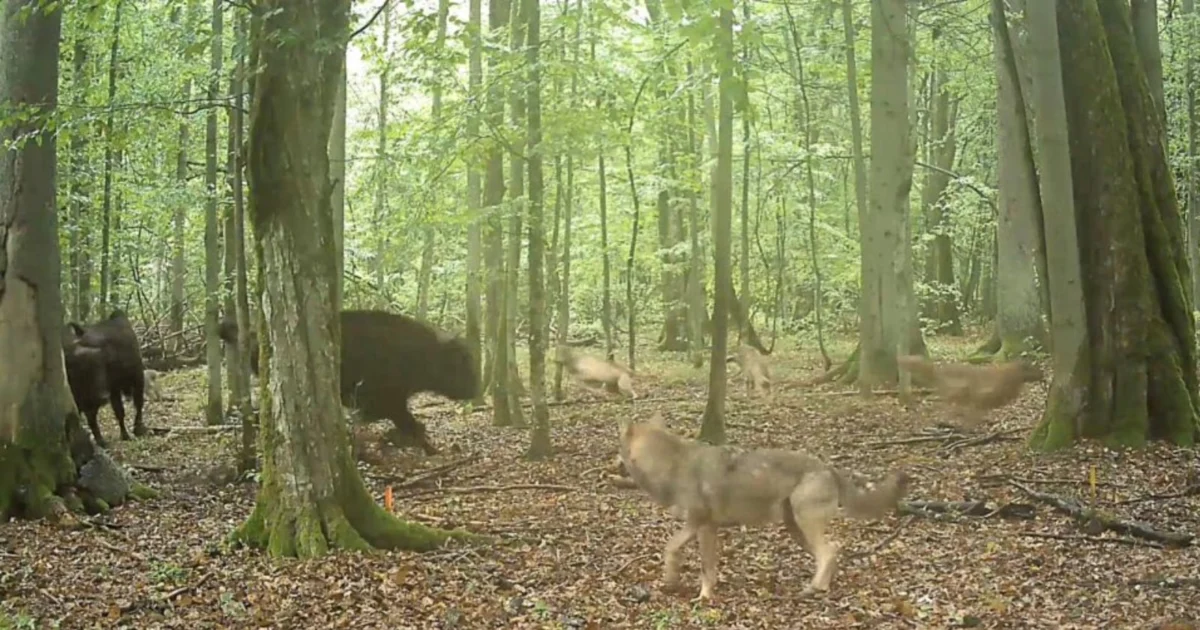
In a landmark moment for wildlife biology and European ecology, remote camera traps stationed deep within the Białowieża Primeval Forest have captured the first-ever video evidence of a wolf pack attempting to hunt a herd of European bison. The footage, documented by researchers from the Polish Academy of Sciences and published in the peer-reviewed journal Ecology and Evolution, provides a rare and scientifically significant look at the predator-prey relationship between two of Europe’s most iconic and once-endangered species. While historical accounts and anecdotal evidence have long suggested that wolves might occasionally target bison, this visual confirmation marks a definitive shift in the understanding of how these species interact in the wild.
The European bison (Bison bonasus), often referred to as the "King of the Forest," is the largest land animal on the continent. Due to their massive size—adult males can weigh up to 2,000 pounds—they have traditionally been viewed as having few, if any, natural predators. However, the newly released footage demonstrates that even these titans of the forest are not entirely immune to the strategic and persistent hunting tactics of the grey wolf (Canis lupus).
A Detailed Chronology of the September Encounter
The encounter took place on September 15, 2025, in a remote, densely wooded sector of the Białowieża Forest, a UNESCO World Heritage site that straddles the border between Poland and Belarus. The footage was captured by a motion-activated camera trap positioned to monitor wildlife corridors.
The event began when a pack of seven wolves emerged from the undergrowth, flanking a herd of 11 European bison. The pack’s behavior was highly coordinated, showing the sophisticated "coursing" predator tactics common to wolves. Rather than engaging the larger bulls or healthy adult cows directly, the wolves focused their collective attention on the most vulnerable member of the herd: a newborn calf.
As the wolves closed in, the video shows them successfully isolating the calf from the main group. One wolf managed to latch onto the young animal, biting it and attempting to drag it away into the denser foliage. The calf’s distress triggered an immediate and aggressive response from the herd. Two adult female bison broke away from the group and charged the predators with surprising speed. This defensive maneuver forced the wolves to release the calf and retreat several meters.
The standoff did not end there. Demonstrating the persistence for which the species is known, the wolves circled back and seized the calf a second time. Once again, the adult bison intervened, using their massive heads and sheer bulk to drive the wolves back. Following this second failed attempt, the bison herd reformed their formation, circling the calf to create a living shield of muscle and horn. Recognizing the futility of further attacks against a consolidated defensive front, the wolf pack eventually abandoned the hunt and retreated into the forest.
Historical Context: The Resurrection of the European Bison
To understand the weight of this footage, one must consider the tumultuous history of the European bison. By the early 20th century, the species was on the absolute brink of extinction. The last wild European bison was shot in the Białowieża Forest in 1919, leaving only 54 individuals alive in various European zoos.
The recovery of the species is considered one of the greatest success stories in conservation history. In 1952, the first bison were reintroduced into the wild in the Białowieża Forest. Through rigorous management and cross-border cooperation between Poland and Belarus, the population has grown steadily. Today, Poland is home to the world’s largest population of European bison, and the species is no longer classified as "Endangered," though it remains "Near Threatened."
Because the bison were absent from the wild for several decades, the natural dynamics between them and their historic predators were largely lost to time. For much of the 20th century, researchers believed that wolves in Europe had pivoted almost entirely to smaller prey, such as red deer, roe deer, and wild boar. This new footage suggests that as bison populations expand and return to their ancestral habitats, ancient predator-prey cycles are being restored.
The Role of the Białowieża Primeval Forest
The Białowieża Primeval Forest serves as a unique laboratory for these observations. It is one of the last and largest remaining parts of the immense primeval forest that once stretched across the European Plain. The complexity of its ecosystem—characterized by old-growth stands, fallen logs, and diverse undergrowth—provides the perfect backdrop for ambush predators like wolves.
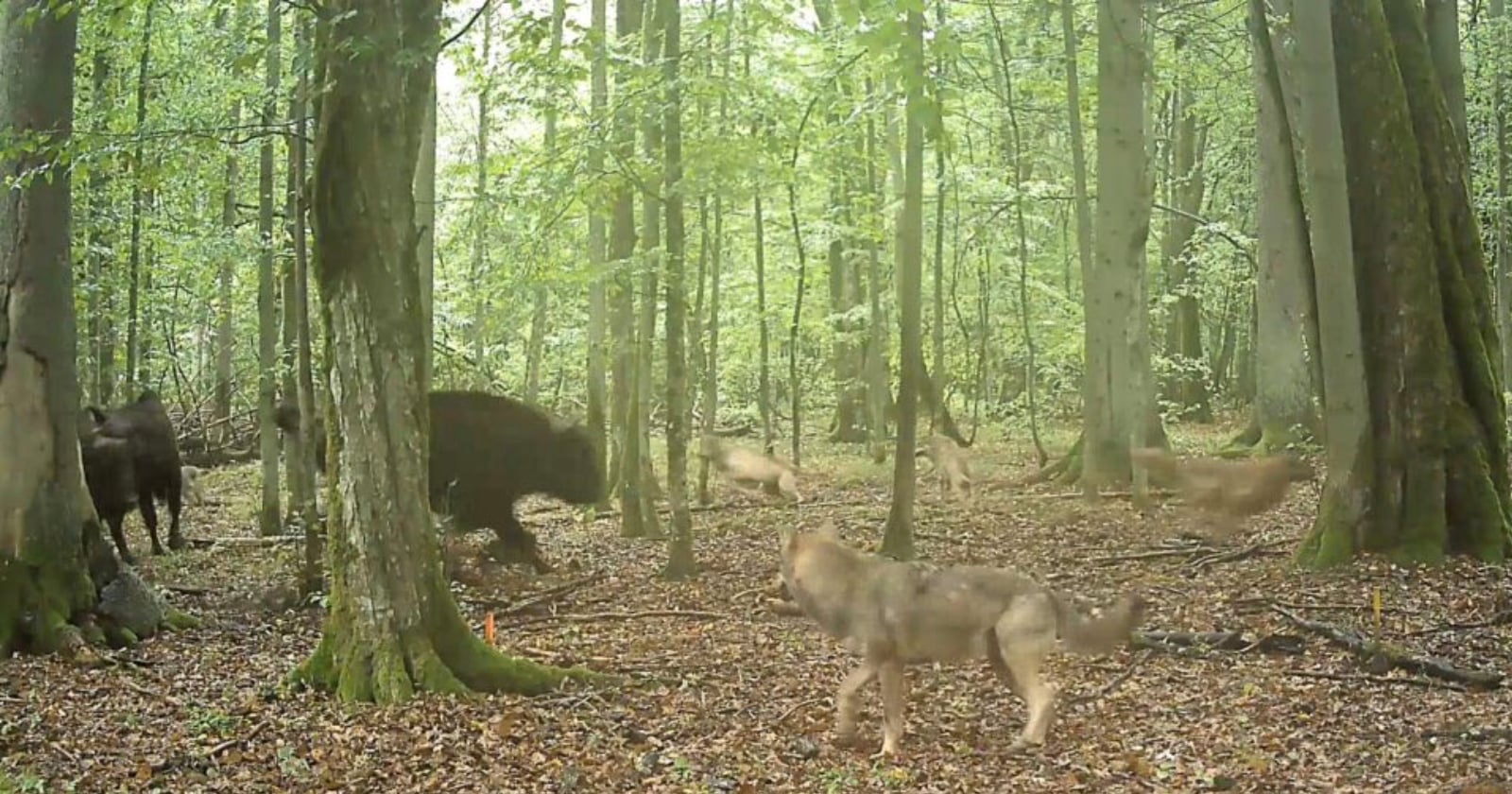
The forest’s status as a protected area allows for "natural processes" to occur with minimal human interference. Unlike more managed landscapes where predators might be culled or bison might be supplementally fed in a way that alters their behavior, Białowieża offers a glimpse into a truly wild Europe. The presence of the seven-wolf pack indicates a healthy, functioning apex predator population, which is essential for maintaining the ecological balance of the region.
Technological Advancements: Camera Traps as Silent Observers
The capture of this hunt highlights the indispensable role of camera trap technology in modern ecology. Traditional field observations of wolves are notoriously difficult; the animals are elusive, often nocturnal, and possess a keen sense of smell that allows them to avoid human presence long before a researcher can get within visual range.
Remote sensing allows scientists to observe "honest" animal behavior without the distorting influence of human observers. In the study published in Ecology and Evolution, authors R. R. Wijnands and T. Borowik emphasized that without these automated systems, such a rare and brief event would almost certainly have gone unrecorded. The use of high-definition video in these traps is providing data points that were previously impossible to obtain, such as the specific biting locations used by wolves on bison and the exact defensive formations adopted by the herd.
Comparative Analysis: European vs. North American Bison Predation
The researchers noted that while this behavior is "new" to documented European records, it mirrors well-documented interactions in North America. In places like Yellowstone National Park, wolves are known to regularly hunt American bison (Bison bison).
However, there are key differences. American bison often inhabit more open plains, where wolves can use long-distance pursuits to exhaust their prey. In the dense Białowieża Forest, the hunt is more tactical and relies on short bursts of activity and the use of terrain. Furthermore, the European bison is slightly taller and more adapted to forest life than its American cousin. The fact that the wolves in Poland were able to coordinate an attack in such thick cover demonstrates the high degree of behavioral plasticity in Canis lupus.
Ecological Significance and Population Health
Despite the dramatic nature of the attack on the calf, the researchers from the Polish Academy of Sciences were quick to note that this predation does not pose a threat to the overall bison population. In fact, such interactions are often a sign of a healthy ecosystem.
"Although the video did not show a direct kill, our observation demonstrated that the European bison is, in fact, a potential prey for wolves," the study authors noted. This realization has several ecological implications:
- Natural Selection: Predators often target the weak, the young, or the old. By hunting bison, wolves act as a mechanism of natural selection, ensuring that only the strongest and most vigilant bison survive to pass on their genes.
- The Landscape of Fear: The presence of wolves changes the movement patterns of herbivores. If bison know they are at risk, they may spend less time overgrazing certain areas, which allows for forest regeneration.
- Nutrient Cycling: While this specific calf survived, successful hunts provide essential biomass for a wide range of scavengers in the forest, including ravens, foxes, and even bears.
Official Responses and Future Research Directions
Wildlife management authorities in Poland have welcomed the findings as a testament to the success of rewilding efforts. Inferred statements from conservationists suggest that this footage will be used to advocate for the continued protection of wolf corridors across Europe. As wolves expand their range into Western Europe, understanding their ability to interact with large ungulates like bison is crucial for future management plans.
The Polish Academy of Sciences intends to continue its monitoring program, potentially increasing the density of camera traps in the Białowieża region. Future research will focus on whether these hunting attempts are seasonal—perhaps peaking during the bison calving season—and whether certain wolf packs specialize in bison hunting, similar to "specialist" packs observed in North America.
In conclusion, the footage of the September 15 encounter is more than just a dramatic nature video; it is a profound piece of scientific evidence. It confirms that the reintroduction of the European bison has reached a stage where the species is once again fully integrated into the natural food web. The "King of the Forest" may have returned to its throne, but as the wolves of Białowieża have proven, even a king must remain vigilant.

