


Maryland, recognized as the fifth greenest state in the nation, provides a rich tapestry of habitats that support a remarkable diversity of wildlife, including a vibrant population of woodpeckers. These distinctive birds, celebrated for their striking plumage and energetic behavior, find ample opportunities for nesting, foraging, and thriving within the state’s extensive forested areas, wetlands, and even its more developed urban and suburban landscapes. Across Maryland, a total of eight distinct woodpecker species have established themselves, each with unique characteristics, dietary preferences, and ecological roles. This in-depth exploration delves into the fascinating world of Maryland’s woodpecker population, examining the specific species, their preferred environments, feeding habits, and the ecological significance they hold within the state’s biodiversity.
The Eight Woodpecker Species of Maryland
Maryland’s commitment to environmental preservation has cultivated an ecosystem capable of sustaining a rich variety of avian life. Among the most captivating are the woodpeckers, whose drumming and vibrant appearances are a testament to the health of the state’s natural resources. The eight species that call Maryland home are: the Red-Cockaded Woodpecker, the Yellow-Bellied Sapsucker, the Hairy Woodpecker, the Pileated Woodpecker, the Northern Flicker, the Red-Bellied Woodpecker, the Downy Woodpecker, and the Red-headed Woodpecker. Each species contributes to the ecological balance of its habitat, playing crucial roles in insect control, seed dispersal, and the creation of cavity nests that benefit numerous other species.
1. The Red-Cockaded Woodpecker: A Pine Forest Specialist
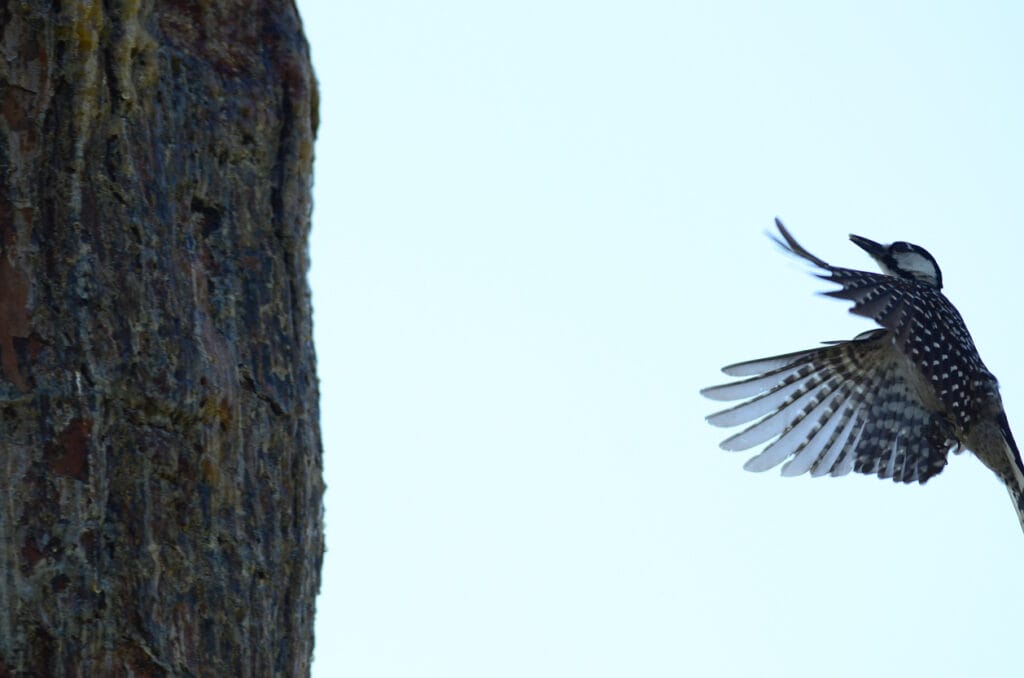
The Red-Cockaded Woodpecker, scientifically known as Picoides borealis, is a species deeply intertwined with the health of mature pine forests. Its name derives from a small, rarely visible red marking, or "cockade," on the male’s cap. This medium-sized woodpecker is distinguished by its striking black and white patterned plumage, a black head and nape, and contrasting white cheek patches.
This species exhibits a highly specialized habitat preference, favoring large, mature longleaf pine trees. Their survival is intrinsically linked to the presence of these specific trees, as they excavate their nesting cavities directly into the living wood. This process is significantly aided by the Red Heart Fungus, which infects the pine trees, softening the heartwood and making excavation easier. This symbiotic relationship underscores the delicate ecological balance required for this woodpecker’s existence.
The diet of the Red-Cockaded Woodpecker consists primarily of insects, including caterpillars, cockroaches, and spiders, supplemented by pine seeds and fruits. Their foraging behavior involves meticulously probing bark crevices and excavating wood to find hidden prey. As a result of habitat loss, particularly the decline of mature longleaf pine forests, the Red-Cockaded Woodpecker is a species of conservation concern. Efforts to preserve and restore these specific forest ecosystems are crucial for its continued survival in Maryland and across its range.
2. The Yellow-Bellied Sapsucker: A Unique Feeder of Sap
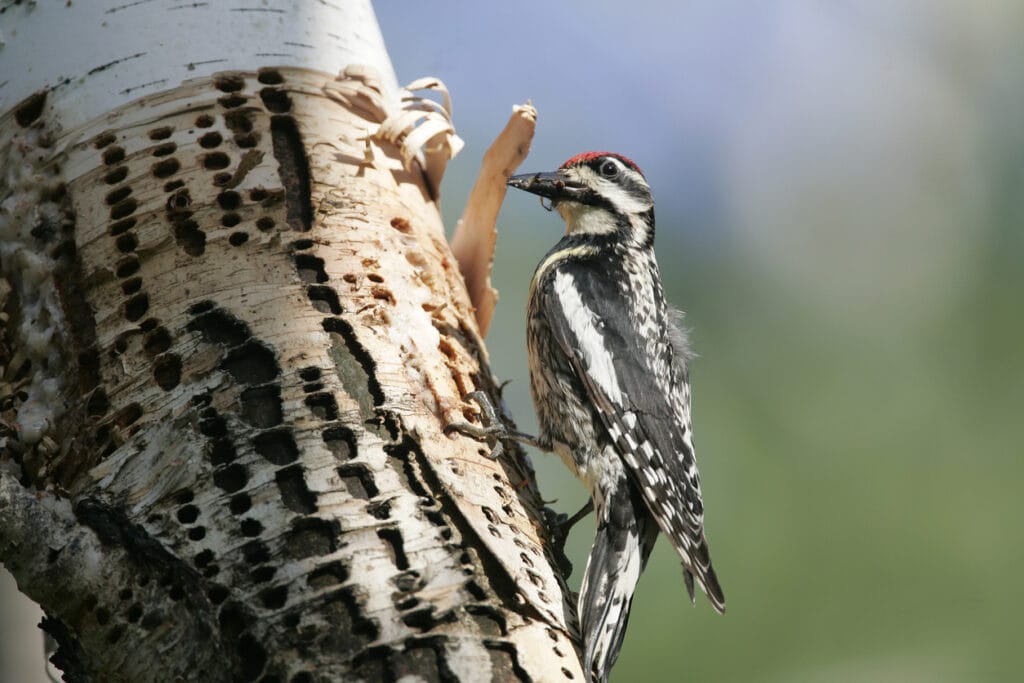
The Yellow-Bellied Sapsucker (Sphyrapicus varius) presents a unique feeding strategy among woodpeckers. While its name suggests a prominent yellow belly, its plumage is primarily black and white, with subtle yellow undertones on its underside. It features distinctive white stripes running down its neck and a bright red forehead. Adult males are further identified by a striking red throat patch.
These migratory birds, comparable in size to a robin, are often observed in Maryland during migration and winter months. They are characterized by their relatively long wings and short bills, adaptations for their specialized feeding habits. Unlike other woodpeckers that primarily seek insects within wood, sapsuckers drill precise, horizontal rows of small holes, or "wells," into the bark of various tree species. They then return to these wells to lap up the exuding sap using their brush-tipped tongues. This sap provides a vital sugar source, and any insects attracted to the sap also become part of their diet.
Preferred host trees for sapsuckers include yellow birch, hickory, sugar maple, red maple, and young paper birch. They maintain these wells meticulously to ensure a consistent sap flow. Sapsuckers also excavate cavities for nesting, typically in dead trees or dead portions of live trees. Their calls are often described as cat-like mewing, and their drumming is a staccato rhythm. The health of deciduous and mixed forests, particularly those with a good representation of their preferred tree species, is essential for the Yellow-Bellied Sapsucker.
3. The Hairy Woodpecker: A Forest Dweller with a Powerful Bill
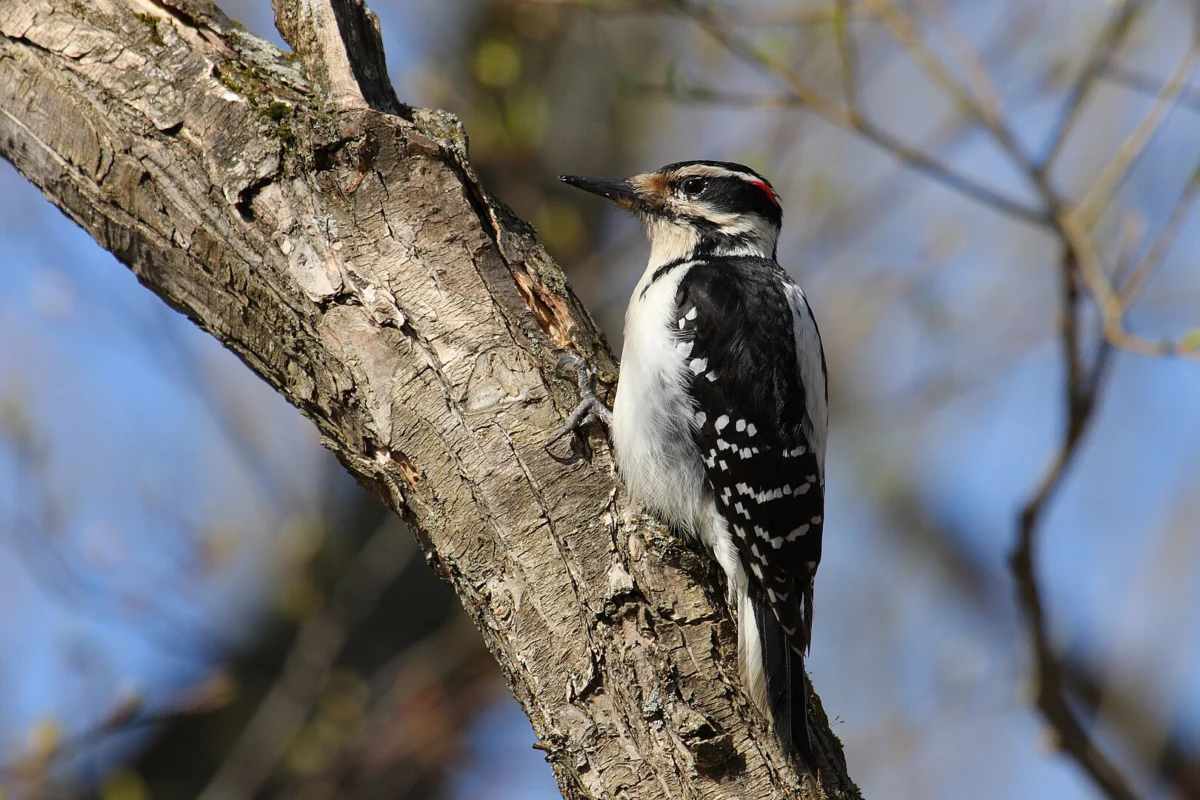
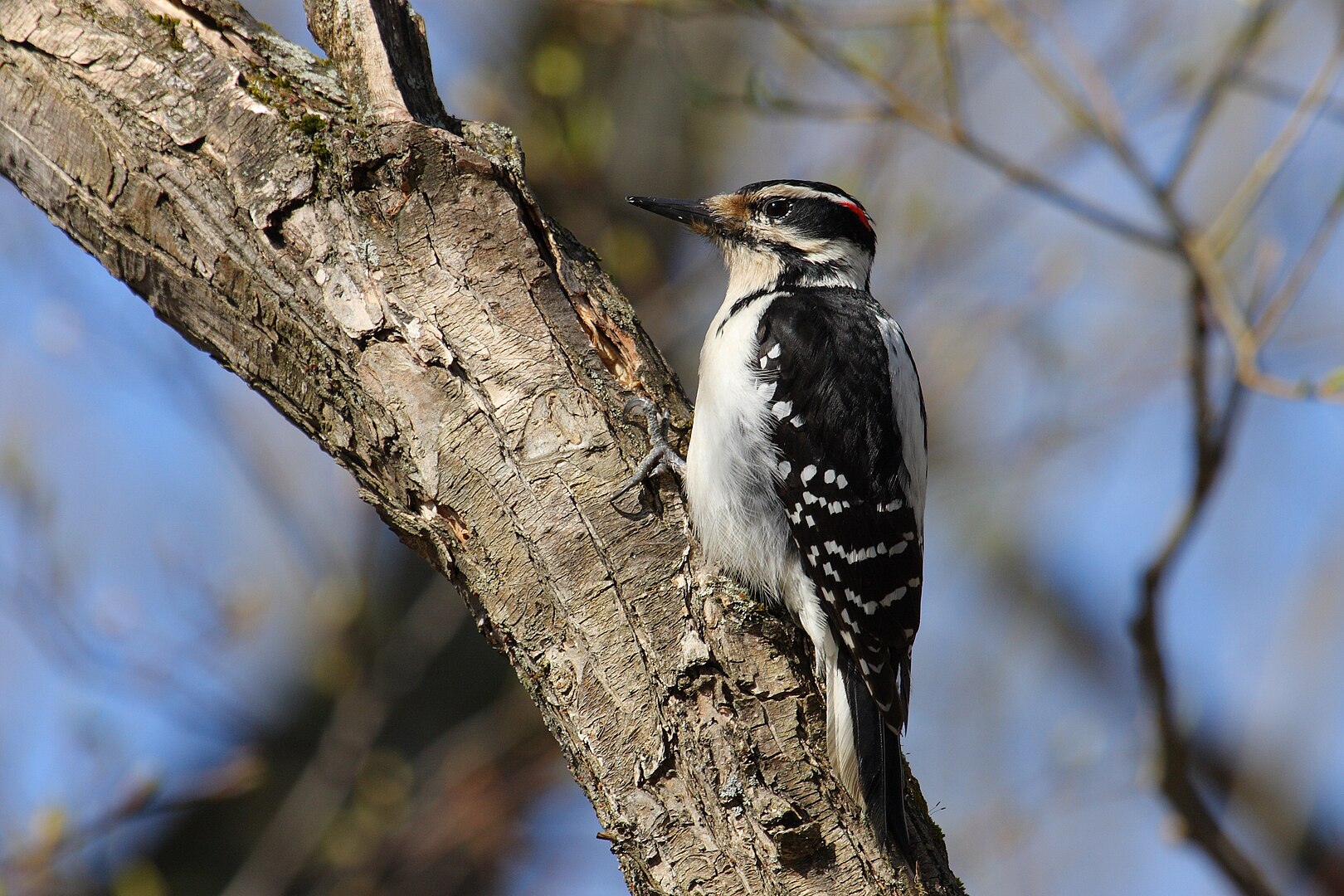
The Hairy Woodpecker (Dryobates villosus) is a medium-sized woodpecker recognized for its bold black and white plumage, a prominent white patch on its back, and a stout, chisel-like bill. Adult males sport a distinctive red streak at the nape of their neck. Its appearance can often be confused with the smaller Downy Woodpecker, but key differences lie in its larger size and significantly longer, sharper bill.
Hairy Woodpeckers are primarily found in mature forests throughout Maryland, but their adaptability allows them to inhabit a range of environments, including swamps, urban parks, orchards, suburban backyards, and even cemeteries. This widespread distribution highlights their ability to utilize diverse wooded landscapes.
Their diet consists mainly of wood-boring insects, such as bark beetle larvae and ants, but they also consume spiders, millipedes, pupae, bees, and caterpillars. They often forage on tall trees, searching for insects or utilizing sap wells left by other species. Their vocalizations are characterized by explosive, loud calls and powerful whinnying sounds, which distinguish them from the more subtle calls of the Downy Woodpecker. Nests are excavated in the cavities of dead trees, and they typically lay between three to six eggs. The presence of mature trees and a healthy insect population are critical for sustaining Hairy Woodpecker populations.
4. The Pileated Woodpecker: The Majestic Giant of Maryland’s Forests
The Pileated Woodpecker (Dryocopus pileatus) is the largest woodpecker species found in Maryland and across North America, rivaling the size of a crow. Its imposing stature and striking appearance make it one of the most recognizable and iconic members of the woodpecker family. These birds are instantly identifiable by their prominent, bright red triangular crests atop their heads, bold white stripes running down the sides of their necks, and an additional red streak on the cheek of adult males.
Their loud, shrill, whiny calls are a hallmark of the deep woods, and their powerful drumming resonates through the forest canopy as they excavate large, rectangular holes in trees in search of food. Contrary to popular belief, Pileated Woodpeckers often prefer dead trees or softer wood logs for both nesting and foraging, as these are easier to excavate and more likely to harbor their primary food source: carpenter ants. Their diet also includes berries, wild fruits, and nuts.
These magnificent birds typically choose a new cavity within dead trees for nesting each year, laying between three to five white eggs. While they are most commonly found in the conifer forests of Maryland, they can also be observed at the edges of large cities where mature trees are present. The conservation of large, mature forests, particularly those with a significant number of standing dead trees (snags), is paramount for the continued presence of the Pileated Woodpecker in Maryland. Their presence is often an indicator of a healthy, mature forest ecosystem.
5. The Northern Flicker: An Unconventional Woodpecker
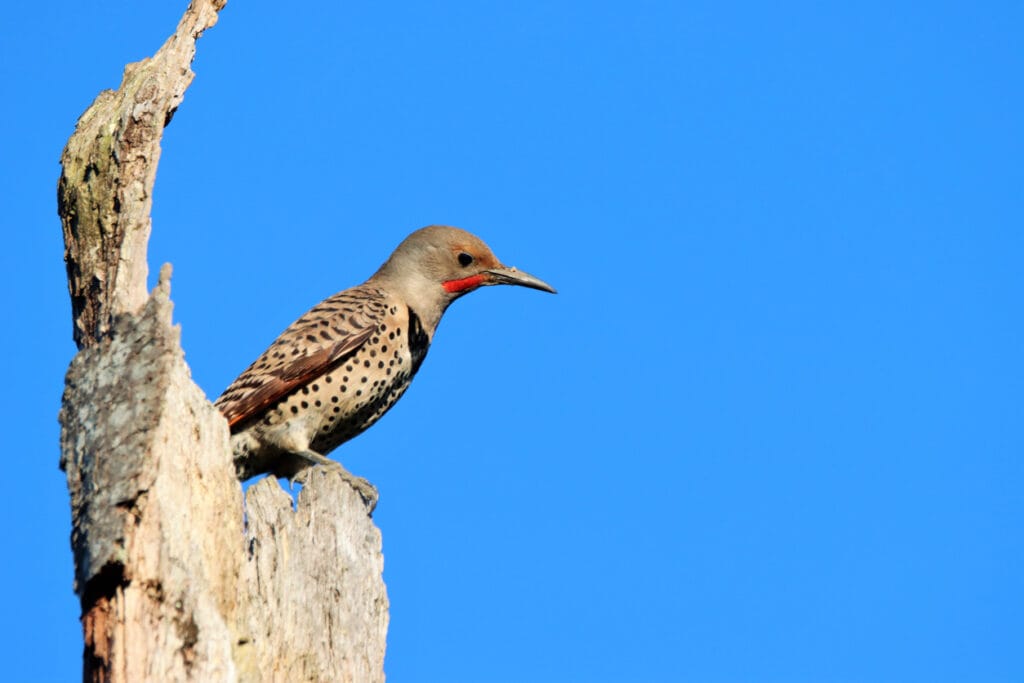
The Northern Flicker (Colaptes auratus) stands out among its relatives for its distinctly different plumage and foraging habits. Found year-round in Maryland, they prefer woodlands interspersed with open fields and clearings. Unlike the typical black and white coloration of most woodpeckers, Northern Flickers exhibit a striking gray and brown patterned plumage.
These relatively large birds possess large, curved bills and round, slender heads. Their undersides are marked with darker streaks, and their wings and tails feature bright yellow undersides, leading to the common observation of a "yellow flash" when they take flight. A distinctive red nape on their necks and a white patch on their rumps further aid in identification. Their zygodactyl feet, with two toes pointing forward and two backward, enable them to walk vertically on tree trunks with ease, but they are also one of the few woodpecker species that frequently forage on the ground.
Northern Flickers are known for their repetitive, piercing calls and deep tree drumming, used for communication. Their diet is unique, with a strong preference for beetles and ants, which they often find by foraging on the ground. They also consume fruits. They excavate cavities in trees for nesting, where they lay between five to eight white eggs. The Northern Flicker’s adaptability to a variety of open woodland habitats makes them a common sight, and their preference for ground foraging sets them apart within the woodpecker family.
6. The Red-Bellied Woodpecker: A Backyard Favorite
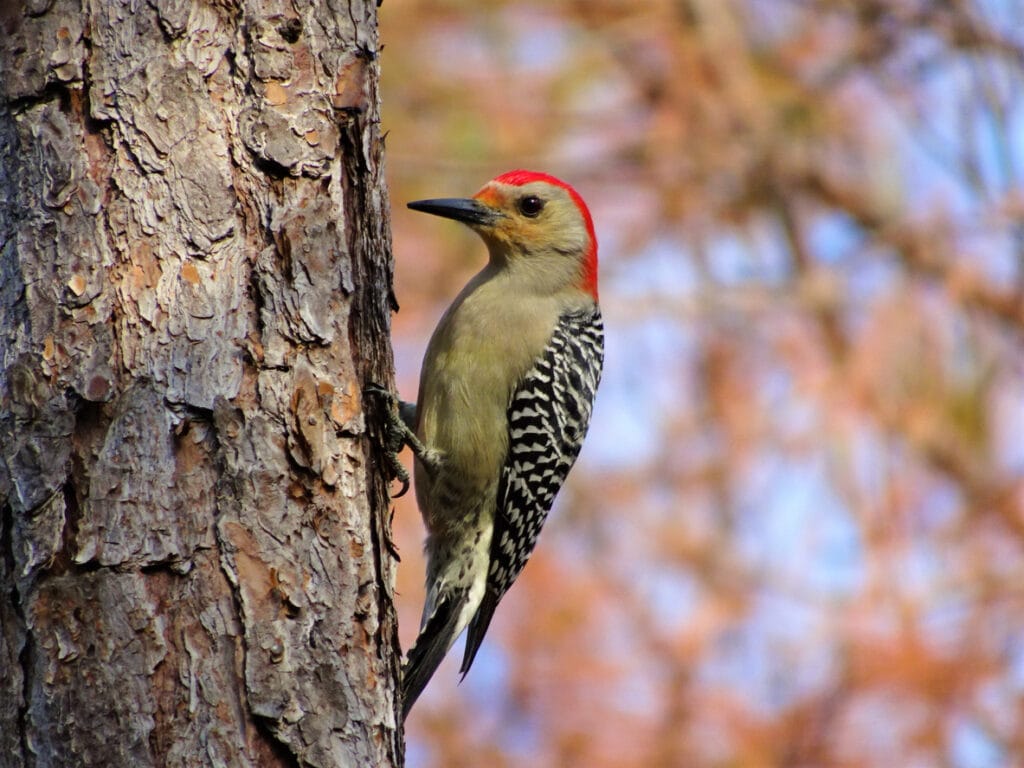
The Red-Bellied Woodpecker (Melanerpes carolinus) is a common and adaptable species that can be found throughout Maryland year-round. While its name suggests a prominent red belly, this coloration is often subtle and difficult to discern, appearing as a faint rosy wash. The most noticeable red markings are on their heads and napes. Adult females have red on the nape but lack the red crown seen in males.
A key sexual dimorphism in this species lies in their tongues; males possess longer and wider tongues than females, an adaptation that likely allows them to forage in different food niches during the breeding season, ensuring a varied diet for their offspring. Their plumage is characterized by the typical black and white barring on their backs, but their undersides are a pale gray.

These birds are highly adaptable, thriving in both forested areas and urban settings, making them a frequent visitor to backyard feeders. Their diet is diverse, encompassing insects, spiders, nuts, fruits, and seeds. Red-Bellied Woodpeckers tend to remain with the same nest site for years, excavating cavities in dead trees or utilizing pre-existing holes. They lay four or five white eggs. Their vocalizations include a variety of loud sounds, such as trills and chuckles, in addition to their characteristic drumming. The Red-Bellied Woodpecker is often cited as one of the most common woodpeckers in Maryland, reflecting its successful adaptation to a range of environments.
7. The Downy Woodpecker: The Smallest of the Flock
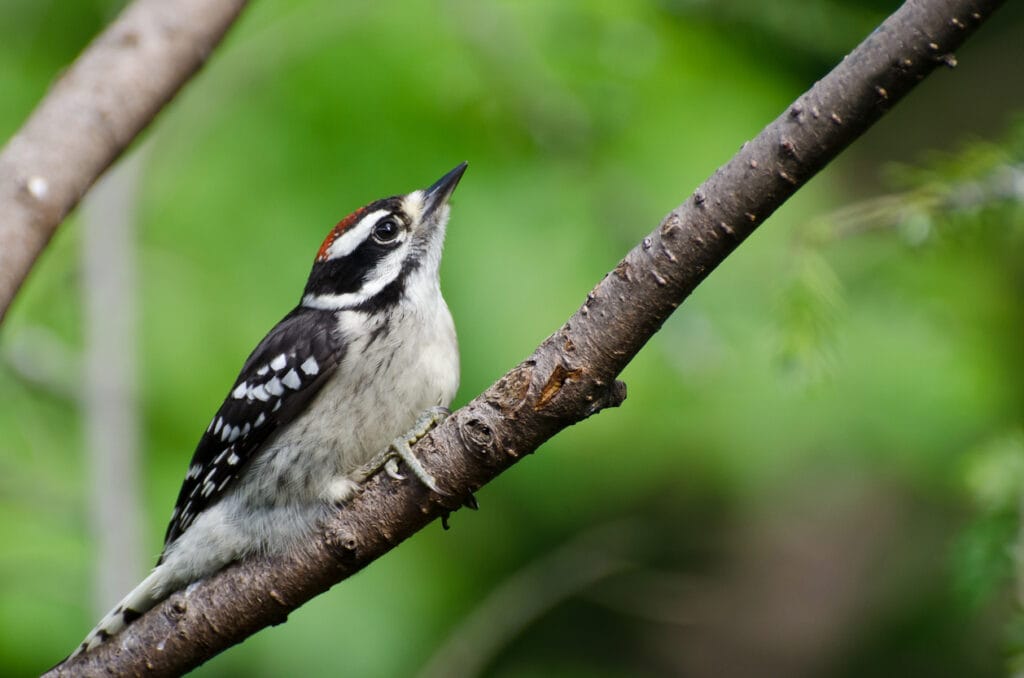
The Downy Woodpecker (Dryobates pubescens) holds the distinction of being the smallest woodpecker species in both Maryland and North America. Its name is derived from the soft, downy texture of its feathers. This diminutive bird shares a similar black and white plumage pattern with the Hairy Woodpecker, featuring distinct horizontal bars on its wings and a white patch on its back. Adult males can be identified by a red patch on the back of their heads.
While visually similar to the Hairy Woodpecker, the Downy Woodpecker is significantly smaller and possesses a much shorter, more delicate bill. An additional distinguishing feature is the presence of white spots on its tail feathers, absent in the Hairy Woodpecker.
Downy Woodpeckers are highly adaptable and can be found in a wide array of habitats, including wooded areas, urban yards, forest edges, and are particularly common around backyard feeders. Unlike most woodpeckers, they not only peck into trees but also forage in long grass and weeds, expanding their dietary reach. Their diet includes nuts and larvae, as well as acorns, berries, and grains. They nest in cavities excavated in dead trees and typically lay between three to eight small white eggs. Their high-pitched sounds, rattles, and peeps, along with their active nature, make them a lively and engaging species to observe.
8. The Red-Headed Woodpecker: A Strikingly Colorful Specialist
The Red-Headed Woodpecker (Melanerpes erythrocephalus) is a medium-sized species renowned for its exceptionally bold and distinctive coloration. Adults are characterized by their entirely bright red heads, which contrast sharply with their black upper parts and white bellies. Their wings are a striking combination of black and white. Juveniles, however, have brown heads that gradually turn red as they mature.
This species possesses powerful bills and short tails. A unique aspect of their foraging behavior is their ability to catch insects in mid-flight, a skill less common among other woodpeckers. This aerial insectivory means they are not solely reliant on insects found within tree cavities. Their diet consists of a variety of insects, including honeybees, midges, grasshoppers, and beetles, which constitute about one-third of their intake. They also supplement their diet with nuts, seeds, wild fruits, and even small rodents.
Red-Headed Woodpeckers are known to fiercely defend their territories and have been observed destroying or removing the eggs and nests of other bird species. They typically nest in tree cavities, often reusing the nesting sites of other birds, and lay four or five eggs. Unfortunately, this species has faced significant population declines, with an estimated 70% reduction between 1966 and 2014, primarily due to severe habitat loss. Their reliance on specific habitat types, particularly open woodlands with dead trees for nesting and foraging, makes them vulnerable to environmental changes.
Conservation and Ecological Significance
The presence of these eight woodpecker species in Maryland underscores the ecological health and biodiversity of the state’s natural landscapes. Woodpeckers play vital roles in forest ecosystems. Their drilling for insects helps control pest populations that could otherwise damage trees. The cavities they excavate in dead trees provide essential nesting sites for a multitude of other bird species, as well as for small mammals and insects, contributing significantly to habitat availability.
The conservation status of certain species, like the Red-Cockaded Woodpecker and the Red-headed Woodpecker, highlights the ongoing challenges of habitat preservation. Factors such as deforestation, changes in forest management practices, and the loss of mature trees directly impact their ability to thrive. State and local conservation efforts, including habitat restoration projects and the protection of mature forests, are crucial for ensuring the long-term survival of these fascinating birds.
Where to Observe Woodpeckers in Maryland
For bird enthusiasts eager to witness these remarkable birds in their natural habitat, several locations in Maryland offer excellent opportunities. The Pickering Creek Audubon Center is specifically noted for its potential to observe the Pileated Woodpecker. Beyond dedicated centers, exploring state parks, national forests, and nature preserves with mature woodlands and wetland areas will increase the chances of encountering various woodpecker species. Even suburban backyards with suitable trees and bird feeders can become frequented spots for more adaptable species like the Red-Bellied and Downy Woodpeckers. Resources like eBird, an online platform for bird sightings, can provide real-time information on recent woodpecker observations, helping enthusiasts pinpoint locations and species of interest.
Conclusion: A Symphony of Drumming and Color
Maryland’s commitment to environmental stewardship has cultivated a sanctuary for a diverse array of woodpecker species. From the specialized needs of the Red-Cockaded Woodpecker to the widespread presence of the Red-Bellied Woodpecker, each of the eight species contributes to the ecological richness of the state. Their drumming echoes through the forests, a vibrant soundtrack to the health and vitality of Maryland’s natural heritage. Understanding their habitats, diets, and conservation needs is essential for ensuring that future generations can continue to marvel at the colorful plumage and energetic antics of these indispensable avian inhabitants.

