



In a landmark decision that has sent shockwaves through the French legal system and the international animal rights community, a judge in Nîmes has acquitted the high-profile French influencer Jeremstar and four other activists associated with People for the Ethical Treatment of Animals (PETA). The ruling, delivered on June 9, 2026, effectively dismisses charges brought against the group following a dramatic protest inside the historic Nîmes arena in September 2025. The core of the judge’s decision rested on a specific legal distinction: because bullfighting is not legally recognized as a sport under French law, the statutes governing the unlawful entry into a sports venue could not be applied to the defendants.
This verdict represents a significant tactical victory for animal rights advocates who have long sought to strip bullfighting of its protected status in France. By ruling that the arena does not function as a "sporting venue" during a bullfight, the court has highlighted a legal paradox that may complicate future attempts by the state to prosecute activists who disrupt these events. The acquittal has been met with jubilant celebrations from supporters across Europe, while proponents of the "corrida" tradition warn that the decision could embolden more frequent and dangerous disruptions of public spectacles.
The Chronology of the Nîmes Arena Protest
The events leading to the June 2026 acquittal began on a high-tension afternoon in September 2025 during the Feria des Vendanges, one of France’s most prominent and culturally significant bullfighting festivals. The Nîmes arena, a Roman-era amphitheater that serves as the epicenter of French bullfighting culture, was packed with spectators.

As the event reached a climax following the killing of a bull by a matador, Jérémy Gisclon, known professionally as Jeremstar, bypassed security barriers and jumped into the ring. He was accompanied by several other PETA supporters. Jeremstar, who commands a massive following on social media, held a sign aloft that denounced the violence of the spectacle. The intervention was carefully coordinated; while Jeremstar moved toward the center of the arena, two other advocates leaped from the stands to draw the attention of security personnel. This diversion proved physically costly for the activists, as one individual reportedly suffered fractures to both feet upon landing on the arena floor.
Despite the injuries and the immediate intervention of security, the images of the protest were captured by thousands of smartphones and broadcast live to millions of viewers via social media. The activists were eventually subdued, handcuffed, and removed from the premises, leading to the criminal charges that were adjudicated this week.
Legal Arguments and the "Sport" Distinction
The prosecution’s case was built on the premise that the activists had violated laws designed to protect the integrity and safety of sporting events. In France, unauthorized entry into a "sporting venue" during a competition is a criminal offense that can carry significant fines and the possibility of imprisonment. The state argued that the Nîmes arena, during the Feria, functioned as a professional arena where a regulated physical contest was taking place.
However, the defense team, representing Jeremstar and his co-defendants, presented a robust challenge based on the French Sports Code. They argued that for an activity to be classified as a sport, it must be governed by a national federation recognized by the Ministry of Sports, involve standardized rules of competition between human participants, and focus on athletic achievement. Bullfighting, they contended, is categorized by the French state as a "traditional cultural spectacle" rather than a sport.

The presiding judge ultimately found this argument compelling. By ruling that the Nîmes arena cannot be considered a sporting venue during a bullfight, the court determined that the specific penal code used to charge the protesters was inapplicable. This technicality led to the full acquittal of all five defendants. Legal experts suggest this ruling creates a "legal vacuum" regarding the enforcement of security in bullrings, as activists can no longer be charged under the same stringent laws that protect football stadiums or tennis courts.
Public Reaction and Mass Demonstrations
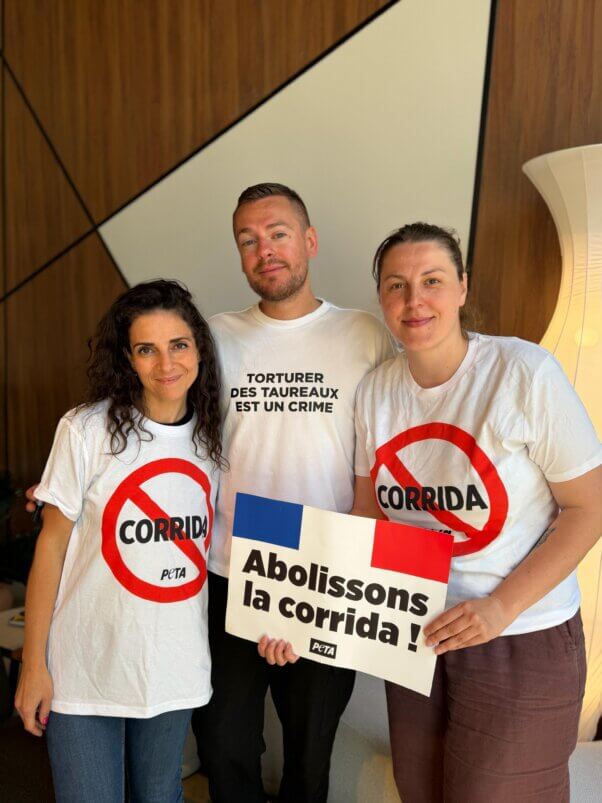
The trial itself became a focal point for the broader "Basta Corrida" (Enough Bullfighting) movement in France. Throughout the proceedings, the streets surrounding the Nîmes courthouse were filled with hundreds of demonstrators. The atmosphere was described as electric, with activists wearing "Abolish Bullfighting" shirts and chanting slogans in solidarity with those inside the courtroom.
Upon the announcement of the "not guilty" verdict, the crowd erupted into cheers. Jeremstar, speaking to the press on the courthouse steps, framed the victory not as a personal win, but as a moral one for animal welfare. He reiterated his stance that the existence of bullfighting in 2026 is an "institutionalized scandal" and argued that the legal system is finally beginning to reflect modern ethical standards.
"Today, we were acquitted," Jeremstar told the gathered media. "Tomorrow, it’s the bulls who must finally be freed from this violence. It is a real scandal that bullfighting—where innocent beings are tortured and slaughtered for entertainment—still exists in this day and age."

Background: The Status of Bullfighting in France
The legal status of bullfighting in France has been a point of contention for decades. Under the Grammont Law of 1850, animal cruelty is generally prohibited; however, a 1951 amendment provided an exemption for bullfighting and cockfighting in localities where an "uninterrupted local tradition" can be proven. This has created a geographical divide in France, where the practice is strictly banned in the north but protected in approximately 10 percent of the country, primarily in the south (Occitanie and Provence-Alpes-Côte d’Azur).
In recent years, the push for a nationwide ban has gained significant political momentum. In 2022, a bill to ban bullfighting was introduced in the National Assembly by Aymeric Caron, though it was eventually withdrawn due to a high volume of proposed amendments intended to obstruct the vote. Despite legislative hurdles, public opinion polls consistently show that a vast majority of French citizens—often cited between 75% and 80%—favor a total ban on the killing of bulls in arenas.
Global Context and Comparative Data
The acquittal in Nîmes occurs within a global landscape where bullfighting is increasingly on the retreat. Data from various animal welfare organizations and government reports highlight a clear trend:
- Colombia: In a historic move in early 2024, the Colombian Congress voted to ban bullfighting nationwide, a transition that is currently being implemented.
- Spain: While still legal at the national level, more than 125 cities and municipalities in Spain have declared themselves "anti-bullfighting" or have stopped subsidizing the events. Attendance at Spanish bullfights has seen a steady decline over the last decade, particularly among younger demographics.
- Mexico: Several states, including Quintana Roo and Sinaloa, have implemented bans, and the legal status of bullfighting in Mexico City has been the subject of ongoing, high-stakes litigation in the Supreme Court.
- Economic Factors: Opponents of the practice often point to the heavy reliance on government subsidies. In France and Spain, critics argue that without millions of euros in agricultural and cultural subsidies (some of which are derived from EU funds), the bullfighting industry would collapse under its own lack of profitability.
Analysis of Implications
The Nîmes acquittal is expected to have several long-term implications for both the animal rights movement and the bullfighting industry in France.
First, the ruling provides a blueprint for future legal defenses. If activists cannot be prosecuted for "intruding on a sports venue," the state may be forced to rely on lesser charges such as simple trespass or "disturbing the peace," which often carry lighter penalties and are more difficult to prosecute in the context of a public spectacle.
Second, the decision heightens the pressure on the French Ministry of Culture and the Ministry of Sports to clarify the legal definition of bullfighting. If the courts officially recognize that it is not a sport, the industry may lose access to certain types of funding or insurance protections that are typically reserved for sporting organizations.
Finally, the high profile of the defendants, particularly Jeremstar, ensures that the issue remains at the forefront of the national conversation. The use of influencers to bridge the gap between traditional activism and mainstream public consciousness has proven effective in mobilizing younger generations who view bullfighting as an archaic vestige of the past rather than a protected cultural heritage.
As the dust settles in Nîmes, the focus of the animal rights movement appears to be shifting toward the 2027 legislative cycle, with renewed calls for a definitive parliamentary vote to end the "interrupted tradition" exemption once and for all. For now, the acquittal stands as a testament to the evolving legal and social landscape of 21st-century France, where the definition of "tradition" is increasingly being weighed against modern concepts of animal sentience and ethics.

