


The landscape of animal ownership in the United States is undergoing a period of significant regulatory transformation, particularly regarding the keeping, breeding, and exhibition of avian species. As legislative bodies at the local, state, and federal levels introduce a rising number of bills aimed at animal welfare and environmental protection, organizations like the American Federation of Aviculture (AFA) are emphasizing the critical necessity of proactive legislative monitoring. The distinction between a "bill" and a "law" is central to this effort, as many proposed measures contain language that, while seemingly focused on domestic pets like dogs and cats, can have profound and often unintended consequences for bird enthusiasts. For members of the avian community, understanding the mechanics of the legislative process—from the initial proposal by lobbying organizations to the final implementation of administrative regulations—is no longer an elective interest but a requirement for the continued legal keeping of birds.
The Mechanics of Legislation and the Influence of Lobbying
In the modern political context, the term "legislation" refers to the formal proposal of laws, typically introduced in the form of a bill. A bill serves as the blueprint for intended legal changes, outlining the scope of the law, the mechanisms for enforcement, and the anticipated impact on the public. However, the origin of these bills is rarely spontaneous. Most legislation affecting animal ownership is the result of intensive efforts by lobbying organizations. While many of these groups represent animal welfare interests, others operate with animal rights agendas that may not align with the practical realities of responsible aviculture.
Lobbying groups often draft the initial language of a bill and present it to sympathetic representatives for introduction into the legislative system. This process can lead to the inclusion of introductory summaries that appear benign or even beneficial to the casual observer. For example, a bill may be framed as a measure to "prevent inhumane treatment" or "reduce animal overpopulation." While these are noble goals, the specific definitions and regulatory powers contained within the body of the bill may be broad enough to encompass private bird owners, specialized breeders, and educational exhibitors in ways that are restrictive or even prohibitive.
Historical Chronology of Avian Regulatory Milestones
To understand the current legislative climate, it is necessary to examine the timeline of federal and state involvement in avian regulation. The legal framework governing birds has evolved from simple conservation measures to complex administrative oversight.
- 1900 – The Lacey Act: Originally enacted to prevent the illegal trade of wildlife, the Lacey Act has been expanded multiple times. It remains a primary tool for federal authorities to regulate the interstate transport and importation of species deemed "injurious."
- 1918 – Migratory Bird Treaty Act (MBTA): This landmark legislation established federal protection for migratory birds, making it illegal to possess, transport, or sell birds (or their parts, nests, or eggs) without a valid permit.
- 1973 – The Endangered Species Act (ESA): The ESA introduced rigorous protections for species at risk of extinction. For aviculturists, this meant increased scrutiny on the movement and sale of certain parrot species and other exotic birds.
- 1992 – The Wild Bird Conservation Act (WBCA): This act significantly restricted the importation of wild-caught birds into the United States, shifting the focus of the avian trade to domestic, captive-bred populations.
- 2023 – USDA Animal Welfare Act (AWA) Standards for Birds: After decades of litigation and administrative delays, the United States Department of Agriculture (USDA) finalized new standards for the humane handling, care, and treatment of birds not bred for use in research. This represents one of the most significant shifts in federal avian oversight in history, bringing many breeders and exhibitors under the direct jurisdiction of the Animal and Plant Health Inspection Service (APHIS).
The Nuance of Local Ordinances and the "Slippery Slope"
While federal laws often capture the headlines, the AFA notes that local ordinances frequently pose the most immediate threat to individual bird owners. Ordinances are laws passed at the municipal or county level. They are typically civil rather than criminal, meaning violations result in fines or court mandates rather than incarceration. However, the cumulative effect of these fines can be devastating for hobbyists.
A common legislative trend involves "limit laws," which restrict the number of animals a household may own. Originally designed to address "puppy mills" or "hoarding" situations involving dogs and cats, these ordinances often use broad language that lists "birds" alongside other domestic animals. In a scenario where a city council passes a limit of six animals per household, a canary breeder with several breeding pairs could suddenly find themselves in violation of the law.
The AFA Legislative Committee warns that these ordinances are rarely static. A law that seems "fair" today can be amended tomorrow. Because the process for amending local ordinances is often less transparent than state or federal lawmaking, changes can occur with little public notice. Once a precedent is set in one municipality, it frequently serves as a template for neighboring areas, creating a "domino effect" that can effectively ban certain types of aviculture across entire regions.
Supporting Data and Economic Impact
The scale of the avian community in the United States is substantial, contributing significantly to the national economy. According to data from the American Pet Products Association (APPA), approximately 6 to 10 million households in the U.S. own birds. The industry encompasses not only the sale of birds but also specialized feed, veterinary services, cage manufacturing, and educational programs.
Restrictive legislation has a measurable economic impact. When "white-list" or "positive-list" legislation is proposed—which only allows for the keeping of specific, pre-approved species—it can instantly devalue the livestock and equipment of thousands of owners. Furthermore, the AFA points out that the "astounding" amount of anti-animal-use legislation currently being introduced at the state level targets the very infrastructure of the hobby. If pet stores are prohibited from selling birds, or if transport laws make it impossible to move birds across state lines for breeding or exhibition, the entire avian ecosystem faces collapse.
Institutional Responses and Official Positions
The reaction to these legislative trends is divided between advocacy groups. Organizations such as the Humane Society of the United States (HSUS) and People for the Ethical Treatment of Animals (PETA) generally support more restrictive laws, arguing that birds are "wild animals" that should not be kept in captivity. Their lobbying efforts often focus on banning the sale of birds in pet stores and ending the use of birds in public displays.
In contrast, the AFA and partner organizations like the United States Association of Reptile Keepers (USARK) and the Pet Advocacy Network (formerly PIJAC) argue for a "welfare-based" approach rather than a "rights-based" prohibition. Their position is that responsible aviculture promotes conservation, education, and the well-being of the species. They contend that private breeders often serve as a "genetic ark" for species that are threatened in the wild.
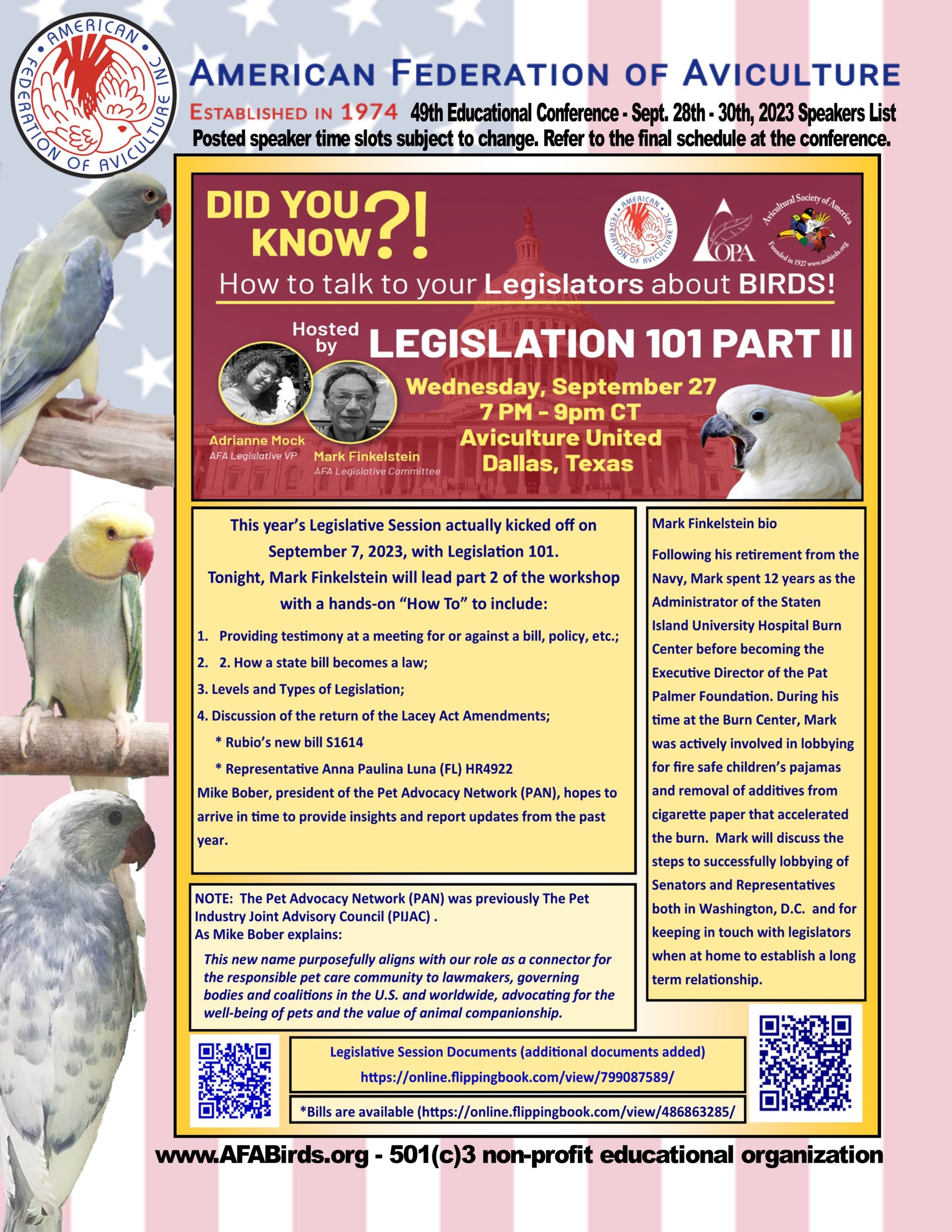
The AFA Legislative Committee actively monitors these bills, often sounding the alarm on legislation that may seem unrelated to birds. For instance, a local ban on circuses may contain definitions of "exotic animals" or "performance" that could later be used to target educational bird shows or even private bird clubs.
Analysis of Broader Implications and Future Outlook
The implications of failing to monitor legislation extend beyond the individual bird owner. From a conservation perspective, the restriction of private aviculture could lead to a loss of specialized knowledge and genetic diversity. Many species, such as the Spix’s Macaw, have relied heavily on private and institutional breeding programs for their survival. If legislation makes it legally or financially impossible for private citizens to maintain these populations, the burden of conservation falls entirely on government agencies, which often lack the necessary funding and specialized expertise.
Furthermore, there is a legal concern regarding the shift from "statutes" to "regulations." While laws must be voted on by elected officials, the "rules" or regulations under those laws are often determined by administrative agencies like the U.S. Fish and Wildlife Service (USFWS). These agencies have the power to add species to the Endangered Species Act list or change transport requirements without a direct vote from Congress. This "administrative creep" requires constant vigilance and participation in the public comment periods that are legally required before such changes can be finalized.
Looking forward, the avian community must adopt a more sophisticated approach to political engagement. This includes the use of legislative tracking software, the employment of professional lobbyists, and the mobilization of "grassroots" campaigns to educate local lawmakers. As the AFA emphasizes, a proposed law in a distant state may not have an immediate effect, but if it passes, it provides a blueprint for similar restrictions nationwide. The goal of monitoring is not merely to react to threats, but to participate in the conversation early enough to ensure that the laws of the future recognize the value of responsible bird ownership. Aviculture, as both a hobby and a scientific endeavor, depends on the ability of its practitioners to navigate a legal environment that is increasingly complex and often hostile to the keeping of non-traditional pets.

