


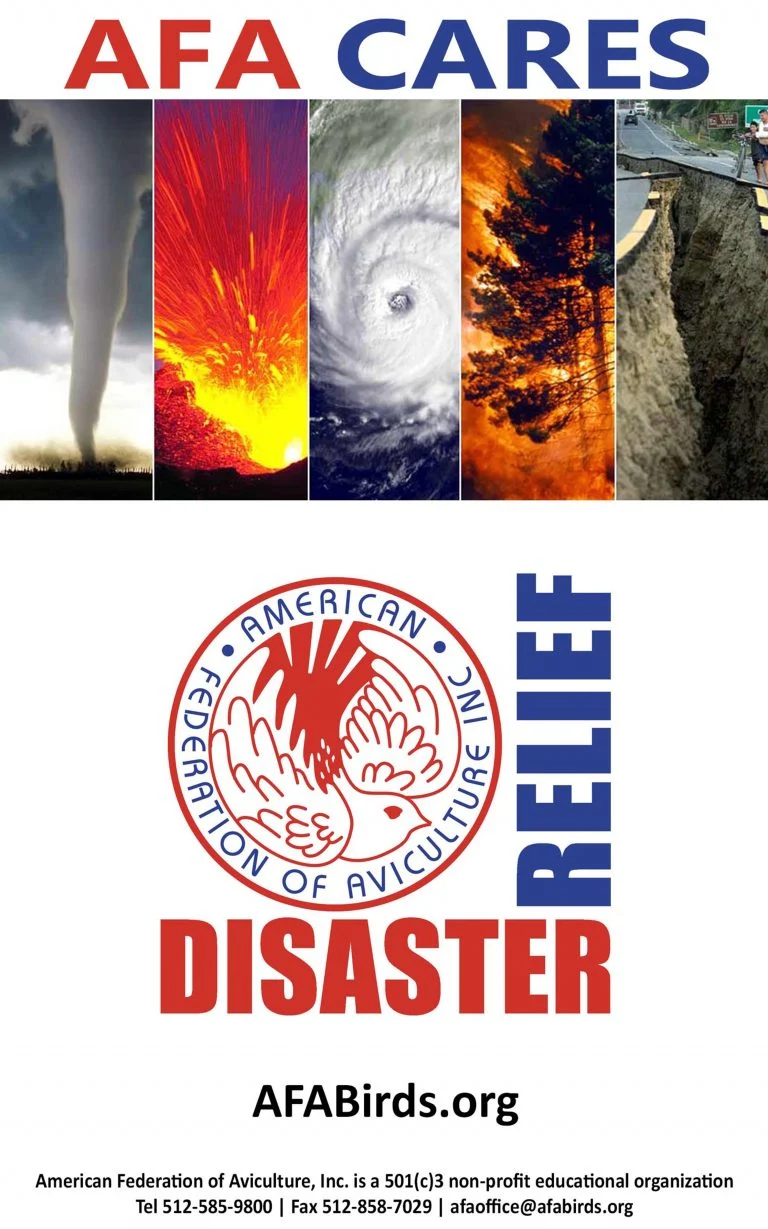
The American Federation of Aviculture (AFA) has established a specialized Disaster Relief Team designed to provide a rapid, coordinated response to emergencies affecting avian populations across the United States. This network, composed of Regional Directors and localized volunteers, operates on a framework of immediate notification and weather monitoring to ensure that bird owners and aviculturists receive support during environmental crises. As climate-driven disasters—ranging from catastrophic wildfires in the West to intensifying hurricanes along the Atlantic and Gulf Coasts—become more frequent, the AFA’s structured approach to avian welfare serves as a critical component of broader domestic animal emergency management.
The necessity for such a specialized response team is rooted in the unique physiological and logistical requirements of birds. Unlike larger mammals, birds possess highly sensitive respiratory systems that make them exceptionally vulnerable to smoke, airborne toxins, and rapid temperature fluctuations. Furthermore, the logistical challenge of transporting dozens, or sometimes hundreds, of birds from a single aviary requires a level of specialized equipment and knowledge that standard emergency services are often unable to provide. To address these challenges, the AFA emphasizes a dual-track strategy focusing on rigorous individual preparedness and a professionalized volunteer rescue infrastructure.
The Framework of Proactive Avian Disaster Planning
Emergency management experts, including Mary Ellen LePage, a former Fire Chief for CalFire and a prominent voice in avian safety, assert that the survival of an avian collection during a disaster is almost entirely dependent on the pre-existing infrastructure of the facility. The AFA’s "Plan! Plan! Plan!" protocol outlines a comprehensive methodology for mitigating risk before an event occurs. This begins with the physical preparation of transport hardware. Aviculturists are encouraged to maintain a surplus of pre-assembled or collapsible carriers that are easily accessible. In a high-stress evacuation scenario, the time lost searching for or assembling cages can be the difference between successful relocation and total loss.
Strategic storage of these carriers is a vital component of the plan. For those with limited space, hanging carriers from garage ceilings or storing them in proximity to permanent flights is recommended. A critical, often overlooked detail in facility management is the standardization of security hardware; using a single key for all cage and flight locks ensures that rescuers do not lose precious minutes fumbling with disparate keys during a fast-moving fire or flood.
Beyond physical transport, the AFA highlights the necessity of "capture kits." These kits should include towels, specialized nets, and protective gloves for handling birds that are not hand-tame. For large-scale aviaries, these kits should be placed in highly visible, centralized locations. The documentation of the collection is equally important. In the chaos of a regional disaster, proving ownership of displaced animals can become a legal hurdle. Owners are advised to ensure all birds are identifiable via leg bands or microchips and that duplicate records—including health certificates and proof of purchase—are stored in a digital cloud or a physical location outside the potential disaster zone.

Navigating the Logistics of Evacuation and Relocation
The decision to evacuate is frequently the most difficult choice an aviculturist will face. In the context of wildfires, the AFA notes that smoke inhalation often kills birds long before flames reach a property. Consequently, the organization’s standing advice is "When in doubt, get out." Waiting for a mandatory evacuation order often means encountering gridlocked roads, fuel shortages, and police checkpoints that may prevent the movement of large trailers or animal transport vehicles.
Effective evacuation requires a pre-identified relocation site. This site must be situated outside the immediate danger zone and have the capacity to house the specific species in the collection. Potential locations include barns, private garages, or vacant commercial spaces. Establishing these mutual aid agreements with other bird owners or facilities ahead of time is a cornerstone of the AFA’s disaster strategy.
Furthermore, the transport vehicle itself must be scrutinized. If a rental truck is utilized, it must have adequate ventilation to the cargo area; many standard box trucks lack airflow, which can lead to rapid overheating and the death of the birds in transit. For those who choose to shelter in place—a decision usually reserved for storms where the structural integrity of the building is deemed sufficient—the AFA mandates a minimum of two weeks’ worth of food and water, along with a dedicated generator and a clear understanding of GPS coordinates, as street signs are frequently destroyed in high-wind events.
The Role of the Incident Command System (ICS) in Avian Rescue
When a disaster escalates to a federal or state-level emergency, the area falls under the jurisdiction of the Occupational Safety and Health Administration (OSHA) and the Incident Command System (ICS). The ICS is a standardized approach to the command, control, and coordination of emergency response, providing a common hierarchy within which responders from multiple agencies can be effective.
For AFA disaster relief volunteers, navigating this hierarchy is essential for gaining access to restricted zones. Each disaster is managed by an Incident Commander (IC) who oversees all operations. Unauthorized entry into a disaster zone is not only illegal but can interfere with life-saving operations. The AFA provides its volunteers with magnetic vehicle signs, t-shirts, and identification cards to establish legitimacy when speaking with law enforcement or the IC. This professionalization of the rescue effort allows avian specialists to work alongside government agencies, ensuring that birds left behind during human evacuations are not overlooked.
Technical Rescue Procedures and Rescuer Safety
The AFA’s instructions for bird rescuers emphasize a "life-threatened only" policy. Rescue operations are inherently dangerous and should only be conducted when the animals’ lives are at immediate risk and when it is safe for the human rescuers to enter. The organization encourages the use of experienced bird handlers who understand the behavioral nuances of different species.
During a rescue, the primary objective is the stabilization and identification of the animals. Rescuers are instructed to:
- Identify Pairs: To the extent possible, mated pairs should be kept together or their carriers marked to ensure they can be reunited.
- Utilize Alternative Housing: If standard carriers are unavailable, rescuers are trained to use ventilated plastic storage bins, cardboard boxes, or even paper bags for small species like finches or budgerigars.
- Maintain Integrity: Rescuers are strictly forbidden from removing leg bands, as these are the primary means of returning the bird to its rightful owner.
- Document the Source: Using markers to annotate the location from which a bird was taken is vital for post-disaster reunification.
The AFA also provides a technical support network for rescuers who encounter structural barriers. This includes the use of wire cutters, chainsaws for clearing debris, and specialized tools to access locked aviaries. By providing this level of technical guidance, the AFA ensures that the rescue process is as efficient as possible, minimizing the stress on the birds.
Broader Impact and the Future of Avian Emergency Management
The work of the AFA Disaster Relief Team has implications that extend beyond individual bird owners. By creating a self-sustaining network of experts, the organization reduces the burden on public emergency services, which are often overwhelmed during large-scale disasters. This community-based model of animal welfare is increasingly seen as a blueprint for other specialized animal groups.
From a sociological perspective, the successful rescue of pets and livestock is a key factor in the psychological recovery of disaster survivors. For many aviculturists, their birds represent years of breeding efforts and significant financial and emotional investment. The loss of a collection can be a devastating blow to an individual’s resilience. By facilitating the rescue and return of these animals, the AFA contributes to the overall stability of the affected community.
As environmental volatility increases, the AFA continues to refine its protocols. The integration of GPS technology, real-time weather tracking, and enhanced inter-agency cooperation remains a priority. The organization’s commitment to education—teaching bird owners how to "catch up" wild birds and how to prepare "go-bags" for their aviaries—is a proactive measure that saves lives long before a disaster strikes.
In conclusion, the AFA’s Disaster Relief Team and the comprehensive planning guidelines authored by experts like Mary Ellen LePage represent a gold standard in avian emergency management. Through a combination of rigorous individual preparation, professionalized rescue protocols, and a deep understanding of the legal and logistical frameworks of disaster response, the AFA ensures that the avian community remains resilient in the face of an increasingly unpredictable climate. For those in need of assistance or looking to join the relief efforts, the AFA maintains a 24-hour contact line and a network of regional directors ready to deploy as the need arises.

