


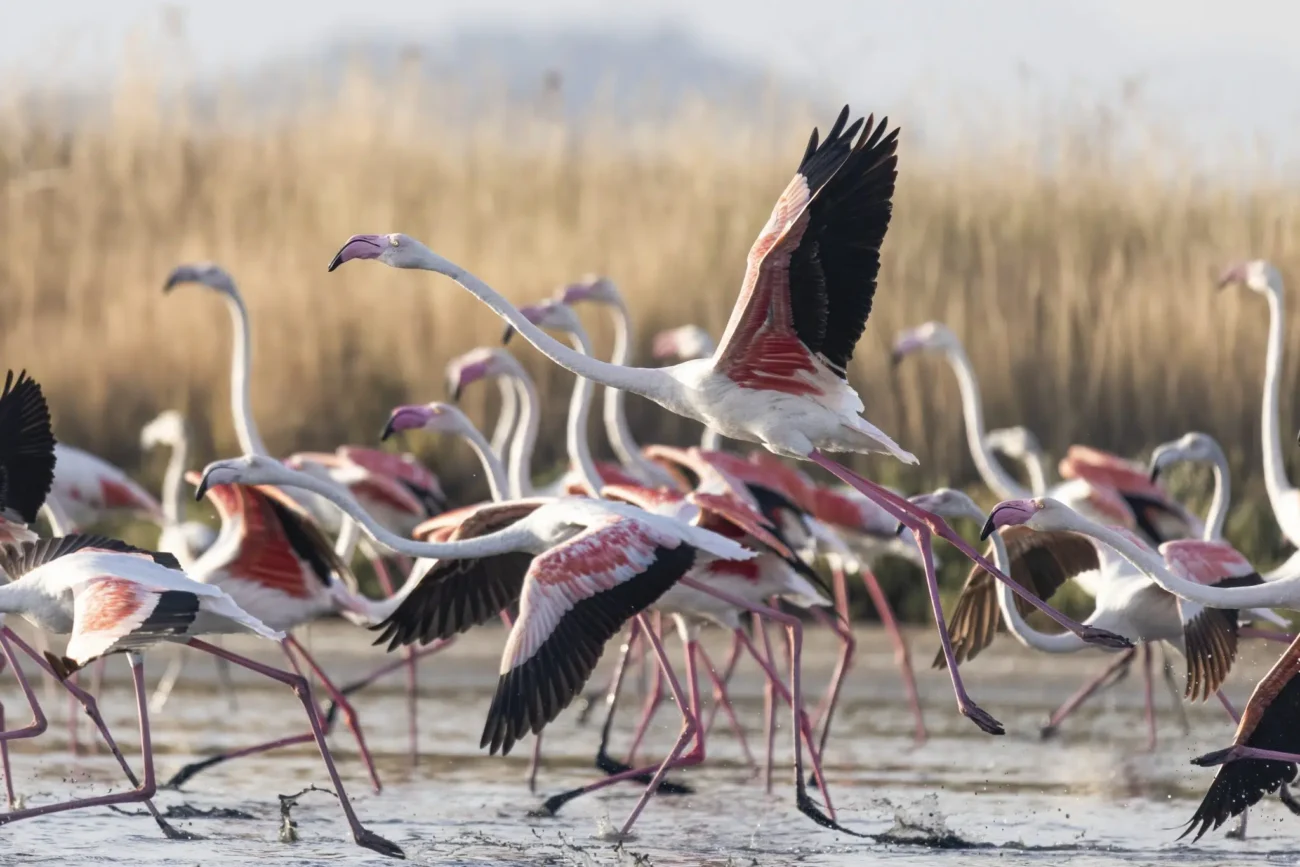
At dawn, the light paints the Pishë-Poro-Narta Protected Landscape in ethereal layers. Mist, a soft veil, hovers above the serene water. The nascent sun ignites the reeds, and then, as if summoned by the light itself, the flamingos emerge. Their pale pink forms, poised and motionless, cast perfect reflections upon the glass-flat lagoon. Overhead, Dalmatian pelicans glide with an unhurried grace, embodying a timeless existence unburdened by urgency. Egrets meticulously work the shallows, while herons stand as stoic sentinels at the water’s edge. The entire tableau possesses a quality that borders on the unbelievable, a scene so pristine it seems conjured from a dream.
This tranquil water mirror is framed by an ancient pine forest, a verdant sentinel that has stood for centuries. These trees, architectural in their maturity, have roots anchored deep within sandy soil, sculpted by relentless salt winds. Their canopies filter the sunlight, casting shifting patterns upon the forest floor, mingling the scent of pine with the bracing aroma of the sea. These are not merely trees; they are irreplaceable. For the millions of migratory birds navigating the Adriatic Flyway, one of Europe’s most critical migratory corridors connecting northern breeding grounds with African wintering territories, this forest represents a vital sanctuary. It is their last refuge before the vast expanse of open water, or their first landfall after a perilous crossing. Species such as the Wood Warbler, the Wryneck, and the Collared Flycatcher pause within these venerable pines, drawing sustenance and respite before continuing journeys that span continents. The ecological significance of an ancient forest on such a crucial flyway cannot be overstated; there is no substitute for its age, its structure, and its inherent biodiversity.
Beyond the sheltering pines, the landscape transforms into rolling dunes that stretch towards the sea in gentle, golden waves. Shaped by the ceaseless interplay of wind and tide over millennia, these dunes are both breathtakingly beautiful and critically functional. This dune belt forms the natural bulwark between the saline lagoon system and the open Adriatic Sea. It acts as a vital barrier, absorbing storm surges, preventing the insidious intrusion of saltwater into the delicate wetland ecosystem, and thereby rendering the marshlands behind it habitable. Even in this seemingly harsh environment, wildflowers find purchase, their tenacious roots clinging to the sand. And here, the ancient mariners of the sea, the loggerhead sea turtles, return to the very beaches where they themselves hatched, coming ashore to nest as they have done for uncounted generations, long before human cartographers etched this coastline onto maps.
This remarkable ecological tapestry is the heart of the Vjosa-Narta Protected Landscape, specifically encompassing Pishë-Poro-Narta. The broader delta, spanning over 250 square kilometers, is a mosaic of 18 distinct habitat types recognized under the European Union’s Natura 2000 framework. Six of these are classified as EU priority habitats, a designation reserved for ecosystems of the highest ecological significance. Collectively, this area supports more than 2,300 species, a testament to its extraordinary biodiversity. Among these are the Mediterranean monk seal, one of the world’s most critically endangered marine mammals, with only a few hundred individuals believed to remain. The Dalmatian pelican, a species that has seen a remarkable recovery in Europe, partly due to the existence of such vital refuges, also thrives here. In total, over 70 species classified as endangered find sanctuary within this landscape. The Narta lagoon itself meets and exceeds the stringent criteria of the Ramsar Convention on Wetlands, an international benchmark for ecological importance, solidifying its status as one of the finest remaining wild coastlines in the Mediterranean. As dusk descends, and the flamingos gather in their ethereal numbers on the lagoon, casting long shadows that stretch from the ancient pines across the dunes, the notion of this place being merely "significant" feels like a profound understatement.
Unforeseen Disruption: Heavy Machinery Arrives
However, this pristine natural sanctuary has been under assault. Since early May 2026, the tranquility of Pishë-Poro-Narta has been shattered by the ominous rumble of bulldozers. Heavy machinery arrived with alarming abruptness, unaccompanied by any published project details, environmental impact assessments, or public consultation processes. The intrusion has been swift and destructive. Roads have been carved directly through the ancient pine forest, an act of ecological vandalism. Sand dunes, legally designated as Natural Monuments under Albanian law, have been desecrated with the dumping of gravel. New roads have been indiscriminately cut through previously untouched habitats, causing severe disruption to the delicate breeding and migration cycles upon which the entire ecosystem depends.
Scientists studying the impact have issued stark warnings. They assert that without immediate and intensive restoration efforts, the damage inflicted upon the dune system alone will require centuries to repair. Moreover, the interconnectedness of this landscape means the losses are not isolated incidents. The lagoon is intrinsically linked to the forest and dunes that surround it through complex hydrological processes. The degradation of one element inevitably compromises the salinity, water quality, and breeding margins that sustain the entire system. Trucks and bulldozers are not merely building; they are dismantling an intricate, living system, piece by irreplaceable piece.
The Luxury Resort Connection and Public Outcry
The destructive works are reportedly linked to a proposed luxury resort development backed by figures associated with prominent real estate ventures. Ivanka Trump, in comments made in May, expressed being "just captivated" after visiting a nearby island and described the project as "the culmination of all of my experience in real estate." Prime Minister Edi Rama of Albania has acknowledged the connection and defended the development, with his office stating that projects should not be judged before their existence. The Albanian government has claimed that the current works are for technical surveys and environmental measurements rather than outright construction.

Despite these assurances, the revelation of the development plans has ignited widespread public outrage. Since the plans became public, hundreds of thousands of Albanians have taken to the streets of the capital, Tirana, daily. Their protests have been marked by a potent symbol of the threatened ecosystem: pink flamingos, carried aloft as a testament to their devotion to this vital wildlife sanctuary.
A Standoff and the Plea for Preservation
The intense public pressure has, for the moment, led to a temporary halt in the works. However, the government maintains that the project is still proceeding. Environmental advocates and concerned citizens insist that this is unacceptable. The only resolution deemed adequate by those fighting to protect the landscape is the complete abandonment of the development project. Furthermore, they are calling for active restoration of the damaged areas, wherever possible, and for the establishment of genuine, legally binding protection for the Vjosa-Narta landscape, safeguards that cannot be easily amended or overturned by future governments influenced by potential investors.
Beyond Tourism: A Distinction in Approach
This is not an argument against tourism itself. Rather, it is a critical distinction between tourism that harmonizes with a place and tourism that exploits and consumes it. The ancient pines, the sculpted dunes, the serene lagoon at dawn – these are precisely the elements that attract travelers seeking authentic experiences and natural beauty. This type of responsible tourism is achievable in the region, with infrastructure development potentially focused on already degraded or urbanized areas on the periphery of the delta. What is irrecoverable, however, is the loss of the habitat itself. The dunes, once machinery returns, will not spontaneously recover their complex structure. The ancient forest cannot regenerate on a developer’s expedited timeline. The survival of iconic species like the monk seal, the pelican, and the loggerhead turtle hinges on the preservation of their habitat; they possess no contingency plans for ecological devastation.
The demand from conservationists and the public is clear and fundamentally simple: Stop the destruction. Reverse the damage. Protect this invaluable landscape. Allow this natural haven, which has sustained life through centuries of storms, migrations, and environmental shifts, and which remains one of the Mediterranean’s last bastions where nature dictates its own rhythm, the opportunity to continue its vital ecological functions.
The flamingos, for now, have not departed. Their continued presence, and indeed the future of the entire Vjosa-Narta ecosystem, depends entirely on the decisions made in the coming days and weeks. The fate of this precious corner of the Mediterranean hangs precariously in the balance, a stark reminder of the ongoing global struggle to reconcile economic development with ecological preservation.
How You Can Help:
Concerned individuals can send a message directly to Albania’s Prime Minister, Edi Rama, urging him to protect the Vjosa-Narta landscape from destruction. Send a message to advocate for its preservation.

