


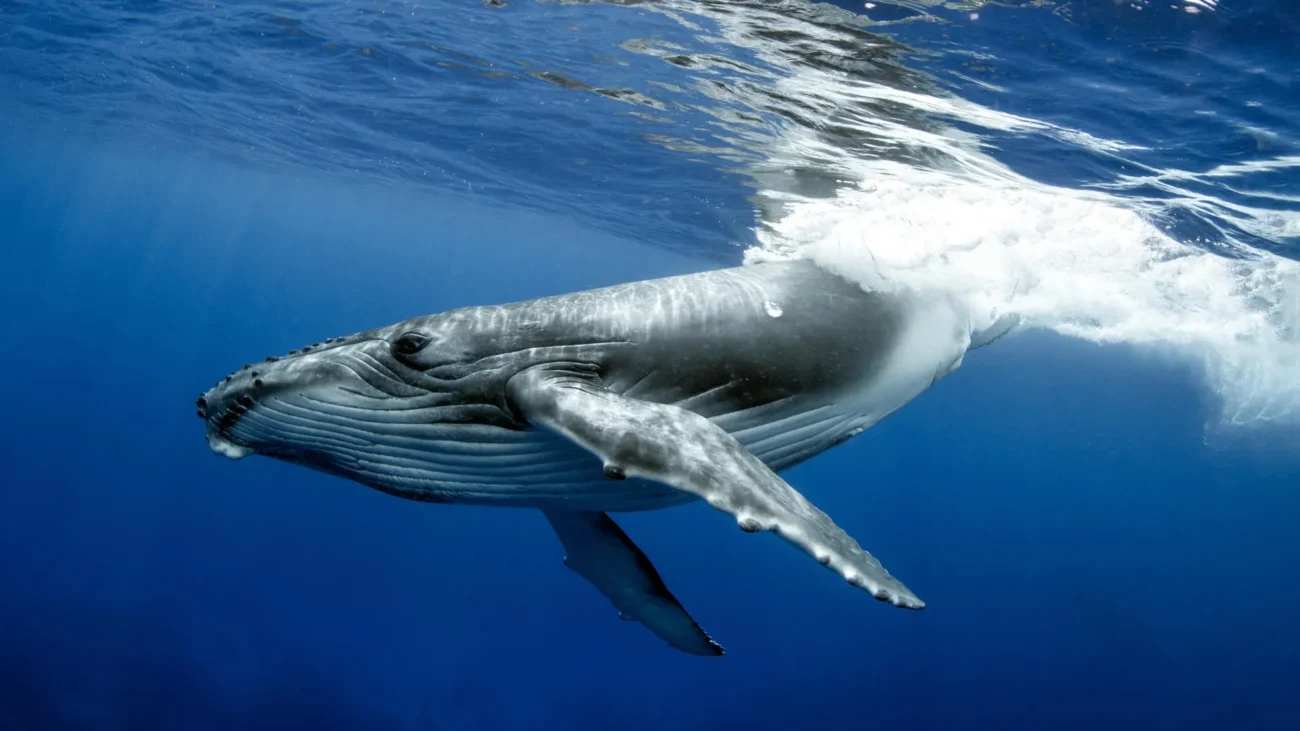
Scientists have documented an extraordinary feat of whale migration for the first time, confirming that humpback whales traveled between breeding grounds in eastern Australia and Brazil across more than 14,000 kilometers of open ocean. This discovery marks the greatest confirmed distance ever recorded between sightings of individual humpback whales anywhere in the world, fundamentally expanding our understanding of these magnificent marine mammals’ migratory capabilities and the interconnectedness of global whale populations.
The groundbreaking findings, published in the prestigious journal Royal Society Open Science, were made possible by an extensive and collaborative research effort, leveraging decades of data and the invaluable contributions of citizen scientists. The study, titled "First evidence of bidirectional exchange between distant humpback whale breeding populations in eastern Australia and Brazil," highlights the power of long-term ecological monitoring and international cooperation in unraveling complex biological phenomena.
The Astonishing Journey: A Tale of Two Oceans
At the heart of this remarkable discovery are two individual humpback whales whose journeys have bridged vast oceanic distances, connecting previously thought-to-be isolated breeding grounds. The identification of these extraordinary travelers was achieved through meticulous analysis of tens of thousands of photographs of humpback whale tails, known as flukes. Each whale possesses a unique pattern of pigmentation, scarring, and notch shapes on its fluke, akin to a human fingerprint, allowing researchers to identify and track individuals over extended periods and vast geographical areas.
The first documented record-breaker was initially photographed in Hervey Bay, Queensland, Australia, a renowned humpback whale breeding and calving site, in 2007. This individual was observed again in the same region in 2013, before embarking on an epic voyage that eventually led it to the waters near São Paulo, Brazil, in 2019. The minimum straight-line distance between these two distinct breeding grounds is an astonishing approximately 14,200 kilometers (about 8,800 miles). To put this into perspective, this is roughly equivalent to the distance between Sydney, Australia, and London, United Kingdom, a testament to the sheer scale of the whale’s undertaking. Scientists emphasize that this figure represents a minimum distance, as the exact migration route taken by the whale remains unknown, and it is highly probable that the actual traveled distance was even greater.
The second whale’s journey proved to be even more extraordinary, setting a new world record for the longest known movement of an individual humpback whale. This individual was first documented in 2003 at Brazil’s Abrolhos Bank, a critical humpback whale nursery located off the coast of Bahia. At the time of its initial sighting, it was observed in a vibrant group of nine adult whales. Fast forward twenty-two years, and in September 2025, this same whale was sighted alone in Hervey Bay, Australia. The documented distance between these two sightings spanned an immense 15,100 kilometers (approximately 9,400 miles), surpassing the previous record and underscoring the incredible migratory capacity of these marine giants.
Decades of Dedication: The Power of Persistent Research and Citizen Science
The scientific breakthroughs detailed in the Royal Society Open Science publication are not the result of a single expedition or a fleeting observation. Instead, they are the culmination of decades of dedicated research and a vast collection of data meticulously gathered from 1984 to 2025. The study’s foundation rests upon 19,283 high-quality fluke photographs. These invaluable images were sourced from both professional researchers and a global network of citizen scientists who actively participate in whale observation and documentation.
Platforms like Happywhale, a global whale tracking initiative, have been instrumental in aggregating these photographic records. This citizen science model empowers individuals to contribute directly to scientific understanding, transforming casual observations into crucial data points for groundbreaking research.
"Discoveries like this are only possible because of investment into long-term multi-decadal research programs and international collaboration," stated Stephanie Stack, a PhD candidate at Griffith University and a co-author of the study. "These whales were photographed decades apart, by different people, in opposite parts of the world, separated by two different oceans, and yet we can connect their journey."
The research team employed sophisticated automated image recognition software to sift through the massive database of fluke photographs, identifying potential matches between individuals sighted in different locations and at different times. Each potential match was then meticulously reviewed and manually verified by experts to ensure the accuracy and reliability of the findings.
Dr. Cristina Castro, lead researcher from the Pacific Whale Foundation and a co-author of the study, emphasized the critical role of public participation. "This kind of research highlights the value of citizen science," she commented. "Every photo contributes to our understanding of whale biology and, in this case, helped uncover one of the most extreme movements ever recorded."
A Rare Phenomenon with Profound Implications
Despite the spectacular distances covered by these two individual whales, researchers stress that such extensive intercontinental migrations appear to be remarkably rare. Across more than four decades of data encompassing nearly 20,000 identified humpback whales, only these two individuals were found to have traveled between the breeding regions of eastern Australia and Brazil. This represents a minuscule 0.01 percent of the whales included in the comprehensive records, suggesting that these specific long-distance journeys are exceptional events.
However, the rarity of these crossings does not diminish their scientific and ecological significance. Scientists posit that even these infrequent exchanges play a vital role in the long-term health and resilience of whale populations.
"Despite their rarity, these exchanges matter for the long-term health of whale populations," Ms. Stack explained. "Occasional individuals moving between distant breeding grounds can help maintain genetic diversity across populations and may even carry new song styles from one region to another — humpback whale songs are known to spread culturally across ocean basins, much like music trends in human populations."
The concept of whales carrying and disseminating cultural elements, such as song, across vast oceanic distances adds another layer of complexity and fascination to their social behavior. This phenomenon mirrors human cultural diffusion and highlights the sophisticated communication and learning processes within whale societies.
Furthermore, these findings provide compelling support for what researchers refer to as the "Southern Ocean Exchange" hypothesis. This theory proposes that humpback whales from different breeding populations may occasionally converge in shared feeding grounds in the Antarctic. While feeding in these rich waters, some whales may then deviate from their typical migratory paths, returning to different breeding regions than those from which they originated. This can lead to the establishment of new connections and the potential for gene flow between previously separated populations.
The Shadow of Climate Change on Migratory Patterns
Looking ahead, scientists are increasingly concerned about the potential impact of climate change on whale migration patterns. Alterations in Antarctic sea ice extent and shifts in the distribution of Antarctic krill, the primary food source for humpback whales in these regions, could significantly influence migratory routes and the frequency of these long-distance exchanges.
As their traditional feeding grounds become less predictable, whales may be compelled to explore new areas, potentially leading to increased instances of intercontinental migrations. This could, in turn, foster greater genetic mixing and cultural exchange between whale populations, but also introduce new challenges and uncertainties for their survival.
The study’s publication in Royal Society Open Science represents a significant milestone in marine biology, offering invaluable insights into the remarkable adaptability and interconnectedness of humpback whale populations. It underscores the importance of continued investment in long-term research, international collaboration, and the vital contributions of citizen scientists in safeguarding these iconic ocean dwellers and understanding the profound impacts of a changing planet on their ancient migratory journeys. The discovery serves as a powerful reminder of the vast, unexplored wonders of our oceans and the ongoing need to protect them.

