


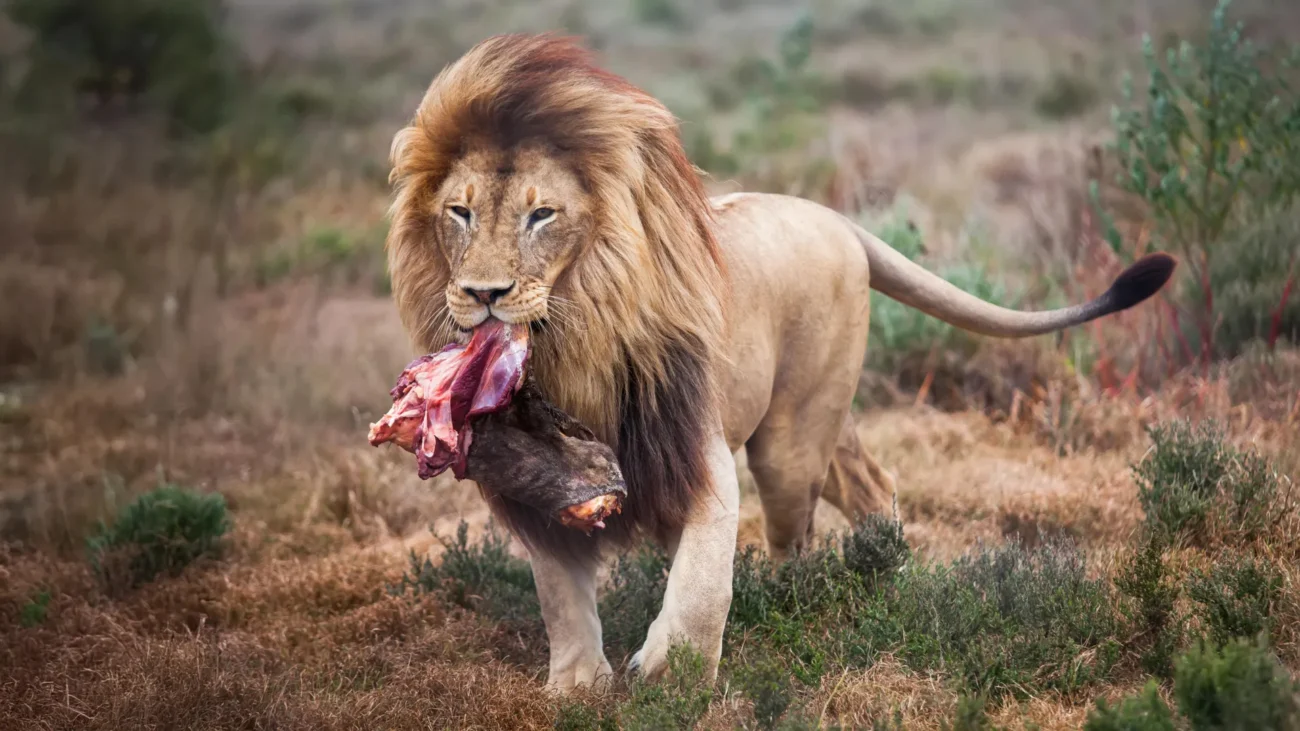
Modern zoological institutions continually seek innovative ways to improve the psychological and physical well-being of the apex predators under their care. For captive African lions, replicating the natural unpredictability of the savanna has long presented a complex challenge. A groundbreaking collaborative study conducted by researchers from the University of Adelaide and Monarto Safari Park in South Australia has shed new light on this issue, offering compelling evidence that shifting captive feeding regimens can dramatically align zoo lion behavior with that of their wild counterparts.
Published in the peer-reviewed journal Applied Animal Behaviour Science, the research investigated a group of adult male African lions. By introducing whole animal carcasses on a cyclical feast-and-fast schedule every nine days, animal care staff and scientists observed profound transformations in how the big cats ate, rested, and moved. The findings not only underscore the importance of dietary composition but also highlight how temporal feeding structures shape the daily lives of large carnivores in human care.
The Main Facts of the Adelaide University and Monarto Safari Park Study
At the core of the research is a shift away from the traditional, predictable daily feeding model commonly practiced in zoos worldwide. Typically, captive lions receive measured portions of pre-cut meat at the same time each day. While nutritionally adequate, this routine strips away the natural behavioral repertoire associated with hunting, scavenging, processing large prey, and managing intermittent scarcity.
To test an alternative approach, the research team—including lead author Lesia Hryhorenko from the University of Adelaide’s School of Animal and Veterinary Sciences, visiting master’s student Florence Demoulin from the University of Liège in Belgium, and co-author Associate Professor Alexandra Whittaker—implemented a structured intervention. Over a three-month experimental phase, three adult male African lions housed at Monarto Safari Park were periodically provided with whole animal carcasses totaling approximately 200 kilograms.
These carcasses were left accessible within the habitat for up to three days, allowing the lions to engage in natural feeding behaviors such as tearing, pulling, tugging, and prolonged consumption. Once the carcass feeding window closed, the lions entered a natural period of rest and digestion, followed by a gradual increase in physical activity as the fasting interval progressed until the next feeding event.
Continuous 24-hour video monitoring utilizing a network of eight infrared cameras captured every movement, generating one of the most comprehensive behavioral datasets ever compiled for captive African lions under a carcass-feeding regime. The results demonstrated that the lions spent nearly three times longer eating when carcasses were available compared to standard feeding days. Furthermore, they exhibited extended periods of post-prandial rest, followed by a steady rise in locomotor activity—a behavioral arc that mirrors the ecological realities of wild lion populations living in dynamic, unpredictable environments.
A Detailed Chronology and Methodology of the Research
The realization of this study required meticulous planning and execution over several months, combining behavioral science with practical zoo animal management.
Phase one involved baseline behavioral observations. Before the introduction of whole carcasses, the research team monitored the daily routines of the three adult male lions at Monarto Safari Park. This baseline phase established a clear understanding of the animals’ standard activity budgets, pacing tendencies, and social dynamics under the park’s existing standard operating procedures.
Phase two marked the experimental intervention. Animal care staff integrated whole carcasses into the lions’ routine on a strict nine-day cycle. Throughout this phase, the carcasses were introduced into the habitat without prior warning to the animals regarding the exact hour of delivery, though the periodicity of the nine-day cycle eventually became a factor in the animals’ anticipation patterns. The lions were given unrestricted access to the approximately 200 kilograms of whole animal material for a maximum of three days. During this period, the carcasses were systematically torn apart, manipulated, and consumed.
Phase three comprised continuous data collection and post-processing. Eight strategically placed infrared cameras recorded the lions around the clock, capturing nighttime behaviors that are often missed in daytime-only observational studies. The video footage was subsequently analyzed to quantify eating durations, resting bouts, movement levels, and stereotypic behaviors such as enclosure pacing.
Phase four involved data synthesis and peer review. Researchers analyzed the correlation between the feeding schedule and behavioral outputs, isolating variables related to hunger, anticipation, and social harmony. The final manuscript was submitted to Applied Animal Behaviour Science, where it underwent rigorous academic scrutiny before publication.
Quantitative Data and Behavioral Metrics
The empirical data gathered during the three-month monitoring period revealed stark quantitative differences between standard feeding and the whole-carcass feast-and-fast regime.
Most notably, the duration of feeding episodes increased by nearly 300 percent. On standard feeding days, captive lions typically consume their rations quickly, leaving vast blocks of time devoid of natural foraging or food-processing challenges. Under the carcass-feeding regime, the physical resistance of the large food items required sustained muscular effort, jaw manipulation, and social coordination. The lions spent significantly more time actively pulling and tearing at the hides and connective tissues.
Following these intense feeding sessions, the behavioral metrics recorded a pronounced shift toward rest. The lions spent significantly more consecutive hours lying down, reflecting the physiological demands of processing a massive caloric intake. As the days elapsed and the fasting period deepened, the telemetry and video data showed a steady, incremental rise in general activity and movement levels. This gradual upward tick in physical output directly countered the misconception that fasting leads to lethargy or severe distress in apex predators; instead, it prompted active patrolling and exploratory behaviors akin to wild lions searching for their next meal.
Interestingly, the study also closely examined stereotypic pacing—a repetitive, goal-oriented locomotion often observed in captive carnivores. While pacing did fluctuate, the data revealed that it was not inversely or directly correlated with the length of time since the last meal. The frequency of pacing did not spike as the animals went longer without food. Instead, the highest peaks in pacing behavior were strictly correlated with predictable human routines, such as the arrival of animal care staff or the management process of shifting lions between different holding areas and habitat zones. This finding suggests that anticipation of human-driven events, rather than physiological hunger, serves as the primary trigger for pacing in this cohort.
Furthermore, animal care staff and researchers monitored social stability closely. The introduction of large, highly valued food items can theoretically trigger heightened aggression or resource-guarding conflicts among male coalitions. However, the study recorded no escalation in aggressive incidents or disruption to the social hierarchy, indicating that the male lions shared the carcasses stably.
Official Responses and Perspectives from the Research Team
The implications of the study have drawn considerable commentary from the scientific community and professional zoo management networks, emphasizing a paradigm shift in how animal welfare is evaluated.
Lead author Lesia Hryhorenko emphasized that the research moves beyond basic nutritional provisioning to address the psychological and behavioral needs of captive carnivores. "Wild lions don’t eat at the same time every day. They experience natural periods of feasting and fasting depending on hunting success," Hryhorenko stated. "We wanted to understand how African lions in human care respond when feeding routines more closely resemble those natural patterns."
Elaborating on the mechanics of the feeding sessions, Hryhorenko noted the irreplaceable value of physical interaction with prey remains. "Providing whole carcasses changes much more than the nutritional content of the diet. It gives lions the opportunity to engage in behaviors such as tearing, pulling and manipulating food over extended periods, which are important components of their natural feeding ecology."
Co-author Associate Professor Alexandra Whittaker highlighted the methodological advancement of the study, particularly the necessity of long-term behavioral tracking rather than isolated observations. "Many zoo studies focus only on what happens immediately after food is provided," Associate Professor Whittaker observed. "Our results show that feeding schedules can influence behavior for days afterwards, making it essential to look at behavioral patterns across the entire feeding cycle rather than a single feeding event."
Staff at Monarto Safari Park echoed these sentiments, noting that the successful implementation of the feast-and-fast schedule demonstrates how modern zoos can continuously refine husbandry protocols to enrich the lives of animals under professional care.
Broader Industry Implications and Future Research Directions
The findings published by the University of Adelaide and Monarto Safari Park carry significant implications for the global zoological community, animal welfare organizations, and wildlife management agencies. As modern zoos increasingly prioritize behavioral welfare alongside conservation breeding and public education, the design of husbandry protocols undergoes constant evolution.
Traditional zoo diets, while formulated to meet exact nutritional requirements, often create behavioral vacuums. In the wild, a lion’s life is defined by high energy expenditure, successful or failed hunts, massive consumption events, and subsequent fasts that can last several days. Replicating this cycle in a captive environment introduces a form of environmental and temporal enrichment that cannot be achieved through puzzle feeders or standard meat chunks alone.
The study demonstrates that incorporating whole carcasses on an intermittent schedule is operationally feasible within a major safari park setting without compromising animal safety or social cohesion. Moreover, the insight regarding enclosure pacing—identifying human routine as the primary catalyst rather than caloric deprivation—provides actionable guidance for animal care teams. To mitigate stereotypic behaviors, zoos may need to randomize staff arrival times, vary enclosure management schedules, and decouple feeding anticipation from daily human interactions.
Looking forward, the research team recommends expanding upon these findings by integrating behavioral observations with physiological indicators of stress and welfare. Future studies could incorporate non-invasive biomarker monitoring, such as fecal glucocorticoid metabolite analysis, to measure stress hormone levels across the feast-and-fast cycle. Additionally, researchers suggest examining whether similar feeding regimens yield comparable behavioral benefits in other large captive carnivores, such as tigers, leopards, and cheetahs.
Ultimately, this research bridges the gap between captive management and ecological reality. By aligning the daily existence of zoo-dwelling African lions with the evolutionary pressures shaped by millennia of wild survival, institutions like Monarto Safari Park are pioneering a more holistic approach to animal welfare—one that respects the biological heritage of the species and redefines the standards of modern zoological care.

