


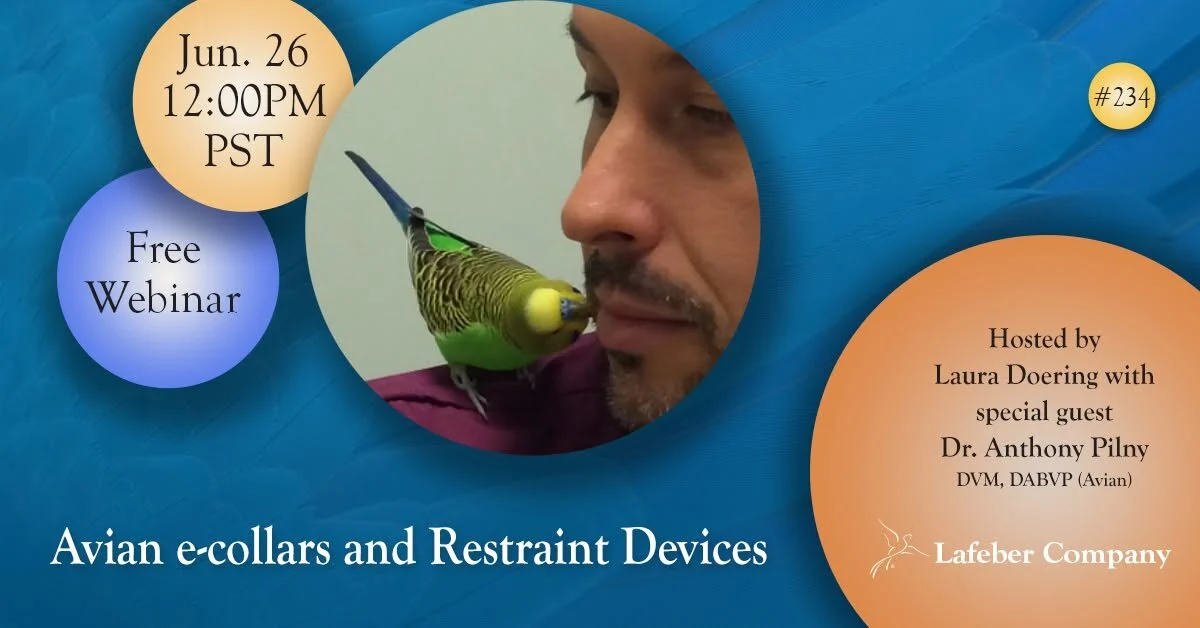
A critical online seminar titled "Avian e-Collars & Restraint Devices With Dr. Pilny" is scheduled for Friday, June 26, 2026, at 12:00 p.m. PDT. This pivotal educational event aims to provide veterinary professionals, avian caregivers, and dedicated bird owners with comprehensive insights into the appropriate application and management of restraint devices crucial for avian safety and recovery. Dr. Anthony A. Pilny, DVM, DABVP (Avian Practice), a distinguished expert in avian veterinary medicine, will lead the discussion, addressing the nuances of these vital tools in managing self-trauma, injuries, and post-surgical care in avian patients.
The Imperative of Avian Restraint in Veterinary Medicine
Avian veterinary medicine presents unique challenges due to the delicate physiology, high metabolic rate, and often stress-sensitive nature of birds. Unlike their mammalian counterparts, birds frequently react to pain, discomfort, or environmental stressors by engaging in self-destructive behaviors, such as feather plucking, mutilation of wounds, or removal of sutures. These behaviors can severely impede recovery, introduce secondary infections, and compromise overall welfare. Consequently, the judicious application of external restraint devices, commonly known as e-collars or Elizabethan collars, and other specialized restraint tools, becomes an indispensable component of effective avian medical and surgical management.
The use of restraint devices in veterinary practice is not a recent phenomenon. Historically, rudimentary forms of physical barriers were employed to prevent animals from interfering with healing processes. However, advancements in veterinary science, particularly in exotic animal medicine, have led to the development of highly specialized, species-appropriate devices designed to maximize efficacy while minimizing stress and discomfort for the patient. For avian species, this evolution has been particularly significant, moving from bulky, vision-obstructing cones to lightweight, transparent, and custom-fit collars and body wraps that allow for greater mobility, feeding, and visual perception, crucial for a bird’s psychological well-being.
Understanding Avian Self-Trauma: A Medical and Behavioral Challenge
Avian self-trauma encompasses a range of behaviors where a bird inflicts harm upon itself, often targeting feathers, skin, or underlying tissues. This can stem from various underlying causes, including dermatological conditions (allergies, infections, parasites), internal organ diseases (hepatic, renal, reproductive issues), nutritional deficiencies, environmental stressors (boredom, lack of enrichment, improper lighting cycles), and psychological distress (anxiety, fear, social isolation). Post-surgical sites or acute injuries are particularly vulnerable areas, as the natural instinct of a bird may be to pick at sutures or disrupt bandages, leading to dehiscence, infection, and prolonged healing.
According to various veterinary studies, feather plucking and self-mutilation represent a significant percentage of presenting complaints in avian specialty practices. While precise epidemiological data can vary by species and geographic location, it is widely acknowledged that psittacine birds (parrots, cockatoos, macaws) are frequently affected. For instance, some reports suggest that behavioral feather destructive behaviors can account for up to 10-15% of avian cases seen by specialists. When these behaviors become pathological and lead to skin lesions, the risk of secondary bacterial or fungal infections skyrockets, complicating treatment and necessitating aggressive intervention, often including physical restraint. The webinar will likely delve into these underlying causes and the diagnostic approaches that precede the decision to apply a restraint device.
The Evolution of Avian Restraint Devices: A Chronological Perspective
The timeline of avian restraint device development reflects a broader trend in veterinary medicine towards more humane and effective patient care.
- Early 20th Century: Initial forms of restraint were often improvised, using stiff materials like cardboard or repurposed plastic to create rudimentary cones. These were effective at preventing access but often cumbersome, impacting the bird’s ability to eat, drink, or navigate its environment.
- Mid-20th Century: The advent of plastics allowed for more standardized Elizabethan collars. While still often rigid, they offered a lighter alternative to earlier materials. However, sizing was often generic, leading to ill-fitting devices for diverse avian anatomies.
- Late 20th Century: Increased understanding of avian physiology and behavior, coupled with the growth of exotic animal medicine as a specialty, spurred innovation. Transparent plastics became common, improving the bird’s field of vision. Designs started to become more tailored to specific species groups (e.g., long-necked birds versus short-necked birds). Soft collars, made from fabric or flexible materials, also emerged for less severe cases or for short-term use.
- Early 21st Century and Beyond: The focus has shifted towards highly customizable, lightweight, and ergonomic designs. Modern e-collars are often made from medical-grade, non-toxic materials, featuring padded edges, multiple adjustment points, and even modular components. Beyond traditional e-collars, specialized body wraps, vests, and even custom-molded devices are now available, offering targeted protection for specific body areas without fully encircling the head. The emphasis is on minimizing sensory deprivation and allowing as much normal function as possible, recognizing the psychological impact of prolonged restraint. The integration of behavioral modification techniques alongside physical restraint is also a growing area of focus.
Types of Avian Restraint Devices and Their Applications
Dr. Pilny’s webinar is expected to provide a detailed taxonomy of available restraint devices, highlighting their specific indications and contraindications.
- Elizabethan Collars (E-collars): These are the most common form of restraint. They come in various materials (clear plastic, soft fabric, cardboard) and designs.
- Indications: Preventing access to the head, neck, wings, chest, and back. Ideal for feather plucking, wound protection post-surgery (e.g., crop surgery, fracture repair), or to deter self-mutilation from systemic illness.
- Considerations: Proper sizing is paramount to prevent rubbing, restrict breathing, or allow the bird to maneuver around it. Material choice impacts visibility and weight. Clear plastic offers the best visibility, while soft collars may be less stressful for some birds but offer less rigidity.
- Body Wraps/Vests: These devices cover the torso, often extending to the wings.
- Indications: Protecting chest and back wounds, preventing access to specific feather tracts on the body, or providing a sense of security for anxious birds (similar to thunder shirts for dogs). They can be particularly useful for birds prone to mutilating surgical sites on the keel or back.
- Considerations: Must be breathable to prevent overheating and allow for normal respiration. Improper fit can restrict movement or cause pressure sores.
- Specialized Harnesses/Flights Suits: While primarily designed for safe outdoor excursions, some flight suits or harnesses can be adapted for very short-term, supervised restraint or to prevent access to specific areas, though this is less common for prolonged medical restraint.
- Physical Barriers/Enrichment Devices: In some cases, environmental modifications or the introduction of engaging enrichment can reduce the need for physical restraint by addressing the underlying behavioral causes of self-trauma. This holistic approach is often considered in conjunction with, or as an alternative to, direct physical devices.
Dr. Anthony A. Pilny: A Leader in Avian Veterinary Care
The webinar’s prominence is significantly elevated by the expertise of its presenter, Dr. Anthony A. Pilny. As a Diplomate of the American Board of Veterinary Practitioners (DABVP), specializing in Avian Practice, Dr. Pilny holds one of the highest distinctions in the field. This board certification signifies an advanced level of knowledge, experience, and competency in the diagnosis, treatment, and prevention of diseases in avian species, requiring rigorous examinations and extensive case experience beyond standard veterinary schooling.
Dr. Pilny’s contributions to avian medicine are extensive, encompassing clinical practice, research, and education. His work often focuses on practical, evidence-based solutions for common and complex avian health issues, including behavioral medicine, advanced diagnostics, and surgical techniques. His participation ensures that the webinar’s content will be clinically relevant, scientifically accurate, and immediately applicable to attendees’ practices and personal care routines. He is renowned for his ability to translate complex veterinary concepts into understandable and actionable advice, making this webinar invaluable for a diverse audience, from seasoned veterinarians to passionate bird owners.
Practical Insights for Avian Safety and Recovery
Beyond merely identifying different devices, the webinar’s agenda, as outlined, promises "practical insights for helping birds stay safe and comfortable throughout the recovery process." This critical component will likely cover:
- Proper Fitting and Sizing: Detailed demonstrations or guidelines on how to accurately measure a bird for an e-collar, ensuring it is secure enough to prevent removal but not so tight as to cause discomfort or restrict breathing/feeding.
- Material Selection: Discussion on when to choose rigid plastic versus soft fabric, or transparent versus opaque materials, based on the bird’s condition, temperament, and duration of wear.
- Acclimation and Monitoring: Strategies for introducing the device to minimize stress, how to monitor for signs of discomfort, skin irritation, or changes in behavior, and what adjustments might be necessary.
- Feeding and Hydration: Tips for ensuring birds can eat and drink adequately while wearing a device, potentially including specialized feeders or bowls.
- Hygiene and Maintenance: Guidance on cleaning and maintaining the device to prevent bacterial growth and skin infections.
- Behavioral Enrichment during Restraint: Ideas for providing mental stimulation and environmental enrichment to alleviate boredom and stress while a bird is restricted.
- Client Education: Essential advice for veterinary professionals on how to effectively communicate instructions and expectations to bird owners, empowering them to manage their bird’s recovery at home.
- Weaning off Restraint: Protocols for gradually removing the device once the primary medical issue has resolved, preventing a relapse into self-destructive behaviors.
Broader Impact and Implications for Avian Welfare
The implications of such specialized training extend far beyond individual patient care. By enhancing the knowledge and skills of veterinary professionals and informed bird owners, this webinar contributes significantly to overall avian welfare.
- Improved Patient Outcomes: Better-fitting and more appropriately managed restraint devices directly lead to faster healing, fewer complications, and reduced necessity for repeat interventions, ultimately improving the quality of life for avian patients.
- Enhanced Veterinary Practice Standards: Continuous education in niche areas like avian medicine elevates the standard of care across the veterinary profession, particularly for exotic animal practices. It encourages the adoption of best practices and the utilization of the most current tools and techniques.
- Empowered Bird Owners: Knowledgeable owners are better equipped to provide optimal home care, recognize potential issues early, and collaborate effectively with their veterinarians. This partnership is crucial for the long-term health and well-being of pet birds.
- Advancement of Avian Medicine: Webinars like this foster a community of learning and discussion, driving further innovation in avian medical devices, protocols, and behavioral therapies. They highlight the ongoing commitment to advancing the care for companion birds and other avian species.
- Ethical Considerations: The proper application of restraint devices is also an ethical imperative. While restraint can be stressful, its judicious use prevents greater suffering from self-mutilation or prolonged illness. The webinar will likely touch upon balancing the need for restraint with the bird’s psychological welfare.
Registration and Participation
The webinar is scheduled for Friday, June 26, 2026, at 12:00 p.m. PDT. Prospective attendees are strongly encouraged to utilize the provided time zone converter link to ensure accurate local time calculation, given the global reach of online educational events. Registration is accessible via the designated Zoom link. This event represents a significant opportunity for anyone involved in avian care to deepen their understanding of critical management techniques that directly impact the health and recovery of birds.
The demand for specialized knowledge in avian medicine continues to grow as more individuals embrace birds as companions and as conservation efforts for wild avian populations intensify. Educational initiatives featuring leading experts like Dr. Pilny are vital in equipping professionals and enthusiasts with the tools and information necessary to meet these evolving demands. This webinar is poised to be a landmark event in the calendar for avian veterinary professionals and dedicated bird enthusiasts alike, underscoring the ongoing commitment to excellence in avian health and welfare.

