


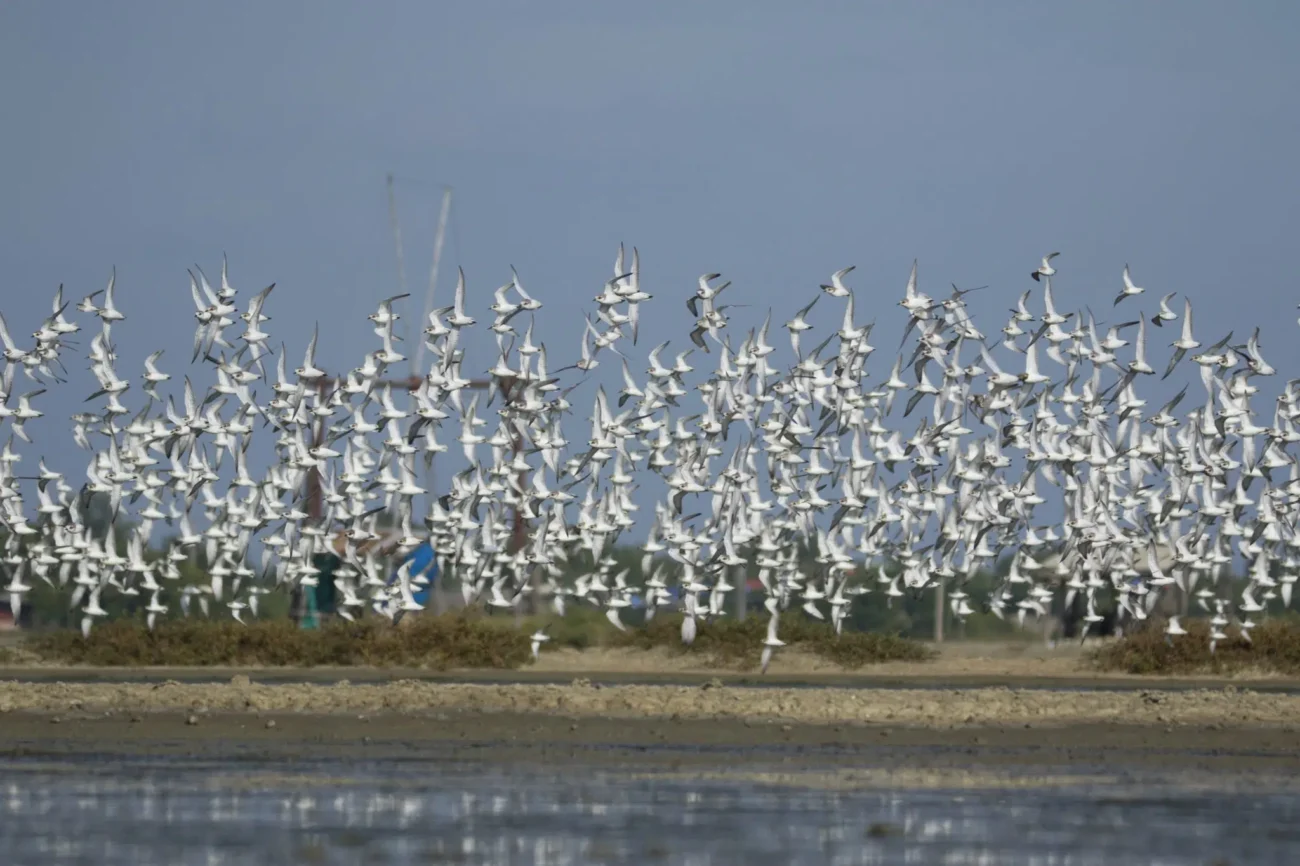
Against the starkly beautiful, cerulean expanse of the Gulf of Thailand, a breathtaking spectacle unfolds: hundreds, if not thousands, of shorebirds erupt from the mudflats in a unified, pixelated wave of white and grey wings. This vibrant tableau, a testament to nature’s migratory marvel, is now precariously perched on the brink of irreversible disruption. These avian travelers, drawn by the abundant marine organisms teeming in the coastal wetlands of Pak Thale Nature Reserve in Southern Thailand, face an existential threat from a proposed industrial complex, including an oil refinery and power plant, planned for construction mere kilometers from their crucial haven.
For generations, Pak Thale has served as a vital refueling and wintering ground for a multitude of shorebird species undertaking the arduous journey along the East Asian-Australasian Flyway. This extensive migratory route, one of only four major avian migration pathways globally, stretches from the frigid breeding grounds of the Arctic Circle to the temperate and tropical regions of Australia and New Zealand. The reserve, a critical stopover point, provides essential sustenance and rest for birds navigating this epic, multi-thousand-kilometer migration. The delicate balance of this ancient ecological corridor is now being challenged by modern industrial ambitions.
The significance of Pak Thale to avian conservation efforts is underscored by the proactive measures taken by the Bird Conservation Society of Thailand (BCST), a BirdLife International partner. In 2019, recognizing the ecological importance of the area, BCST purchased eight hectares of coastal land to establish a dedicated wildlife sanctuary. This initiative has not only protected a crucial habitat but has also become a magnet for some of Asia’s rarest bird species, attracting dedicated birdwatchers and researchers from around the globe. The reserve’s compact size, paradoxically, facilitates exceptional viewing opportunities for species such as the Critically Endangered Spoon-billed Sandpiper, the Endangered Far Eastern Curlew, the Great Knot, and the Spotted Greenshank. Indeed, Pak Thale is potentially the sole location in Southeast Asia where these rare and endangered species can be reliably observed within a single day.
Ecotourism and Sustainable Livelihoods at Risk
The ecological richness of Pak Thale has fostered a burgeoning ecotourism industry, providing a valuable and sustainable income stream for the local community. BCST has played a pivotal role in empowering residents, training them as knowledgeable guides for the nature reserve. This engagement has not only enhanced the visitor experience but has also fostered a sense of stewardship among the community members. Furthermore, BCST has collaborated with local salt farmers, a traditional occupation in the region, to develop innovative and profitable avenues for marketing their "biodiversity-friendly" salt. This initiative demonstrates a successful model of integrating conservation with economic development, where the health of the ecosystem directly benefits the livelihoods of the people. The proposed industrial development threatens to dismantle this carefully cultivated symbiosis, jeopardizing both the natural heritage and the economic well-being of the community.
The Looming Industrial Shadow
The announcement of plans for an oil refinery and power plant in close proximity to Pak Thale Nature Reserve sent immediate ripples of concern through the conservation community and the local populace. The potential environmental ramifications are multifaceted and severe. An oil refinery, by its very nature, poses risks of air and water pollution. Airborne emissions, including volatile organic compounds and particulate matter, can degrade air quality, impacting both terrestrial and avian life. Accidental spills or leaks could contaminate the vital mudflats and surrounding waterways, decimating the food sources upon which the migratory birds depend.

The proposed power plant introduces additional dangers. Low-flying birds, particularly during their migratory flights or foraging activities, are at significant risk of colliding with high-voltage electrical wires. Such collisions are often fatal and can lead to a substantial increase in bird mortality rates, further straining already vulnerable populations. The cumulative impact of these industrial facilities could render Pak Thale uninhabitable for the approximately 270 bird species that currently rely on its resources, effectively silencing the vibrant avian chorus that defines the reserve.
A Cascading Ecological and Economic Crisis
The loss of Pak Thale as a stopover site would have profound and far-reaching consequences for migratory birds. For species like the Spoon-billed Sandpiper, with an estimated wild population of fewer than 500 individuals, the loss of any critical habitat is an almost catastrophic blow. The concept of migratory stopover sites is rooted in the biological imperative for rest and replenishment. Birds expend enormous amounts of energy during their long-distance flights, and these sites are crucial for them to regain strength, feed, and prepare for the next leg of their journey.
The East Asian-Australasian Flyway, like many other major migratory routes, is experiencing a steady erosion of critical coastal wetland habitats due to rapid coastal development, urbanization, and industrialization. This creates a "stopover desert" effect, where the distance between essential resting places increases, making migration significantly more challenging and increasing mortality rates. The loss of Pak Thale would exacerbate this existing crisis, pushing already imperiled species closer to the brink of extinction.
The economic repercussions for the local community would be equally devastating. The cessation of ecotourism, the cornerstone of their newfound economic prosperity, would leave many families without their primary source of income. The market for biodiversity-friendly salt, a product directly linked to the health of the wetlands, would inevitably collapse, further marginalizing the local salt farmers. This scenario represents a tragic regression, undoing years of conservation efforts and community empowerment.
A Timeline of Concern and Action
While the exact timeline for the proposed industrial project’s approval and construction remains unclear, the initial announcement has galvanized conservationists and local communities into action.
- Prior to 2019: Pak Thale Nature Reserve had been recognized for years as a crucial stopover point for migratory birds along the East Asian-Australasian Flyway. Birdwatchers and researchers had documented its significant ecological value.
- 2019: The Bird Conservation Society of Thailand (BCST) proactively purchased 8 hectares of land to establish a wildlife sanctuary, reinforcing its commitment to protecting the area.
- Ongoing (Pre-Proposal): BCST engaged with the local community, developing ecotourism initiatives and promoting sustainable practices like biodiversity-friendly salt farming.
- Recent Past (Announcement): News emerged of a proposed oil refinery and power plant development situated in close proximity to Pak Thale Nature Reserve.
- Present: Conservation organizations, including BCST, have publicly voiced their strong opposition to the project, highlighting the severe environmental and socioeconomic threats. Community members, such as Niyom Thongmeun, the Pak Thale Manager for BCST, have become vocal advocates, raising awareness about the potential impacts.
- Immediate Future: A concerted effort is underway to mobilize public support and exert pressure on relevant authorities to reconsider or reject the development proposal. This includes public awareness campaigns and, crucially, online petitions.
Supporting Data and Scientific Evidence
The importance of Pak Thale is not merely anecdotal. Scientific studies on migratory bird populations consistently highlight the critical role of well-preserved coastal wetlands. For instance, research on the East Asian-Australasian Flyway has documented significant population declines in many shorebird species, directly linked to habitat loss and degradation along their migratory routes.
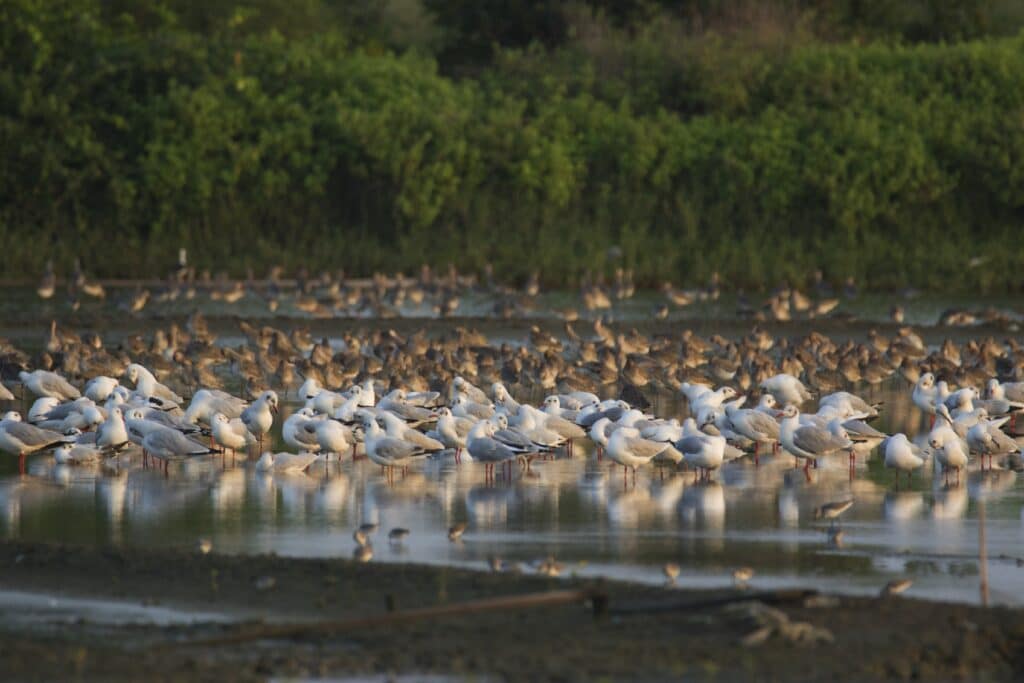
- Species Diversity: Pak Thale is known to host a remarkable diversity of shorebirds, with over 270 avian species recorded. This high biodiversity index is indicative of a healthy and productive ecosystem.
- Critically Endangered Species: The presence of species like the Spoon-billed Sandpiper, with its extremely small global population, underscores the exceptional conservation value of Pak Thale. Losing such a site could have disproportionately severe consequences for the species’ survival.
- Economic Value of Ecotourism: While precise figures for Pak Thale are not readily available in the provided text, global data on ecotourism consistently demonstrates its significant contribution to local economies. Studies by organizations like the World Tourism Organization (UNWTO) highlight that well-managed ecotourism can generate substantial revenue, create jobs, and incentivize conservation. In many developing regions, ecotourism is a vital alternative to more destructive industries.
- Pollution Impact: Scientific literature on oil refineries and power plants details a range of environmental impacts, including air and water pollution, habitat fragmentation, and noise disturbance, all of which can negatively affect avian populations.
Reactions from Stakeholders
The announcement has elicited strong reactions from various parties:
- Bird Conservation Society of Thailand (BCST): "We cannot guarantee when the final migration of migratory birds will occur, because both humans and birds are facing the same fate. Let’s work together to stop the fossil fuel industry,” states Niyom Thongmeun, Pak Thale Manager for BCST. This sentiment encapsulates the dual threat to both wildlife and human livelihoods. BCST has been actively engaging with local communities, as evidenced by images of community members holding signs that read, "This affects ecotourism and the bird habitat."
- Local Community: The community members who have benefited from ecotourism and biodiversity-friendly salt initiatives are deeply concerned. Their livelihoods are directly tied to the health of Pak Thale, and they view the proposed development as a direct threat to their economic future.
- Conservationists and Birdwatchers: The broader conservation community and international birdwatching networks are expressing alarm. The loss of such a vital stopover site would be a significant blow to global avian conservation efforts and would diminish opportunities for scientific research and nature appreciation.
- Developers and Government Agencies (Inferred): While not directly quoted, the developers of the oil refinery and power plant would likely emphasize the economic benefits, job creation, and energy security that their projects would bring to the region and the country. Government agencies responsible for industrial development and environmental oversight will be tasked with balancing economic growth with environmental protection and the concerns of local communities and conservationists.
Broader Implications and the Path Forward
The situation at Pak Thale is a microcosm of a global conflict between industrial development and environmental preservation. The increasing demand for energy and resources often clashes with the imperative to protect biodiversity and fragile ecosystems. The proposed development in Pak Thale highlights the critical need for robust environmental impact assessments, transparent public consultation processes, and the prioritization of sustainable development models that integrate ecological and social considerations.
The loss of a site like Pak Thale is not an isolated incident; it represents a systemic threat to migratory species worldwide. As coastal habitats shrink and pollution levels rise, the resilience of these ancient migratory journeys is tested. The fate of the Spoon-billed Sandpiper, a species teetering on the edge of extinction, serves as a stark reminder of what is at stake.
The call to action, amplified by BCST and its supporters, is clear: protect Pak Thale. By signing the petition and raising awareness, individuals can lend their voice to this crucial conservation battle. The success of this campaign hinges on collective action to demonstrate that the long-term ecological and economic benefits of preserving this vital habitat far outweigh the short-term gains of industrial development. The future of hundreds of bird species, the livelihoods of a dedicated community, and the integrity of a vital ecological corridor hang in the balance. The choice is between a legacy of environmental stewardship and the irreversible loss of a natural treasure.

