


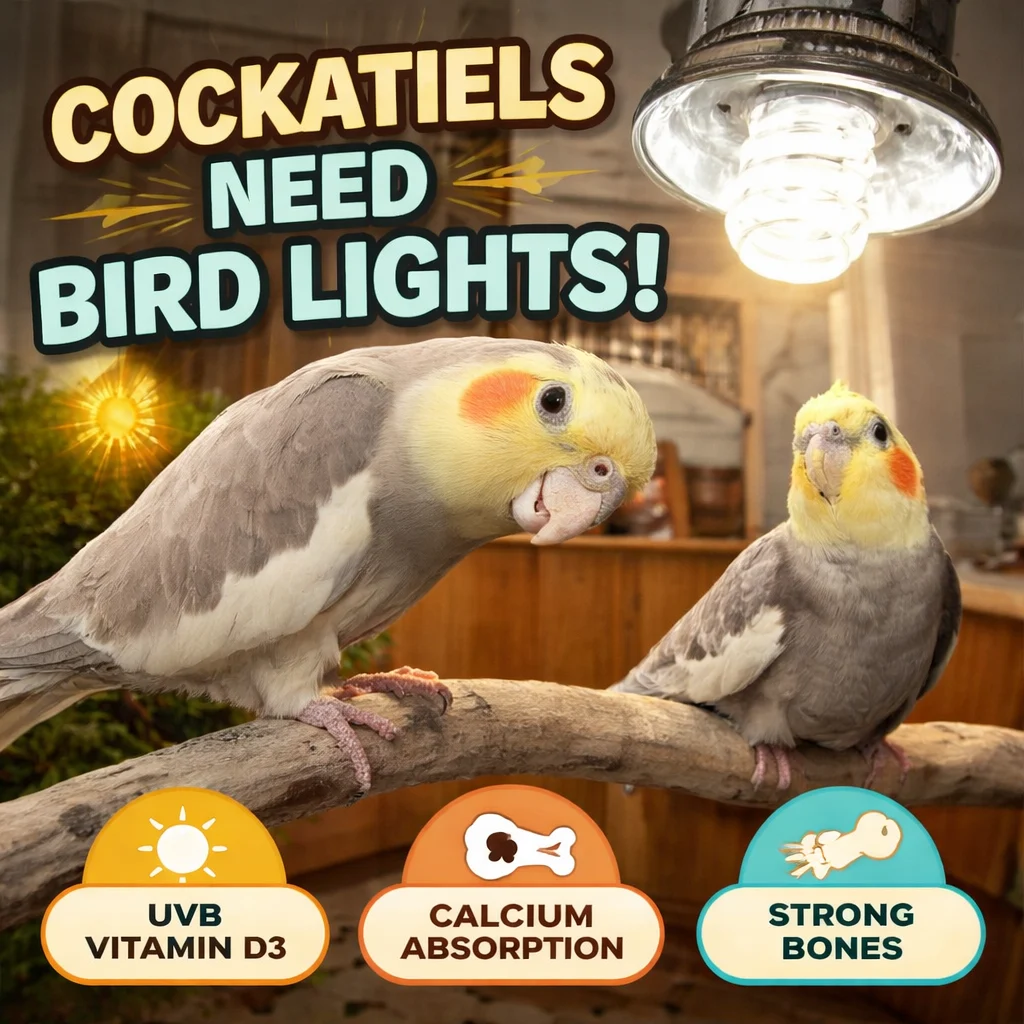
For countless pet bird owners, the question of whether artificial lighting, specifically bird lights emitting ultraviolet B (UVB) radiation, is a necessity or a mere accessory for their indoor avian companions is a critical one. With birds increasingly living in human homes, often far removed from direct natural sunlight, understanding their unique physiological needs related to light exposure has become paramount for ensuring their long-term health and well-being. This guide delves into the scientific consensus, practical implications, and expert recommendations surrounding UVB lighting for indoor birds, aiming to provide clarity on a topic often shrouded in misunderstanding.
The dilemma primarily affects birds housed indoors, particularly those situated near windows designed to filter UVB rays, or those whose owners are questioning the safety and efficacy of specialized avian lighting. If a bird already benefits from a properly installed UVB light, maintained at the correct distance and on an appropriate schedule, and exhibits robust health indicators such as a strong grip, vibrant featheration, stable mood, and coordinated flight, its current regimen likely requires only maintenance. However, for many, a deeper investigation into potential light deficiencies is warranted.
Quick Diagnostic: Is Light the Missing Piece?
To quickly assess whether insufficient light exposure might be a contributing factor to a bird’s health or behavioral issues, consider the following indicators:
| If your bird… | What It Often Means
Background: The Avian Need for Sunlight
In their natural habitat, birds rely on a constant influx of natural sunlight. This is not merely about brightness; it’s about specific wavelengths of light, primarily ultraviolet B (UVB). When UVB rays strike a bird’s skin (specifically, the preen gland oil that birds spread over their feathers), they trigger a photochemical reaction that converts precursors into pre-vitamin D3. This pre-vitamin is then further processed into active vitamin D3 (calcitriol), a hormone crucial for calcium absorption and utilization. Without adequate vitamin D3, dietary calcium, no matter how plentiful or high-quality, cannot be effectively absorbed from the gut or properly deposited into bones.
This biological imperative has deep roots in avian evolution. Birds evolved outdoors, under the full spectrum of the sun’s rays. Their bodies are finely tuned to this environment. Domestication and indoor living, however, drastically alter this natural exposure. Standard window glass, even clear panes, effectively blocks almost all beneficial UVB rays, transforming what appears to be a brightly lit room into a UVB-deficient environment. Similarly, typical incandescent, fluorescent, or LED household lights, while providing visible light, do not emit the specific UVB wavelengths necessary for vitamin D3 synthesis.
The Silent Threat: Why Indoor Brightness Isn’t Enough
Many bird owners mistakenly believe that a brightly lit room or a cage placed near a window provides sufficient light for their birds. This assumption, while logical from a human perspective, overlooks a critical biological distinction. While our eyes perceive brightness, a bird’s physiological needs extend beyond visible light.
"My house is bright. Isn’t that enough?" No. Indoor brightness does not equate to UVB exposure. The crucial difference lies in the wavelength of light. Standard bulbs and filtered window light do not provide the specific UVB wavelengths (typically between 290-315 nanometers) needed for avian vitamin D3 production. Imagine trying to get a tan through a window; it’s ineffective because the glass blocks the UV rays responsible for melanin production. The same principle applies to birds and their vitamin D3 synthesis. Without UVB, calcium, an essential mineral for bone health, nerve function, muscle contraction, and eggshell formation, cannot be properly absorbed and utilized—even when a bird consumes a high-quality, calcium-rich diet. This leads to a silent, insidious deficiency that can manifest in a myriad of health problems over time.
The Science of UVB and Avian Physiology: A Deeper Dive
The impact of UVB extends far beyond mere calcium metabolism. It is a cornerstone of avian health, influencing multiple physiological systems:
-
Vitamin D3 Synthesis and Calcium Metabolism: As mentioned, UVB initiates the conversion of 7-dehydrocholesterol in the skin (via preen gland oil) to pre-vitamin D3, which then isomerizes to vitamin D3. The liver and kidneys further metabolize this into the active hormone, calcitriol. Calcitriol is vital for regulating calcium and phosphorus levels in the blood, ensuring proper absorption from the intestines, reabsorption in the kidneys, and deposition in bones. A chronic lack of active vitamin D3 leads to hypocalcemia (low blood calcium), resulting in soft bones (rickets in young birds, osteoporosis in adults), weak eggshells, splayed legs, tremors, seizures, and severe reproductive issues like egg-binding. Studies have shown a direct correlation between appropriate UVB exposure and robust bone density in captive birds across various species.
-
Circadian Rhythms and Mood Regulation: Beyond vitamin D3, the full spectrum of light, including UV, plays a crucial role in regulating a bird’s circadian rhythm—its natural sleep-wake cycle. Light

