


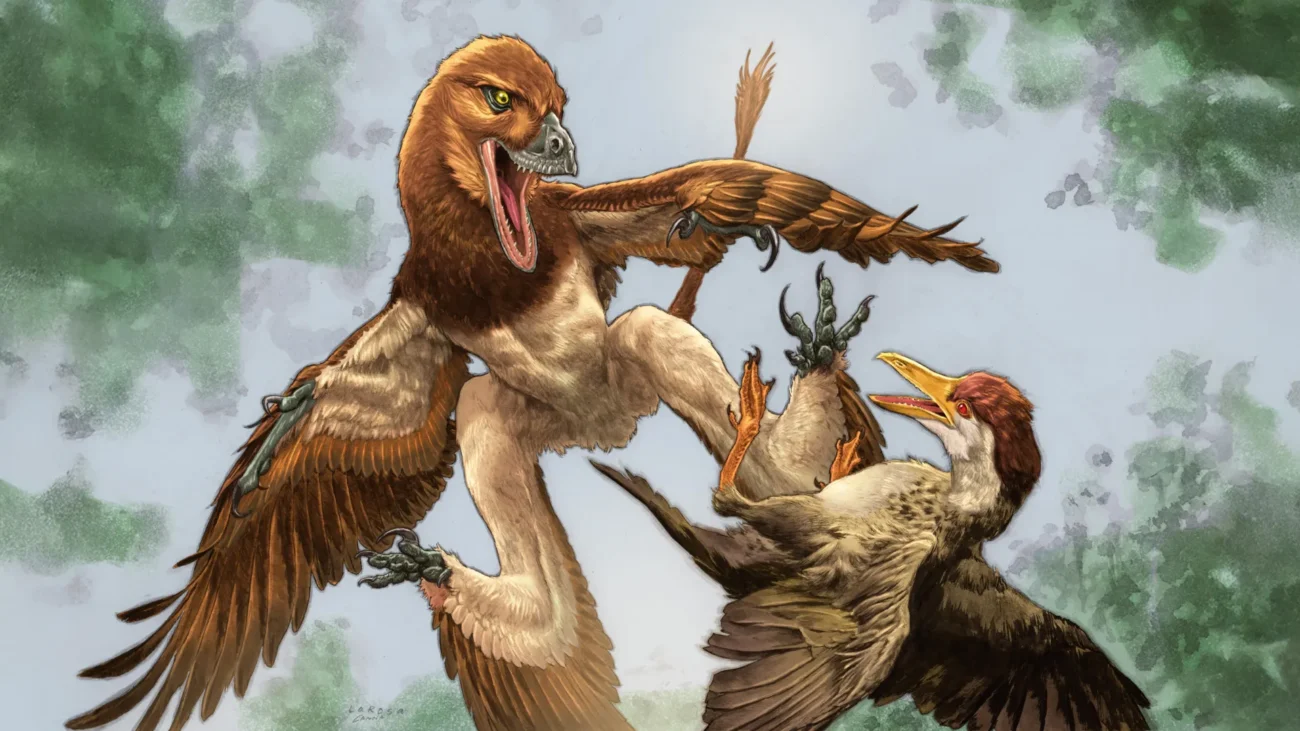
A groundbreaking discovery at a renowned fossil site in northwestern China is poised to rewrite our understanding of prehistoric ecosystems, particularly the predatory dynamics that shaped the early evolution of birds. For years, paleontologists working in the Changma Basin have been intrigued by a remarkable abundance of prehistoric bird fossils, often found in peculiar clusters of shattered bones. These enigmatic accumulations bore a striking resemblance to the pellet-like regurgitations produced by modern owls, hinting at a larger, non-avian predator systematically hunting these ancient avian ancestors. While the hypothesis of such a predator has been a persistent theory, concrete evidence remained elusive, leaving a significant gap in the ecological narrative of the region. Now, the unveiling of a previously unknown dinosaur species, tentatively named Jianchangmaensis, offers a compelling candidate for this mysterious hunter, potentially solving a long-standing paleontological puzzle.
Unveiling a New Predator in the Ancient Ecosystem
The discovery of Jianchangmaensis is detailed in a recent study published in the Annals of Carnegie Museum. This newly described dinosaur was unearthed from the very same fossiliferous strata that have yielded hundreds of bird remains. Initial analysis reveals Jianchangmaensis to be a feathered relative of the iconic Velociraptor, a member of the dromaeosaurid family. What sets this new species apart, and fuels the predator hypothesis, are its distinctive anatomical features, particularly in its forelimb and shoulder structure. Researchers posit that these adaptations suggest an animal capable of actively hunting and dispatching prey, including the smaller birds found in abundance at the site.
Dr. Jingmai O’Connor, associate curator of fossil reptiles at the Field Museum in Chicago and senior author of the paper, articulated the significance of this find. "Scientists have found these weird, broken-up clusters of bird bones at this site, and we didn’t know what made them," Dr. O’Connor stated. "This new microraptor dinosaur, Jianchangmaensis, is our best guess. It’s the only dinosaur found at this site that wasn’t a bird, it was a carnivore, and it was much bigger than everything else that we’ve found there." This crucial distinction – being a non-avian carnivore in a predominantly avian fossil bed – immediately elevates Jianchangmaensis as a prime suspect.
The Dromaeosaurid Lineage: A Look at Jianchangmaensis‘s Family Tree
To fully appreciate the implications of Jianchangmaensis, it’s essential to place it within its evolutionary context. Modern birds are the sole surviving lineage of dinosaurs, having persevered through the cataclysmic asteroid impact that occurred approximately 66 million years ago. However, for eons prior to this extinction event, during the Jurassic and Cretaceous periods, birds coexisted with a diverse array of other dinosaur groups. Among their closest relatives were the dromaeosaurs, a clade of feathered dinosaurs characterized by their relatively small size, agility, and predatory nature. The Velociraptor, famously depicted in popular culture, is a well-known representative of this group, though real-life dromaeosaurs were likely smaller and more heavily feathered than their cinematic counterparts.
Jianchangmaensis belongs to a specialized subgroup within the dromaeosaurs known as microraptors. While many microraptor species were diminutive, some reaching the size of a crow, Jianchangmaensis represents a significant outlier in terms of its scale. "Jian is one of the biggest microraptor specimens that has ever been found," Dr. O’Connor explained. "The piece of its upper arm bone that we have is about 4 inches long, so the entire dinosaur probably had something like a four-foot wingspan, around the size of a barn owl." This size estimation, while based on partial remains, suggests an animal substantial enough to pose a threat to the various small bird species inhabiting the same environment.
A Four-Winged Glider with Predatory Prowess
Although only a portion of Jianchangmaensis‘s forelimb has been recovered, paleontologists infer that it shared a key characteristic with other microraptors: the presence of long feathers extending along both its arms and legs. This unique morphology would have given the dinosaur the appearance of possessing four wings, a remarkable adaptation that likely facilitated gliding rather than true powered flight. "Jian and the other microraptors probably weren’t capable of true, powered flight, but they could probably glide like a flying squirrel," Dr. O’Connor elaborated. This gliding ability, combined with its predatory dentition and agile build, would have made Jianchangmaensis a formidable hunter capable of ambushing prey from arboreal perches.
The nomenclature of the newly described species, Jianchangmaensis, is a deliberate tribute to both its unique characteristics and its discovery locale. In Chinese mythology, "Jian" refers to a winged creature, reflecting the presumed feathered appendages of the dinosaur. The specific epithet, "changmaensis," honors the Changma Basin in China’s Gansu province, the very region where this significant fossil was unearthed. This naming convention not only adds a layer of cultural resonance but also firmly anchors the species to its geographical and scientific origin.
Reconstructing the Ancient Changma Ecosystem
The discovery of Jianchangmaensis is not merely the addition of another prehistoric creature to the fossil record; it is a crucial piece of the puzzle that allows for a more comprehensive reconstruction of the ancient Changma ecosystem. For years, the Changma fossil site has been celebrated for its exceptional preservation of early bird fossils, offering invaluable insights into avian evolution. However, the absence of non-avian predators had created an ecological anomaly.
Dr. Matt Lamanna, corresponding author of the study and Mary R. Dawson Curator of Vertebrate Paleontology and senior dinosaur researcher at the Carnegie Museum of Natural History, emphasized the significance of this find in bridging that gap. "Jianchangmaensis reveals that non-avian dinosaurs lived in what is now the Changma Basin, an area famous for its fossil birds," Dr. Lamanna stated. "Our team has recovered more than a hundred bird fossils at Changma, but only this single non-avian dinosaur specimen. Jian provides critical new insight into the biological history of the Changma region and the ecological context of the ancestors of today’s birds."
The presence of a relatively large, feathered, carnivorous dinosaur like Jianchangmaensis alongside numerous small birds suggests a dynamic predator-prey relationship. The shattered bone clusters, once a perplexing enigma, now find a plausible explanation in the feeding habits of this dromaeosaur. It is highly probable that Jianchangmaensis would have hunted the various bird species, consuming them and subsequently regurgitating indigestible bone fragments and other materials in a manner akin to modern raptors. This would explain the concentrated deposits of bird bones, often compressed and fragmented, that have long puzzled researchers.
Broader Implications for Understanding Avian Evolution
Beyond the immediate context of the Changma fossil site, the discovery of Jianchangmaensis holds broader implications for our understanding of avian evolution and the divergence of bird lineages from their non-avian dinosaur relatives. The study of these ancient ecosystems, where birds and their close dinosaur cousins coexisted, is paramount to comprehending the evolutionary pressures that shaped the lineage leading to modern birds.
"You cannot understand life on the planet today without looking at its origins," Dr. O’Connor underscored. "Birds are arguably the most successful group of land-dwelling vertebrate animals on Earth today. Learning about early birds and their close non-bird dinosaur relatives gives us a better understanding of what made the group of birds that survived so special."
By establishing a direct predator-prey relationship, scientists can now investigate the selective pressures that may have influenced the development of traits in early birds, such as enhanced flight capabilities, improved camouflage, or behavioral adaptations for predator avoidance. The anatomical features of Jianchangmaensis, particularly its presumed gliding adaptations and predatory morphology, provide a tangible baseline against which the evolutionary trajectory of early birds can be measured. The survival of avian dinosaurs after the K-Pg extinction event suggests that they possessed inherent advantages or resilience. Understanding their ecological interactions with non-avian relatives like Jianchangmaensis offers crucial clues to what those advantages might have been.
A Collaborative Endeavor and Future Research
The research team responsible for this significant discovery is a testament to international scientific collaboration. The study was contributed to by a distinguished group of paleontologists from various institutions, including Ling-Qi Zhou (Gansu Geological Museum), Matthew Lamanna (Carnegie Museum of Natural History), Ashley Poust (University of Nebraska State Museum and University of California Museum of Paleontology), Da-Qing Li (Gansu Agricultural University), Hai-Lu You (Institute of Vertebrate Paleontology and Paleoanthropology, Chinese Academy of Sciences), and Jingmai O’Connor (Field Museum). This multidisciplinary approach, combining expertise from different geographical locations and research specializations, is vital for tackling complex paleontological questions.
The recovery of a single, albeit significant, specimen of Jianchangmaensis opens avenues for future research. Continued exploration of the Changma Basin may yield more complete fossil remains of this predator, allowing for a more detailed analysis of its skeletal structure, musculature, and potential dietary habits. Further comparative studies with other microraptor and dromaeosaurid specimens will refine our understanding of their evolutionary relationships and ecological roles. Moreover, ongoing research at fossil sites worldwide continues to expand our knowledge of the intricate web of life that existed millions of years ago, constantly refining our picture of how dinosaurs and early birds interacted and evolved. The Jianchangmaensis discovery represents a significant leap forward, transforming speculation into compelling evidence and offering a vivid glimpse into the predatory landscape that shaped the dawn of avian evolution.

