


The diverse ecosystems of Georgia, from its coastal plains and barrier islands to the Okefenokee Swamp and the Appalachian foothills, provide a rich habitat for a variety of avian predators. While the state ranks 32nd nationally in eBird species diversity with 438 recorded species, understanding the intricate classifications of birds of prey, particularly hawks, can be a complex endeavor. This article delves into the world of Accipitriformes, specifically focusing on the Accipitridae family and its members commonly referred to as hawks in Georgia, offering detailed insights into their identification, distribution, and ecological roles.

Understanding the Taxonomy of Hawks
The classification of birds of prey can be intricate, with overlapping family and subfamily structures. The order Accipitriformes encompasses most diurnal birds of prey. Within this order, the family Accipitridae is broadly known as hawks, eagles, and kites. Further refining this classification, the subfamily Accipitrinae specifically includes "true hawks." This subfamily is further divided into several genera, including Accipiter, Microspizias, Erythrotriorchis, Megatriorchis, and Circus.
For the purposes of this overview, and acknowledging common parlance, we will also include members of the Buteo genus, often referred to as buzzard-hawks or simply hawks, despite their placement outside the "true hawks" subfamily. These birds are widely recognized and studied as hawks, making their inclusion essential for a comprehensive understanding of Georgia’s hawk population.
Georgia’s Avian Landscape
Georgia, often celebrated as the "Peach State," boasts a varied topography that supports a remarkable array of wildlife. Its relatively short coastline belies the ecological richness of its numerous barrier islands and estuaries, while the vast Okefenokee Swamp represents the largest swamp in the United States. In the north, the Blue Ridge Mountains and the Appalachian Plateau offer distinct habitats. These diverse environments collectively contribute to Georgia’s status as a significant avian biodiversity hotspot. While not at the very top of national bird species rankings, its consistent presence in the top tier signifies a healthy and varied bird population.
Key Hawk Species in Georgia
Georgia is home to several species within the Accipitrinae and Buteo genera, each with unique characteristics and ecological niches. Based on eBird data and common sightings, the following are notable members of Georgia’s hawk population:
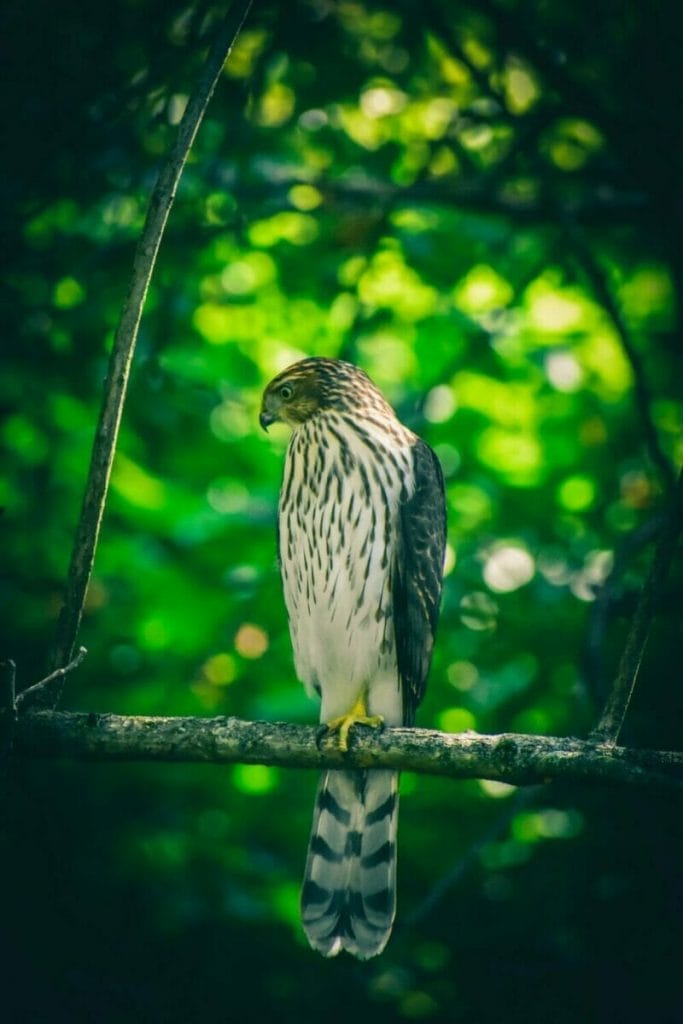
Red-shouldered Hawk (Buteo lineatus)
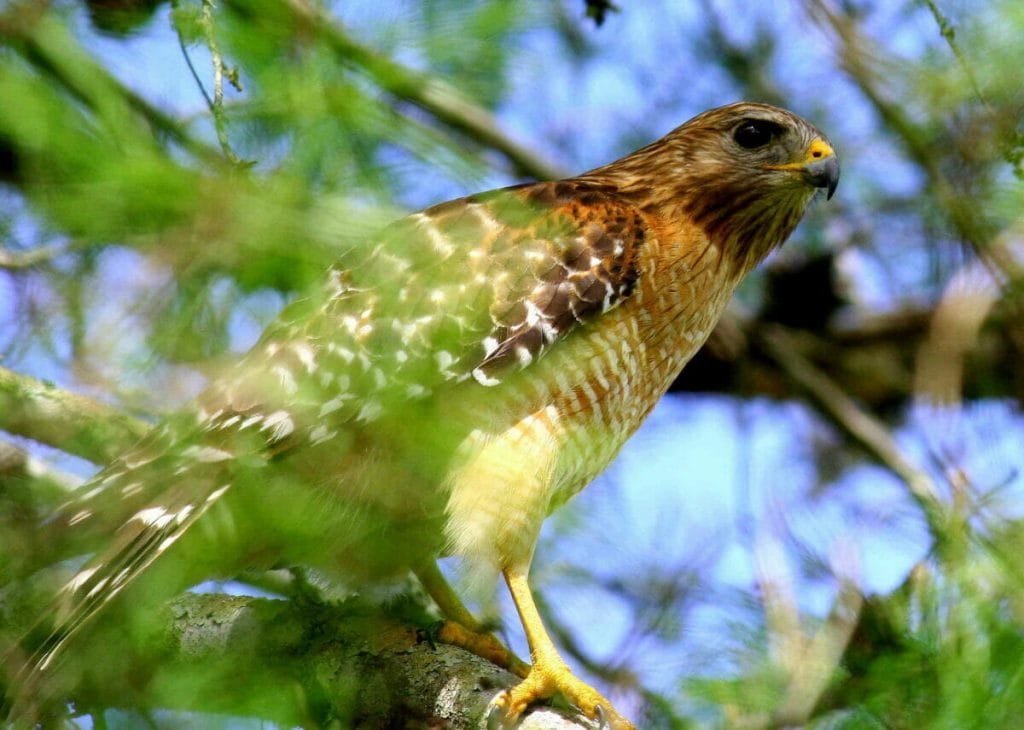
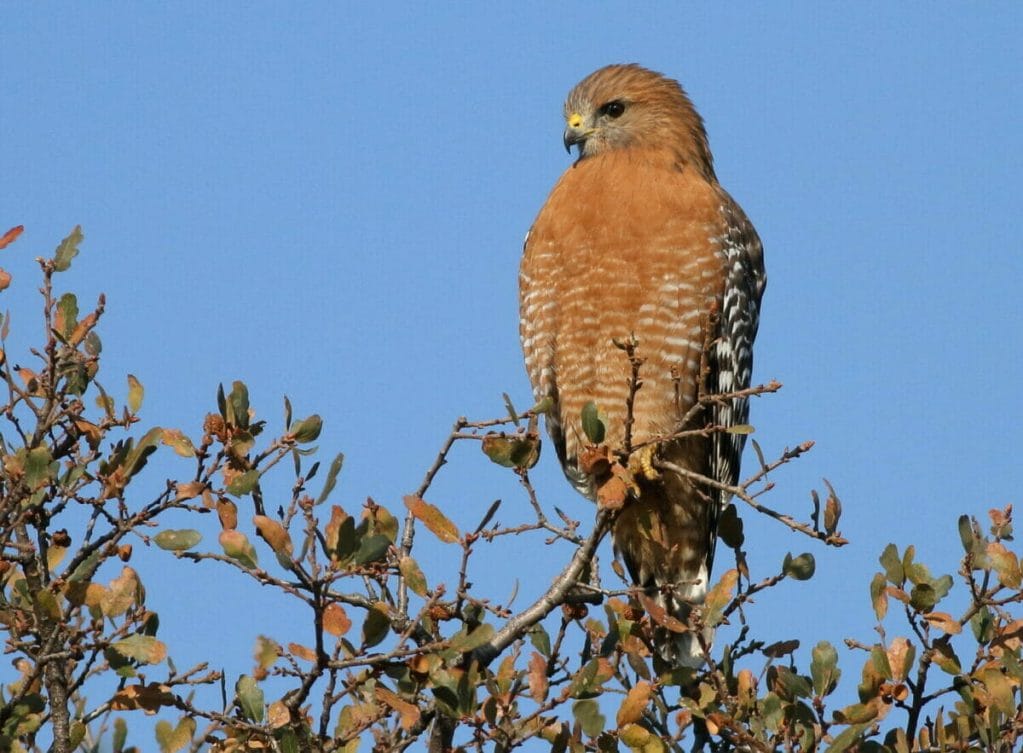
The Red-shouldered Hawk is a striking resident of Georgia, found throughout the state in suitable forested environments. Its distinctive rufous coloration on the breast and head, coupled with the characteristic red shoulders, makes it easily recognizable. The underside of its wings and tail are marked with bold black and white checks.
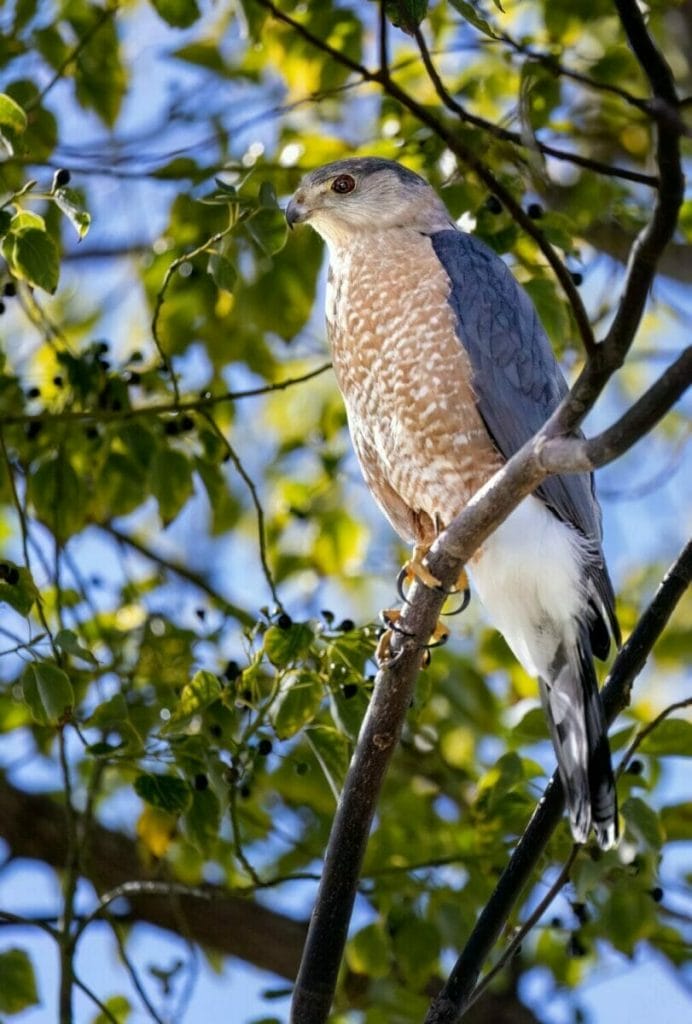
- Identification and Size: Adults are characterized by their reddish-brown breasts and bellies, with finely barred black and white wings and tails. Juveniles are more streaked and lack the distinct rufous markings.
- Length: 16.9 – 24.0 inches
- Wingspan: 37.0 – 43.7 inches
- Weight: 17.1 – 27.3 ounces
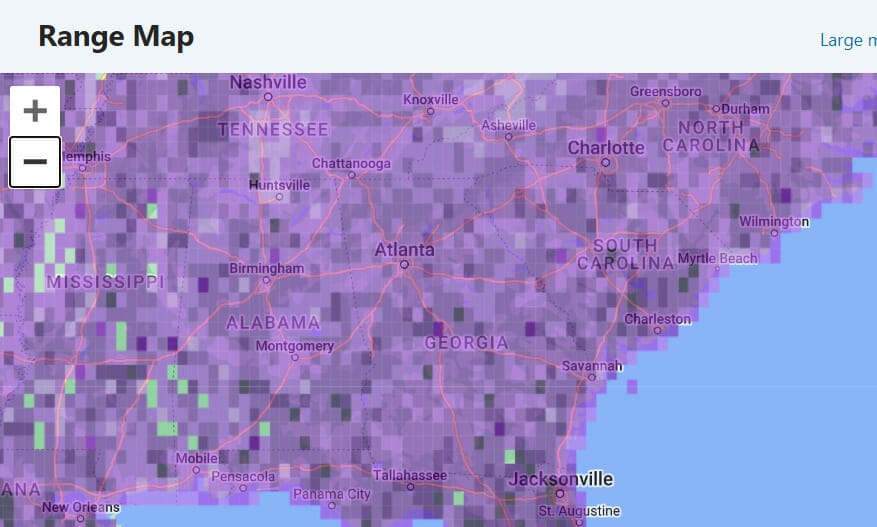
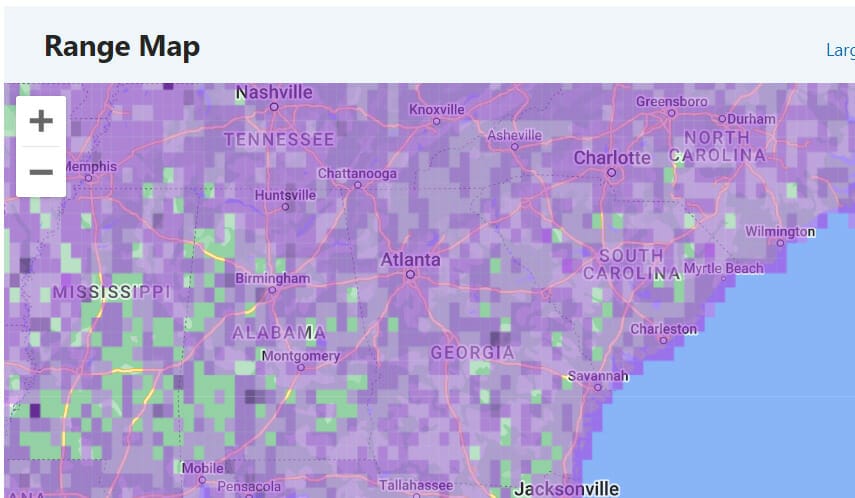
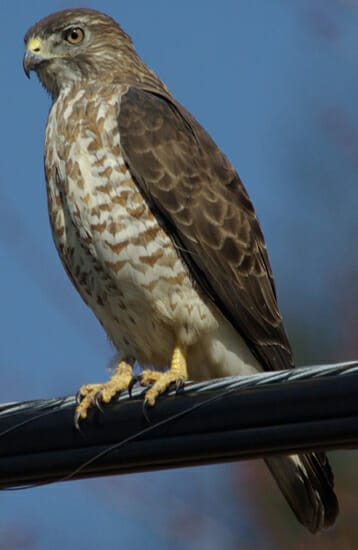
- Distribution: The Red-shouldered Hawk is a year-round resident in Georgia, occupying a wide range of habitats including mature forests near water sources. Their presence is indicated across most of the state on eBird range maps.
- Interesting Fact: This hawk is an adept hunter of small prey, including rodents, amphibians, reptiles, and small birds, often found in woodlands near water.
Cooper’s Hawk (Accipiter cooperii)
The Cooper’s Hawk is another resident species in Georgia, though its preference for dense forest canopies can make it less conspicuous than some other raptors. While migratory in many parts of the United States, it maintains a consistent presence in Georgia throughout the year.
- Identification and Size: Adult Cooper’s Hawks display a dark gray upper body with a rufous-orange barring on their pale chests and bellies. Females are noticeably larger than males. Immature birds are typically brown with streaky undersides. Their eyes are often described as dark and staring.
- Length: 14.6 – 17.7 inches
- Wingspan: 24.4 – 35.4 inches
- Weight: 7.8 – 24 ounces
- Distribution: Found across Georgia, the Cooper’s Hawk favors wooded areas, including suburban gardens with mature trees. Its distribution maps show consistent presence throughout the state.
- Interesting Fact: Cooper’s Hawks are known for their agile hunting style, often ambushing prey like songbirds and small mammals within the dense cover of forests. They are adept at navigating complex wooded environments.
Sharp-shinned Hawk (Accipiter striatus)
The Sharp-shinned Hawk, while similar in appearance to the Cooper’s Hawk, is significantly smaller. It is a migratory species that spends its non-breeding season in Georgia, typically from fall through spring, before returning to its breeding grounds in Canada.
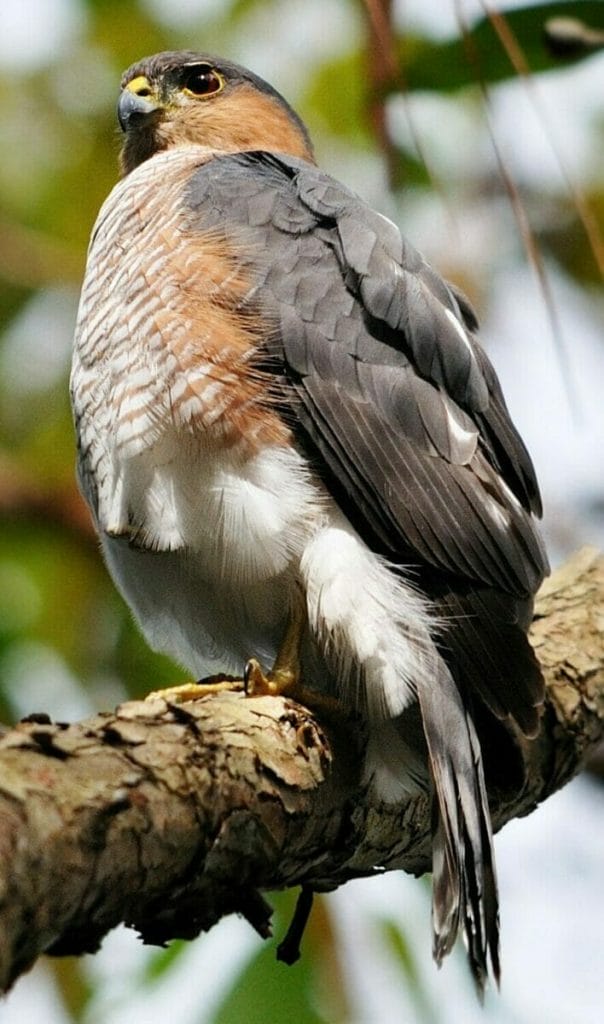
- Identification and Size: Distinguishing between Sharp-shinned and Cooper’s Hawks can be challenging due to their similar plumage. However, the Sharp-shinned Hawk is considerably smaller, with a more compact build and a proportionally shorter tail. Adults have slate-gray backs and finely barred pale breasts, while juveniles are brown and streaky.
- Length: 9.4 – 13.4 inches
- Wingspan: 16.9 – 22.1 inches
- Weight: 3.1 – 7.7 ounces
- Distribution: While widespread during its migratory passage through Georgia, the Sharp-shinned Hawk’s preference for dense, mature forests means it is less frequently observed in open habitats, particularly in the southern parts of the state.
- Interesting Fact: This hawk is a specialist predator of small birds, often pursuing them with remarkable speed and agility through dense vegetation. Its hunting technique involves rapid aerial maneuvers and surprise attacks.
Red-tailed Hawk (Buteo jamaicensis)
The Red-tailed Hawk is arguably the most common and widely recognized raptor across North America, and Georgia is no exception. Its presence is consistent throughout the state, making it a familiar sight in various habitats.
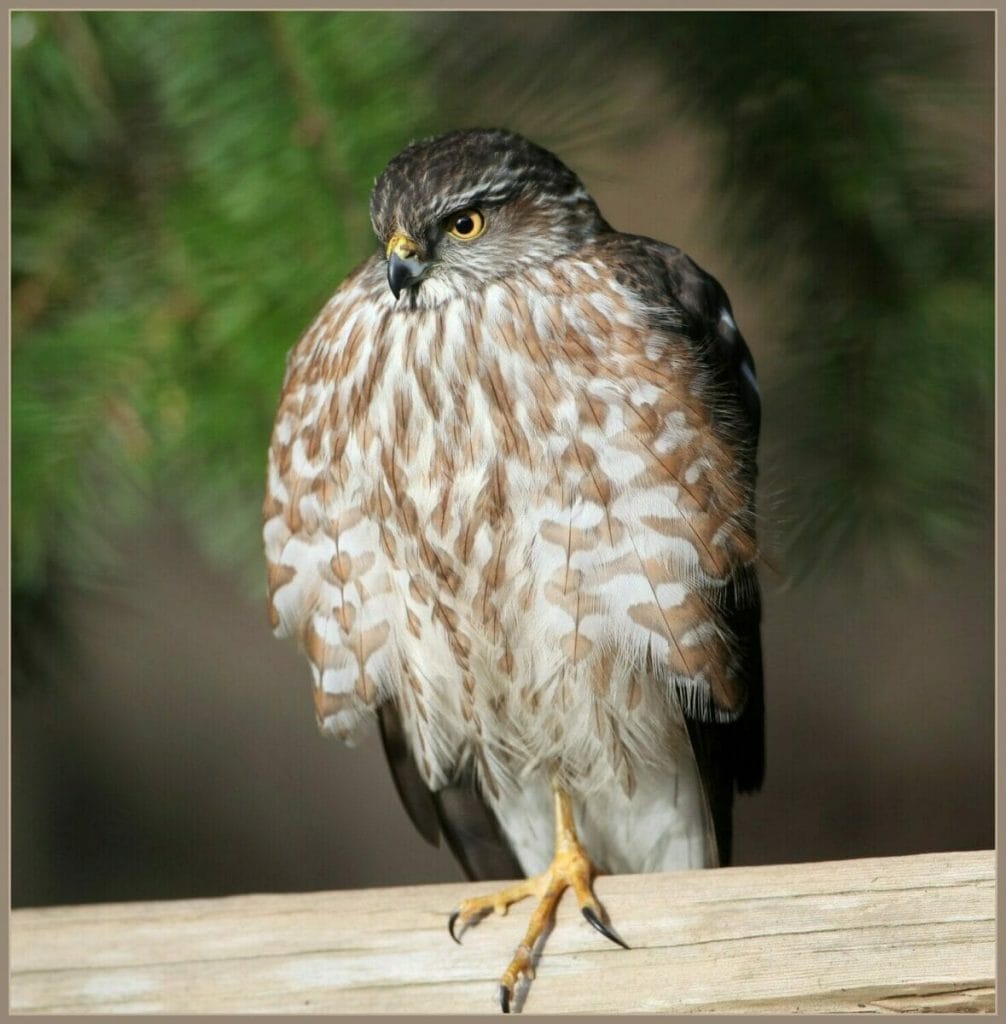
- Identification and Size: The defining characteristic is the brick-red tail of adult birds, though variations in plumage exist across its vast range. In Georgia, adults typically exhibit a pale underside with some red and brown markings. Juveniles lack the red tail and are generally more streaked. Females are larger than males.
- Length: 17.7 – 25.6 inches
- Wingspan: 44.9 – 52.4 inches
- Weight: 24.3 – 51.5 ounces
- Distribution: The Red-tailed Hawk is an abundant year-round resident in Georgia, found in virtually all habitats, from open country and woodlands to suburban and urban areas. eBird maps show near-complete coverage of the state.
- Interesting Fact: The distinctive, shrill cry of the Red-tailed Hawk is so iconic that it is frequently used in popular media, particularly in dramatic or suspenseful film scenes, to evoke a sense of wildness or foreboding.
Broad-winged Hawk (Buteo platypterus)
The Broad-winged Hawk is a summer visitor to Georgia, breeding in the state during the warmer months before migrating south to Central and South America for the winter.
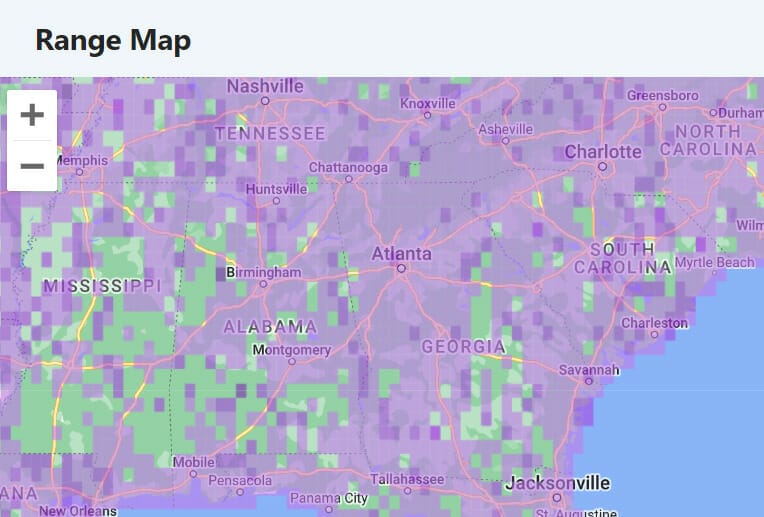
- Identification and Size: This hawk is characterized by its short body and relatively wide wings. Adults typically have brown upperparts and barred breasts. The wings show rufous coloration near the shoulders, transitioning to black and white barring towards the wingtips and tail.
- Length: 13.4 – 17.3 inches
- Wingspan: 31.9 – 39.4 inches
- Weight: 9.3 – 19.8 ounces
- Distribution: The Broad-winged Hawk breeds in Georgia’s forested areas. Its migratory patterns are notable for the formation of large flocks, known as "kettles," where hundreds or even thousands of these hawks can be seen soaring together.
- Interesting Fact: The mass migration of Broad-winged Hawks is a spectacular natural phenomenon. These large congregations, or kettles, create breathtaking aerial displays as they circle together, often at high altitudes, before continuing their journey.
Short-tailed Hawk (Buteo brachyurus)
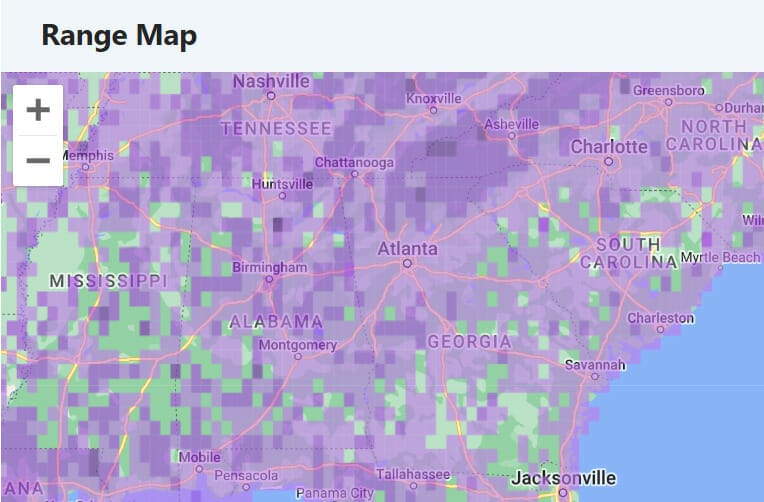
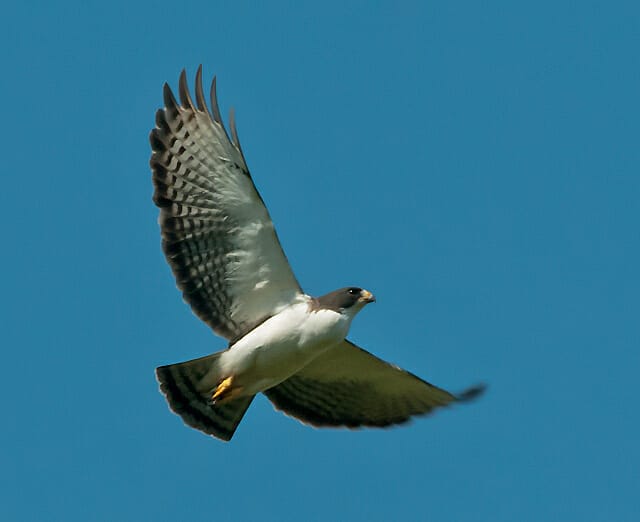
The Short-tailed Hawk is a less common visitor to Georgia, with a more established population in south Florida. Its presence in Georgia is primarily limited to the southern parts of the state, and sightings are relatively rare.
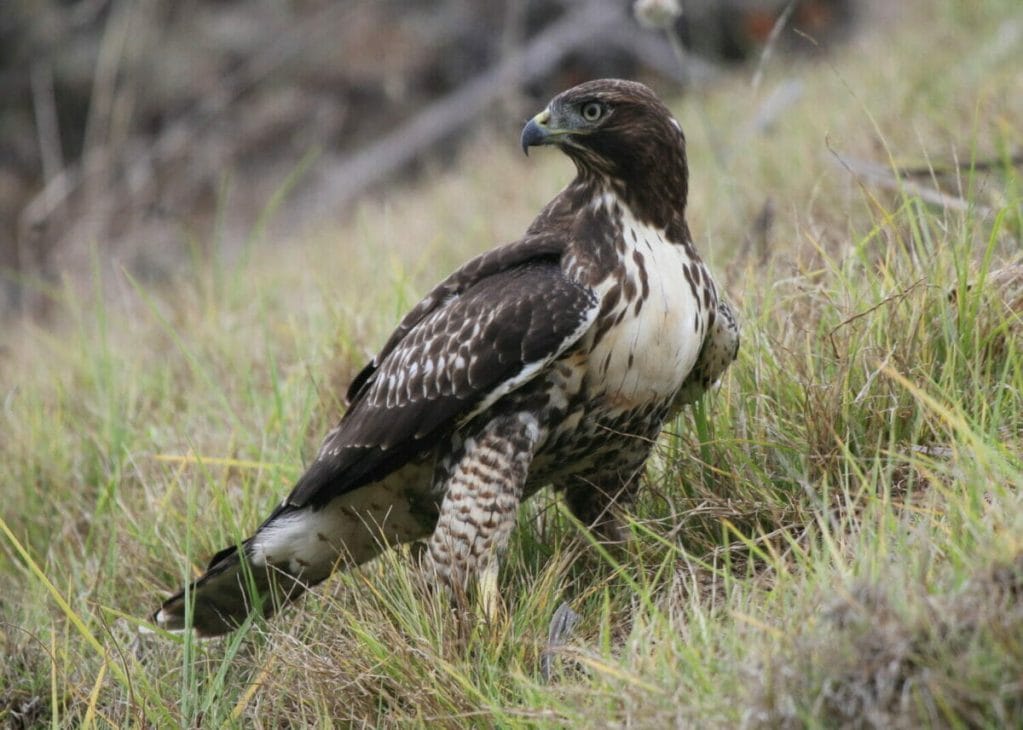
- Identification and Size: This hawk is easily identifiable by the dark facial markings surrounding a white throat. It exists in two morphs: a dark morph with a predominantly dark body and some white underwing patches, and a pale morph that is white underneath with dark barring.
- Length: 15.3 – 17.3 inches
- Wingspan: 32.7 – 40.5 inches
- Weight: 13.6 – 16.9 ounces
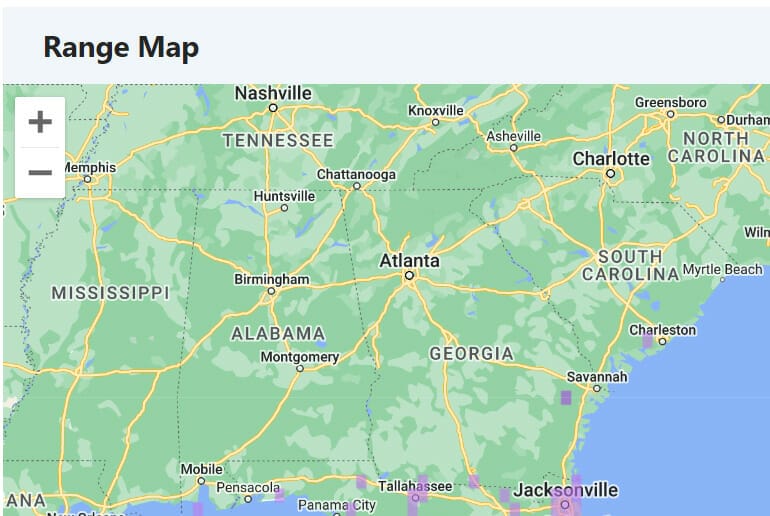
- Distribution: While breeding further north and having a strong population in Florida, the Short-tailed Hawk is an occasional visitor to southern Georgia. eBird records indicate fewer than 15 sightings within the state, highlighting its rarity.
- Interesting Fact: The dark morph is more prevalent in the Florida population, which is the closest established breeding population to Georgia. Therefore, any observed Short-tailed Hawks in Georgia are most likely to be of the dark morph.
Northern Goshawk (Accipiter gentilis)
The Northern Goshawk is an elusive and powerful raptor, with its range barely extending into the northwestern border of Georgia. Sightings are exceedingly rare in the state.
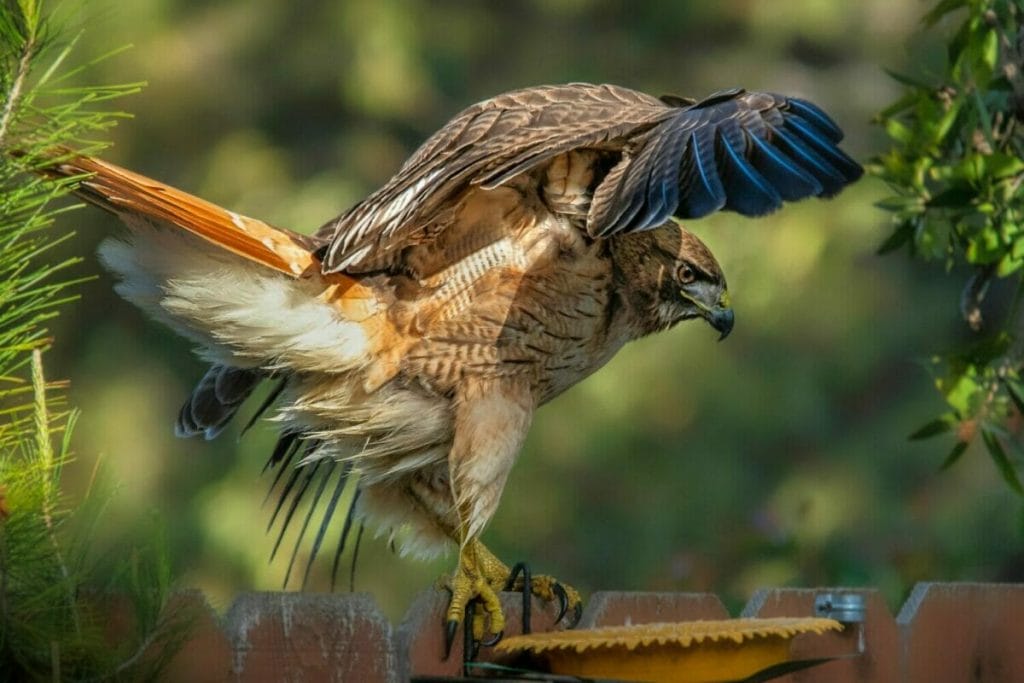
- Identification and Size: This large hawk possesses a distinctive appearance with dark gray backs and finely patterned pale undersides. A prominent white eyebrow stripe and deep red eyes are key identification features. Juvenile plumage is varied brown with streaking.
- Length: 20.9 – 24.0 inches
- Wingspan: 40.5 – 41.1 inches
- Weight: 22.3 – 48.1 ounces
- Distribution: Georgia lies on the extreme southern edge of the Northern Goshawk’s range. With only three reported sightings on eBird, its presence is exceptionally scarce, primarily limited to the northwestern mountainous regions.
- Interesting Fact: Northern Goshawks are known for their intricate nesting behaviors. A pair may maintain up to eight nesting sites within their territory, utilizing them in rotation or returning to successful nests in subsequent years, showcasing a sophisticated territorial strategy.
Northern Harrier (Circus hudsonius)
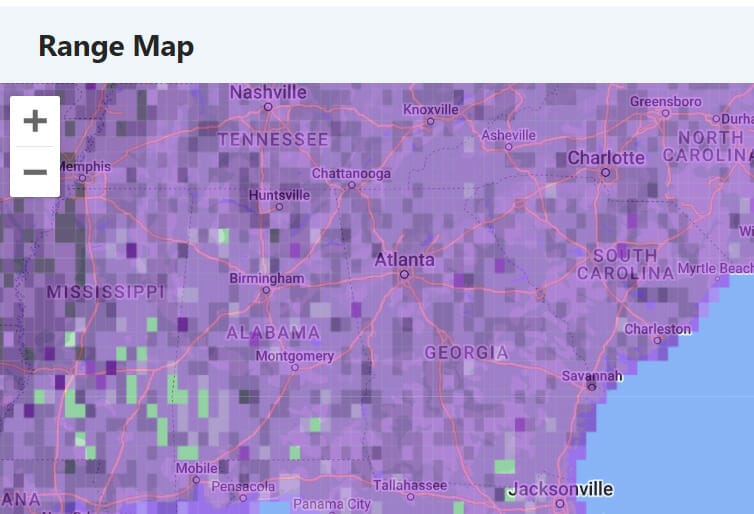
The Northern Harrier, a graceful bird of open country, is present in Georgia during its non-breeding season, which includes spring, autumn, and winter months.
- Identification and Size: This hawk is recognized for its elegant flight pattern, often flying low over open terrain. It has gray upperparts and distinctive facial markings. Underwing barring is prominent, and its tail is notably long. Sexual dimorphism is present, with females typically browner than the gray males.
- Length: 18.1 – 19.7 inches
- Wingspan: 40.2 – 46.5 inches
- Weight: 10.6 – 26.5 ounces
- Distribution: Georgia falls within the non-breeding range of the Northern Harrier. They are found in suitable open habitats such as grasslands, marshes, and agricultural fields during their wintering period.
- Interesting Fact: The Northern Harrier is a skilled hunter of small mammals, birds, and insects, relying on its keen eyesight and low-level flight to detect prey in open landscapes. Its preference for such environments makes it an indicator species for healthy grassland ecosystems.
Comparative Analysis and Ecological Significance
The distribution and ecological roles of these hawk species highlight Georgia’s diverse habitats. The widespread Red-tailed Hawk and resident Red-shouldered Hawk demonstrate the adaptability of these birds to various environments. In contrast, the migratory Sharp-shinned Hawk and Broad-winged Hawk showcase seasonal shifts in avian populations, driven by breeding and overwintering needs. The rarity of species like the Northern Goshawk and Short-tailed Hawk underscores the importance of preserving specific, often sensitive, habitats for these less common raptors.

The inclusion of species like the Northern Harrier, which prefers open fields and marshes, further emphasizes the interconnectedness of Georgia’s ecosystems and the specialized niches occupied by its predatory birds. These hawks, in their various forms and hunting strategies, play crucial roles in regulating prey populations and maintaining ecological balance within the state’s natural landscapes.
Frequently Asked Questions
What is the largest bird of prey in Georgia?
Among the hawk species discussed, the Red-tailed Hawk is generally considered the largest, with the Northern Harrier also being a substantial bird of prey.
How do you differentiate between a hawk and a falcon?
Key distinctions include the presence of a notched bill in falcons, which aids in dispatching prey, whereas hawks lack this feature. Falcons also tend to be smaller, more slender, and possess a more agile flight style compared to many hawks.
Can a hawk lift a dog?
While large hawk species possess formidable strength, lifting a dog is highly improbable. They are equipped to hunt and carry smaller prey such as rodents, birds, and reptiles. Encounters with domestic pets are rare and typically involve very small animals under specific circumstances.
Conclusion
Georgia’s avian landscape is enriched by a fascinating array of hawks and their relatives. From the common and adaptable Red-tailed Hawk to the elusive Northern Goshawk, each species contributes to the ecological tapestry of the state. Understanding their distinct characteristics, distribution patterns, and taxonomic relationships not only deepens our appreciation for these magnificent birds but also underscores the importance of conservation efforts aimed at preserving the diverse habitats that support them. The study of these raptors, whether they are true hawks of the Accipiter genus, the widespread Buteos, or the specialized Harriers, provides a window into the health and complexity of Georgia’s natural heritage.

