


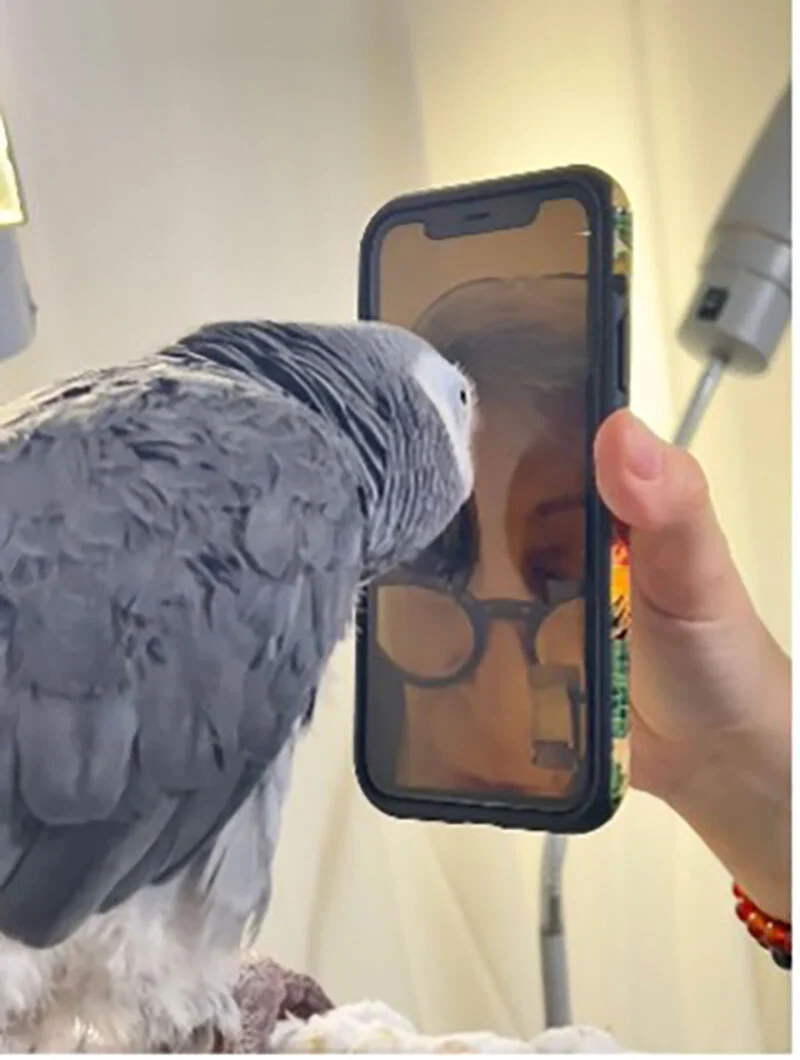
The innovative use of video conferencing technology to sustain the crucial bond between humans and highly intelligent avian species has been successfully implemented by Dr. Irene Pepperberg, a renowned researcher in avian cognition. For several years, Dr. Pepperberg has been connecting with Griffin, her African Grey parrot, via video calls while she travels, a practice she confirms has proven remarkably effective in mitigating the psychological impacts of her absence on the bird. This pioneering approach offers valuable insights into interspecies communication, animal welfare, and the evolving role of technology in pet care.
The Legacy of Alex and the Intelligence of African Greys
Dr. Irene Pepperberg is globally recognized for her groundbreaking research with Alex, an African Grey parrot whose cognitive and communicative abilities challenged long-held scientific assumptions about animal intelligence. Beginning in 1977, Dr. Pepperberg’s work with Alex demonstrated that parrots could not only mimic human speech but also understand concepts, quantify objects, identify colors and shapes, and even express desires and frustrations. Alex’s remarkable vocabulary of over 100 words and his ability to use them meaningfully revolutionized the field of animal cognition, proving that African Greys possess cognitive abilities comparable to those of a five-year-old child and emotional intelligence akin to a two-year-old. This extensive background underscores the profound social and emotional needs of these birds, making their bond with primary caregivers exceptionally significant. Following Alex’s passing in 2007, Dr. Pepperberg continued her research with other African Greys, including Griffin and Athena, further exploring the depths of avian intelligence and communication. The continuity of her work ensures that the lessons learned from Alex continue to inform contemporary understanding and care practices for these extraordinary animals.
African Grey parrots (Psittacus erithacus) are native to the equatorial regions of Africa and are celebrated not only for their remarkable mimetic abilities but also for their complex social structures in the wild. In their natural habitat, they live in large flocks, forming strong pair bonds and engaging in intricate social interactions. This inherent sociality translates directly into their needs as companion animals; they thrive on interaction and can suffer significantly from loneliness or perceived abandonment. For a bird like Griffin, who has been part of a highly stimulating research environment and has a deep, long-standing bond with Dr. Pepperberg, her frequent travels, even when mitigated by the presence of a dedicated research team, present a unique challenge to his emotional well-being. The traditional "cold shoulder" or "cold wing" treatment, a common behavior observed in parrots when their primary caregiver returns after an absence, is a clear manifestation of their displeasure or emotional distress. It serves as a passive-aggressive signal of their perceived abandonment and can range from ignoring the person to refusing interaction, sometimes lasting for extended periods. Addressing this behavioral response became a key motivator for Dr. Pepperberg to explore alternative methods of maintaining connection.
Conceiving a Digital Lifeline: An Innovative Approach to Avian Care
The idea to use video calls originated several years ago, as Dr. Pepperberg’s demanding schedule frequently took her away from her lab. Initially, the concept was exploratory, aimed at understanding if a digital interface could bridge the physical distance and maintain the psychological connection. This initiative predates the widespread reliance on video conferencing during global events like the COVID-19 pandemic, positioning Dr. Pepperberg at the forefront of applying communication technology to interspecies relationships. While a dedicated team of research associates consistently attends to Griffin’s physical needs in her absence, ensuring he receives regular care, food, and environmental enrichment, Dr. Pepperberg recognized that these provisions, while vital, do not fully substitute for the unique bond and direct interaction he shares with her. Her goal was to ensure Griffin understood he was not being abandoned by her, personally, a concern that speaks to the nuanced understanding of individual relationships that these intelligent birds possess.
As Dr. Pepperberg approached her 75th birthday, she consciously reduced her travel frequency from an average of three trips per month to typically one, although academic conference schedules sometimes necessitate exceptions. Even with this reduction, her absences are still frequent enough to potentially impact Griffin. This personal commitment to her own well-being and her recognition of the impact of her schedule on her birds underscored the necessity of finding effective remote communication strategies. The decision to integrate video calls into her routine was not merely a convenience but a carefully considered intervention designed to support Griffin’s emotional stability and reinforce their bond across geographical distances.
Navigating Time Zones and Technicalities: The Logistics of Avian Video Calls
The practical implementation of these video calls presents its own set of logistical challenges, primarily centered around time zone differences and internet connectivity. When Dr. Pepperberg travels within the continental United States, the time differential is manageable, typically no more than three hours. This allows for relatively straightforward scheduling, ensuring she can connect with Griffin before his customary 8 PM bedtime. A brief break in her conference or meeting schedule is usually sufficient to make the call, ensuring consistency.
However, international travel introduces significantly more complex logistical hurdles. For instance, a trip to Dubai involves an eight-hour time difference, while a journey to Japan extends this to a challenging thirteen-hour differential, compounded by the international dateline. These extreme shifts drastically narrow the available windows for communication. Dr. Pepperberg recounts instances of having to utilize mobile internet "hot spots" from a colleague’s car to secure a connection, highlighting the dedication required to maintain these interactions. These anecdotes not only illustrate her commitment but also demonstrate the willingness of her professional peers to support this innovative approach, often expressing their own enjoyment in observing Griffin during these calls. The technical support from her research associates in the lab is equally crucial, as they must ensure Griffin is ready, the device is properly positioned, and the connection is stable on their end. This collaborative effort underlines the scientific community’s interest in and support for these unconventional methods of animal welfare.
Griffin’s Digital Perception: Bridging the Species Communication Gap
A fascinating aspect of these video calls lies in understanding how Griffin perceives and interprets the digital interaction. The science behind avian vision differs significantly from human vision. Parrots, for example, possess tetrachromatic vision, meaning they have four types of cone cells in their eyes, allowing them to see into the ultraviolet (UV) spectrum, a range invisible to humans. Standard cell phone cameras and screens are optimized for human vision, primarily capturing red, green, and blue light. Consequently, the visual representation of Dr. Pepperberg on screen likely lacks the UV components that would be present in her feathers or skin (if she were a bird), or indeed in Griffin’s own feathers. This raises questions about the fidelity of the image Griffin perceives. Despite these differences, Dr. Pepperberg postulates that Griffin likely sees a "reasonable replica" of her on the screen, sufficient for recognition.
Equally intriguing is the question of auditory recognition. While parrots are adept at vocal mimicry and distinguishing voices, the fidelity of sound transmitted over video calls can vary. Dr. Pepperberg acknowledges that it is uncertain how well Griffin can hear and recognize her voice specifically through the digital medium. However, Griffin’s consistent positive response suggests that he associates the sounds and images emanating from the device with her. This association may be reinforced by the fact that Dr. Pepperberg is the sole individual who engages in video calls with him. This conditioning, where the visual and auditory cues from the screen are consistently linked to his primary caregiver, likely plays a significant role in his engagement.
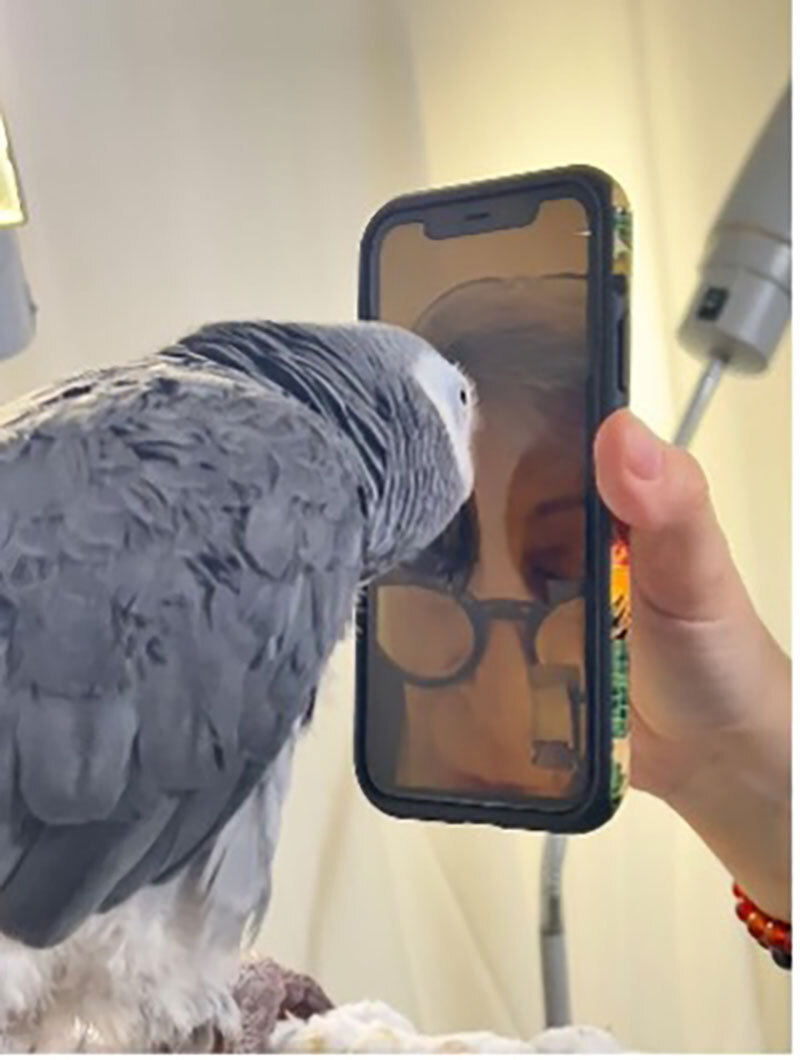
Griffin’s behavior during these calls provides compelling evidence of his engagement. He consistently leans down to touch the screen, a gesture Dr. Pepperberg interprets as giving "kisses." This physical interaction with the digital representation indicates an attempt to bridge the virtual divide and engage in a familiar bonding behavior. Furthermore, Griffin has demonstrated a nuanced understanding of the limitations of the medium. He no longer requests "tickles" from the phone, a clear indication that he comprehends the distinction between the virtual presence on screen and the physical presence required for such an interaction. This ability to differentiate between a simulated presence and a tangible one highlights a sophisticated level of cognitive processing, suggesting he understands that while Dr. Pepperberg is there in some form, she is not physically accessible. For Dr. Pepperberg, these interactions provide invaluable reassurance, allowing her to see Griffin and confirm his well-being during her absence, reinforcing that the experience is positive and non-aversive for him.
Observed Outcomes and Behavioral Implications: The "Cold Wing" Treatment Mitigation
The most significant and tangible outcome of implementing these video calls is the marked reduction in the "cold wing" treatment Griffin typically exhibits upon Dr. Pepperberg’s return from a trip. Before the advent of video calls, her returns were often met with prolonged periods of aloofness or outright ignoring, a common, albeit disheartening, display of displeasure from parrots feeling abandoned. Since integrating the calls, Dr. Pepperberg reports that she is "much less likely" to receive this treatment. In instances where Griffin still displays some initial reluctance to engage, the duration of this behavior is "much shorter." This observed change is a powerful indicator of the calls’ effectiveness in maintaining the bond and alleviating Griffin’s stress during her absence.
From a behavioral science perspective, this outcome suggests that the video calls provide a consistent source of reassurance and connection, mitigating the feelings of separation anxiety or perceived abandonment. The regular visual and auditory contact, even if imperfect, likely reinforces the idea that Dr. Pepperberg has not vanished permanently but is merely temporarily absent. This continuity of interaction helps to maintain the social structure and bond, which are paramount for the psychological health of highly social and intelligent species like African Greys. The reduction in negative post-travel behaviors implies that Griffin’s emotional state is more stable and less impacted by the separation, thereby improving his overall welfare.
Broader Implications for Avian Care and Human-Animal Bonds in the Digital Age
Dr. Pepperberg’s successful implementation of video calls for Griffin carries significant implications beyond her immediate research context. It offers a potential paradigm shift in how companion animal owners, particularly those with highly intelligent and social pets, can manage separations. In an increasingly mobile world, where travel for work or leisure is common, maintaining continuity in pet care and emotional connection is a growing concern. This methodology could inspire owners of other intelligent species, such as dogs, cats, or other parrot species, to explore similar technological solutions.
However, Dr. Pepperberg is quick to emphasize that video calls are not a substitute for direct, in-person interaction. She highlights the irreplaceable aspects of their daily routine when she is home: "When I am in town, Griffin will spend at least an hour a day on my hand, getting tickles and preening himself; we spend additional time together in sessions; and while he eats his afternoon birdy snacks, he likes to have me nearby, eating my human snacks (things like carrots, which he absolutely hates—so no sharing!)." None of these nuanced, tactile, and physically proximate interactions can be replicated by a ten-minute video call. The digital connection serves as a vital supplement, a "better than nothing" solution that significantly improves outcomes during periods of absence.
This approach aligns with a broader trend in animal welfare that seeks to leverage technology to enhance the lives of pets. From remote pet cameras that allow owners to monitor and even interact with their animals via voice, to automated feeders and enrichment devices, technology is increasingly becoming an integral part of modern pet care. Dr. Pepperberg’s work specifically pushes the boundary into emotional and social bonding through digital means, demonstrating that even sophisticated cognitive and emotional connections can be partially sustained across physical distances.
The Human Analogy: Relatability in Remote Connection
Dr. Pepperberg draws a powerful analogy between her experience with Griffin and the human experience of remote communication, particularly during the COVID-19 pandemic. She reflects on her own "appreciated and disliked" use of Zoom calls with friends and family during that period. While acknowledging that "Nothing could replace a real hug," she asserts that "sharing news and seeing the faces of loved ones certainly made life a bit less miserable!" This human parallel makes her research highly relatable, underscoring the universal human need for connection and the significant role technology plays in bridging gaps when physical presence is impossible. It reinforces the idea that just as humans benefit emotionally from seeing and hearing loved ones remotely, intelligent animals like Griffin also derive tangible emotional benefits from similar interactions. This perspective adds a layer of empathy and understanding to the scientific observations, highlighting the shared psychological needs across species for maintaining social bonds.
Future Directions and Conclusion
The success of Dr. Pepperberg’s video call initiative opens several avenues for future research and development. Further studies could investigate optimal visual and auditory parameters for avian perception on digital screens, potentially leading to specialized devices or software tailored for animal use. Research into the long-term psychological impacts of such interventions on different species could provide a deeper understanding of how technology can foster and maintain interspecies bonds. Comparative studies across various intelligent animal species could reveal commonalities and differences in their responses to digital interaction.
In conclusion, Dr. Irene Pepperberg’s pioneering work in using video calls to connect with Griffin exemplifies an innovative and compassionate approach to animal welfare. By leveraging technology, she has effectively mitigated the emotional distress associated with separation for a highly intelligent and social avian companion. While not a replacement for direct interaction, these digital connections serve as a powerful tool to maintain crucial bonds, reduce stress, and enhance the overall well-being of companion animals in an increasingly mobile world. Her continued dedication to understanding and improving the lives of intelligent birds not only enriches the scientific community but also provides practical, empathetic solutions for pet owners globally.

