


The landscape of veterinary medicine is undergoing a profound transformation as specialized care for non-traditional species moves from the periphery to the center of clinical practice. Central to this evolution has been a multi-decade initiative led by the Lafeber Company to bridge the gap between standard veterinary curricula and the highly specialized requirements of avian, exotic, and wildlife medicine. By sponsoring a continuous series of lectures, wet labs, and symposia across dozens of the world’s leading veterinary colleges, the program has cultivated a new generation of practitioners equipped to handle the unique physiological and anatomical challenges presented by non-traditional patients.
The Future of Specialized Education: 2025–2026 Outlook
The ongoing commitment to high-level veterinary pedagogy is exemplified by the projected schedule for 2026, which emphasizes both emergency response and advanced clinical diagnostics. On April 20, 2026, at Kansas State University, Dr. Rebecca Duerr, the Senior Director of Research and Veterinary Science for the International Bird Rescue, is scheduled to present a critical session on the medical problems of oiled birds to the Exotic Animal Medicine Club. This lecture represents a vital intersection of veterinary science and environmental conservation, focusing on the complex toxicological and physiological interventions required during ecological disasters.
Earlier that month, the University of Arizona’s ZEWA Club will host Dr. Amanda Fisher from the University of Pittsburgh for a virtual deep dive into laboratory animal medicine—a field essential for both biomedical research and the welfare of captive populations. This follows a pattern of diverse educational offerings, including Cornell University’s Wildlife Conservation Day on April 4, 2026, and a comprehensive session on avian nutrition fundamentals at Purdue University led by Kara Burns, a highly credentialed specialist in nutrition and internal medicine.
The international scope of these efforts remains robust. In early 2026, the Atlantic Veterinary College will feature Dr. Andrea Henrik’s insights into the surgery of the reproductive tract of female birds, a session co-sponsored by the Association of Avian Veterinarians (AAV). These sessions underscore a shift toward virtual and distance-learning platforms, which have significantly increased the accessibility of world-class expertise to students regardless of their geographic location.
The Digital Pivot: Expanding Global Reach through Distance Learning
A retrospective analysis of the program’s timeline reveals a strategic pivot toward distance learning that began to accelerate in 2020. While initially necessitated by global travel restrictions, the virtual format has evolved into a permanent fixture of Lafeber’s educational outreach. This model has allowed for unprecedented cross-institutional collaboration. For instance, in January 2025, a joint session was held involving Kansas State University, the European Association of Avian Veterinarians Student Group, and the Archaeopteryx of Utrecht in the Netherlands. During this event, Dr. Yvonne van Zeeland presented on the intersection of behavior and medical issues in birds, demonstrating how psychological health directly impacts clinical outcomes in companion parrots.
This digital expansion has also facilitated niche presentations that might otherwise be difficult to coordinate. In October 2025, Dr. Grayson Doss from the University of Wisconsin provided the University of Illinois Non-Traditional Species Club with specialized training on hedgehog anesthesia and surgery. By removing the logistical barriers of travel, the program has effectively created a global classroom where specialists from one institution can mentor students thousands of miles away.
Core Pillars of the Curriculum: Nutrition and Critical Care
Throughout the history of the Lafeber-sponsored series, nutrition has remained a cornerstone of the curriculum. The recurring presence of experts like Kara Burns and Dr. Thomas Tully emphasizes the industry-wide recognition that proper diet is the primary preventative measure in exotic animal health. From "Avian Nutrition Fundamentals" at the University of Florida to "Rabbit Nutrition and Critical Care Feeding" at the University of Minnesota, these sessions provide students with evidence-based protocols for managing metabolic bone disease, obesity, and gastrointestinal stasis—conditions frequently seen in private practice but often under-emphasized in general veterinary training.
The focus on critical care is equally prominent. In November 2025, Dr. Larry Nemetz discussed emergency and critical care with student chapters at Western University of Health Sciences, providing a roadmap for stabilizing exotic patients in high-stress environments. Similarly, Dr. Sydney Pokard’s 2023 session on common emergencies in exotic medicine served as a vital resource for senior students preparing for clinical rotations.
Hands-On Training and the Wet Lab Tradition
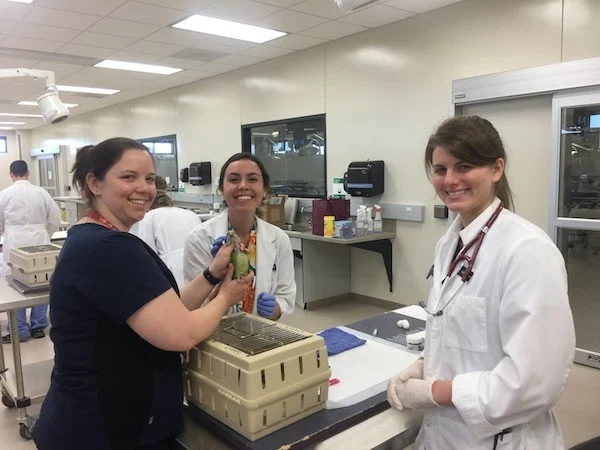
Despite the success of virtual lectures, the program has maintained a steadfast commitment to tactile, hands-on learning through sponsored wet labs. These sessions are critical for developing the fine motor skills required for avian and exotic surgery. Texas A&M University has been a frequent beneficiary of this support, hosting annual Zoo, Exotics, and Wildlife (ZEW) Club wet labs that cover everything from avian reproductive surgery to fish anesthesia.
In 2023 and 2024, these hands-on opportunities expanded to include local rescues. At Michigan State University, Dr. Jack Kottwitz led physical examination labs at "Birds and Beaks," a local bird rescue. This dual-purpose model provides students with real-world clinical experience while offering much-needed veterinary services to non-profit organizations. Other notable hands-on sessions include rabbit dentistry labs at Louisiana State University led by Dr. Javier Nevarez and avian blood smear workshops at North Carolina State University, which provide students with essential diagnostic skills that are often outsourced in general practice.
Conservation and Public Policy Integration
The educational series also addresses the broader societal and environmental context of veterinary medicine. In late 2024, the University of Tennessee hosted Janelle Musser, a black bear support biologist from the Tennessee Wildlife Resources Agency, to discuss the management of native wildlife. This aligns with other conservation-focused events, such as Dr. LoraKim Joyner’s lectures on "Transformative Parrot Conservation" and "The Human Dimension of Parrot Conservation." These sessions challenge students to think beyond the individual patient and consider the veterinarian’s role in ecosystem health and species survival.
Furthermore, the program has touched on public health and regulatory veterinary medicine. In 2023, Dr. Sara McReynolds briefed Kansas State University students on Highly Pathogenic Avian Influenza (HPAI), a topic of immense importance to both wildlife conservation and the global poultry industry. By integrating these topics, Lafeber ensures that veterinary graduates are prepared for the regulatory and epidemiological challenges of the modern era.
Historical Chronology and Institutional Impact
Since its inception, the program has touched nearly every major veterinary college in North America and several in Europe. The timeline shows a steady growth in complexity:
- 2007–2012: Early sessions focused on falconry, basic avian handling, and the introduction of specialized nutrition. Key speakers included Dr. Marla Lichtenberger and Dr. M. Scott Echols.
- 2013–2018: The program expanded into "Special Species Symposia," providing silver and gold-level sponsorships for multi-day conferences at Cornell, Penn, and UC Davis. This era saw an increase in advanced surgical topics, such as microsurgery and orthopedic interventions.
- 2019–2024: A period of rapid diversification, including sessions on elephant reproduction, sea turtle imaging, and the ethics of fish pain perception. The program also began addressing diversity in the profession, with Dr. Kemba Marshall discussing DEI in zoological medicine at Tufts University.
- 2025–2026: A forward-looking phase characterized by globalized virtual learning and a focus on high-tech diagnostics like CT scans and advanced ultrasound in avian patients.
Analysis of Professional Implications
The long-term impact of these educational initiatives cannot be overstated. By providing consistent funding and access to elite specialists, Lafeber has helped standardize the level of care for exotic species across the veterinary profession. Historically, many veterinary graduates felt ill-equipped to treat birds or reptiles, leading to a gap in care for the millions of non-traditional pets in households worldwide.
The shift toward board certification is a direct beneficiary of this environment. In October 2024, the University of California at Davis hosted a panel discussion on board certification in exotic animal medicine. Such events demystify the path to specialization and encourage students to pursue residency programs, ultimately increasing the number of Diplomates in the American Board of Veterinary Practitioners (ABVP) and the American College of Zoological Medicine (ACZM).
Conclusion: A Legacy of Academic Partnership
The collaboration between the Lafeber Company and global veterinary institutions represents a gold standard for corporate-academic partnerships. By focusing on evidence-based medicine, practical skill acquisition, and a broad view of conservation, the program has moved the needle on animal welfare. As the scheduled events for 2026 approach, the initiative continues to adapt to the needs of the modern student, ensuring that the next generation of veterinarians is as comfortable treating a scarlet macaw or a green sea turtle as they are a domestic feline. This sustained investment ensures that the "special" in special species medicine refers to the unique expertise of the practitioner rather than a lack of available care.

