


Since its historic launch on Christmas Day 2021, the James Webb Space Telescope (JWST) has fundamentally altered the landscape of modern astronomy. Now marking its fourth year of development and operations, the $10 billion international collaboration between NASA, the European Space Agency (ESA), and the Canadian Space Agency (CSA) has transitioned from a high-stakes engineering feat into the most powerful scientific tool ever deployed in space. While its primary mission is to unlock the secrets of the early universe, the telescope has also gained a massive public following for its breathtaking visual catalog. The following selection of the 25 best images captured by Webb thus far represents a unique intersection of aesthetic beauty and groundbreaking scientific achievement.
The Evolution of a Cosmic Giant: A Brief Chronology
The journey of the James Webb Space Telescope began decades before its first image was released. Conceived as the successor to the Hubble Space Telescope, Webb was designed to see the universe in infrared light, allowing it to peer through dust clouds that previously obscured the view of astronomers.
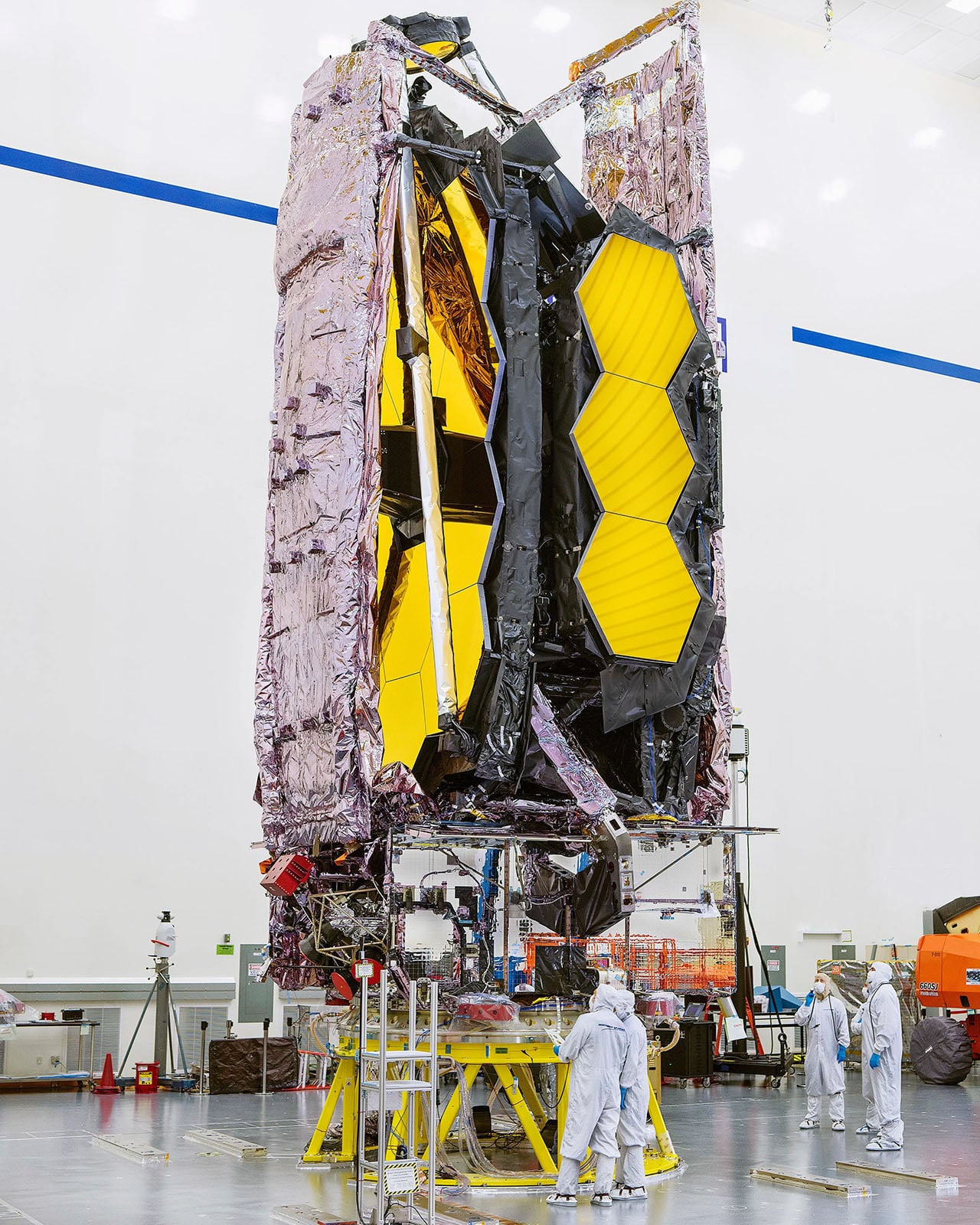
The timeline of Webb’s success is a testament to international perseverance. Following its launch in December 2021, the telescope underwent a complex six-month commissioning phase. This included the delicate unfolding of its five-layer sunshield—roughly the size of a tennis court—and the alignment of its 18 hexagonal gold-plated mirror segments. On July 12, 2022, the world saw the first full-color images, marking the official start of its science operations. Since then, Webb has consistently delivered data that challenges existing cosmological models, particularly regarding the speed of galaxy formation in the early universe.
Probing the Solar System: Our Galactic Neighbors
While Webb was built to look billions of light-years away, some of its most striking contributions have occurred much closer to home. By utilizing its Near-Infrared Camera (NIRCam), Webb has provided high-resolution views of the gas and ice giants in our own solar system.
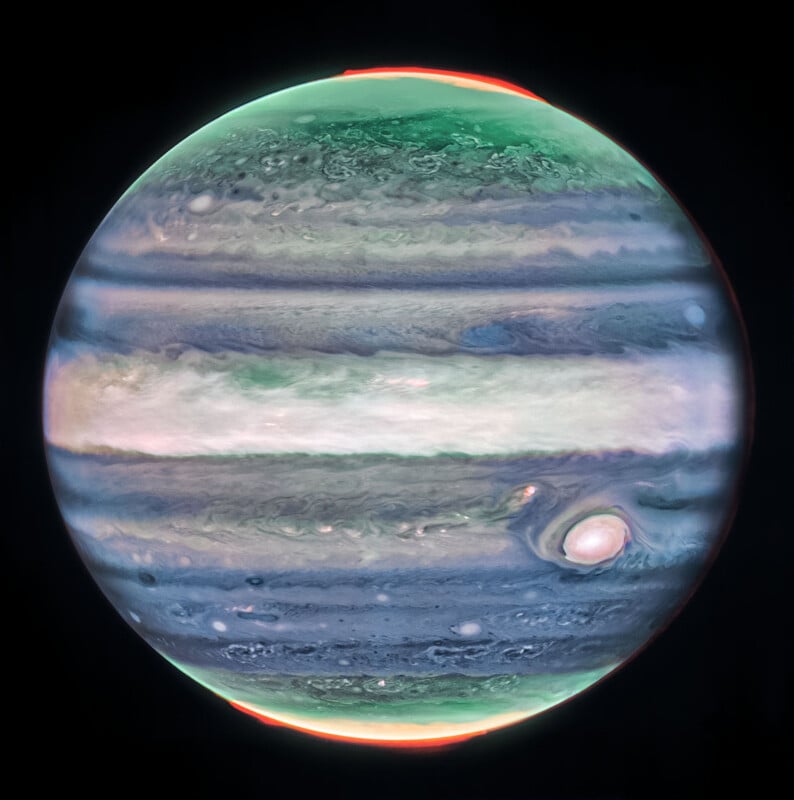
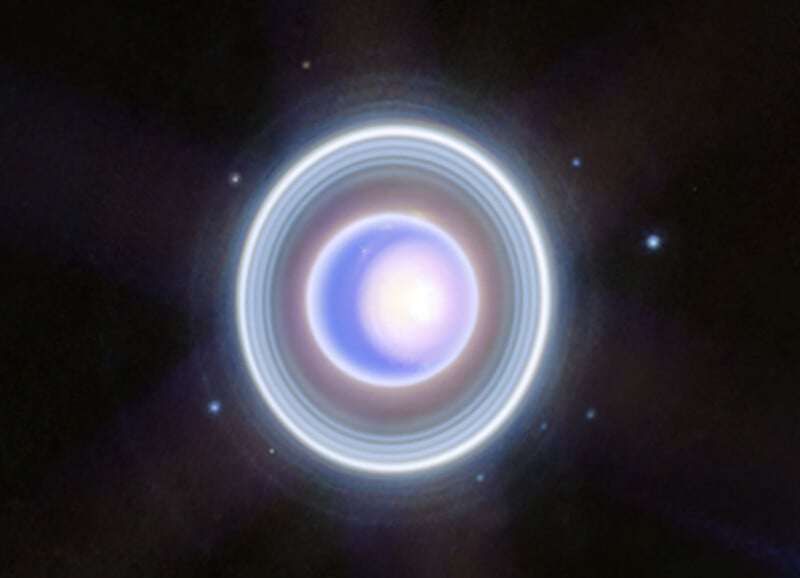
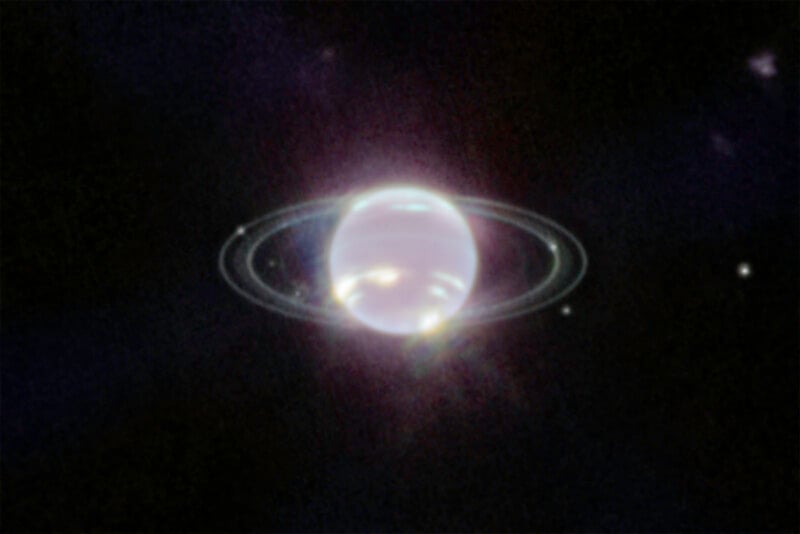
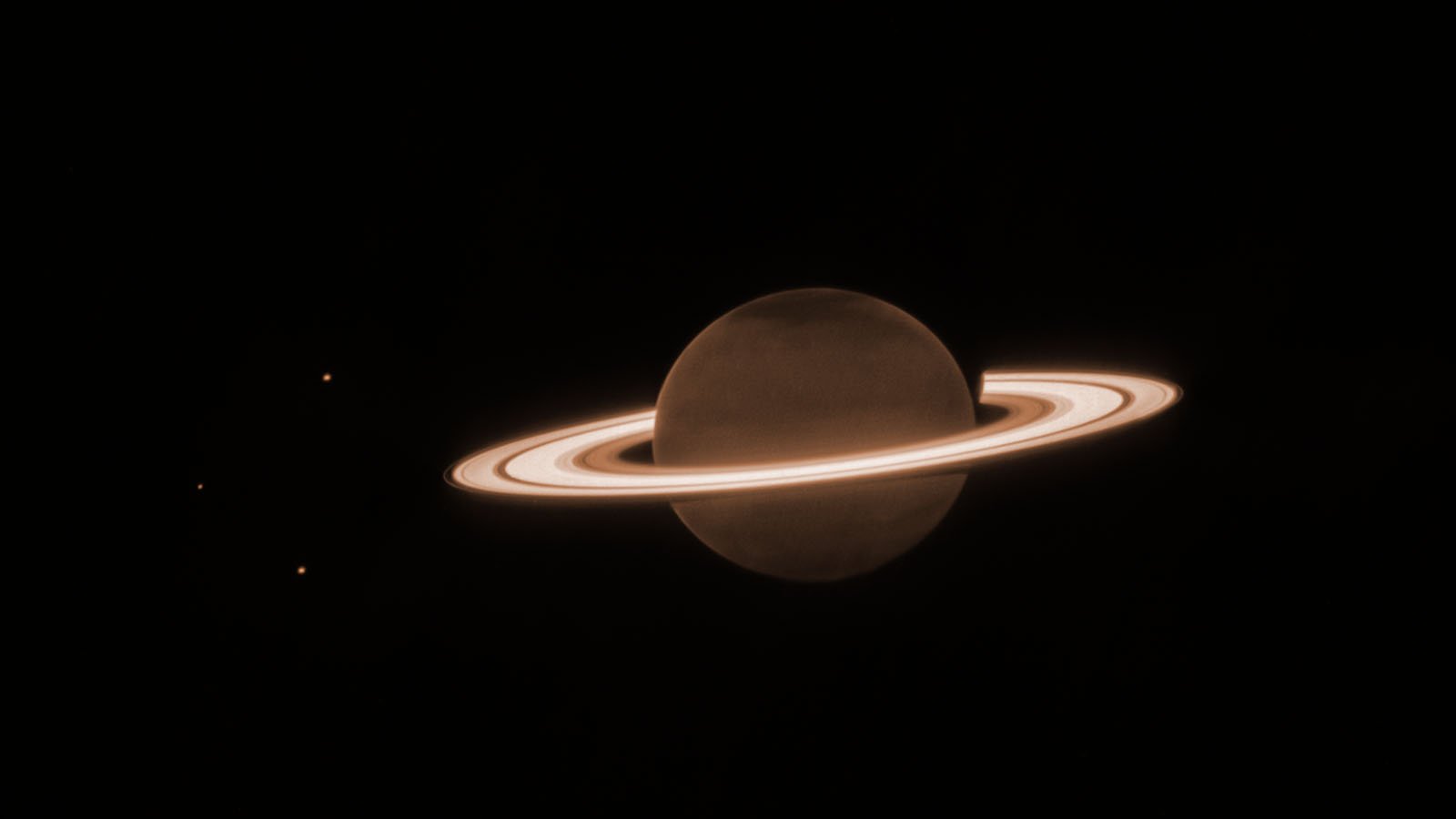
The telescope’s portrait of Jupiter, for instance, revealed the planet in a light never before seen by the human eye. The image showcased vivid auroras at the poles and the "Great Red Spot" glowing white due to its reflection of sunlight. Similarly, Webb’s observations of Uranus and Neptune have provided scientists with unprecedented clarity regarding their ring systems and atmospheric compositions. In the case of Uranus, Webb resolved nine of the planet’s 27 moons and captured the seasonal north polar cap with startling precision. Perhaps most haunting is the image of Saturn, where the planet’s rings appear to glow against a dark void, a result of the methane gas in the atmosphere absorbing sunlight at specific infrared wavelengths.
Nebulae and the Birth of Stars
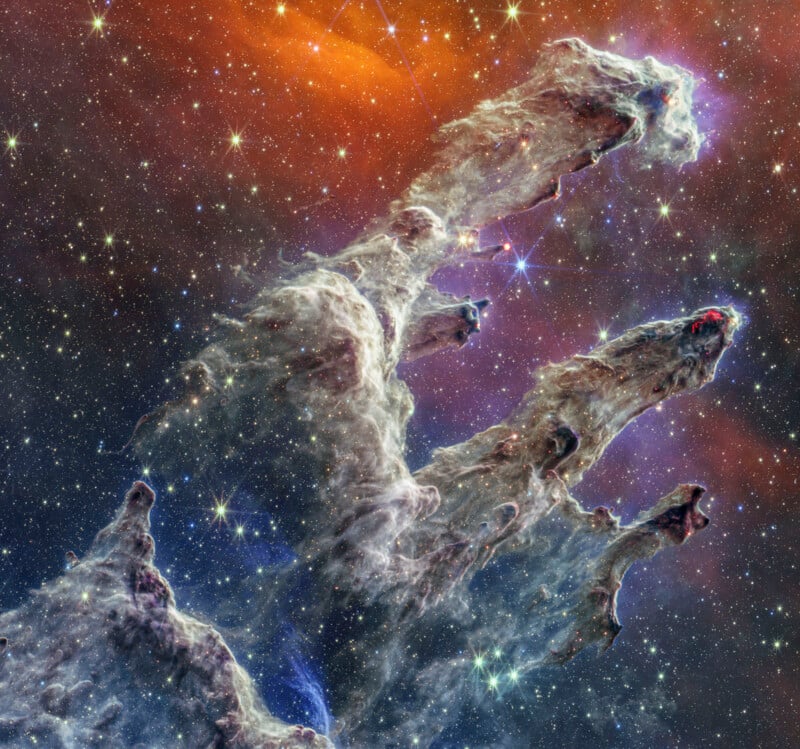
One of Webb’s most significant scientific advantages is its ability to see through interstellar gas and dust. In the "Pillars of Creation," a region within the Eagle Nebula made famous by Hubble in 1995, Webb’s infrared capabilities allowed it to look "inside" the towering columns of gas. By combining data from the Mid-InfraRed Instrument (MIRI) and NIRCam, the resulting composite image reveals thousands of sparkling stars that were previously hidden, providing new data on how stars form and erupt from these dusty cocoons.
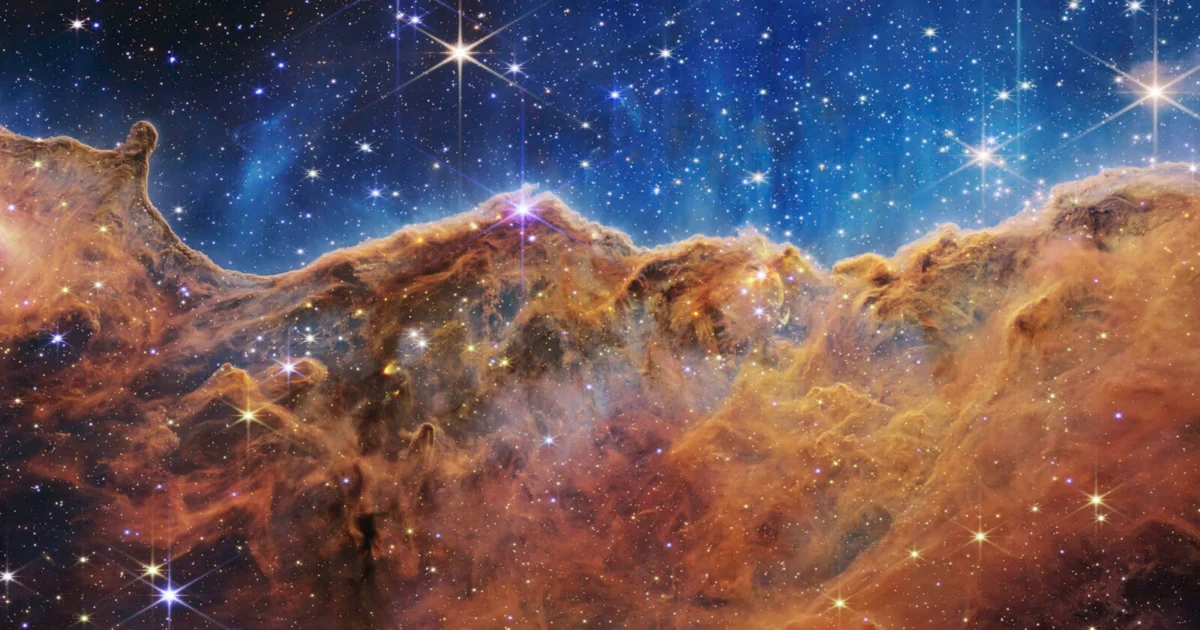
The Carina Nebula, often referred to as the "Cosmic Cliffs," serves as another prime example of Webb’s resolution. This image captures the edge of a giant, gaseous cavity where extremely massive, hot stars are forming. The "steam" that appears to rise from the celestial mountains is actually hot, ionized gas and dust streaming away from the nebula due to intense stellar radiation. These observations are crucial for understanding the lifecycle of stars and the impact they have on their surrounding environments.
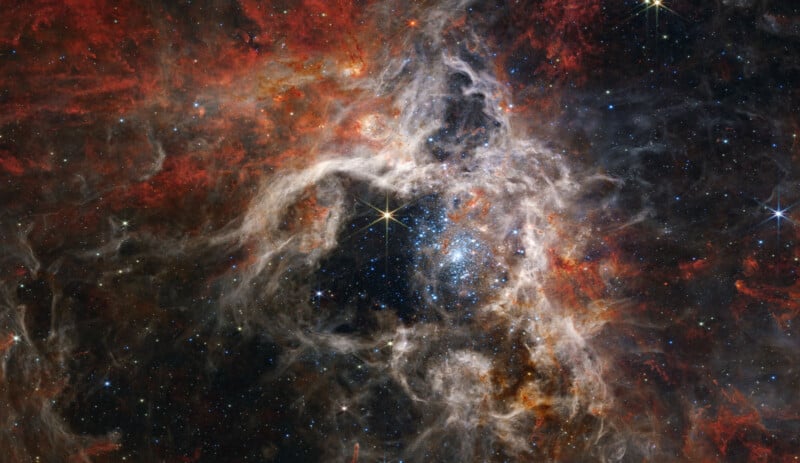
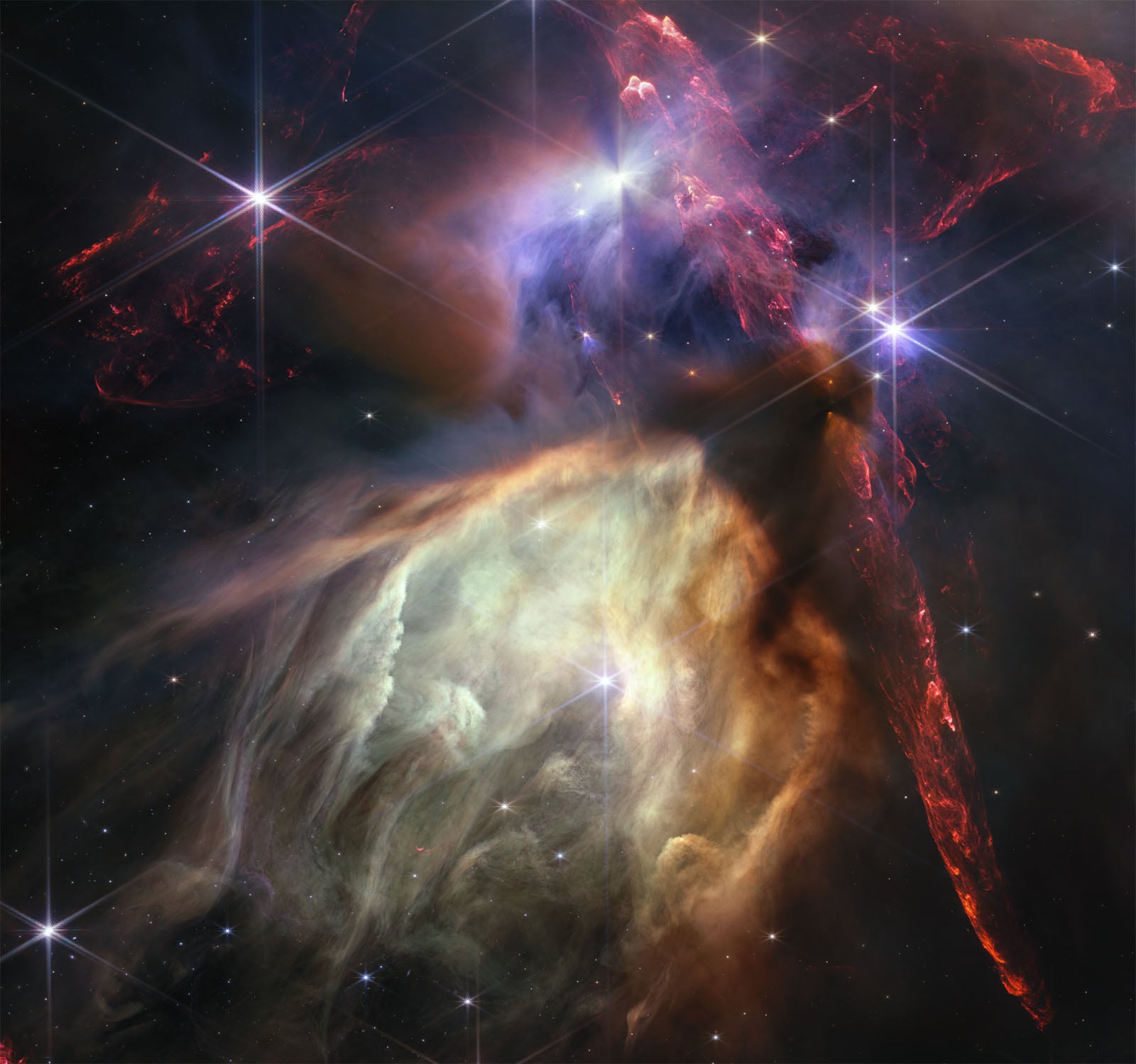
In the Rho Ophiuchi cloud complex—the closest star-forming region to Earth—Webb celebrated its first anniversary of science operations. The image depicted a chaotic yet beautiful scene of red molecular hydrogen jets and glowing dust, illustrating the violent birth of sun-like stars.
Galactic Dynamics and Cosmic Collisions
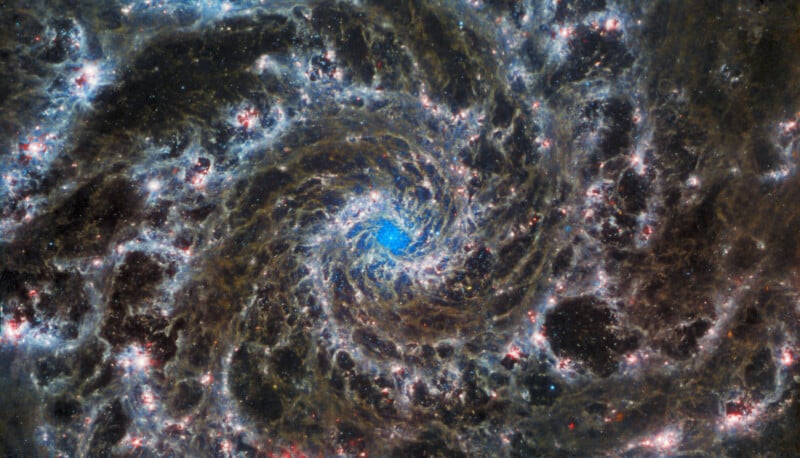
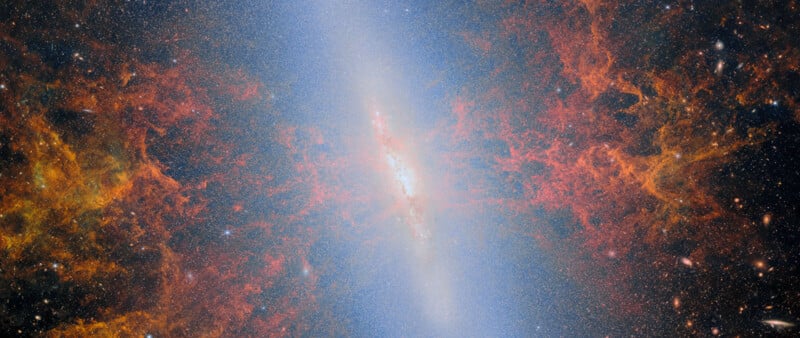
Webb has also focused its mirrors on the grand architecture of galaxies. Messier 74, also known as the "Phantom Galaxy," was imaged using MIRI to highlight the intricate "skeletal" structure of gas and dust in its spiral arms. These observations help astronomers map the star-forming regions within galaxies and understand the distribution of mass.
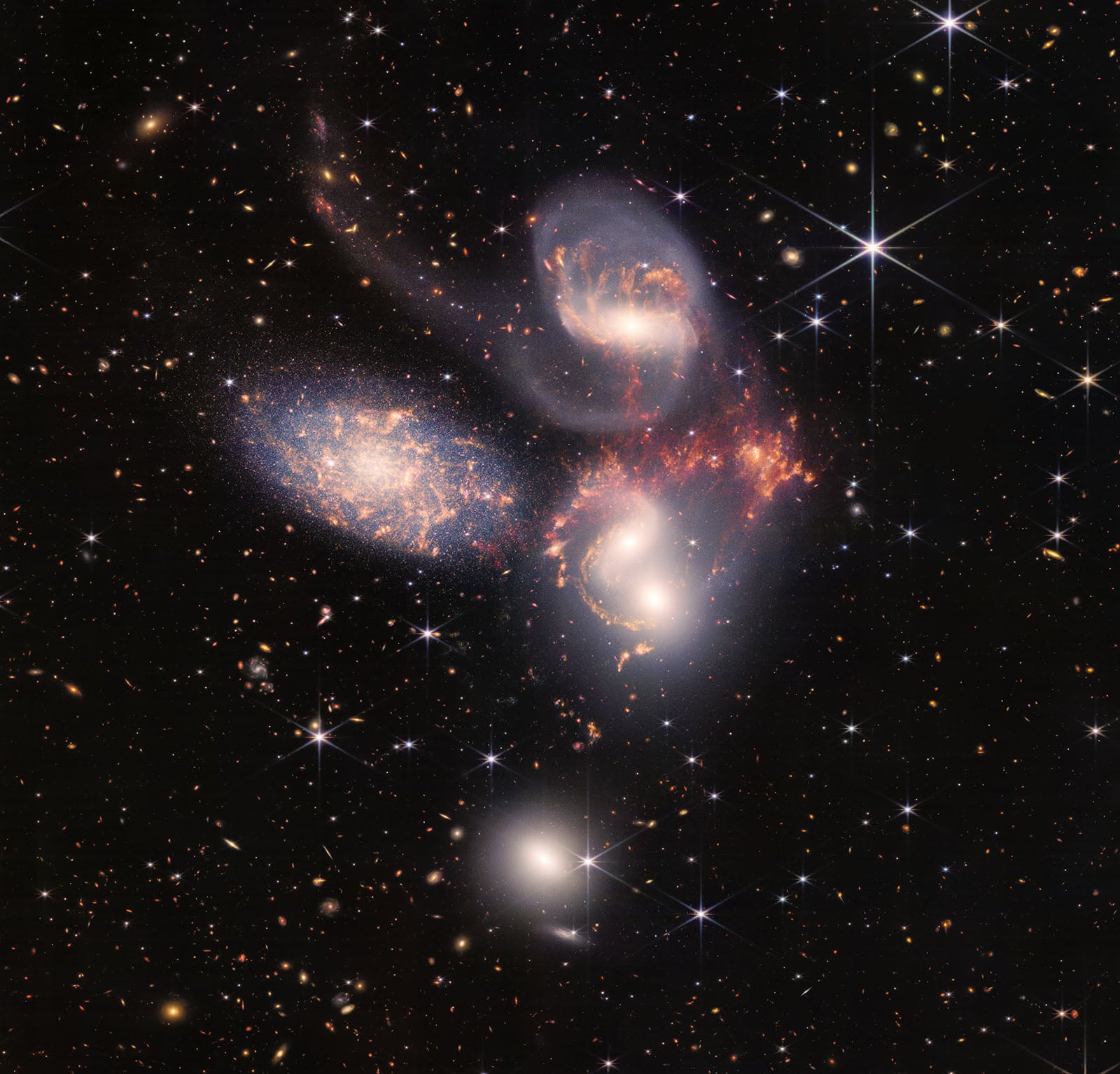
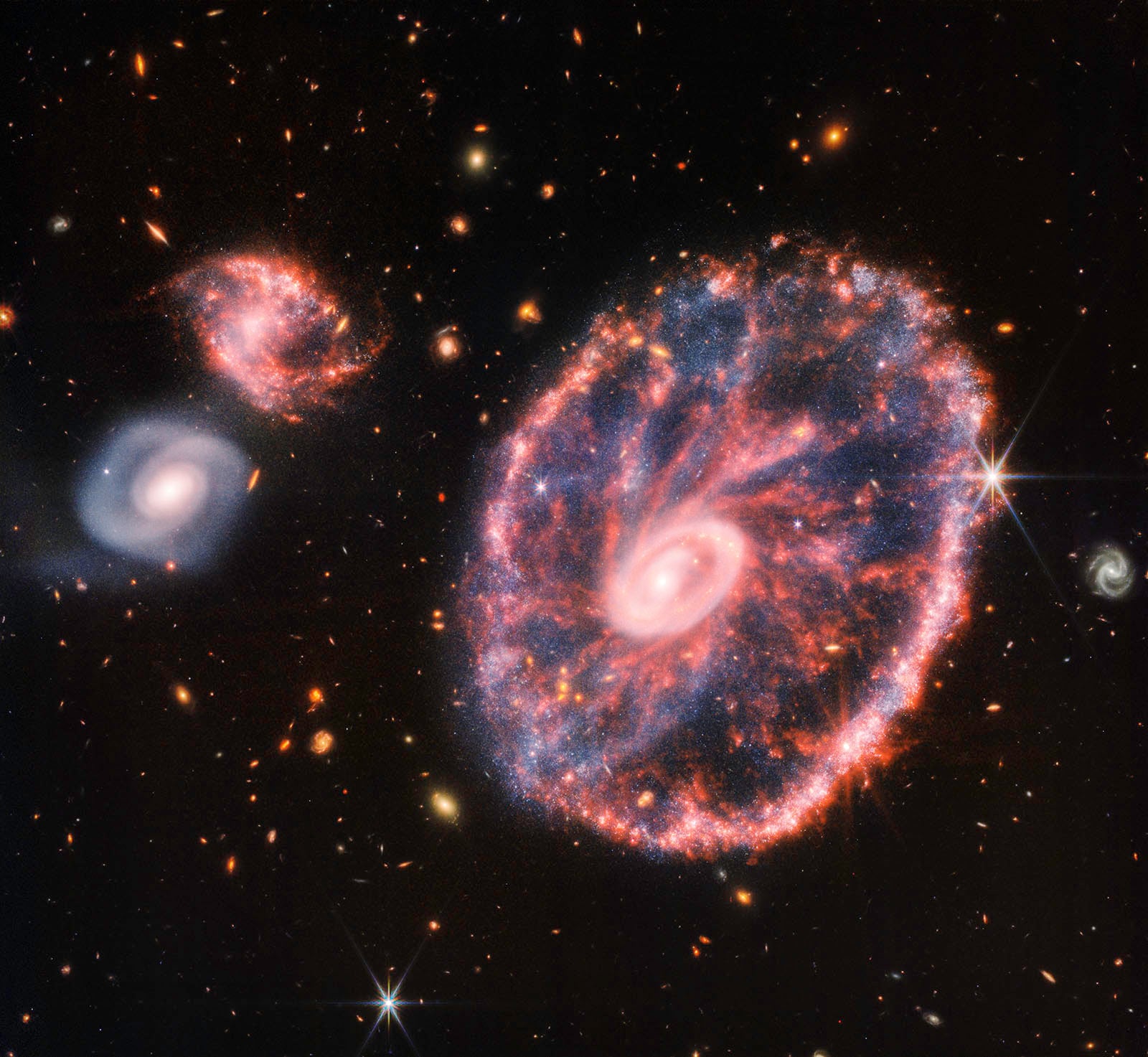
The telescope has also captured dramatic "cosmic battles." Stephan’s Quintet, a group of five galaxies, shows four of them locked in a gravitational dance that will eventually lead to mergers. Webb’s data revealed the shockwaves produced as one galaxy, NGC 7318B, smashed through the cluster. Similarly, the Cartwheel Galaxy, located 500 million light-years away, reveals the aftermath of a high-speed collision between a large spiral galaxy and a smaller companion. This event created a double-ring structure, resembling the ripples in a pond after a stone is tossed in.

Peerless Depth: The Early Universe and Gravitational Lensing
The true "raison d’être" for the JWST is the study of the deep past. The image of the galaxy cluster SMACS 0723, known as Webb’s First Deep Field, covers a patch of sky approximately the size of a grain of sand held at arm’s length. Yet, it contains thousands of galaxies. This image utilized a phenomenon known as gravitational lensing, where the massive foreground cluster warps space-time, acting as a natural magnifying glass for the much more distant and fainter galaxies behind it.
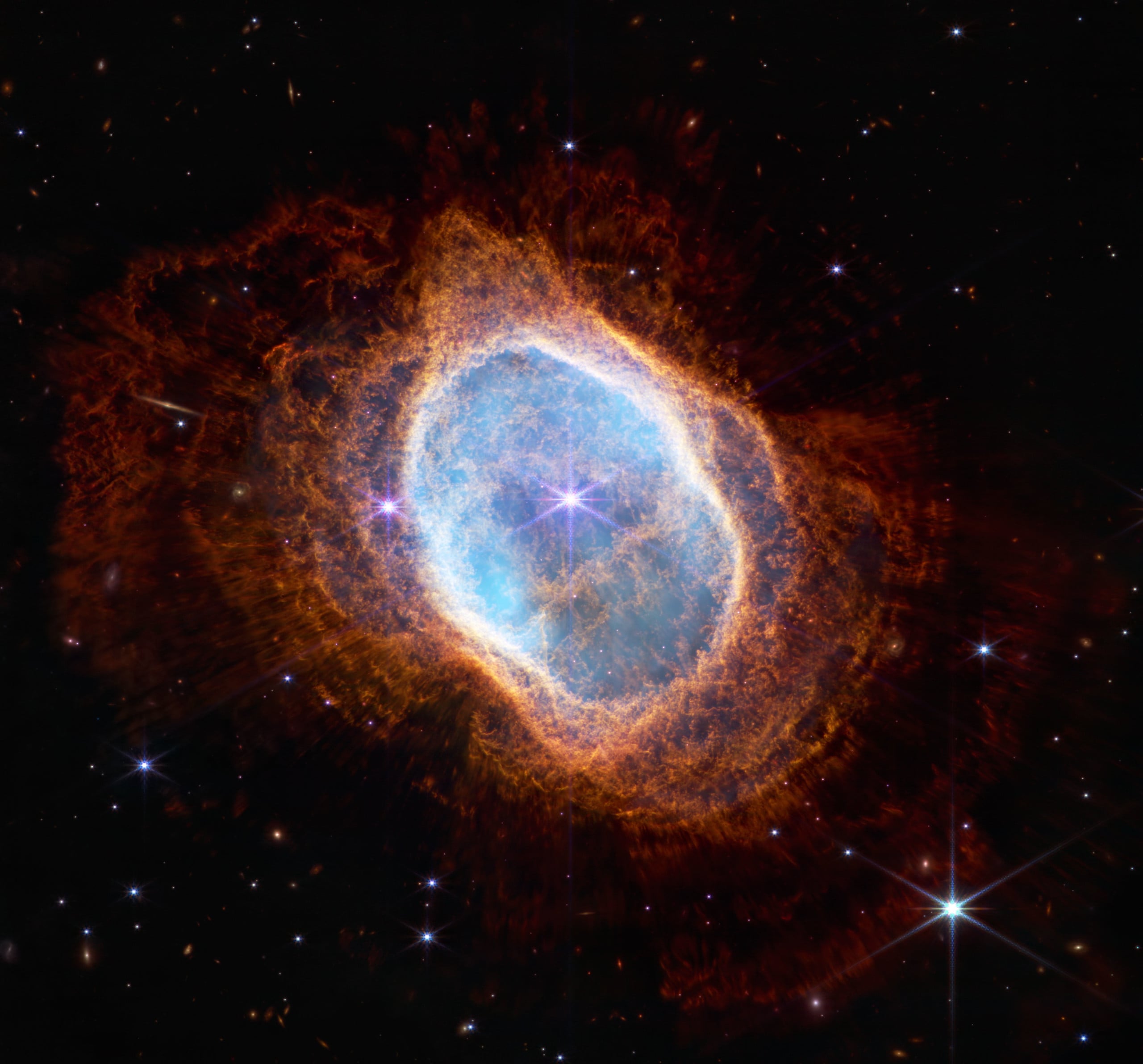
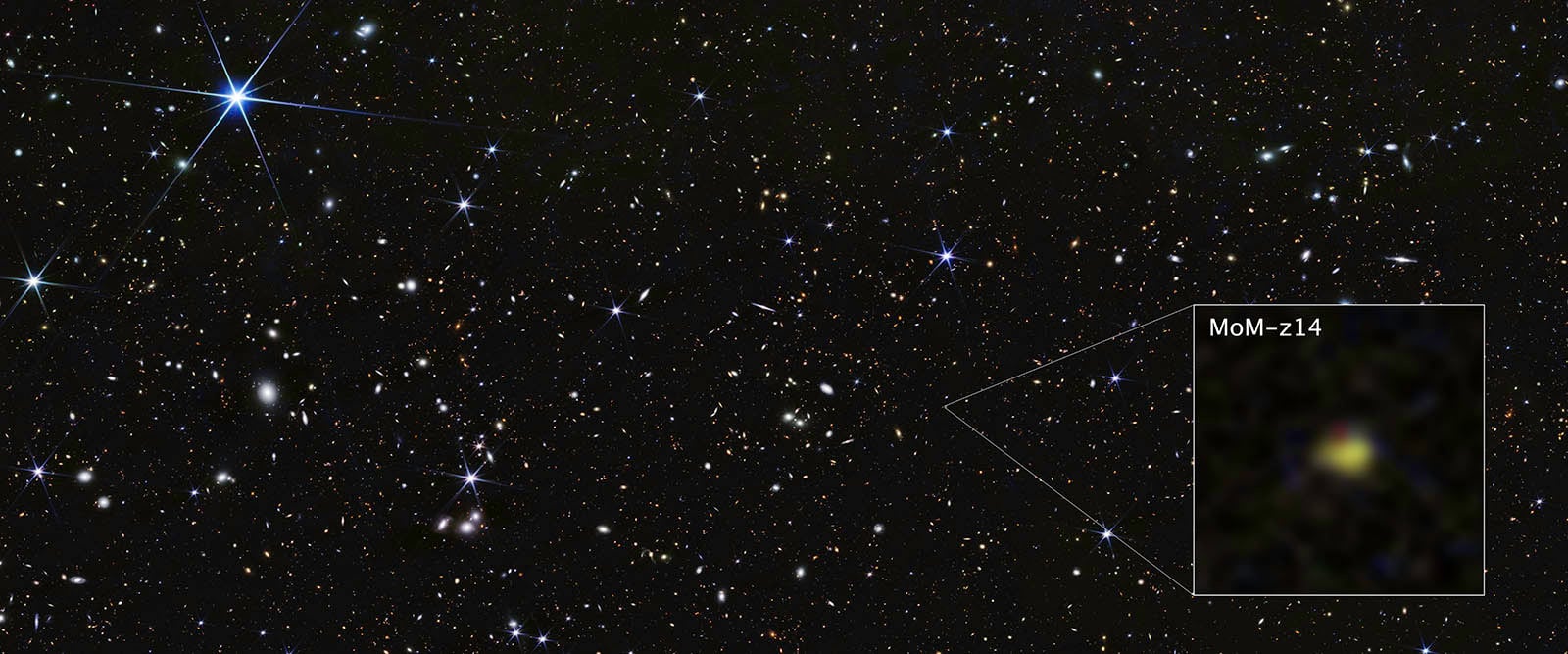
Webb has repeatedly broken its own records for the most distant galaxy ever observed. The galaxy MoM-z14, for instance, existed just 280 million years after the Big Bang. These findings are revolutionary; they suggest that galaxies in the early universe were much more massive and luminous than previously predicted by standard cosmological theories.
The JADES (JWST Advanced Deep Extragalactic Survey) program has further expanded this reach, capturing images containing upwards of 45,000 galaxies in a single field. This massive data set allows scientists to study the "Cosmic Dawn," the period when the first stars and galaxies began to light up the universe.

Technical Achievement and Scientific Impact
The success of these images is rooted in Webb’s sophisticated suite of four main instruments:
- NIRCam (Near-Infrared Camera): The primary imager that detects light from the earliest stars and galaxies.
- MIRI (Mid-Infrared Instrument): Equipped with a camera and a spectrograph that sees light in the mid-infrared region, essential for observing cooler objects like debris disks and extremely distant galaxies.
- NIRSpec (Near-Infrared Spectrograph): Capable of observing 100 objects simultaneously to analyze their chemical composition, temperature, and mass.
- FGS/NIRISS (Fine Guidance Sensor and Near Infrared Imager and Slitless Spectrograph): Used for "first light" detection and exoplanet transit observations.
By operating at the second Lagrange point (L2), nearly a million miles from Earth, Webb maintains a stable, cold environment necessary for infrared sensitivity. This position, combined with its 6.5-meter primary mirror, gives it a light-collecting area about 6.25 times that of Hubble.
Official Responses and the Future of the Mission
NASA Administrator Bill Nelson has frequently remarked that Webb is not just a telescope but a "mission to find our place in the universe." Following the release of the anniversary images, NASA project scientists noted that the telescope’s performance has exceeded all pre-launch expectations. The precision of the Ariane 5 launch vehicle also resulted in a fuel-saving trajectory that has extended the telescope’s potential operational lifespan from an initial 10-year estimate to more than 20 years.
The Space Telescope Science Institute (STScI) in Baltimore, which manages Webb’s operations, continues to receive thousands of proposals from the global scientific community. Future cycles of observation are expected to focus more heavily on the atmospheres of exoplanets—planets orbiting other stars—searching for chemical signatures of water, methane, and carbon dioxide that could indicate habitability.
Conclusion: A New Era of Enlightenment
The 25 images highlighted in this anniversary retrospective are more than just visual wonders; they are data-rich maps of the history of the cosmos. From the glowing rings of Saturn to the ancient, warped light of galaxies formed at the dawn of time, the James Webb Space Telescope has proven that the intersection of art and science is where human understanding truly flourishes. As Webb enters its fifth year of operation, the scientific community anticipates even deeper dives into the "dark ages" of the universe, potentially uncovering the very origins of the building blocks of life. The $10 billion investment has already begun to pay dividends in the form of a rewritten cosmic history, ensuring that Webb’s legacy will be felt for generations of astronomers to come.

