


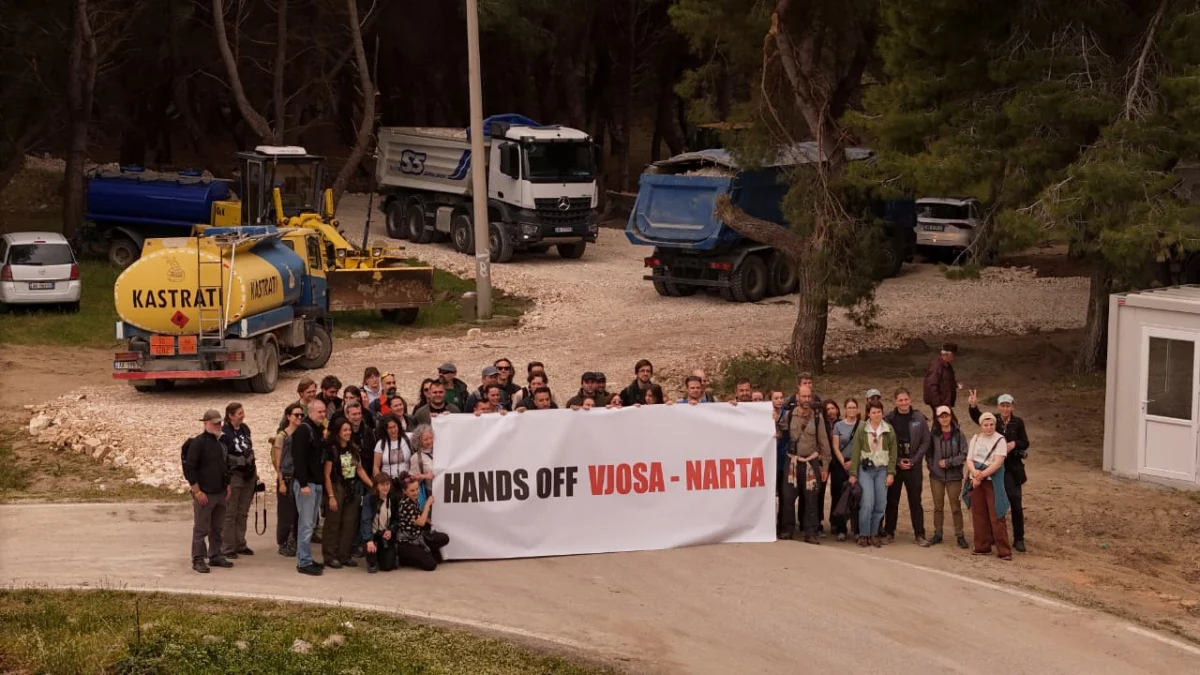
The pristine beauty of the Albanian coast in spring, a vibrant tapestry of flamingos wading through tranquil lagoons, Dalmatian Pelicans gracefully gliding overhead, and millions of migratory birds finding sanctuary in ancient pine forests, is under severe threat. Pishë Poro-Nartë, recognized as one of the Mediterranean’s last remaining wild coastlines and a site of profound global ecological importance, is currently being ravaged by bulldozers. The destruction is proceeding without an approved project, public consultation, environmental impact assessment, or any discernible construction permit, raising urgent questions about accountability and the rule of law in a nation striving for European Union accession.
Heavy machinery began its destructive advance into this protected area at the end of April. Ancient trees are being felled, sand dunes meticulously shaped over centuries are being leveled, and the perpetrators of this environmental vandalism remain shrouded in secrecy. This lack of transparency, in itself, points to a potential scandal that risks irreversible damage to a vital natural heritage.
A Priceless Ecological Haven Under Siege
Pishë Poro-Nartë is an integral part of the Vjosa-Nartë Protected Landscape, a designation that encompasses the delta of the Vjosa River, often lauded as one of Europe’s last truly wild rivers. This expansive protected area is a biodiversity hotspot, providing critical habitat for over 70 endangered species and more than 200 distinct bird species. The ancient pine forest, a non-renewable resource, stands as a crucial resting point and refueling station along one of Europe’s most vital avian migration corridors, the Adriatic Flyway. The potential loss of this ecosystem carries ecological consequences that extend far beyond Albania’s national borders, impacting migratory bird populations across continents.
The ecological significance of this region is underscored by its role in supporting the life cycles of numerous species. For instance, the Dalmatian Pelican (Pelecanus crispus), a species listed as Near Threatened by the IUCN, relies heavily on the sheltered lagoons and abundant fish populations found in the Nartë Lagoon, which forms part of Pishë Poro-Nartë. Similarly, the vibrant flocks of flamingos are indicative of healthy wetland ecosystems, crucial for their feeding and breeding. The pine forests, beyond their aesthetic value, provide essential nesting sites and protection from predators for a multitude of bird species undertaking their arduous annual migrations.
Exploiting a Legislative Loophole: A Race Against Time
The current crisis appears to be rooted in a controversial amendment to Albania’s Law on Protected Areas. This amendment, enacted previously, controversially permits luxury resort construction within designated protected zones. Such provisions directly contravene established EU nature protection standards, a point of significant concern for the European Commission, especially given Albania’s ongoing EU accession negotiations. While the Albanian government has provided assurances that this law will be amended to align with EU requirements, the unfolding events suggest a deliberate exploitation of a temporal window.
Aleksandër Trajçe, Director of PPNEA, the Albanian partner organization of BirdLife Europe, has articulated a stark assessment of the situation. The perceived strategy, he suggests, is to expedite development activities on the ground before a stricter, more protective legal framework is fully implemented. This approach prioritizes immediate construction over long-term environmental preservation, creating a fait accompli that could render future legal reforms ineffective in protecting the affected areas.
Compounding the alarm is the strong indication that the ongoing works are illegal even under the existing, already problematic legislation. Reports indicate a complete absence of environmental assessments, public consultations, and transparent permitting processes. Furthermore, no official authority has provided any explanation regarding the nature of the construction, the entities involved, or the authorization behind these activities. Adding another layer of complexity, a major development project reportedly linked to Jared Kushner has also been earmarked for this region, although the direct connection between these planned developments and the current destructive works remains unclear, fueling speculation and concern.
A Chronology of Concern and Action
The escalating destruction at Pishë Poro-Nartë has prompted a swift response from international conservation organizations.
- Late April: Heavy machinery reportedly enters the Pishë Poro-Nartë protected area. Initial reports indicate the commencement of tree felling and sand dune leveling.
- Early May: Conservation organizations, including BirdLife Europe and its Albanian partner PPNEA, begin raising public awareness about the escalating destruction.
- Mid-May: BirdLife Europe’s Regional Director Ariel Brunner and Head of Policy Anouk Puymartin travel to Tirana to engage with Albanian authorities.
- Mid-May: BirdLife Europe holds a press conference in Tirana, issuing a direct appeal to Albanian institutions to halt the works.
During their visit to Tirana, BirdLife Europe representatives engaged in discussions with Albanian authorities. While these conversations were described as constructive, and assurances were received regarding the upcoming legislative update this year, the immediate cessation of destructive activities remains the paramount concern.
International Scrutiny and Calls for Immediate Intervention
The international community is closely monitoring the situation. The European Commission has consistently emphasized the need for Albania to align its environmental legislation with EU standards. The current actions in Pishë Poro-Nartë appear to be a direct challenge to these commitments and a potential impediment to Albania’s EU accession trajectory.
In a pointed statement during a press conference in Tirana, Ariel Brunner, BirdLife Europe’s Regional Director, declared, "Bulldozers are operating in a completely illegal way, based on unclear decisions and a total lack of transparency – and this needs to stop." This statement underscores the urgency and the perceived illegality of the ongoing operations. The concern is that by the time any reformed law comes into effect, the vital forest ecosystem it was intended to protect may have already been irrevocably lost.
BirdLife Europe, along with PPNEA and other environmental advocates, is issuing a strong call to action for Albanian institutions. Their demands include:
- Immediate halt to all ongoing works: This is considered the most critical step to prevent further irreversible damage.
- Publication of all permits and project documents: Transparency is demanded regarding any authorization, planning, or documentation associated with the site.
- Launch of a full legal investigation: A comprehensive inquiry is needed to determine who authorized these activities, under what legal basis, and to hold responsible parties accountable for any violations.
Broader Implications: Betrayal of Trust and Missed Opportunities
The potential destruction of Pishë Poro-Nartë represents more than just an environmental tragedy; it is seen as a betrayal of the Albanian people, a disregard for European commitments, and a grave injustice to the millions of migratory birds that depend on this critical habitat. Albania’s wild coast is rightly identified as one of its most valuable natural assets, a source of ecological wealth, tourism potential, and national pride. To sacrifice this for short-term, potentially illicit development would be a profound and lasting mistake.
The economic implications of such destruction are also significant. Healthy coastal ecosystems contribute to sustainable tourism, fisheries, and the overall well-being of local communities. The degradation of Pishë Poro-Nartë could lead to long-term ecological imbalances, impacting fish stocks, coastal erosion, and the overall health of the Adriatic Sea.
Furthermore, the handling of this situation raises concerns about Albania’s commitment to good governance and the rule of law, crucial factors in its EU accession process. The lack of transparency and apparent disregard for environmental regulations, even under existing laws, could cast a shadow over future negotiations and investments.
The narrative unfolding at Pishë Poro-Nartë is a stark reminder of the perennial conflict between development pressures and environmental protection. The actions taking place on this ecologically vital stretch of Albanian coastline demand immediate attention, robust legal scrutiny, and a decisive intervention to safeguard a natural treasure for future generations and the global biodiversity it supports. The international community, including the European Union, will be watching closely to see how Albania navigates this critical juncture and upholds its environmental responsibilities.

