


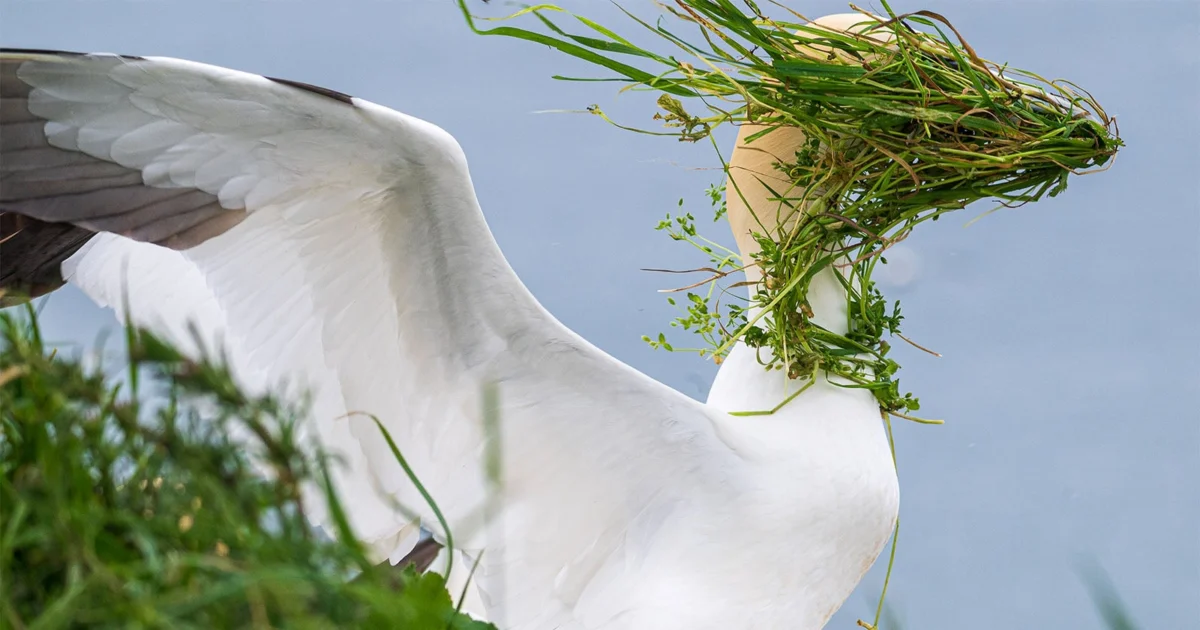
British photographer Alison Tuck has been declared the winner of the Sterna People’s Choice Award for the 2025 Nikon Comedy Wildlife Awards, following a public vote that saw her humorous depiction of a seabird surpass dozens of other finalists. The winning photograph, titled "Now which direction is my nest?", features a Northern Gannet momentarily blinded by a beak full of nesting material, capturing a relatable moment of navigational confusion in the natural world. The announcement marks a significant milestone for the 2025 competition cycle, highlighting the intersection of high-end technical photography and the lighthearted charm of wildlife behavior.
The Nikon Comedy Wildlife Awards, which transitioned into a partnership with the optics giant Nikon in recent years, continues to serve as a platform for highlighting the lighter side of nature while promoting global conservation efforts. Tuck’s image was selected from a shortlist of 40 finalists, all of which were vetted for their comedic timing, technical execution, and originality. According to the competition organizers, the public response to Tuck’s entry was overwhelmingly positive, with the image "convincingly" securing the top spot in the popular vote.
The Story Behind the Winning Frame
The award-winning photograph was captured at Bempton Cliffs in East Yorkshire, a renowned Royal Society for the Protection of Birds (RSPB) reserve. Bempton Cliffs is famous for hosting one of the UK’s most significant seabird colonies, where half a million birds congregate between March and October to nest on the towering white chalk cliffs. Among these inhabitants, the Northern Gannet (Morus bassanus) is one of the most visually striking, known for its six-foot wingspan and piercing blue eyes.
Alison Tuck recounted the specific environmental conditions that led to the capture of the image. On the day of the shoot, heavy onshore winds made photography from a boat impossible, forcing Tuck and her colleagues to remain on the clifftops. However, these same winds proved advantageous for photography. The gannets, struggling against the gusts while carrying grass and seaweed for their nests, were pushed closer to the cliff edges and forced into hovering patterns. This gave Tuck the rare opportunity to capture close-up, high-detail shots of the birds in flight.
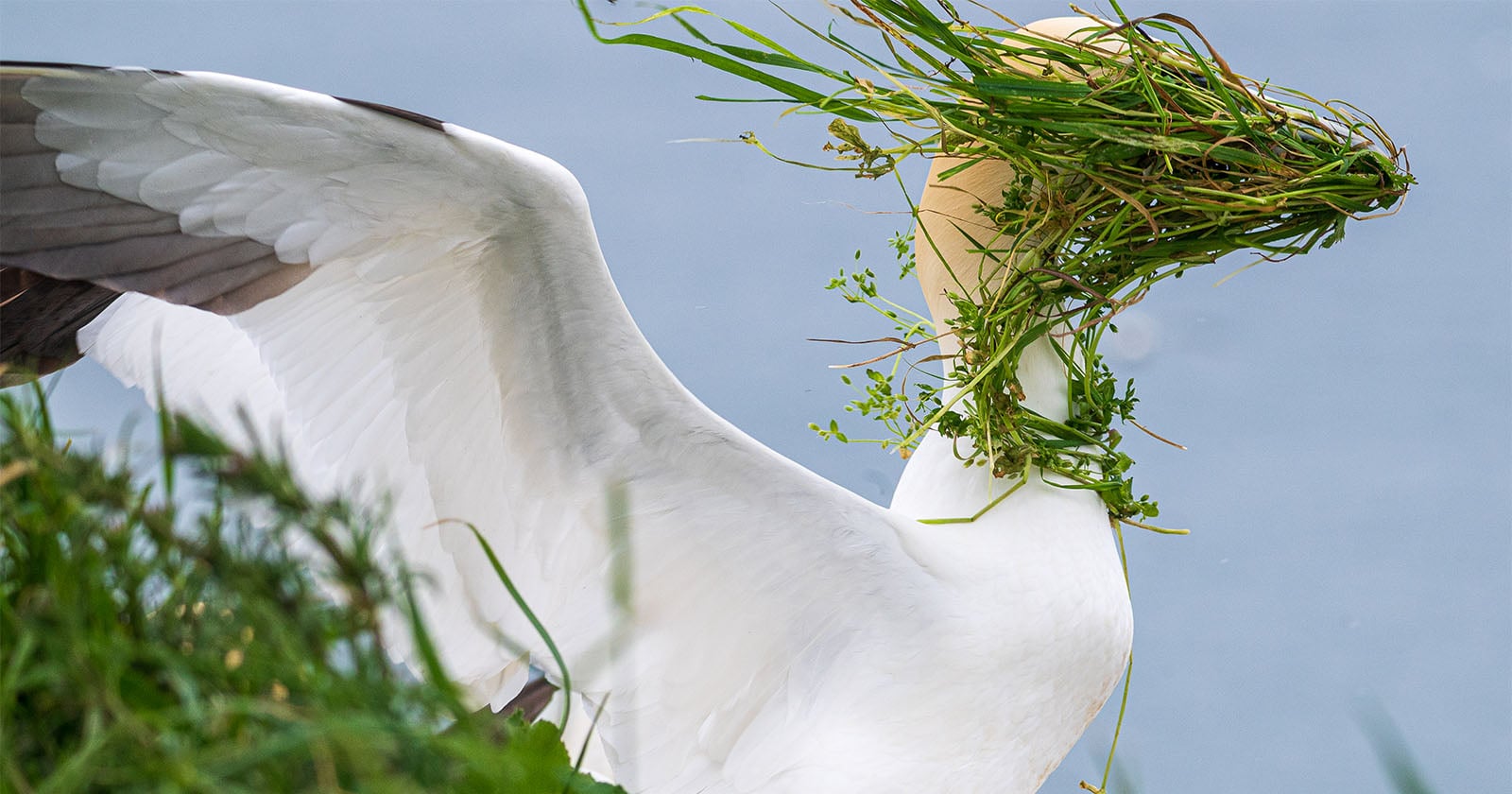
The resulting image captures a gannet mid-air, its face almost entirely obscured by a massive clump of greenery. The composition perfectly illustrates the "comedy" requirement of the competition—transforming a routine biological task (nest building) into a moment of slapstick humor.
Technical Specifications and Photographer Profile
The victory is a personal triumph for Alison Tuck, who has maintained a lifelong dedication to photography. Her journey began with analog systems, specifically the Olympus OM1 and OM2 35mm SLRs, which were staples of the film era. As digital technology evolved, Tuck transitioned through various systems, including an early Kodak point-and-shoot and eventually her first digital single-lens reflex (DSLR) camera, the Nikon D70, which she purchased for a trip to Borneo.
Coincidentally, the winning image was captured using the Nikon Z8, one of the industry’s most advanced mirrorless cameras. The Z8 is often cited by professionals as a "mini-Z9," offering a 45.7-megapixel stacked sensor and a sophisticated autofocus system capable of tracking animal eyes and fast-moving subjects. In the context of wildlife photography, where subjects like gannets can fly at speeds of up to 60 miles per hour, the high frame rates and precise tracking of the Z8 are critical tools for capturing the exact millisecond of a comedic expression.
Tuck’s win underscores the accessibility of the competition, which welcomes both seasoned professionals and dedicated amateurs. Her motivation to enter the contest was sparked during a visit to the London Photography Show, where she viewed an exhibition of previous winners. This inspired her to review her extensive catalog of wildlife images, ultimately leading her to select the gannet portrait for submission.
The Evolution of the Nikon Comedy Wildlife Awards
Founded in 2015 by professional photographers Paul Joynson-Hicks and Tom Sullam, the Comedy Wildlife Photography Awards was established with a dual purpose: to showcase hilarious imagery of the natural world and to drive engagement for wildlife conservation. The founders recognized that while traditional wildlife photography often focuses on the majestic or the tragic, humor offers a unique "way in" for the general public to connect with environmental issues.
In 2024, the competition entered a major partnership with Nikon, a move that significantly expanded its global reach and prize pool. The competition remains free to enter, ensuring that photographers from all socio-economic backgrounds can participate. Despite the Nikon branding, the contest remains "brand agnostic," allowing entries from photographers using any equipment, from high-end mirrorless systems to smartphones.
The Sterna People’s Choice Award is a critical component of the event’s mission. By allowing the public to vote, the competition generates massive social media engagement, which in turn raises awareness for its conservation partners, such as the Whitley Fund for Nature. This UK-based charity supports grassroots conservation leaders across the Global South, using the funds raised by the awards to protect endangered habitats and species.
Biological Context: The Northern Gannet
To understand the humor in Tuck’s photo, one must understand the industrious nature of the Northern Gannet. These birds are master fishers, capable of diving from heights of 100 feet and hitting the water at speeds of 60 mph. However, during the breeding season, their focus shifts to the meticulous construction of nests on narrow cliff ledges.
Gannets are known to collect a wide variety of materials, including grass, seaweed, and unfortunately, marine debris such as discarded fishing nets. The behavior captured in Tuck’s photo—a bird carrying a load so large it obscures its vision—is a common sight in dense colonies where competition for nesting material is fierce. The "blinded" flight path of the bird in the photograph is a testament to the biological drive to secure a breeding site, even at the expense of dignity or clear sightlines.
Prizes and Recognition
For securing the People’s Choice Award, Alison Tuck receives a suite of prizes aimed at supporting her photographic endeavors. This includes a high-end camera bag from Think Tank, a brand preferred by wildlife photographers for its durability in harsh environments. Additionally, she receives a large-format professional print of her winning image, produced on Hahnemühle Fine Art Pearl paper. Hahnemühle is widely regarded as the gold standard for archival printing, ensuring that the comedic moment is preserved with gallery-quality detail and color accuracy.
Tuck’s image was also recognized as "Highly Commended" by the professional judging panel, which included prominent figures such as TV presenter Kate Humble, actor and comedian Hugh Dennis, and renowned wildlife photographers. This dual recognition from both the public and the experts highlights the universal appeal of the image.
Broader Implications for Wildlife Photography and Conservation
The success of images like Tuck’s "Now which direction is my nest?" reflects a shift in the landscape of wildlife media. While high-drama "predator vs. prey" shots continue to dominate traditional wildlife documentaries, there is a growing appetite for content that humanizes animals through humor. This anthropomorphic lens, while scientifically debated, is undeniably effective at fostering empathy.
The 2025 competition saw a record number of entries from around the globe, reflecting the growing community of wildlife enthusiasts. By highlighting the funny, clumsy, or awkward moments of animals, the competition reminds viewers that wildlife is worth protecting not just for its ecological value, but for its intrinsic personality.
As the 2025 cycle concludes, the organizers have already opened the call for entries for the 2026 Nikon Comedy Wildlife Awards. The deadline for the next round of submissions is June 30, 2026. The competition remains a vital entry point for photographers looking to gain international exposure while contributing to a global cause.
For Alison Tuck, the win is a validation of her philosophy toward photography. She notes that whether she is shooting a tiny ant, a soaring raptor, or an orca in the sea, every creature has a story to tell. By capturing a gannet in a moment of feathered chaos, she has managed to tell a story that resonated with thousands of voters worldwide, proving that in the world of conservation, a laugh can be just as powerful as a lecture.

