


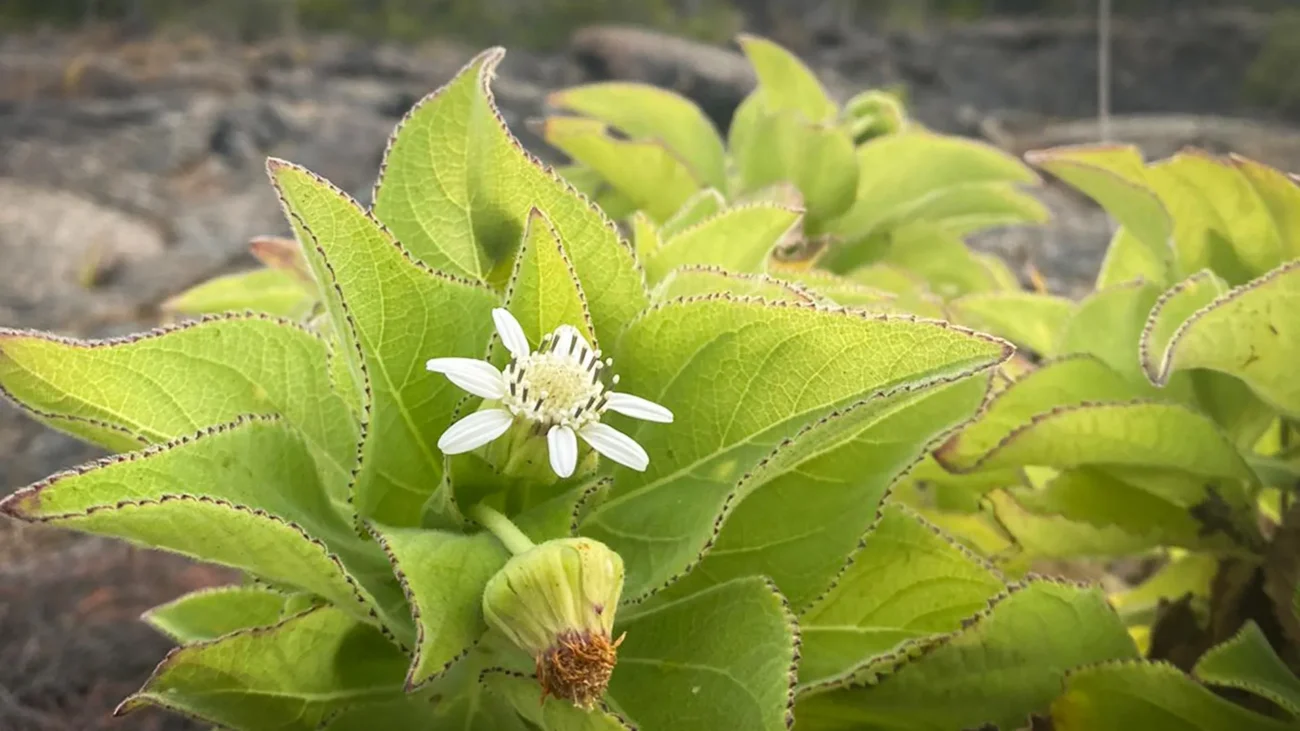
More than a century and a half after Charles Darwin’s historic voyage aboard the HMS Beagle fundamentally reshaped human understanding of the natural world, the Galápagos Islands continue to serve as a living laboratory for evolutionary biologists. While the archipelago’s iconic finches have long held center stage as the textbook example of natural selection and adaptive radiation, a new, comprehensive genomic study reveals that the region’s plant life holds equally compelling secrets. Researchers examining Scalesia—a diverse genus of plants commonly known as the Galápagos giant daisies—have uncovered groundbreaking insights into how complex physical traits evolve, demonstrating that nature can arrive at the exact same biological outcome through entirely different genetic pathways.
The findings, published recently in the prominent scientific journal Nature Communications, were spearheaded by a large, international consortium of scientists. Researchers from the Royal Botanic Gardens, Kew; the Norwegian University of Science and Technology’s (NTNU) University Museum; the University of California, Davis; the University of Copenhagen; the Charles Darwin Foundation; the University of Georgia, Athens; and the University of British Columbia collaborated to sequence and analyze the complete genomes of every known Scalesia species. The resulting data not only deepens the scientific community’s comprehension of parallel evolution but also offers vital guidance for modern conservation strategies in one of the planet’s most fragile ecosystems.
Historical Context and the Legacy of the Beagle
To fully appreciate the significance of the recent Scalesia genomic study, one must look back to the foundational era of evolutionary biology. In September 1835, the HMS Beagle, under the command of Captain Robert FitzRoy, dropped anchor in the Galápagos archipelago, a volcanic island chain situated roughly 1,000 kilometers off the coast of Ecuador. Among the ship’s crew was a young, observant naturalist named Charles Darwin, whose observations during his five-week stay in the islands would become the cornerstone of his theory of evolution by natural selection.
During his time on the islands, Darwin collected a variety of animal and plant specimens to ship back to scientific institutions in England. Among his collection were numerous birds. Initially, Darwin mistakenly believed his avian specimens comprised a mixed assortment of unrelated sparrows, warblers, and true finches. It was not until he returned to England and consulted with prominent ornithologist John Gould that the true nature of the specimens became clear. Gould recognized that the birds were all closely related ground and tree finches whose remarkably varied beak shapes had adapted over generations to exploit different food sources, ranging from hard seeds to cactus flowers and insects.
While the Galápagos finches rightfully claimed their place in scientific history, Darwin’s botanical collections were equally vast and scientifically valuable. Historical records indicate that Darwin gathered numerous plant specimens during his island explorations. Impressively, 78 of those collected plants were later utilized by taxonomists to identify species entirely new to science, a haul that included four distinct species of Scalesia.
Despite this historical nod to botany, animal evolution has historically dominated public awareness and research funding regarding the Galápagos. The new Scalesia study successfully shifts the scientific spotlight back to the flora, proving that plants within the archipelago underwent an evolutionary burst just as rapid and complex as that of their avian counterparts.
The Rapid Evolution and Adaptive Radiation of Scalesia
The genus Scalesia provides scientists with an extraordinary textbook example of adaptive radiation—an evolutionary process in which a single ancestral lineage rapidly diversifies into a wide array of form-types adapted to specialized ecological niches. According to the research team, Scalesia is a remarkably young plant genus. Every single species of giant daisy existing today emerged within the remarkably brief evolutionary window of the past one million years.
After arriving via long-distance dispersal from the South American mainland, the ancestral Scalesia encountered a mosaic of isolated volcanic islands offering diverse, unoccupied ecological niches. In the absence of heavy competition, the plants diversified rapidly. Today, extant species of Scalesia inhabit dramatically contrasting environments across the archipelago, thriving everywhere from the scorching, arid lowlands near the coast to the cool, mist-shrouded highland forests.
This ecological diversity is matched by astonishing morphological variation. Unlike typical daisy relatives on the mainland, which are usually small, herbaceous weeds, Galápagos Scalesia species range dramatically in physical stature. Some exist as low-growing shrubs, while others have evolved into towering canopy-forming trees that can reach heights of up to 15 meters, earning them their colloquial moniker of "giant daisies."
Perhaps the most striking physical variation among the species lies in their foliage. Scalesia leaves range from large, smooth, and entire margins to small, deeply lobed structures with intricate, serrated edges. For decades, evolutionary biologists debated the adaptive value of these diverse leaf shapes, hypothesizing that deeply lobed leaves likely played a crucial functional role in helping plants survive harsh environmental conditions by limiting transpirational water loss and efficiently shedding excess solar heat in exposed low-land environments. Until the recent genomic sequencing project, however, the precise genetic mechanisms driving these adaptations remained a mystery.
Cracking the Code: Different Genes, Same Solution
To uncover the genetic basis of these structural adaptations, the international research team undertook the massive task of sequencing the complete genomes of all recognized Scalesia species. The results of this genetic mapping provided profound insights into the mechanics of parallel evolution—a biological phenomenon wherein independent lineages evolve similar physical traits in response to comparable environmental pressures, often without sharing the exact underlying genetic mutations.
When the researchers mapped the leaf morphology traits onto the comprehensive Scalesia family tree, they discovered that deeply lobed leaves had evolved independently multiple times across separate branches of the genus. This suggested that natural selection repeatedly favored this specific leaf architecture whenever populations colonized hot, dry habitats.
The most astonishing discovery, however, lay within the DNA itself. Lead author Vanessa Bieker, a researcher at the Royal Botanic Gardens, Kew, highlights the unexpected nature of the findings. "Even more surprising was that each time this trait evolved, it did so through different genes—even though all of them belong to the same biological system controlling leaf development," Bieker noted.
Rather than relying on a single, highly conserved "master gene" to dictate leaf shape across the entire genus, evolution in Scalesia appears to operate through a more flexible and decentralized mechanism. The evolutionary process tapped into an expansive, interconnected network of genes, tweaking various individual components within that network to achieve the exact same macroscopic physical result.
This nuanced understanding of genetic architecture challenges older, more rigid models of how complex phenotypic traits arise. It demonstrates that nature can achieve convergent solutions through diverse genetic pathways, revealing an unexpected degree of molecular plasticity in plant evolution.
Ongoing Speciation and Unmapped Lineages
Beyond solving a long-standing botanical mystery, the genomic analysis of Scalesia delivered a striking revelation about the present state of the archipelago: evolution in the Galápagos is far from finished. The DNA data indicates that the diversification of these giant daisies is an ongoing, dynamic process actively occurring in real-time.
Professor Michael D. Martin of the NTNU University Museum emphasizes that the genetic evidence points to cryptic diversity within currently recognized species. "Populations within the same species show large genetic differences and have been isolated from one another for long periods," Martin explained. "This means new species may be in the process of forming. Many Scalesia populations may represent distinct evolutionary lineages that have not yet been formally described."
Because physical appearances can be misleading—a phenomenon where genetically distinct populations look nearly identical due to stabilizing environmental pressures—traditional taxonomy has occasionally failed to capture the full scope of biological diversity within the genus. The discovery of these hidden lineages implies that the total number of distinct Scalesia species is higher than current official taxonomies indicate, underscoring how much remains to be learned about the islands’ biodiversity.
Implications for Modern Conservation Management
The identification of numerous isolated, genetically distinct populations operating along independent evolutionary trajectories carries immediate and profound implications for conservation biology. For decades, conservation management in the Galápagos National Park has largely focused on preserving broadly defined species and macro-ecosystems. However, the findings from the Scalesia study suggest that standard practices may need to be updated to account for micro-evolutionary units.
Because these isolated populations are evolving independently and represent unique genetic repositories, the research team argues that conservationists must shift their strategic approach. Each distinct, isolated population should ideally be managed and protected as an individual conservation unit.
Such a granular approach is especially critical given the severe threats facing Scalesia forests today. Invasive species, introduced herbivores, habitat destruction, and the escalating pressures of global climate change have placed immense strain on native Galápagos flora. Several Scalesia species are already listed as endangered or critically endangered. By recognizing that populations within a single species may actually represent separate evolutionary lineages on the verge of speciation, conservation authorities can better prioritize habitat preservation, seed banking, and ecological restoration efforts to protect the full spectrum of evolutionary potential in the islands.
A Continuing Legacy of Discovery
The insights gleaned from the genomic sequencing of Scalesia giant daisies reinforce the enduring relevance of the Galápagos Islands to modern science. More than 150 years after Charles Darwin published On the Origin of Species, the archipelago remains an unparalleled crucible for studying the mechanisms of life.
By combining cutting-edge genomic sequencing with historical specimen analysis and field ecology, contemporary scientists are able to peer deeper into the evolutionary process than Darwin could have ever imagined. The revelation that nature can construct identical physical adaptations through entirely separate genetic networks highlights both the flexibility and the creativity of natural selection. As researchers continue to decode the hidden biodiversity of the Galápagos, the islands will undoubtedly continue to challenge, surprise, and expand human understanding of how life on Earth adapts, diversifies, and endures.

