


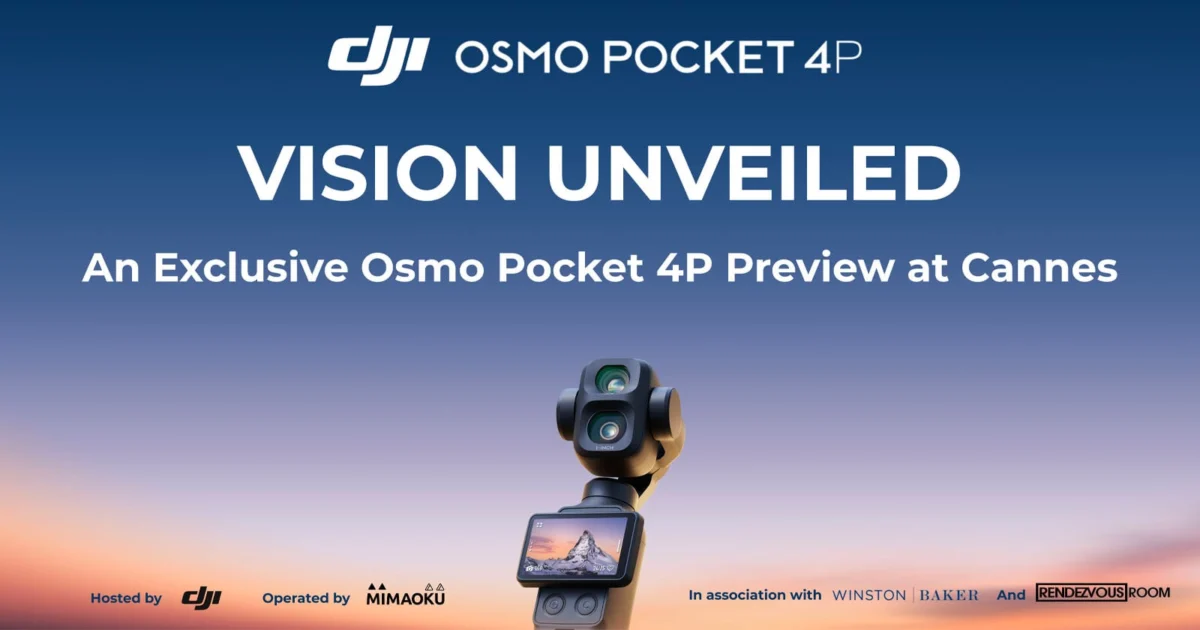
The official unveiling of the DJI Osmo Pocket 4P at the Cannes Film Festival marks a strategic pivot for the world’s leading drone and gimbal manufacturer, as it moves to reclassify its handheld camera line from consumer-grade vlogging tools to professional-grade cinematic devices. While the industry had widely anticipated a successor to the highly successful Osmo Pocket 3, the introduction of the "4P" variant—presumably standing for "Professional"—introduces a dual-lens architecture that fundamentally alters the capabilities of the compact gimbal camera category. By choosing the prestigious backdrop of the Cannes Film Festival for this announcement, DJI is explicitly targeting the independent filmmaking and documentary communities, positioning the Pocket 4P as a viable alternative or supplement to traditional, bulkier cinema rigs.
A Strategic Debut on the Global Stage
The decision to reveal the Osmo Pocket 4P at Cannes is a calculated branding move. Traditionally, the Pocket series has been marketed toward "content creators," a broad demographic ranging from casual travelers to social media influencers. However, the 4P designation and its debut at one of the world’s most significant film festivals suggest a desire to compete in the high-end production market. DJI representatives stated that the unveiling signals a "bold evolution" for the series, moving toward a device capable of professional-grade storytelling.
In the context of the current imaging market, where mobile phones continue to improve their video capabilities, dedicated hardware manufacturers must offer features that smartphones cannot easily replicate. The Pocket 4P attempts to do this through a combination of physical three-axis stabilization, high-quality optics, and advanced color science derived from DJI’s high-end Ronin and Inspire lines.
Technical Specifications and Dual-Camera Innovation
Although DJI has remained somewhat guarded regarding the full technical data sheet, the core of the announcement centers on the new dual-lens system. This configuration is expected to solve one of the primary limitations of previous Pocket models: the fixed focal length. While the original series utilized a wide-angle lens suitable for vlogging and landscape shots, it often lacked the compression and "bokeh" required for cinematic portraiture or detailed close-ups.
The Osmo Pocket 4P incorporates at least one Type 1 sensor (commonly referred to as a 1-inch sensor). This sensor size is a critical benchmark for image quality in compact cameras, providing a significant advantage in light-gathering ability and dynamic range over the smaller sensors found in most smartphones. DJI has highlighted "enhanced portrait capabilities" for the 4P, which suggests that the second lens may be optimized for a tighter focal length, allowing for natural background separation and more flattering facial proportions.
Furthermore, the integration of true 10-bit D-Log2 color is a major inclusion for colorists and professional editors. This color profile allows for a higher level of flexibility in post-production, enabling filmmakers to recover highlights and shadows while maintaining smooth tonal transitions. DJI claims the device offers "cinematic-level dynamic range," a metric that is crucial for shooting in high-contrast environments, such as outdoor scenes with bright skies and deep shadows.
The Influence of the Ronin and Inspire Ecosystems
The Osmo Pocket 4P is not an isolated product but rather a convergence of technologies from DJI’s more expensive professional ecosystems. The company noted that the 4P takes direct lessons from the Ronin series of ground stabilizers and the Inspire series of cinematography drones. This cross-pollination of technology likely manifests in the gimbal’s stabilization algorithms and the camera’s internal processing engine.
By utilizing the same color science found in the DJI Ronin 4D and the Inspire 3, the Pocket 4P allows filmmakers to use the device as a "B-cam" or "C-cam" that can easily be color-matched to footage from more expensive primary cameras. This makes the Pocket 4P an attractive tool for "guerrilla" filmmaking, where a large camera rig might be too conspicuous or physically impossible to operate.
The Evolution of the Pocket Series: A Chronology
To understand the significance of the Pocket 4P, it is necessary to look at the timeline of the series’ development:
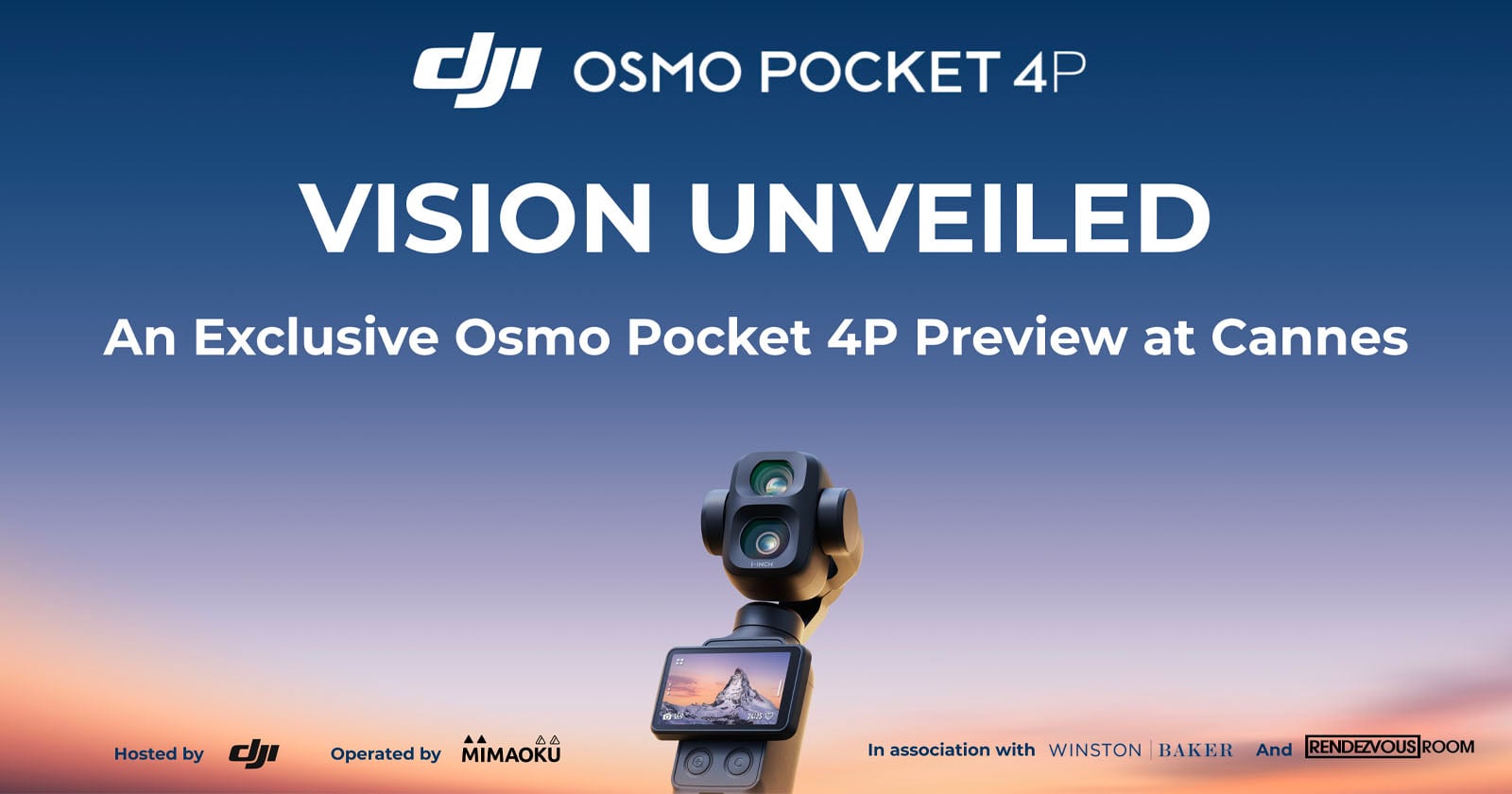
- Osmo Pocket (2018): The original device introduced the concept of a "thumb-sized" three-axis gimbal camera. It featured a 1/2.3-inch sensor and was primarily a novelty for early adopters.
- DJI Pocket 2 (2020): This iteration improved the sensor size to 1/1.7 inches and widened the field of view. It introduced the "Creator Combo" concept, emphasizing external microphones and modularity.
- Osmo Pocket 3 (2023): A major leap forward, the Pocket 3 introduced the 1-inch sensor and a rotatable OLED screen. It became a favorite among professional vloggers and journalists for its low-light performance and fast autofocus.
- Osmo Pocket 4P (2026): The current announcement marks the shift to a dual-lens system and a focus on "prosumer" and professional cinema applications.
This timeline illustrates a clear trajectory toward larger sensors, more sophisticated optics, and professional-grade software features, culminating in the 4P’s cinema-centric positioning.
Competitive Pressures: The Insta360 Luna and the High-End Market
The timing of the Osmo Pocket 4P announcement is likely a response to increasing competition in the handheld stabilized camera market. Recently, Insta360 announced its Luna series, which aimed to challenge DJI’s dominance in the "all-in-one" gimbal camera space. By moving the Pocket 4P further upmarket, DJI is attempting to distance itself from competitors that focus primarily on the consumer action and vlogging segments.
Market analysts suggest that the "content creator" market is becoming saturated, leading manufacturers to seek growth in the "prosumer" and "independent filmmaker" segments. These users are often willing to pay a premium for features like 10-bit internal recording, dual lenses, and robust thermal management—areas where DJI has historically excelled.
Integration with Portable Power Solutions
A curious aspect of the Cannes announcement was DJI’s emphasis on the DJI Power 1000 and DJI Power 2000 portable power stations as companion products for the Pocket 4P. While the Pocket 4P is designed for portability, professional film sets often require continuous operation over many hours.
The mention of these high-capacity batteries suggests that the Pocket 4P may support high-speed charging or external power during operation, catering to documentary filmmakers who may be in the field for extended periods without access to traditional power grids. This further reinforces the "professional" narrative, moving away from the "short-form clip" usage pattern of casual users toward long-form production.
Industry Reactions and Inferred Implications
While official reviews are not yet available, the reaction from the filmmaking community at Cannes has been one of cautious optimism. Documentary creators, in particular, have long sought a device that offers the image quality of a mirrorless camera with the footprint of a mobile phone. The ability to shoot 10-bit D-Log2 footage from a device that fits in a jacket pocket is a significant value proposition for those working in sensitive environments where large equipment might be intrusive.
However, some industry veterans have raised questions regarding thermal management. Operating a 1-inch sensor and high-bitrate recording in such a small chassis generates significant heat. DJI’s claim of "algorithm improvements" likely includes more efficient processing to mitigate thermal throttling, a common issue in ultra-compact professional video gear.
Availability and Future Outlook
As of the announcement at Cannes, DJI has not provided a specific release date or a final retail price for the Osmo Pocket 4P. It is expected that the device will be sold through DJI’s official online store and authorized professional photography retailers.
Given the "P" branding and the dual-lens technology, it is highly probable that the Pocket 4P will be priced higher than the standard Osmo Pocket 4. This pricing strategy would align with DJI’s tiered approach across its other product lines, such as the Mavic and Air drone series, where "Pro" models command a significant premium for enhanced imaging capabilities.
In conclusion, the DJI Osmo Pocket 4P represents more than just an incremental hardware update; it is a statement of intent. By integrating professional color science, a dual-lens architecture, and high-end sensor technology into a pocketable form factor, DJI is attempting to redefine the boundaries of mobile cinematography. Whether the device can truly bridge the gap between "accessibility and cinematic quality" will depend on its real-world performance, but the specifications revealed at Cannes suggest that the compact camera market is entering a new, more sophisticated era.

